World history can feel too big to learn, but a few dozen anchor events give it a shape you can hang everything else on.
These twenty-five questions move in time order from the first cities to the end of the Cold War. Each answer has a short explanation that links the event to its wider story.
Quick takeaways
- Learn events in time order, not at random.
- Pair each date with a cause and a result.
- Anchor dates make the rest easier to place.
Ancient world
Start with the first civilisations and the great empires of the ancient world.
1Which people developed cuneiform, one of the earliest writing systems?
Answer: The Sumerians. Sumerian scribes pressed wedge-shaped marks into clay tablets in Mesopotamia.2Between which two rivers did ancient Mesopotamia lie?
Answer: Tigris and Euphrates. Mesopotamia means 'land between the rivers' in Greek.3Which Indus Valley city is famous for its Great Bath?
Answer: Mohenjo-daro. Mohenjo-daro, in present-day Pakistan, had planned streets and drains.4Who became the first emperor of a unified China in 221 BC?
Answer: Qin Shi Huang. He standardised writing, coins and weights, and was buried with the Terracotta Army.5Who was Alexander the Great's teacher?
Answer: Aristotle. Aristotle tutored the young Alexander in Macedonia.6In which year is the Western Roman Empire traditionally said to have fallen?
Answer: AD 476. In 476 the last western emperor, Romulus Augustulus, was deposed.7What was the capital of the Byzantine Empire?
Answer: Constantinople. Constantinople is the modern city of Istanbul.
Medieval and early modern
Empires, charters, printing presses and voyages that changed the world.
8In which year did King John of England agree to Magna Carta?
Answer: 1215. Magna Carta limited the king's power and influenced later ideas about law.9Who founded the Mongol Empire?
Answer: Genghis Khan. Genghis Khan united the Mongol tribes in 1206 and began a vast series of conquests.10In which year did Constantinople fall to the Ottoman Turks?
Answer: 1453. Sultan Mehmed II captured the city, ending the Byzantine Empire.11Who introduced printing with movable metal type to Europe?
Answer: Johannes Gutenberg. Gutenberg's press in Mainz printed a famous Bible in the 1450s.12In which year did Christopher Columbus first reach the Americas?
Answer: 1492. Columbus landed in the Bahamas in October 1492.13In which year was the American Declaration of Independence adopted?
Answer: 1776. The Continental Congress adopted it on 4 July 1776.14Which revolution began with the storming of the Bastille in 1789?
Answer: The French Revolution. The Paris crowd stormed the Bastille fortress on 14 July 1789.15In which country did the Industrial Revolution begin?
Answer: Britain. Textile mills, steam engines and coal powered Britain's early industrial growth.
Twentieth century
Finish with the wars, independence movements and rivalries of the 1900s.
16Whose assassination in Sarajevo in 1914 helped trigger World War I?
Answer: Archduke Franz Ferdinand. Gavrilo Princip shot the heir to Austria-Hungary on 28 June 1914.17Which 1919 treaty set the peace terms for Germany after World War I?
Answer: Treaty of Versailles. It imposed reparations and territorial losses on Germany.18Germany's invasion of which country in 1939 started World War II in Europe?
Answer: Poland. Germany invaded Poland on 1 September 1939; Britain and France declared war two days later.19On which two Japanese cities were atomic bombs dropped in 1945?
Answer: Hiroshima and Nagasaki. The bombings in August 1945 were followed by Japan's surrender.20Which organisation was founded in 1945 to keep international peace?
Answer: The United Nations. The UN replaced the League of Nations, which had failed to prevent war.21In which year did India gain independence?
Answer: 1947. India became independent on 15 August 1947 and a republic in 1950.22In which year did the Cuban Missile Crisis take place?
Answer: 1962. For thirteen days in October 1962 the US and USSR came close to nuclear war.23Who was the first person to walk on the Moon?
Answer: Neil Armstrong. Armstrong stepped onto the Moon on 20 July 1969 during Apollo 11.24In which year did the Berlin Wall fall?
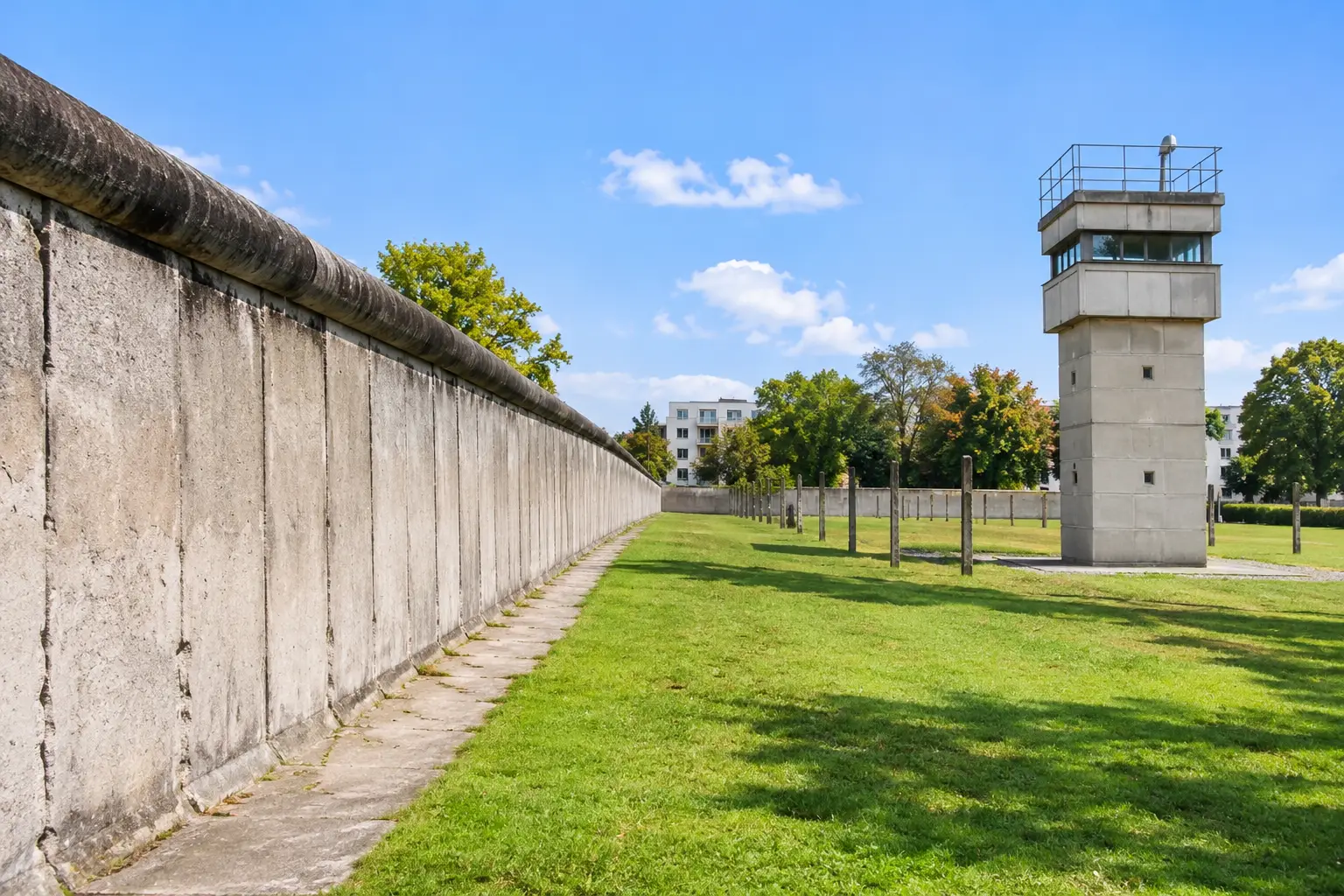
Answer: 1989. Border crossings opened on 9 November 1989.25In which year did the Soviet Union dissolve?
Answer: 1991. The USSR formally ended in December 1991.
Five final history questions
0 / 5 answered
1Which city is modern Istanbul?
Answer: Constantinople. Constantinople was renamed Istanbul in Turkish usage.2Which event came first?
Answer: Magna Carta. Magna Carta (1215) came before 1453, 1492 and 1789.3Which organisation did the United Nations replace?
Answer: The League of Nations. The League was founded after World War I.4Which mission first landed people on the Moon?
Answer: Apollo 11. Apollo 11 landed in July 1969.5Who shot Archduke Franz Ferdinand?
Answer: Gavrilo Princip. Princip was a young Bosnian Serb nationalist.
Frequently asked questions
Why does the quiz stop in 1991?
The end of the Soviet Union is a common end point for twentieth-century history courses. More recent events are still being studied, and summaries of them change more quickly.
Build a timeline in your head
Place each event on one mental timeline. When you know what came before and after, dates stop being isolated numbers.
Check the evidence behind the guide
Use these references to check terminology and pursue a topic in more depth. Photo quizzes help you practise observation; a single picture rarely proves a difficult identification.
Dates and causes are often simplified in summaries. Compare two sources for any event you need to remember, and note where historians still disagree.