The Cold War was a rivalry between the United States and the Soviet Union, and their allies, that lasted from the late 1940s to 1991. The two superpowers never fought each other directly, but they competed through alliances, arms races, space races and wars in other countries.
The US State Department's Office of the Historian publishes detailed accounts of many of these events. This timeline picks out the ones that appear most often in history courses.
Beginnings, 1947–1955
In 1947 the Truman Doctrine promised US support to countries resisting communism, and the Marshall Plan sent economic aid to rebuild Western Europe.
In 1948 the Soviets blockaded West Berlin, and the Western allies supplied the city by air for almost a year in the Berlin Airlift. NATO was founded in 1949, the same year the Soviet Union tested its first atomic bomb. The Korean War followed from 1950 to 1953, and the Warsaw Pact was formed in 1955.
Crises and the space race, 1957–1979
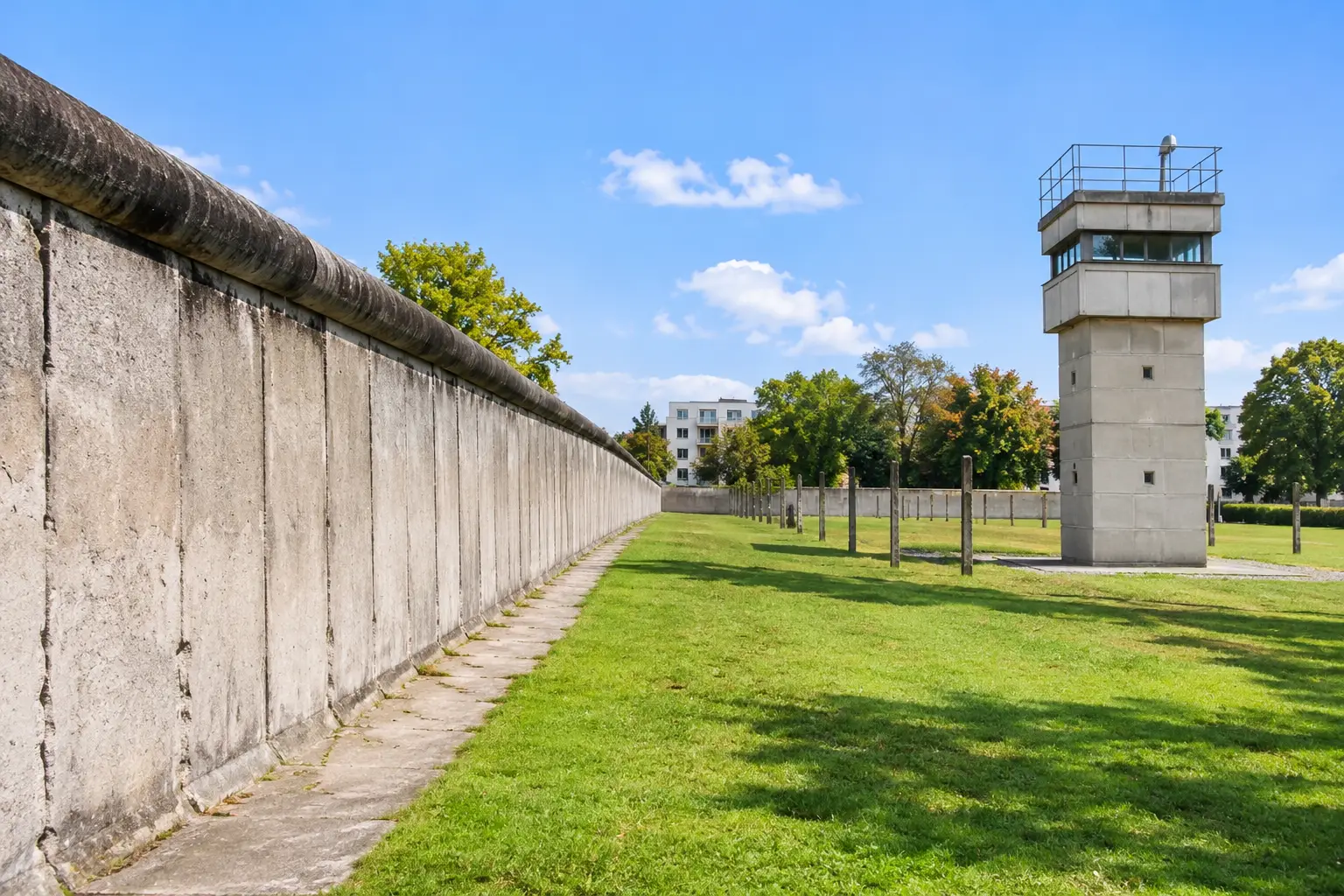
The Soviet Union launched Sputnik, the first artificial satellite, in 1957. In 1961 East Germany built the Berlin Wall. In October 1962 the discovery of Soviet missiles in Cuba brought the world to the edge of nuclear war during the Cuban Missile Crisis.
Tensions eased in the 1970s during a period called détente, which produced arms limitation agreements such as SALT I in 1972. The Soviet invasion of Afghanistan in 1979 ended that thaw.
The end, 1985–1991
Mikhail Gorbachev became Soviet leader in 1985 and introduced glasnost, or openness, and perestroika, or restructuring.
Revolutions swept Eastern Europe in 1989, and the Berlin Wall opened on 9 November 1989. Germany reunified on 3 October 1990, and the Soviet Union dissolved in December 1991.
| Year | Event |
|---|---|
| 1947 | Truman Doctrine and Marshall Plan |
| 1948–1949 | Berlin Blockade and Airlift |
| 1949 | NATO founded; first Soviet atomic test |
| 1957 | Sputnik launched |
| 1961 | Berlin Wall built |
| 1962 | Cuban Missile Crisis |
| 1989 | Berlin Wall falls |
| 1991 | Soviet Union dissolves |
Cold War checkpoint
0 / 4 answered
1Why is it called the Cold War?
Answer: The superpowers never fought each other directly. The rivalry played out through other means and proxy wars.2How did the Western allies keep West Berlin supplied in 1948–49?
Answer: By air. The Berlin Airlift flew in food and fuel.3What was Sputnik?
Answer: The first artificial satellite. Its 1957 launch began the space race.4What does 'perestroika' mean?
Answer: Restructuring. Glasnost means openness; perestroika means restructuring.
Frequently asked questions
Was the Cold War completely without fighting?
No. The superpowers did not fight each other directly, but wars in Korea, Vietnam, Afghanistan and elsewhere were shaped by their rivalry and cost millions of lives.
Three phases
Remember the Cold War in three phases: the early confrontations, the crises and détente, and the rapid end under Gorbachev.
Check the evidence behind the guide
Use these references to check terminology and pursue a topic in more depth. Photo quizzes help you practise observation; a single picture rarely proves a difficult identification.
Dates and causes are often simplified in summaries. Compare two sources for any event you need to remember, and note where historians still disagree.