The age of dinosaurs is called the Mesozoic Era, meaning middle life. It is split into three periods: the Triassic, the Jurassic and the Cretaceous. Each lasted tens of millions of years, and the dinosaurs of one period were very different from those of the next.
The dates below are rounded figures from the international geological time scale. Individual dinosaurs often lived for only a few million years within a period, not for the whole of it.
The Triassic: the first dinosaurs
The Triassic ran from about 252 to 201 million years ago. It began after the largest mass extinction in Earth's history, and the land was joined in one supercontinent, Pangaea.
The first dinosaurs appeared about 230 million years ago. They were mostly small, two-legged animals, such as Eoraptor and Herrerasaurus from Argentina. By the Late Triassic there were larger plant-eaters such as Plateosaurus in Europe and small hunters such as Coelophysis in North America. Dinosaurs shared the land with many other reptiles, including the ancestors of crocodiles.
The Jurassic: the age of giants
The Jurassic ran from about 201 to 145 million years ago. Another extinction at the start of the period removed many rival reptiles, and dinosaurs became the dominant land animals. Pangaea began to break apart.
This was the time of the huge sauropods, such as Diplodocus, Brachiosaurus and Brontosaurus, and of Stegosaurus and the hunter Allosaurus. Many of these come from the Morrison Formation in the western United States, dated to about 155 to 150 million years ago. Archaeopteryx, the famous early bird, lived in what is now Germany about 150 million years ago.
The Cretaceous: horns, crests and the end
The Cretaceous ran from about 145 to 66 million years ago, making it the longest of the three periods. Flowering plants spread across the land, and the continents moved closer to their present positions.
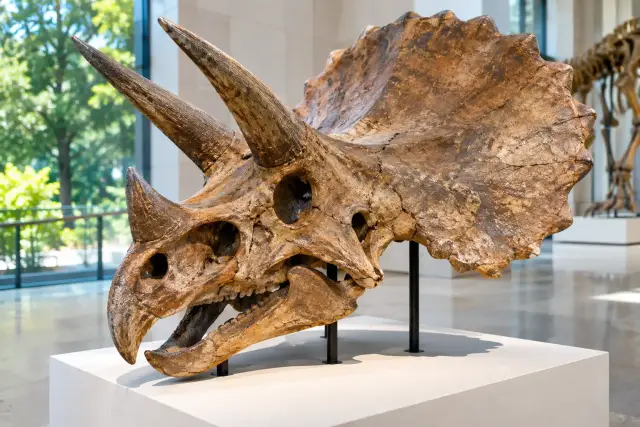
Famous Cretaceous dinosaurs include Iguanodon, Spinosaurus, Velociraptor, Parasaurolophus, Ankylosaurus, Triceratops and Tyrannosaurus rex. The period ended with an asteroid impact, alongside large volcanic eruptions, that wiped out all dinosaurs except birds. A surprising result of these dates is that T. rex lived closer in time to us than to Stegosaurus.
| Period | About when | Example dinosaurs |
|---|---|---|
| Triassic | 252 to 201 million years ago | Eoraptor, Herrerasaurus, Plateosaurus, Coelophysis |
| Jurassic | 201 to 145 million years ago | Diplodocus, Brachiosaurus, Stegosaurus, Allosaurus |
| Cretaceous | 145 to 66 million years ago | Iguanodon, Velociraptor, Triceratops, Tyrannosaurus |
Put them in order
0 / 4 answered
1In which period did Stegosaurus live?
Answer: Jurassic. Stegosaurus lived about 155 to 150 million years ago, in the Late Jurassic.2Which period comes between the Triassic and the Cretaceous?
Answer: Jurassic. The Mesozoic order is Triassic, Jurassic, Cretaceous.3About when did the first dinosaurs appear?
Answer: About 230 million years ago. They appeared in the Late Triassic.4Which of these lived closer in time to Tyrannosaurus rex?
Answer: Humans. About 66 million years separate T. rex from us, but more than 80 million separate it from Stegosaurus.
Frequently asked questions
Did T. rex and Stegosaurus ever meet?
No. Stegosaurus lived in the Late Jurassic, about 150 million years ago, and T. rex lived at the end of the Cretaceous, about 68 to 66 million years ago. Films often mix dinosaurs from different periods.
Three chapters, one era
Remember the order Triassic, Jurassic, Cretaceous, and link each period to a few famous names: early small dinosaurs, then long-necked giants, then horned, crested and tyrant dinosaurs.
Check the evidence behind the guide
Use these references to check terminology and pursue a topic in more depth. Photo quizzes help you practise observation; a single picture rarely proves a difficult identification.
Dinosaur science changes as new fossils are found. Sizes and dates are estimates, so museums and papers may give slightly different figures.