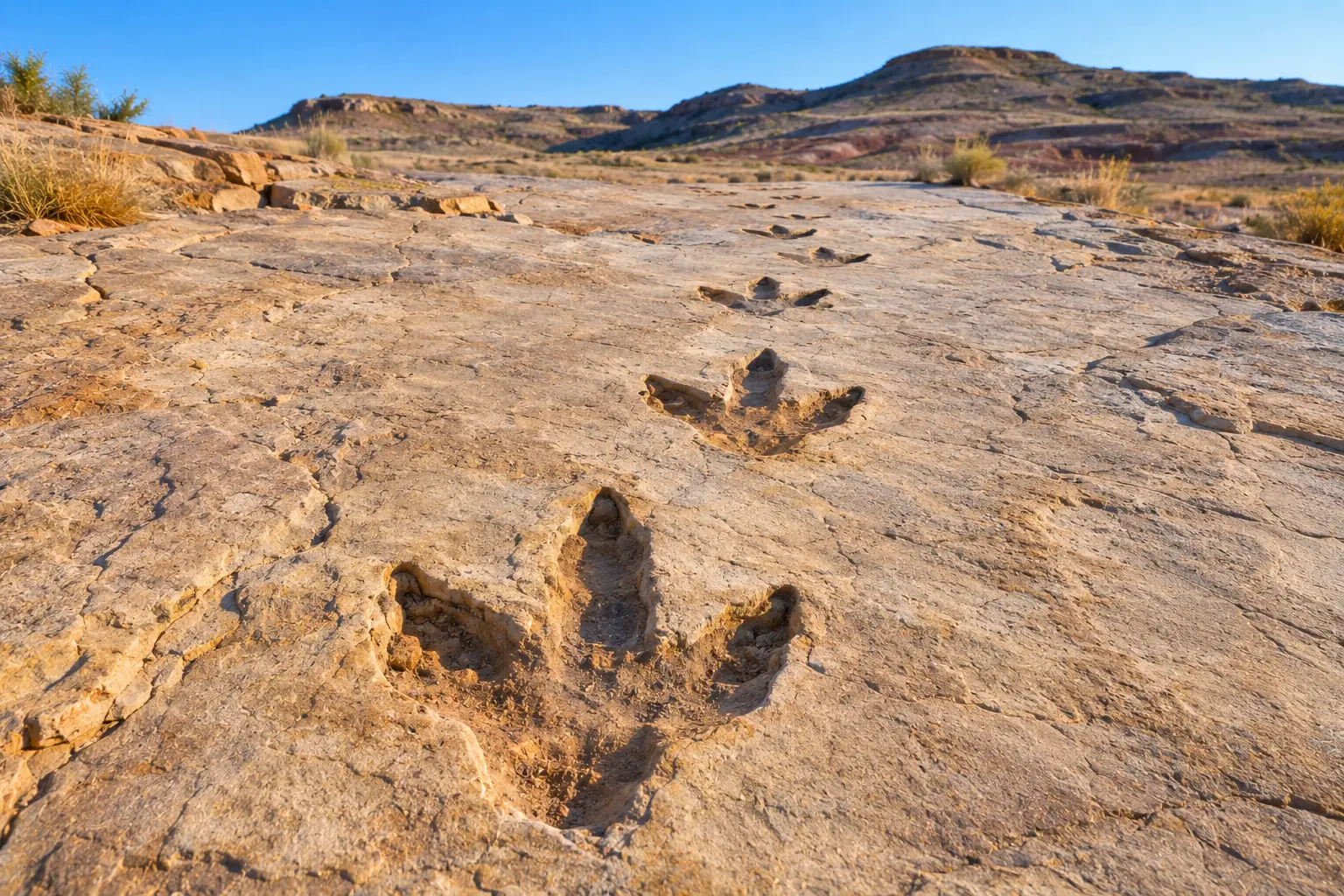
Dinosaurs lived for more than 160 million years and came in an enormous range of shapes, from turkey-sized hunters to plant-eaters longer than a tennis court. This quiz covers the names, features and fossils you are most likely to meet in a museum or a book.
Each answer comes with a short explanation, so you learn why a name or date fits rather than memorising a list. Sizes and dates are estimates based on fossils, so treat them as approximate.
Quick takeaways
- Dinosaurs lived in the Triassic, Jurassic and Cretaceous periods.
- Many dinosaur names describe a feature, such as three horns or a swift build.
- Birds are living dinosaurs; pterosaurs and sea reptiles are not dinosaurs.
Famous dinosaurs and their names
Start with the best-known dinosaurs and what their names mean.
1What does the word 'dinosaur' mean?
Answer: Terrible lizard. Richard Owen built the word from the Greek deinos, terrible or fearfully great, and sauros, lizard.2What does the name Tyrannosaurus rex mean?
Answer: Tyrant lizard king. Tyrannos means tyrant, sauros means lizard and rex is Latin for king.3Roughly when did Tyrannosaurus rex live?
Answer: About 68 to 66 million years ago. T. rex lived at the very end of the Cretaceous, in what is now western North America.4How many fingers did Tyrannosaurus rex have on each hand?
Answer: Two. Its short arms ended in two clawed fingers, and the arms were stronger than their size suggests.5How many horns did Triceratops have on its face?
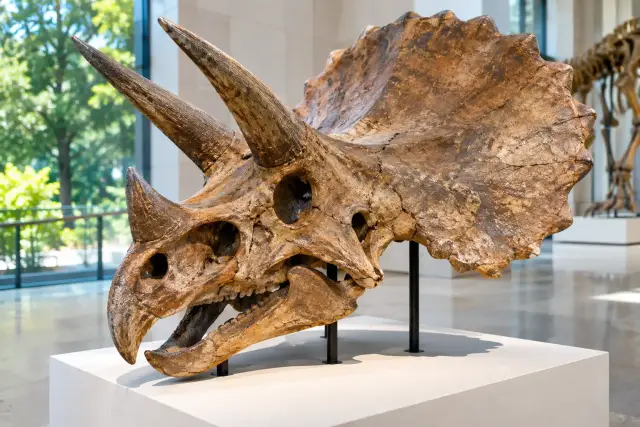
Answer: Three. Triceratops means three-horned face: two long horns above the eyes and a shorter one on the nose.6Which dinosaur's name means 'swift thief'?
Answer: Velociraptor. Velox means swift and raptor means thief or plunderer.7About how big was a real Velociraptor?
Answer: About the size of a turkey. Velociraptor was about 2 metres long, much of it tail, and fossil forearm bones show it had feathers.8What does the name Brontosaurus mean?
Answer: Thunder lizard. Bronte means thunder in Greek, a nod to the ground-shaking size of the animal.
Giants, sails, armour and crests
These questions cover the long-necked giants and the dinosaurs with the most striking features.
9In which year was Brontosaurus reinstated as its own genus, separate from Apatosaurus?
Answer: 2015. Brontosaurus had been merged into Apatosaurus in 1903. A large study in 2015 found enough differences to bring the name back.10Which group of long-necked plant-eaters includes Diplodocus and Brachiosaurus?
Answer: Sauropods. Sauropods had small heads, very long necks and tails, and four pillar-like legs.11Which South American sauropod is often cited as one of the heaviest dinosaurs known?
Answer: Argentinosaurus. Argentinosaurus is known from only part of a skeleton, so its weight is an estimate, but it was clearly enormous.12Which large theropod had a tall sail of spines on its back and long, crocodile-like jaws?
Answer: Spinosaurus. Spinosaurus lived in North Africa about 95 million years ago and ate fish, among other prey.13Which early-named dinosaur is known for the cone-shaped spikes on its thumbs?
Answer: Iguanodon. Iguanodon was named in 1825. The thumb spike was first thought to sit on its nose.14Which dinosaur had a heavy bony club at the end of its tail?
Answer: Ankylosaurus. Ankylosaurus was covered in bony armour plates, and its tail ended in a large club of fused bone.15Which duck-billed dinosaur had a long, hollow crest curving back from its head?
Answer: Parasaurolophus. Air passages ran through the crest, and it may have helped the animal make loud, low calls.16What is the informal name for the cluster of spikes on the end of a Stegosaurus tail?
Answer: Thagomizer. The name began as a joke in a cartoon, and palaeontologists later adopted it.
Fossils, science and extinction
Finish with how scientists named and study dinosaurs, how they are grouped and how most of them died out.
17Who coined the word 'dinosaur' in 1842?
Answer: Richard Owen. The British anatomist Richard Owen named the group to describe a few large fossil reptiles found in England.18Which crater in Mexico is linked to the asteroid impact at the end of the Cretaceous?
Answer: Chicxulub crater. The Chicxulub crater lies buried under the Yucatan Peninsula and is about 180 kilometres across.19About how long ago did the non-bird dinosaurs die out?
Answer: About 66 million years ago. The end-Cretaceous extinction wiped out all dinosaurs except the ancestors of modern birds.20Which group of animals alive today are dinosaurs?
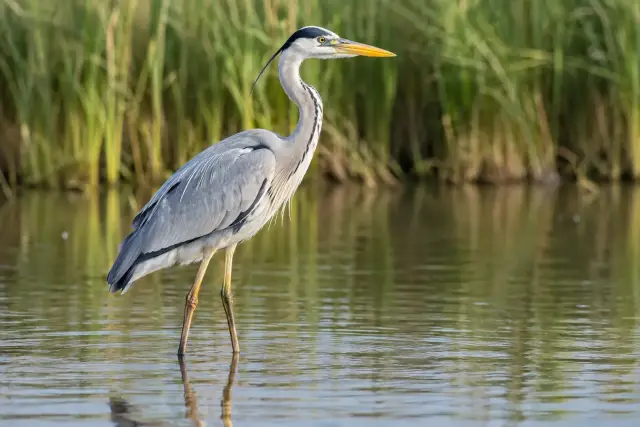
Answer: Birds. Birds evolved from small feathered theropods, so scientists class them as living dinosaurs.21Which feathered fossil, first found in Germany in 1861, links dinosaurs and birds?
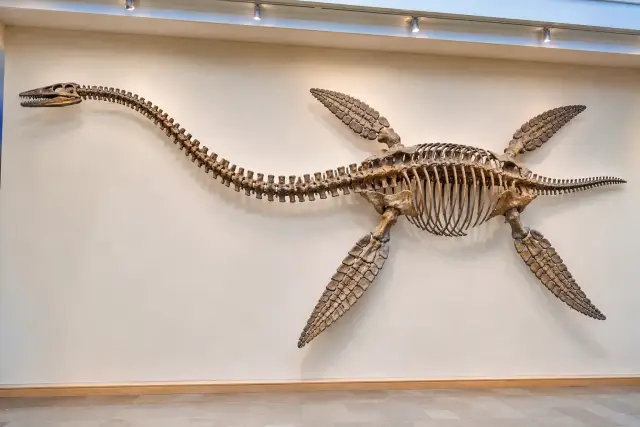
Answer: Archaeopteryx. Archaeopteryx had feathered wings like a bird, but also teeth, clawed fingers and a long bony tail.22Pteranodon was a flying reptile but not a dinosaur. Which group did it belong to?
Answer: Pterosaurs. Pterosaurs were close cousins of dinosaurs that flew on wings of skin stretched from a long fourth finger.23What are coprolites?
Answer: Fossilised dung. Coprolites can show what an animal ate, such as crushed bone or plant matter.24Dinosaurs are traditionally split into two main groups based on the shape of the hip. What are they called?
Answer: Saurischians and ornithischians. Saurischian means lizard-hipped and ornithischian means bird-hipped. Confusingly, birds come from the lizard-hipped branch.25Which period of the Mesozoic Era came first?
Answer: Triassic. The first dinosaurs appeared in the Triassic, about 230 million years ago, followed by the Jurassic and the Cretaceous.
Four final dinosaur questions
0 / 4 answered
1Which dinosaur had two long brow horns and a short nose horn?
Answer: Triceratops. Its name means three-horned face.2Was Pteranodon a dinosaur?
Answer: No, it was a pterosaur. Pterosaurs were close cousins of dinosaurs, not dinosaurs themselves.3Which period came straight after the Jurassic?
Answer: Cretaceous. The order is Triassic, Jurassic, Cretaceous.4Which group of mostly meat-eating dinosaurs includes T. rex and Velociraptor?
Answer: Theropods. Theropods walked on two legs, and birds evolved from them.
Frequently asked questions
Why do books give different sizes for the same dinosaur?
Most dinosaurs are known from incomplete skeletons, so length and weight are estimated by comparing them with better-known relatives. Different methods give different results, and new fossils can change the figures.
Names tell stories
Many dinosaur names describe a feature or a place, so learning a few Greek and Latin word parts, such as saurus, tri and raptor, makes the names much easier to remember.
Check the evidence behind the guide
Use these references to check terminology and pursue a topic in more depth. Photo quizzes help you practise observation; a single picture rarely proves a difficult identification.
Dinosaur science changes as new fossils are found. Sizes and dates are estimates, so museums and papers may give slightly different figures.