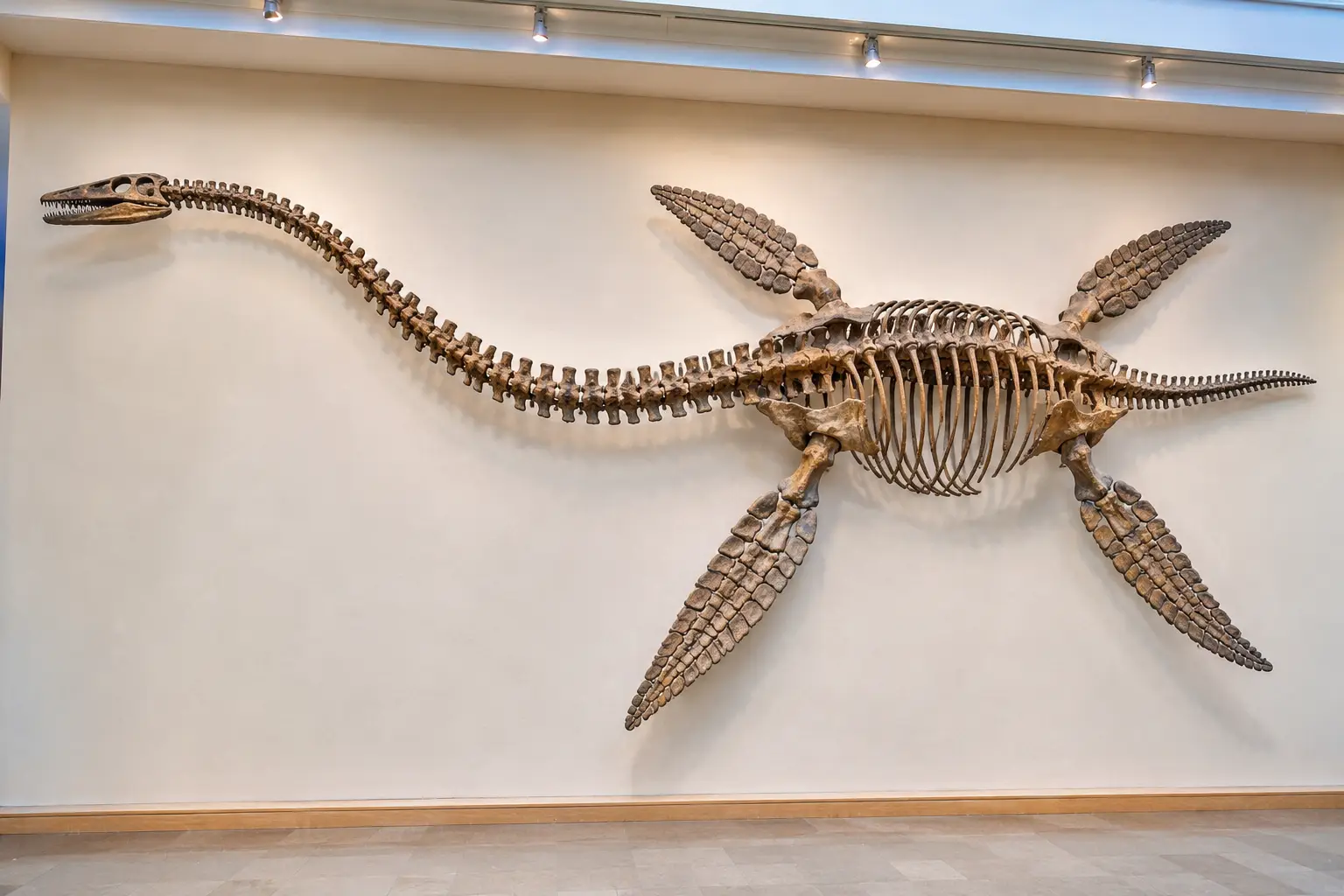
Toy boxes and films often call every prehistoric reptile a dinosaur. In fact, many of the most famous ancient animals belong to other groups. Some lived alongside dinosaurs, and some lived long before them.
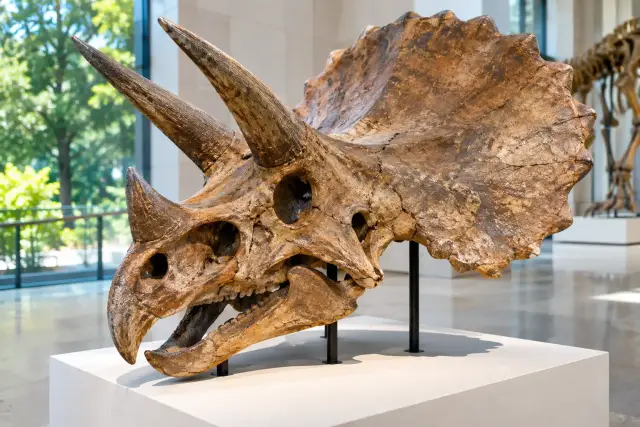
Scientists define dinosaurs by ancestry: a dinosaur is any animal descended from the most recent common ancestor of groups such as Triceratops and birds. In practice, a few skeleton features help you spot one.
What makes a dinosaur
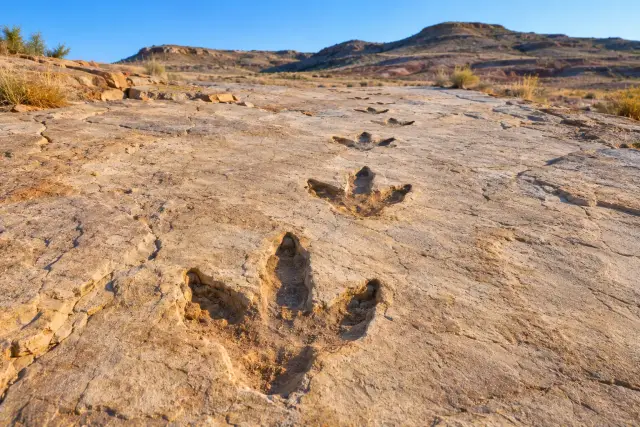
All dinosaurs lived on land, or descend from land animals, as birds do. Their legs were held straight beneath the body, like a horse's, rather than sprawling out to the sides like a lizard's. Their hip socket also had an open hole through it, which helped support this upright stance.
So no non-bird dinosaur lived in the open sea like a dolphin, and no dinosaur flew on wings of skin. Some, such as Spinosaurus, spent time in or near water, and birds took to the air with feathered wings.
Flying and swimming reptiles
Pterosaurs, such as Pteranodon and Quetzalcoatlus, were flying reptiles. They were close cousins of dinosaurs, but their wings were made of skin stretched from a very long fourth finger. They were the first vertebrates to fly.
The seas held several groups of marine reptiles. Ichthyosaurs were shaped like dolphins. Plesiosaurs had four paddle-like flippers, and many had very long necks. Mosasaurs were huge sea-going reptiles related to lizards that lived in the Late Cretaceous. None of these were dinosaurs.
Too early or too late
Dimetrodon, with its tall back sail, is often sold with dinosaur toys. It lived in the Permian, tens of millions of years before the first dinosaurs, and it was a synapsid, a group more closely related to mammals than to reptiles.
Woolly mammoths and sabre-toothed cats lived in the last ice ages, long after the non-bird dinosaurs had died out. They were mammals.
| Animal | What it was | Dinosaur? |
|---|---|---|
| Pteranodon | Flying reptile (pterosaur) | No |
| Ichthyosaurus | Dolphin-shaped marine reptile | No |
| Plesiosaurus | Long-necked marine reptile with flippers | No |
| Mosasaurus | Giant sea-going reptile related to lizards | No |
| Dimetrodon | Sail-backed synapsid of the Permian | No |
| Woolly mammoth | Ice age mammal | No |
| Spinosaurus | Sail-backed theropod | Yes |
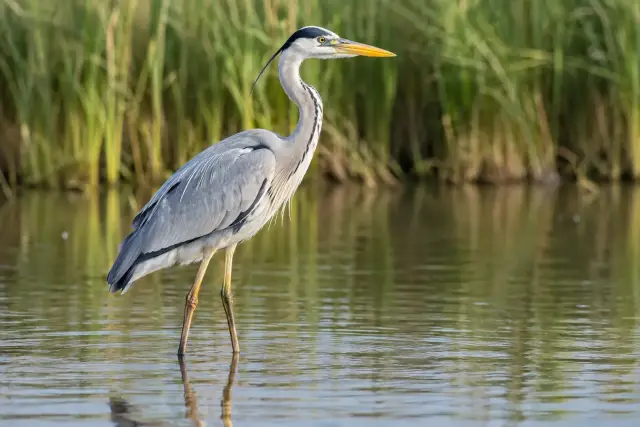
| Pigeon | Living bird | Yes |
Spot the real dinosaur
0 / 4 answered
1Which of these was a dinosaur?
Answer: Allosaurus. Allosaurus was a Jurassic theropod; the others were flying or marine reptiles.2Dimetrodon was more closely related to which group?
Answer: Mammals. Dimetrodon was a synapsid, on the line that later led to mammals.3How were a dinosaur's legs held?
Answer: Straight beneath the body. This upright stance is one of the key dinosaur features.4What kind of animal was a mosasaur?
Answer: A large sea-going reptile related to lizards. Mosasaurs lived in the seas of the Late Cretaceous.
Frequently asked questions
Are crocodiles dinosaurs?
No. Crocodiles and dinosaurs both belong to a larger group called archosaurs, so they are relatives, but crocodiles sit on a separate branch. Among living animals, crocodiles and alligators are the closest relatives of birds.
Check the legs and the habitat
If a prehistoric reptile flew on skin wings, swam the open sea or lived before the Triassic, it was not a dinosaur. Look for legs held straight under the body.
Check the evidence behind the guide
Use these references to check terminology and pursue a topic in more depth. Photo quizzes help you practise observation; a single picture rarely proves a difficult identification.
Dinosaur science changes as new fossils are found. Sizes and dates are estimates, so museums and papers may give slightly different figures.