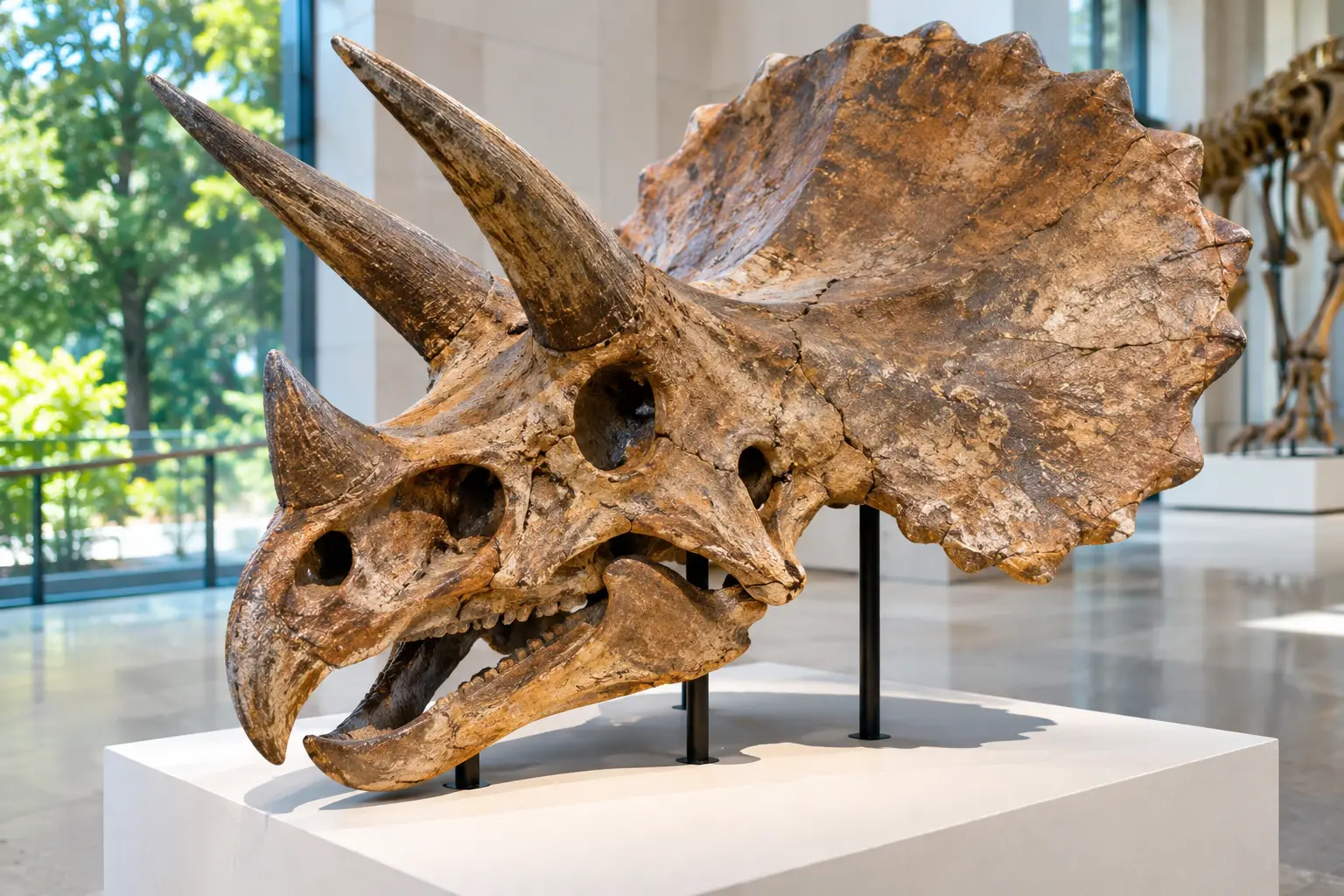
You do not need to memorise hundreds of names to recognise dinosaurs. Most belong to a handful of groups, and each group has a body plan and a few standout features that give it away.
Start with two questions: did it walk on two legs or four, and what were its teeth like? Then look for the special features, such as horns, plates, armour or a crest.
Meat-eaters and plant-eaters
Teeth are the best clue to diet. Meat-eaters usually had blade-like, curved teeth with serrated edges, like a steak knife, for slicing flesh. Plant-eaters had leaf-shaped, peg-like or tightly packed grinding teeth, and many ornithischians also had a horny beak at the front of the mouth.
Almost all the big meat-eaters were theropods, which walked on two legs and had clawed hands. Not every theropod ate meat, though: some, such as the long-clawed therizinosaurs, became plant-eaters.
Long necks, plates and armour
Sauropods are the easiest to spot: small heads, very long necks and tails, and four thick, pillar-like legs. Diplodocus, Brachiosaurus and Brontosaurus are sauropods, and all of them ate plants.
Stegosaurs carried two rows of tall plates along the back and spikes on the tail. Ankylosaurs were low and wide, covered in bony armour, and some, like Ankylosaurus itself, swung a heavy tail club.
Horns, frills, domes and crests
Ceratopsians had a beak like a parrot's, and most had a bony frill at the back of the skull and horns on the face. Triceratops, Styracosaurus and the smaller Protoceratops belong here.
Hadrosaurs, the duck-billed dinosaurs, had broad, flat snouts and rows of hundreds of grinding teeth. Some had crests, such as the long tube of Parasaurolophus. Pachycephalosaurs had thick, domed skulls ringed with bony knobs.
| Group | Diet | Key features | Examples |
|---|---|---|---|
| Theropods | Mostly meat | Two legs, sharp serrated teeth, clawed hands | Tyrannosaurus, Allosaurus, Velociraptor |
| Sauropods | Plants | Long neck and tail, four pillar legs | Diplodocus, Brachiosaurus, Brontosaurus |
| Stegosaurs | Plants | Back plates, tail spikes | Stegosaurus, Kentrosaurus |
| Ankylosaurs | Plants | Body armour, some with tail clubs | Ankylosaurus, Euoplocephalus |
| Ceratopsians | Plants | Beak, frill, often horns | Triceratops, Styracosaurus |
| Hadrosaurs | Plants | Duck bill, many grinding teeth, some crests | Parasaurolophus, Edmontosaurus |
| Pachycephalosaurs | Plants | Thick domed skull | Pachycephalosaurus |
Name the group
0 / 4 answered
1Blade-like, curved teeth with serrated edges suggest which diet?
Answer: Meat. Serrated teeth slice through flesh, like a steak knife.2A dinosaur with a beak, a bony frill and horns belongs to which group?
Answer: Ceratopsians. Triceratops is the best-known ceratopsian.3Which dinosaur had a thick, domed skull?
Answer: Pachycephalosaurus. Its name means thick-headed lizard.4Which group is known as the duck-billed dinosaurs?
Answer: Hadrosaurs. Hadrosaurs had broad, flat snouts and many grinding teeth.
Frequently asked questions
Were all two-legged dinosaurs meat-eaters?
No. Most theropods ate meat, but some became plant-eaters, and many plant-eating ornithopods, such as Iguanodon and some hadrosaurs, could walk on two legs as well as four. Check the teeth and beak as well as the legs.
Body plan first, details second
Decide on two legs or four and look at the teeth, then check for horns, plates, armour or a crest. Those few clues place most dinosaurs in the right group.
Check the evidence behind the guide
Use these references to check terminology and pursue a topic in more depth. Photo quizzes help you practise observation; a single picture rarely proves a difficult identification.
Dinosaur science changes as new fossils are found. Sizes and dates are estimates, so museums and papers may give slightly different figures.