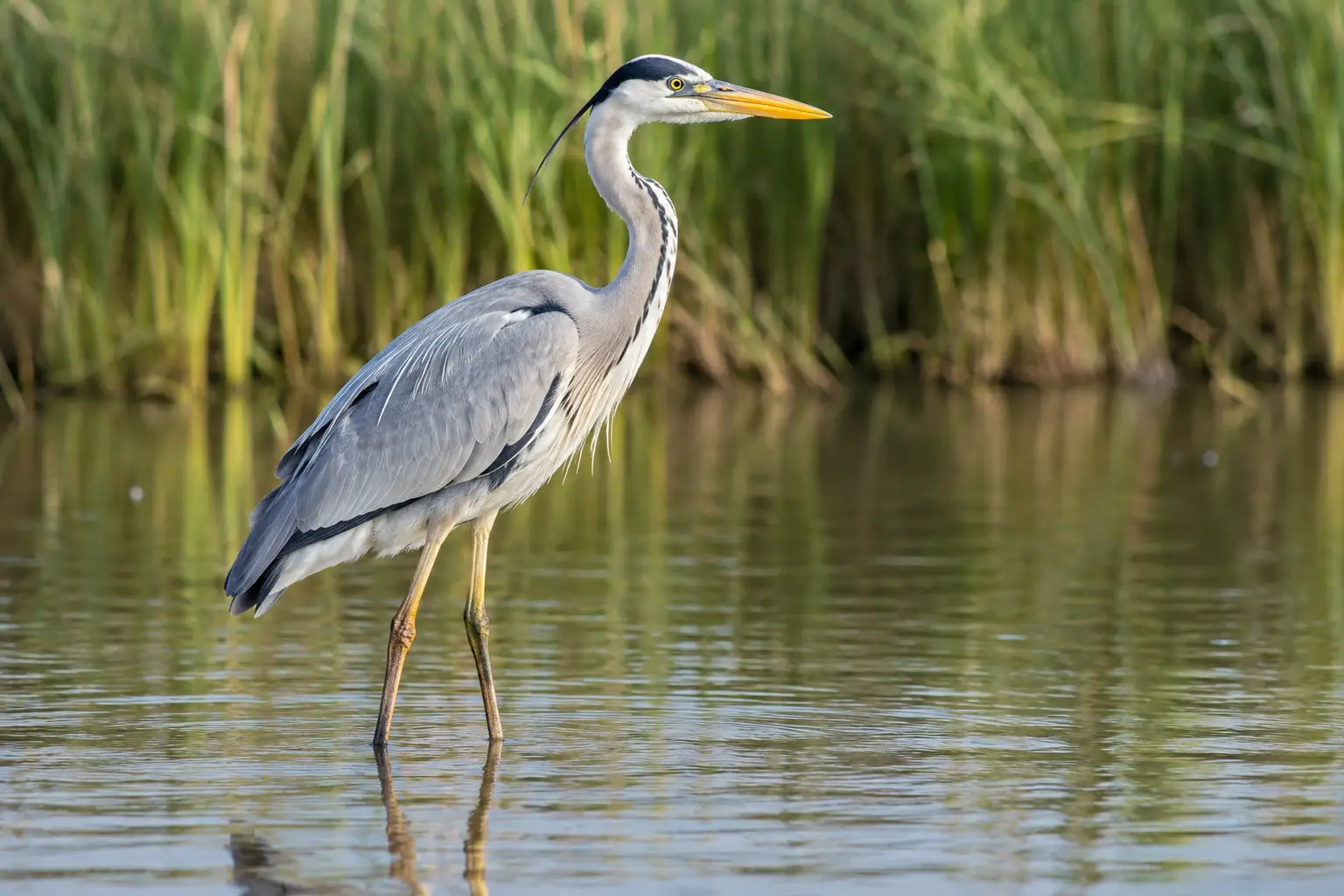
Not all dinosaurs died out 66 million years ago. One group of small feathered theropods survived, and their descendants are the birds we see today. That is why scientists call the extinct kinds non-bird, or non-avian, dinosaurs.
The idea goes back to the 1860s, soon after Archaeopteryx was found, but the strongest evidence has come since the 1990s from fossils of feathered dinosaurs, especially in China.
Archaeopteryx: half bird, half dinosaur
Archaeopteryx lived about 150 million years ago in what is now southern Germany. Its first skeleton was found in 1861. It had feathered wings and a wishbone like a bird, but also teeth, three clawed fingers on each hand and a long bony tail like a small theropod dinosaur.
The British biologist Thomas Henry Huxley noticed how closely its skeleton matched small meat-eating dinosaurs, and argued that birds were related to them.
Feathered dinosaurs
In 1996, scientists described Sinosauropteryx from China, the first non-bird dinosaur found with a coat of simple feather-like filaments. Since then, feathers have been found on many theropods, including Microraptor, which had long feathers on both its arms and legs, and Yutyrannus, a large early relative of T. rex.
Feathers probably began as insulation and display, long before they were used for flight. Fossil bones of Velociraptor carry small bumps, called quill knobs, where large feathers were anchored, just as in many living birds.
Bird or dinosaur?
0 / 4 answered
1Which group of dinosaurs did birds evolve from?
Answer: Theropods. Birds descend from small feathered theropods related to Velociraptor.2Which fossil found in China in 1996 was the first non-bird dinosaur found with feather-like filaments?
Answer: Sinosauropteryx. Its fossils show a coat of short filaments along the body.3What are quill knobs?
Answer: Bumps on bones where large feathers were anchored. They have been found on Velociraptor forearm bones.4What does 'non-avian dinosaur' mean?
Answer: A dinosaur that is not a bird. Avian means relating to birds.
Frequently asked questions
Did T. rex have feathers?
This is still debated. Patches of fossil skin from Tyrannosaurus show scales, but some of its relatives, such as Yutyrannus, had feathers. An adult T. rex may have had few feathers, or feathers only on parts of the body.
Dinosaurs at the bird feeder
Feathers, wishbones, hollow bones and nesting behaviour all link birds to theropod dinosaurs, so a garden bird is a living member of the dinosaur family.
Check the evidence behind the guide
Use these references to check terminology and pursue a topic in more depth. Photo quizzes help you practise observation; a single picture rarely proves a difficult identification.
Dinosaur science changes as new fossils are found. Sizes and dates are estimates, so museums and papers may give slightly different figures.