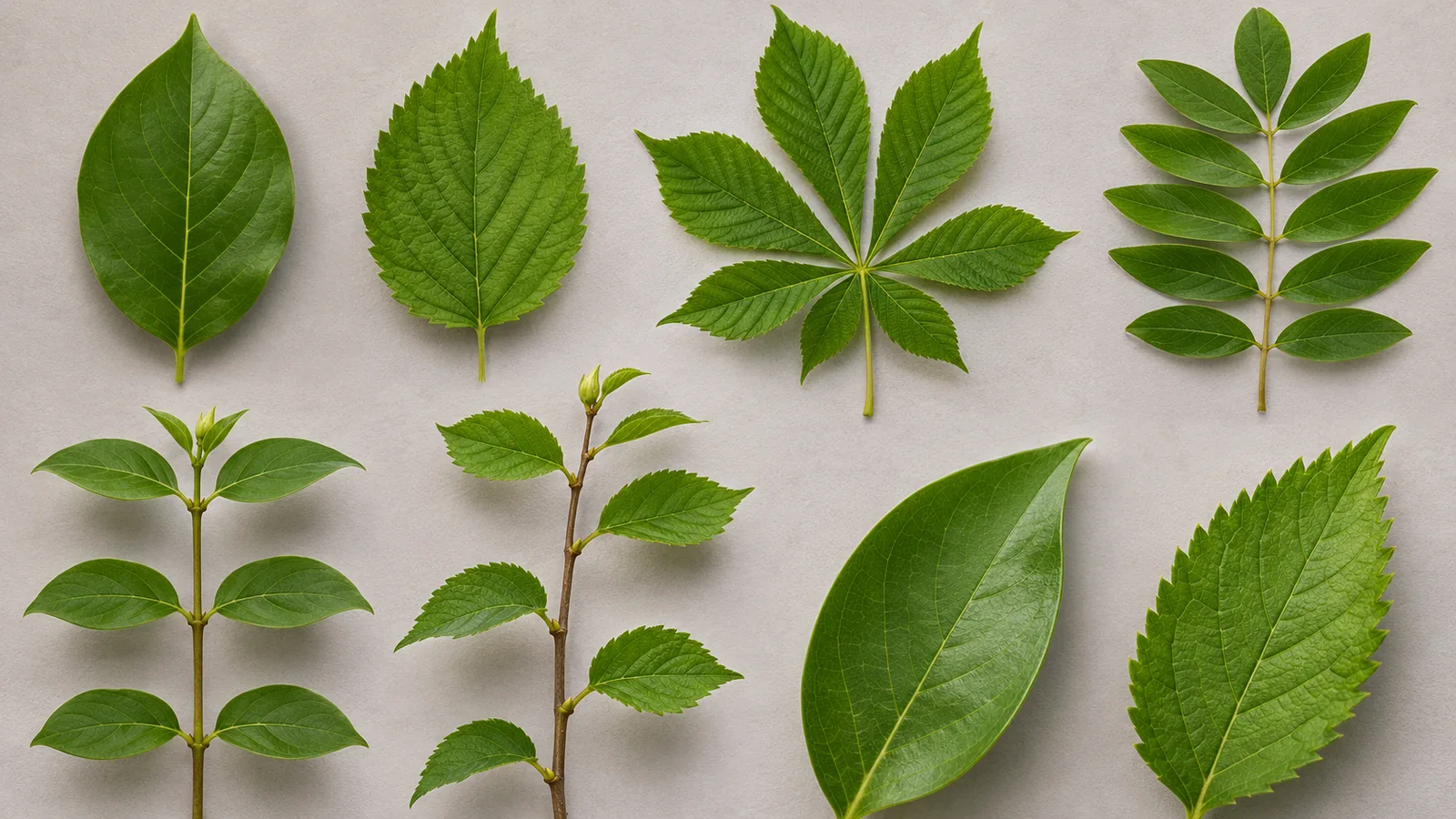
A good plant description is a series of observations anyone else can check. 'Green leaf' carries little information; 'opposite leaves with toothed margins' narrows the field.
Kew highlights leaf arrangement and shape because flowers are often absent. Once you know a few terms, a field guide becomes much easier to use.
Blade, petiole and margin
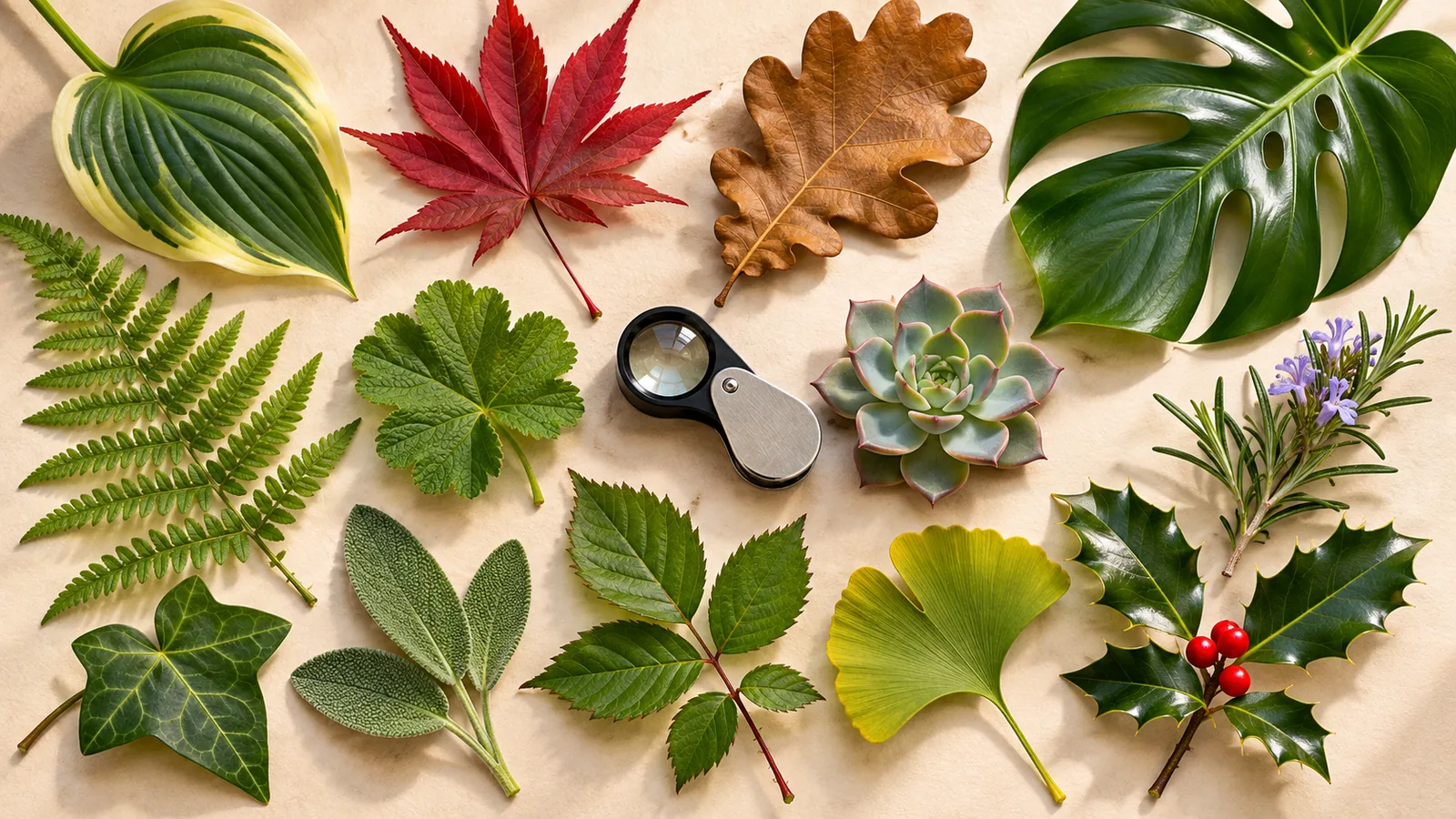
The blade is the broad photosynthetic part of a typical leaf. A petiole is the stalk joining it to the stem. The margin is the outer edge; it may be smooth, serrated, toothed or lobed.
Describe what you see without overcommitting. A damaged margin may look toothed even if an intact leaf is smooth.
Simple leaves versus leaflets
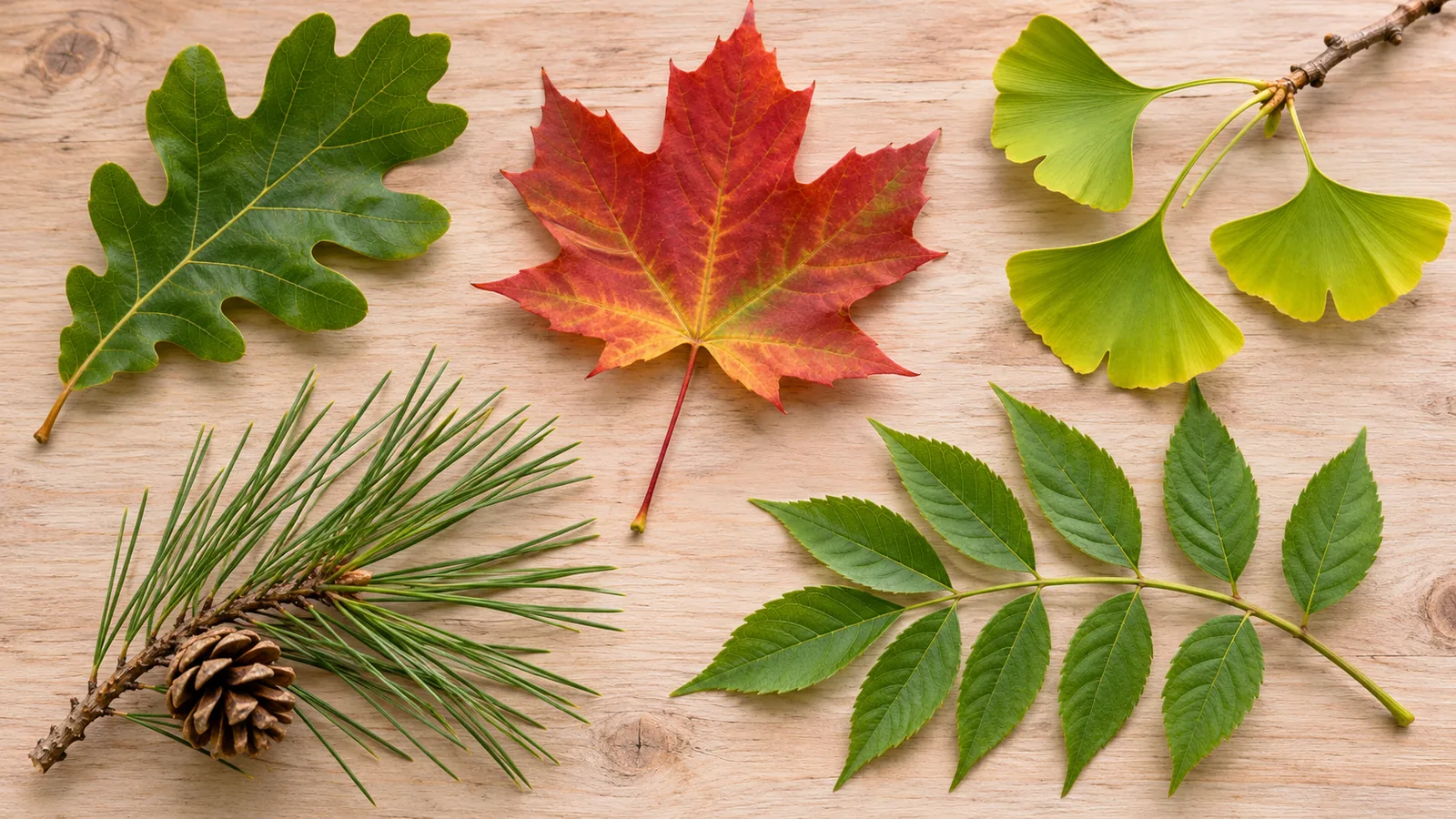
A simple leaf has one blade. It can have deep lobes while remaining one leaf. A compound leaf divides into leaflets; the whole leaf usually connects to the stem at one point.
This difference is easy to miss when a leaflet looks like a tiny independent leaf. Find the twig and its bud to locate the true attachment point.
Arrangement and veins
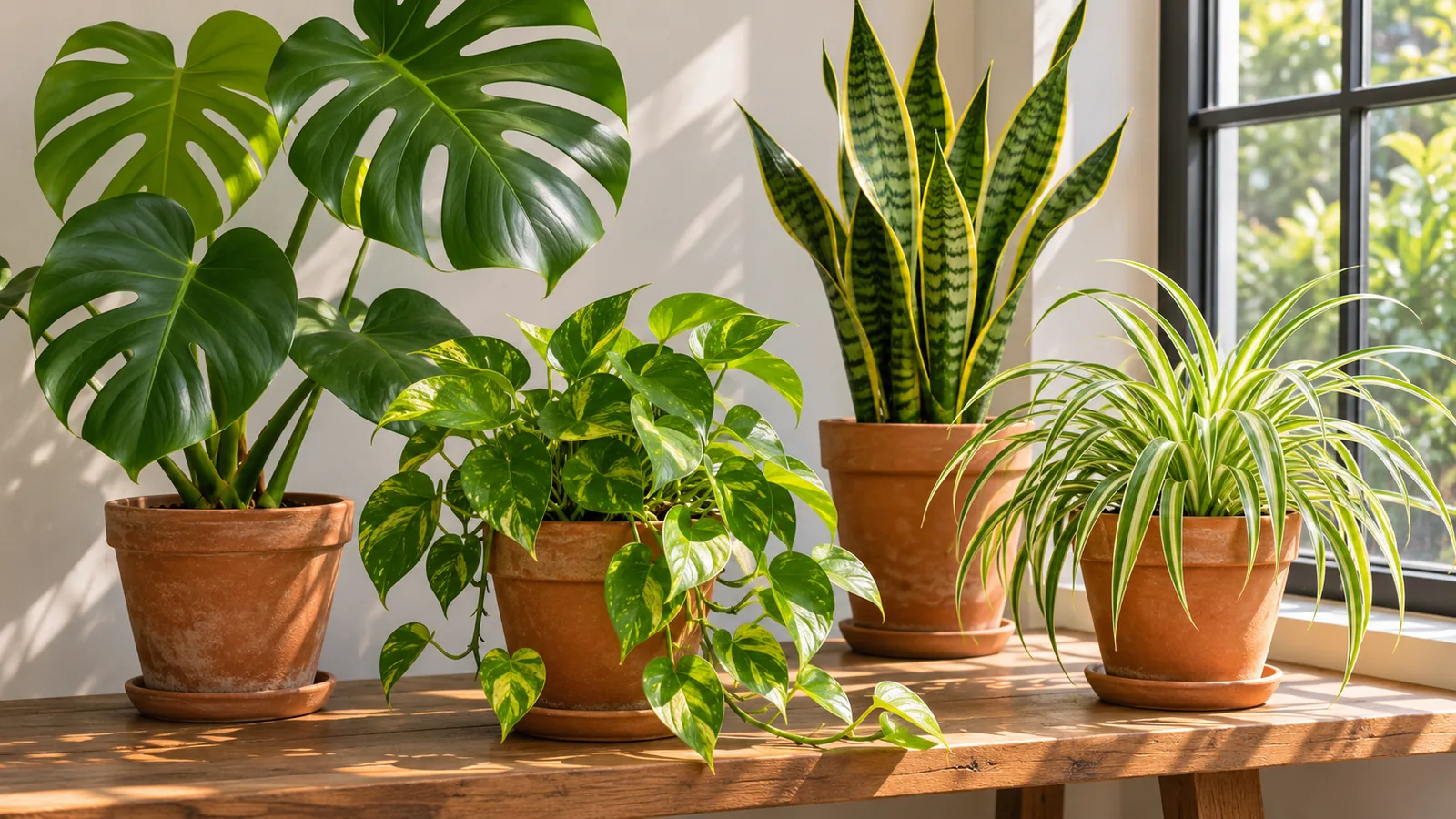
Opposite leaves form pairs at a node. Alternate leaves occur singly at successive nodes. A whorled arrangement has three or more leaves at a node. Look along several nodes because a broken twig can mislead.
Veins may radiate from one point, run in a feather-like pattern from a midrib or appear nearly parallel. Combine venation with margin and arrangement rather than using one feature alone.
| Term | What it means | Where to look |
|---|---|---|
| Simple | One blade | Whole leaf |
| Compound | Several leaflets | Shared stalk |
| Opposite | Pair at a node | Stem |
| Alternate | One at a node | Stem |
| Margin | Leaf edge | Blade perimeter |
Use the terms
0 / 4 answered
1What is the leaf's outer edge?
Answer: Margin. Margin describes the outer edge of the blade.2Two leaves at one node are what arrangement?
Answer: Opposite. Opposite leaves occur as pairs.3Several leaflets on one leaf stalk make what?
Answer: Compound leaf. The entire structure is one compound leaf.4Can a simple leaf have lobes?
Answer: Yes. Lobes do not divide the blade into independent leaflets.
Frequently asked questions
Why describe leaves if I can use an app?
Describing features lets you check an app's suggestion and compare regional sources rather than accepting a guess without evidence.
Write a short leaf sentence
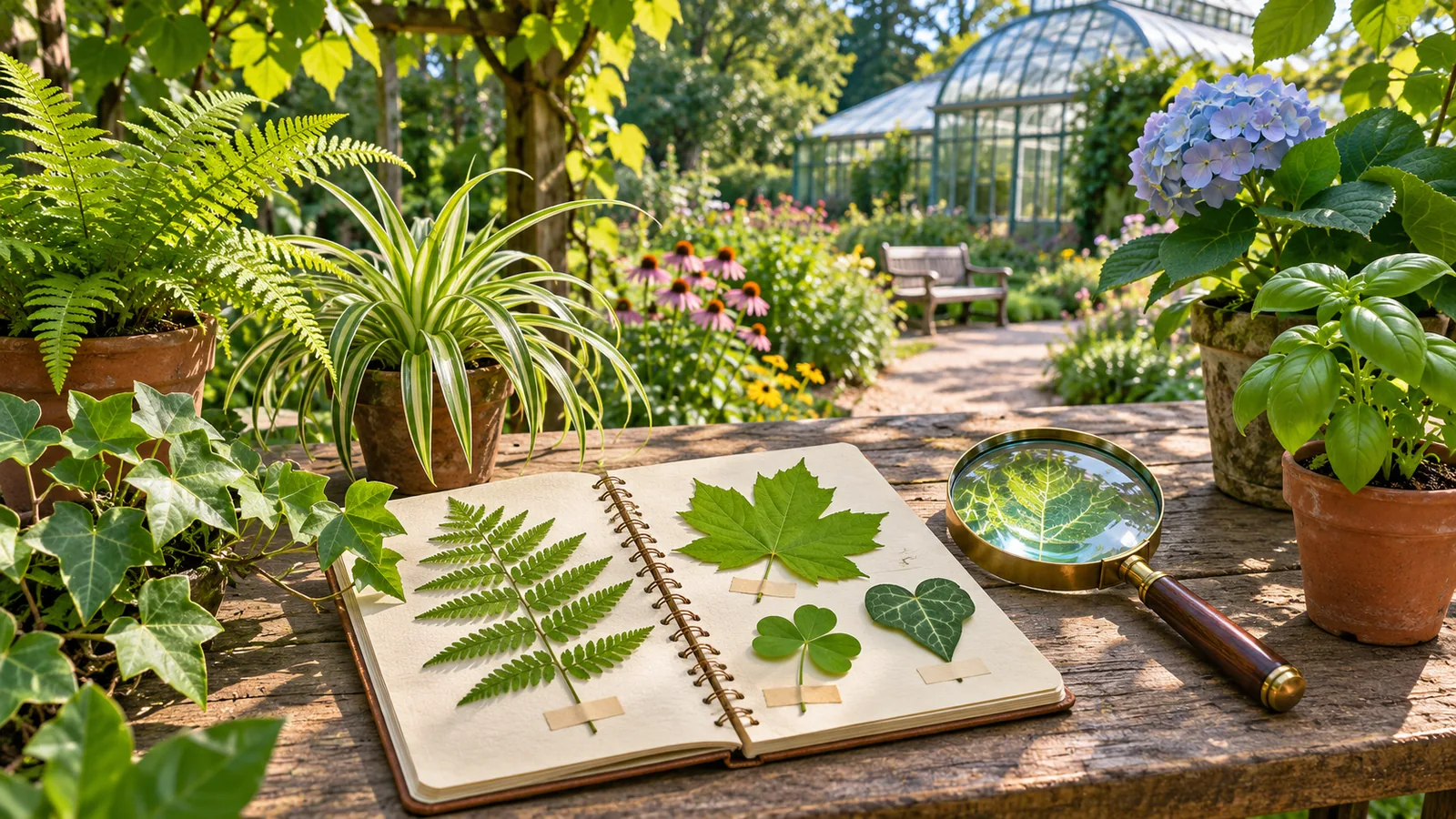
Try: 'alternate, simple, oval leaves with a serrated margin.' Add buds, bark and habitat for a stronger identification.
Check the evidence behind the guide
Use these references to check terminology and pursue a topic in more depth. Photo quizzes help you practise observation; a single picture rarely proves a difficult identification.
When a source describes a broad group, compare its details with the exact species, model or specimen you are studying. Record the feature that supports your answer rather than relying on a name alone.