Indoor plants often arrive with a store label that says only 'tropical foliage'. You can still make a useful first identification by checking how the plant grows and where new leaves appear.
Cultivars and juvenile leaves can look unlike mature examples. Match several traits before deciding, and ask a nursery or botanic garden if an exact species matters.
Climbers: Monstera and pothos
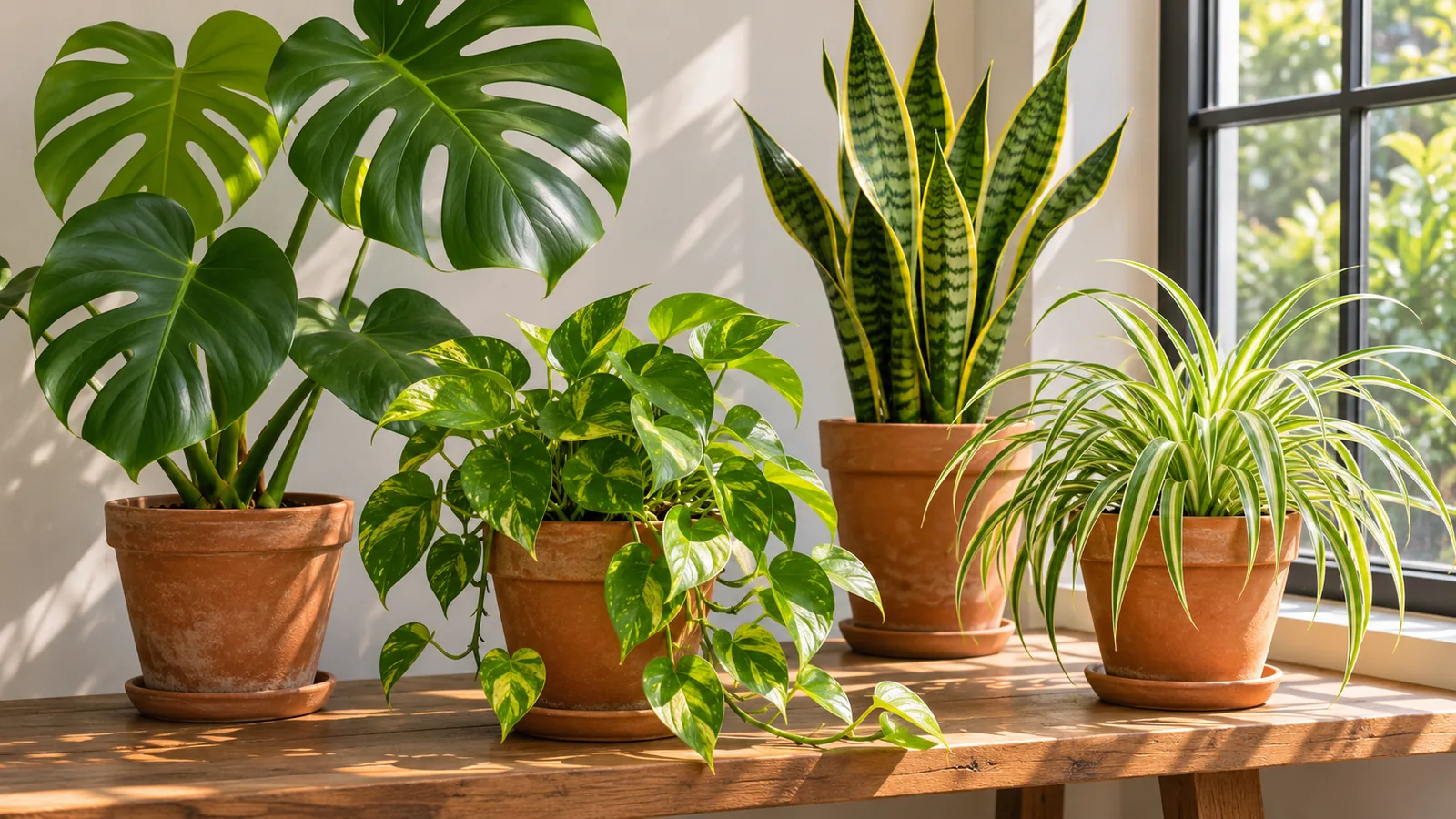
Monstera deliciosa develops large mature leaves with splits and holes called fenestrations. Young leaves may be whole, so size and maturity matter. The plant can climb with aerial roots.
Pothos is a trailing or climbing vine with heart-shaped leaves, often variegated. Its leaves generally stay simpler in everyday indoor conditions, though mature climbing plants can look different.
Upright and arching plants
Snake plant has stiff, sword-shaped leaves growing upward from the base. Spider plant has narrow arching leaves and often sends out long stems carrying small plantlets.
These silhouettes remain useful even when leaf color varies among cultivars. A striped leaf alone is not a species-level answer.
Ferns and succulents
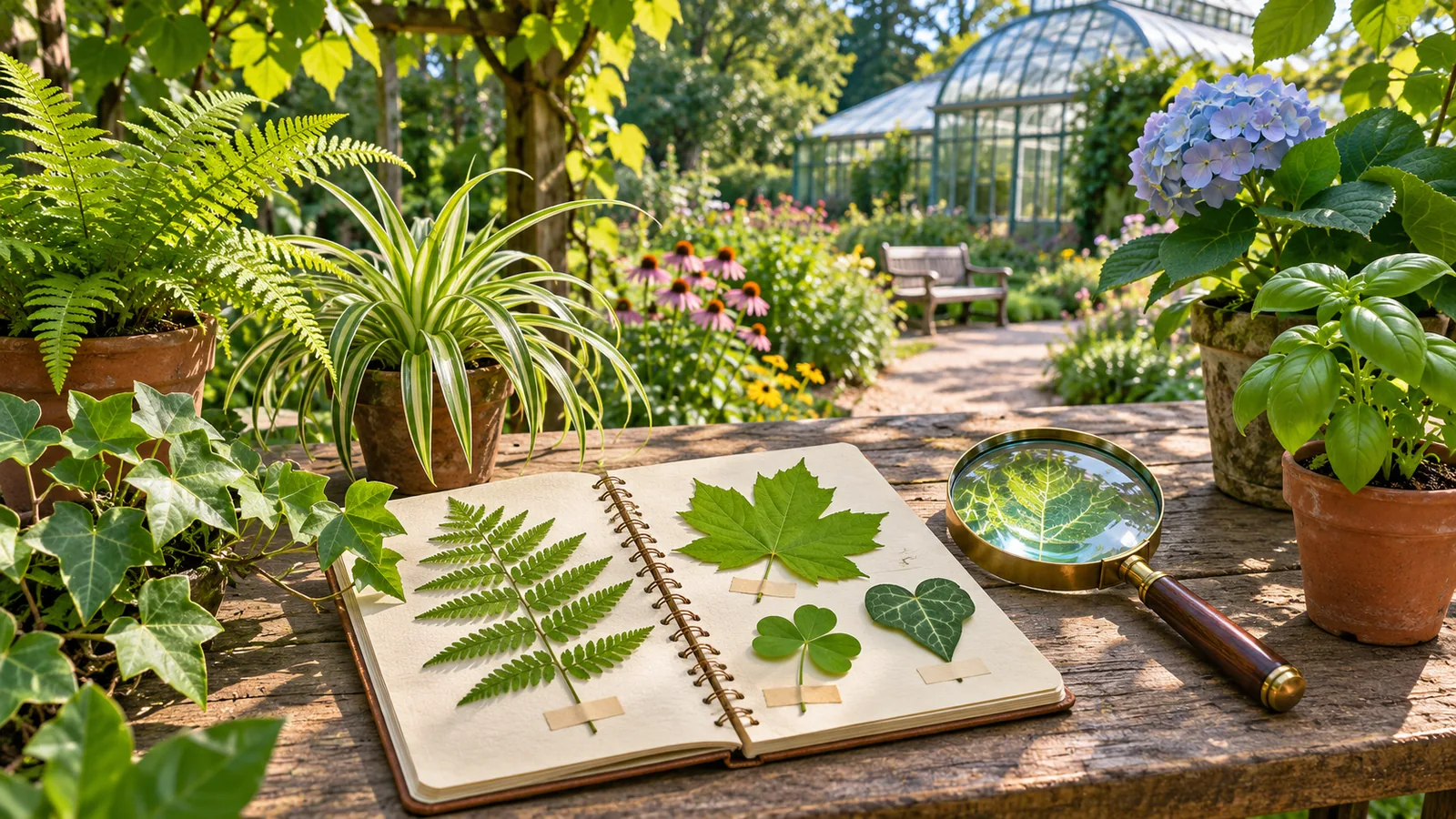
Ferns have fronds and reproduce through spores rather than flowers. Aloes and many other succulents store water in fleshy leaves. Cacti are a particular succulent lineage identified by areoles, which can bear spines or flowers.
Do not assume every thick-leaved plant wants identical care. Identification is the first step; light and watering needs vary by species and growing conditions.
| Plant | First visible clue | Check next |
|---|---|---|
| Monstera | Mature split or perforated leaves | Climbing habit and aerial roots |
| Pothos | Heart-shaped trailing leaves | Vine growth |
| Snake plant | Upright sword leaves | Leaves emerge from base |
| Spider plant | Arching narrow leaves | Plantlets on runners |
Name the growth habit
0 / 4 answered
1Which plant may develop holes in mature leaves?
Answer: Monstera. Fenestrations appear on mature Monstera leaves.2Which plant commonly sends out plantlets on runners?
Answer: Spider plant. Spider plants often reproduce via small offsets.3Which plant has stiff upright sword leaves?
Answer: Snake plant. The upright leaf form is its strongest quick clue.4Why might a young Monstera lack holes?
Answer: Leaves change with maturity. Juvenile leaves often have an unbroken blade.
Frequently asked questions
Can leaf color alone identify a houseplant?
No. Variegated cultivars and growing conditions can change color; shape and growth habit are more reliable first clues.
Look at the whole plant
Record whether it climbs, trails, stands upright or forms offsets. Pair that with leaf structure before trusting a label.
Check the evidence behind the guide
Use these references to check terminology and pursue a topic in more depth. Photo quizzes help you practise observation; a single picture rarely proves a difficult identification.
When a source describes a broad group, compare its details with the exact species, model or specimen you are studying. Record the feature that supports your answer rather than relying on a name alone.