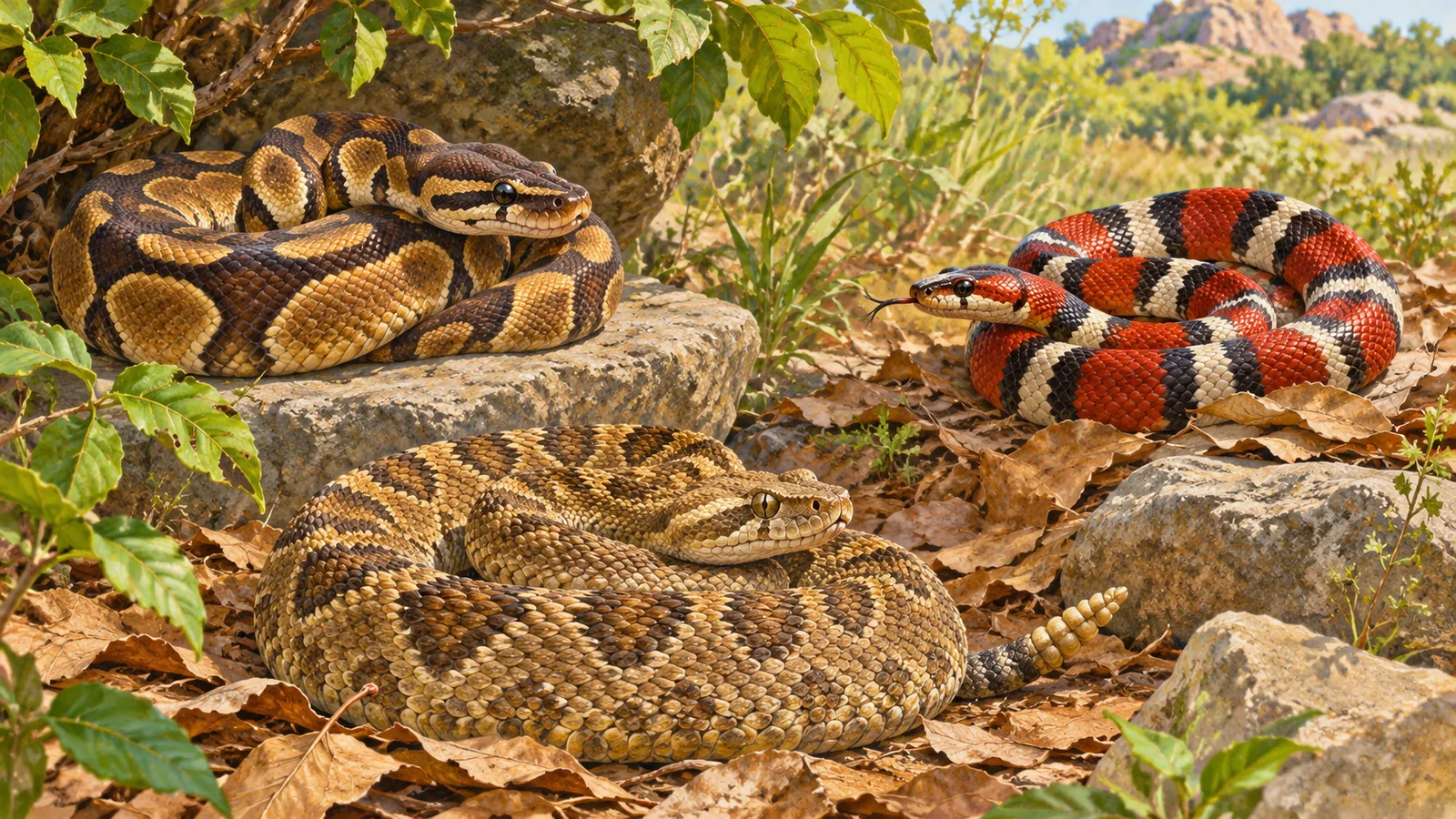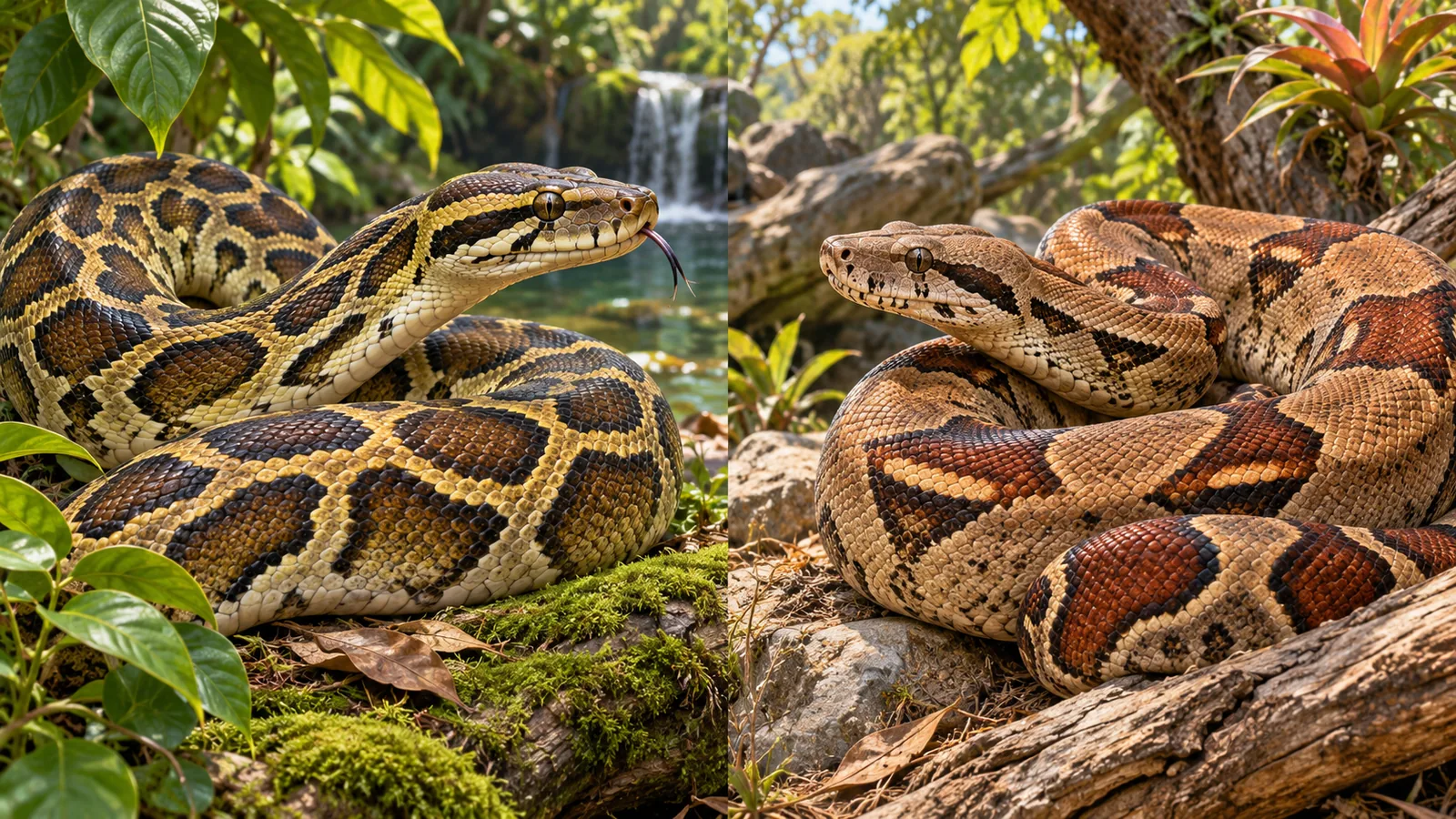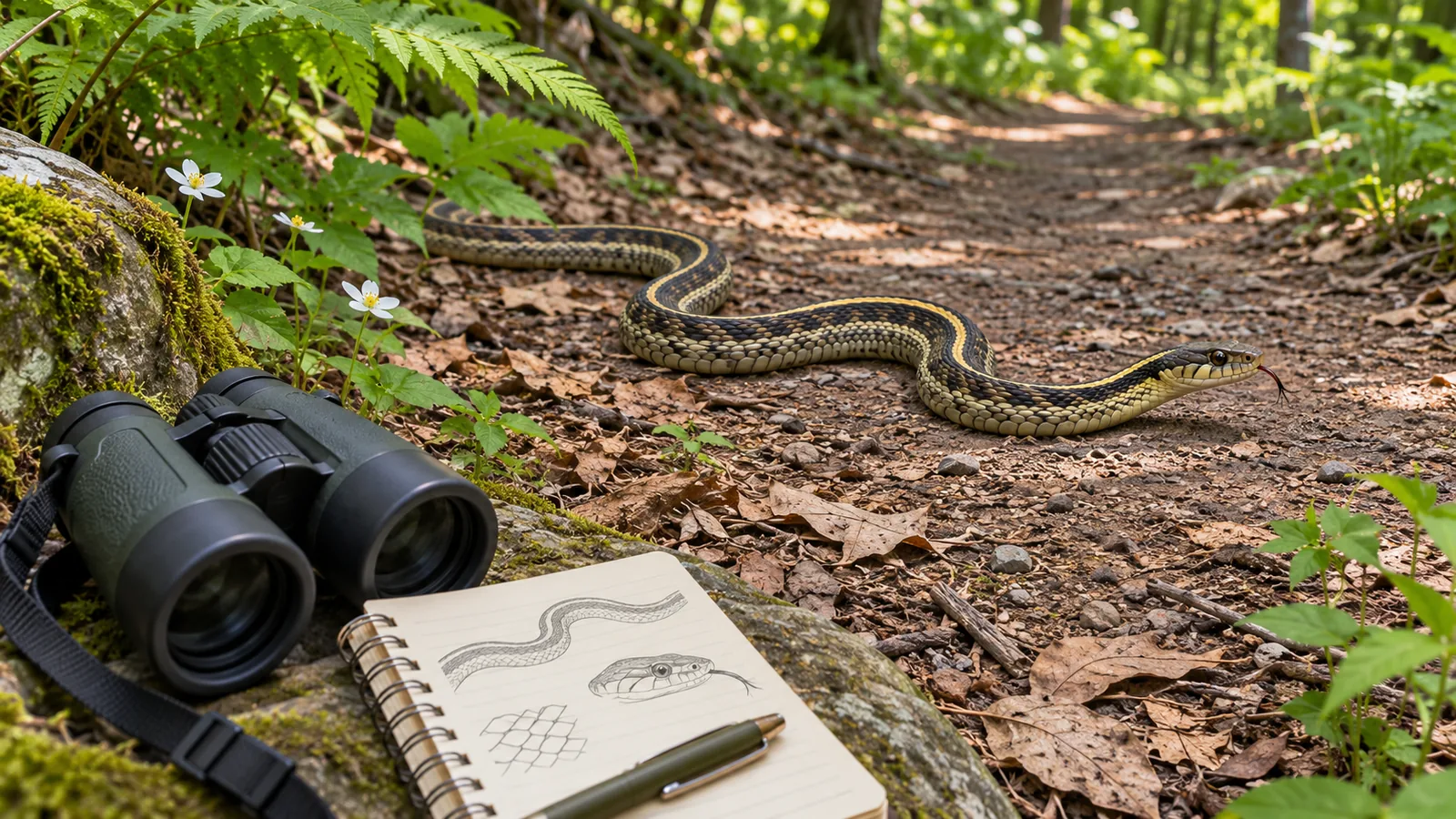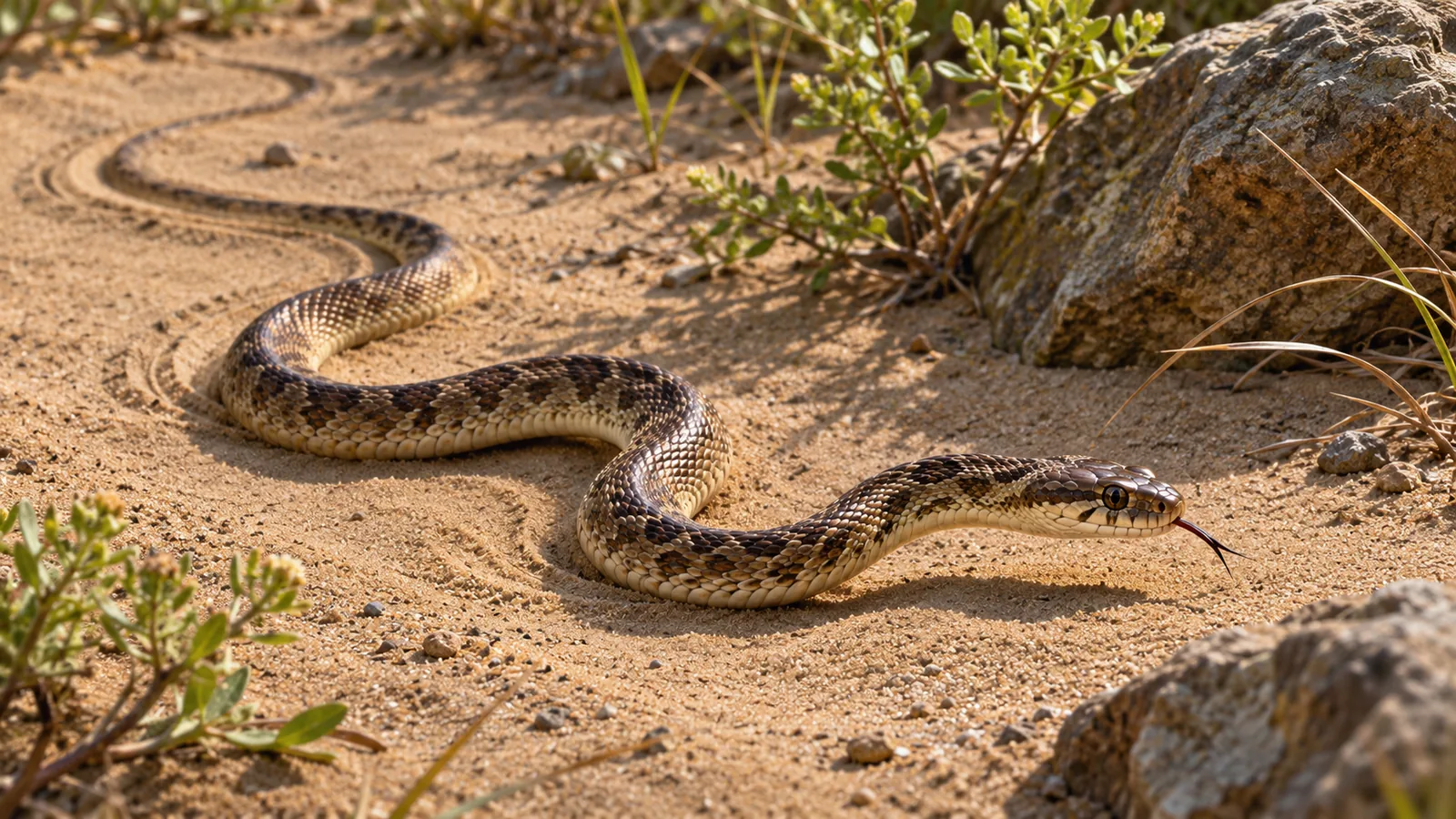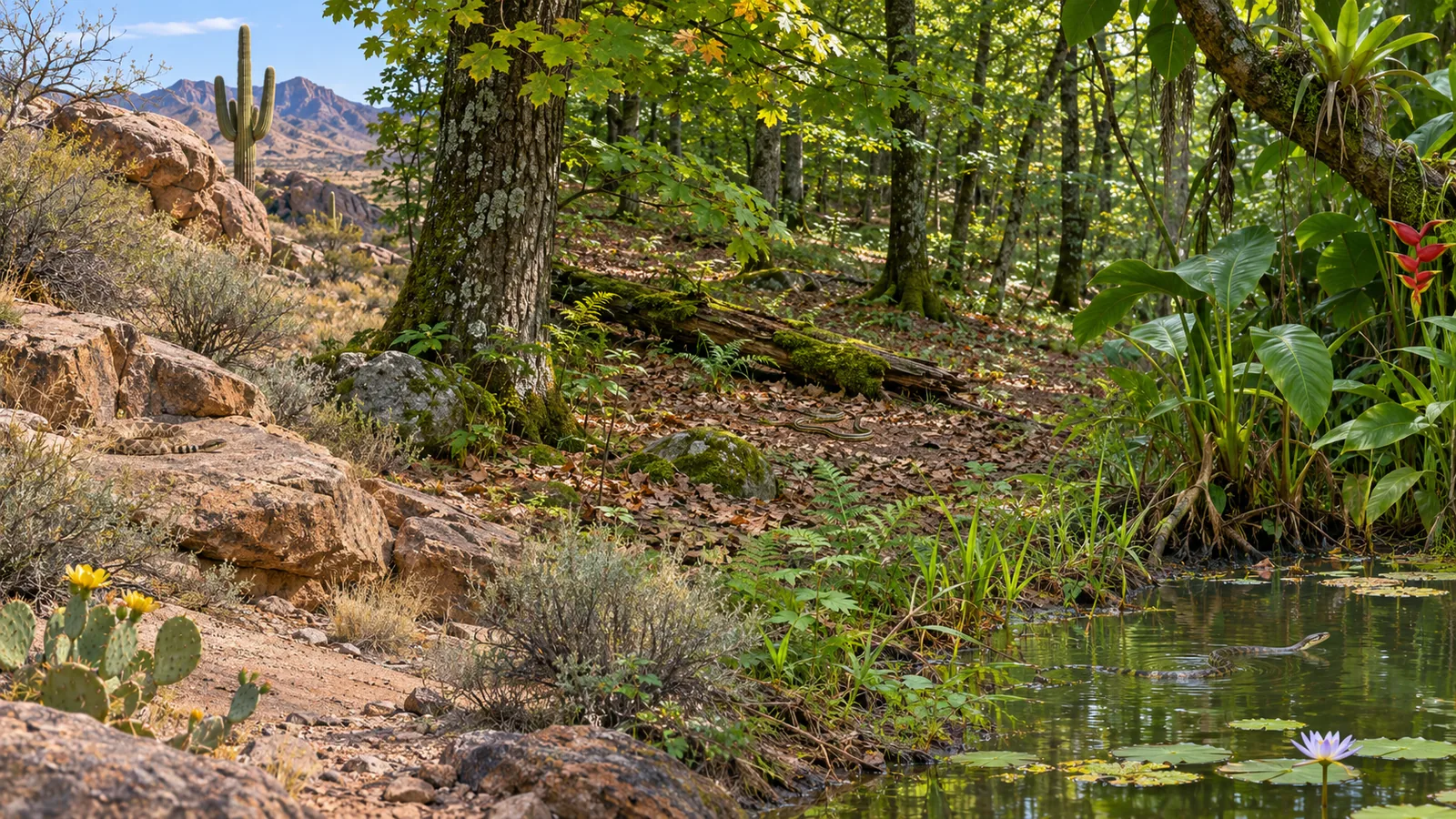
There is no single snake habitat. Some species burrow through sand, others spend much of their lives in trees, and some are adapted to water. Habitat can be a strong learning clue when paired with a verified region.
The examples here describe tendencies, not a guarantee that a given snake belongs to a particular species. Wild animals move across habitat edges.
Dry ground and desert edges
In dry habitats, snakes may use rock crevices, burrows and shaded surfaces to avoid heat. Sand boas are associated with loose ground and can move beneath the surface. Some desert snakes use sidewinding on sand.
A desert photograph can be deceptive: grassland, scrub and rocky slopes may sit close together, and the same species may use more than one microhabitat.
Woodland and trees
Leaf litter, logs and branches offer shelter and hunting opportunities. Arboreal snakes have bodies and behavior suited to climbing; green tree pythons are a familiar example. Other snakes remain mostly on the forest floor.
Camouflage is not only about color. A still animal with a broken outline can disappear among leaves and shadow.
Wetlands and open water
Green anacondas are strongly associated with South American waterways. Water snakes and many other species use riverbanks and marshes, where prey and cover are available.
Marine snakes often have flattened tails for swimming and different ways of using saltwater habitats. A sea snake, an estuary visitor and a freshwater snake have very different lives despite all being seen near water.
| Habitat | Possible adaptation | Example |
|---|---|---|
| Loose sand | Burrowing or sidewinding | Sand boa |
| Trees | Climbing and camouflage | Green tree python |
| Fresh water | Swimming and ambush | Green anaconda |
| Sea | Flattened swimming tail | Sea snakes |
Match habitat to adaptation
0 / 4 answered
1Which snake is associated with South American waterways?
Answer: Green anaconda. Green anacondas spend much time in or near water.2What can a flattened tail help a sea snake do?
Answer: Swim. A paddle-like tail aids propulsion in water.3Which snake is associated with burrowing through loose substrate?
Answer: Sand boa. Sand boas are adapted to life in loose ground.4Can habitat alone prove a species identification?
Answer: No. Many species share habitats, and individuals cross boundaries.
Frequently asked questions
Are snakes only found in warm climates?
No. Snakes occupy varied climates, though their activity changes with temperature and species. Local field guides give the best regional picture.
Match place and body
Learn one habitat adaptation at a time, then use a regional source to check which species actually occur there.
Check the evidence behind the guide
Use these references to check terminology and pursue a topic in more depth. Photo quizzes help you practise observation; a single picture rarely proves a difficult identification.
When a source describes a broad group, compare its details with the exact species, model or specimen you are studying. Record the feature that supports your answer rather than relying on a name alone.