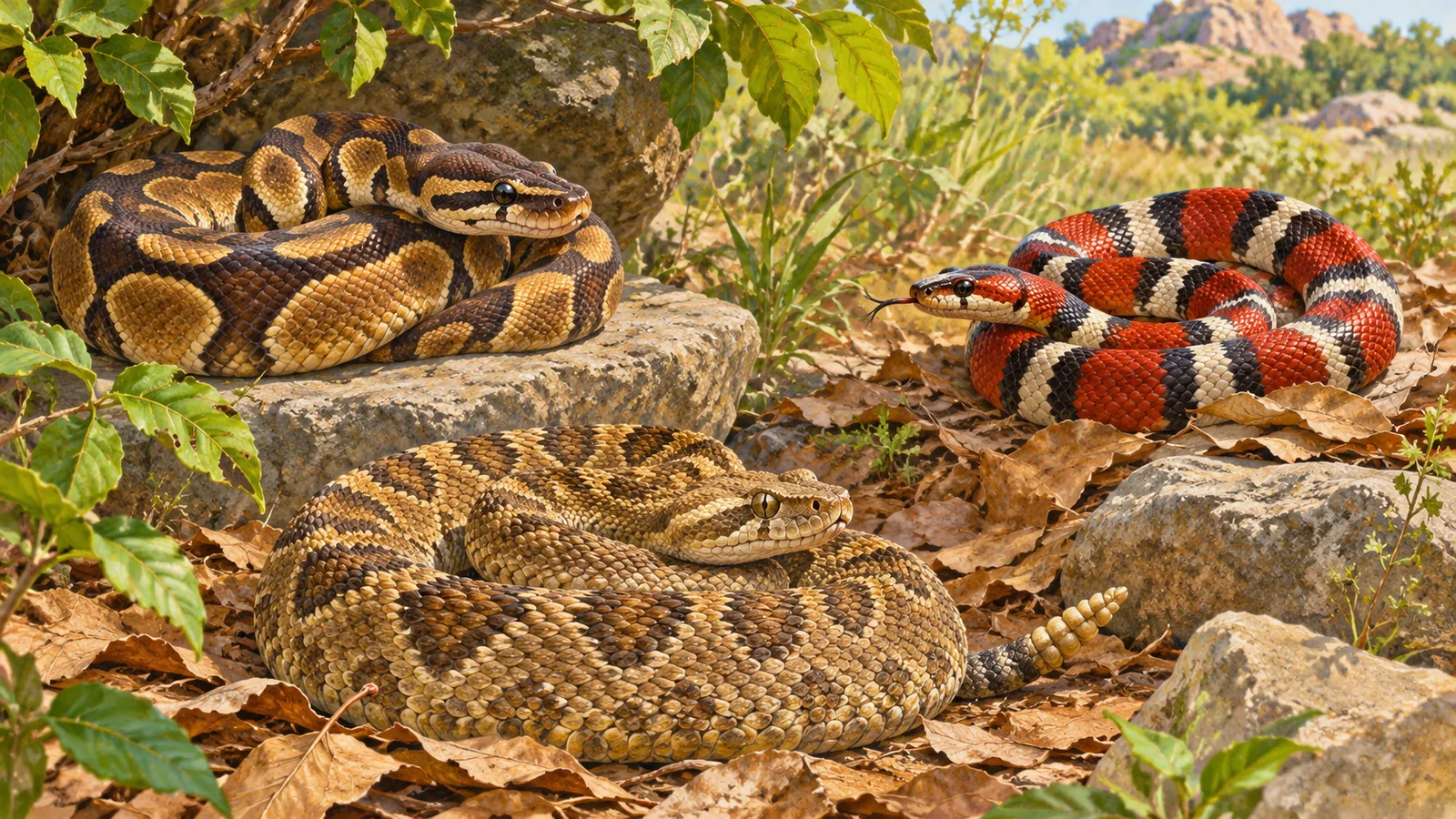
Snakes live in deserts, forests, grasslands and the sea. A species name often points to a habitat or body feature, but a wild animal can look different from a textbook photograph.
This quiz asks twenty-five questions about well-known species and groups. It is designed for learning, not for deciding whether a snake you meet is safe. Keep your distance from wild snakes and use local experts for real-world identification.
Quick takeaways
- Learn habitat and body plan together.
- Common names can be imprecise.
- Never infer safety from color, head shape or a quiz result.
Constrictors and familiar species
Begin with large boas, pythons and familiar North American snakes.
1Which snake is famous for a tail rattle used in warning displays?
Answer: Rattlesnake. Rattlesnakes vibrate specialized tail segments; young snakes may have only a small button.2Which very large snake is native to tropical South American waterways?
Answer: Green anaconda. Green anacondas are large boas associated with water.3Which snake is a large constrictor native to Central and South America?
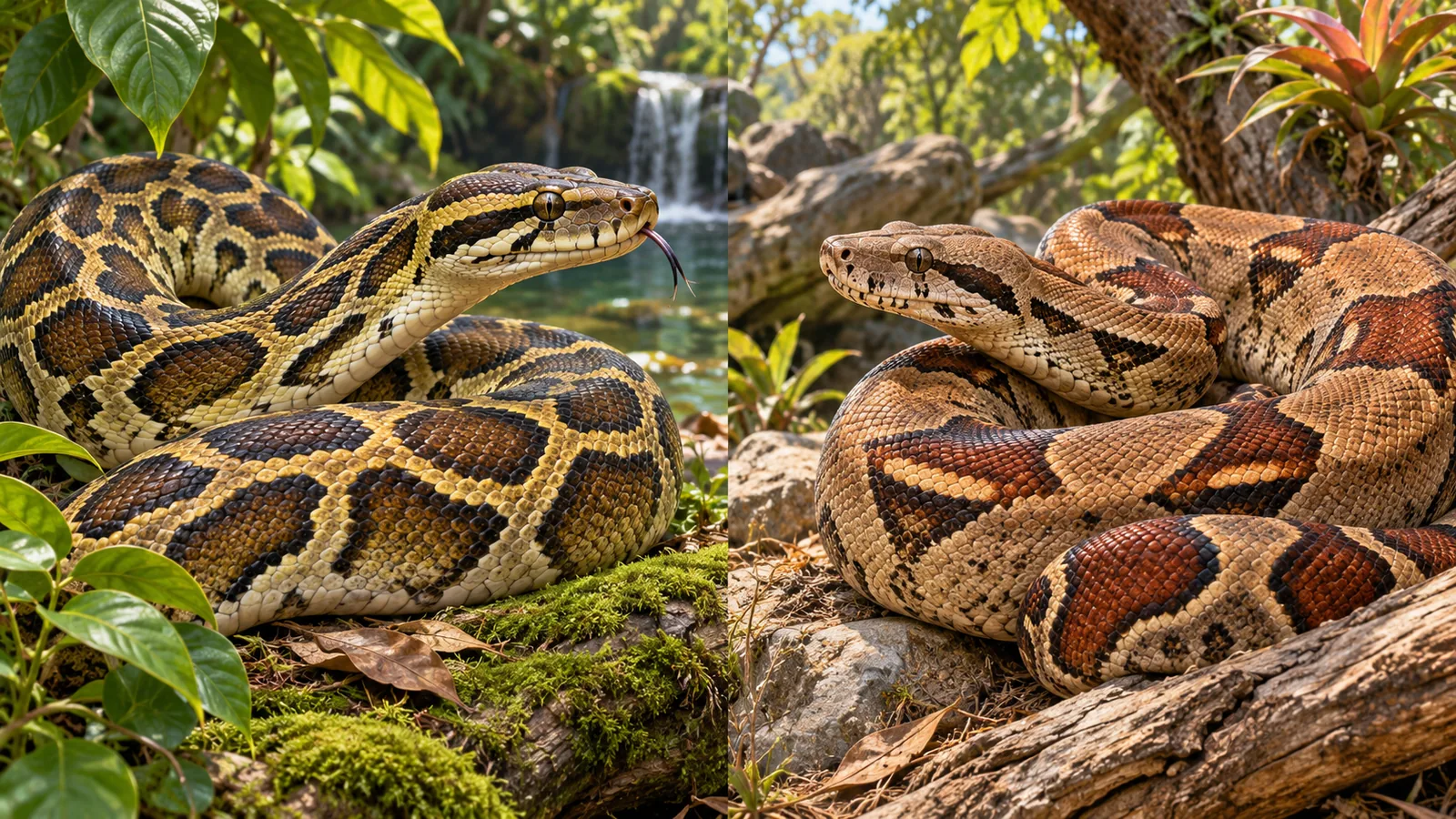
Answer: Boa constrictor. Boa constrictors occur across varied habitats in Central and South America.4Which python is named for its net-like pattern?
Answer: Reticulated python. Reticulated refers to its distinctive network-like markings.5Which snake is known for curling into a tight ball when threatened?
Answer: Ball python. The defensive posture gave the ball python its common name.6Which snake can raise and spread a hood?
Answer: Cobra. Several cobra species flatten the neck into a visible hood.7Which cobra feeds heavily on other snakes?
Answer: King cobra. The king cobra is notable for eating other snakes; it is not a true Naja cobra.8Which snake is commonly associated with warm North American grasslands and gardens?
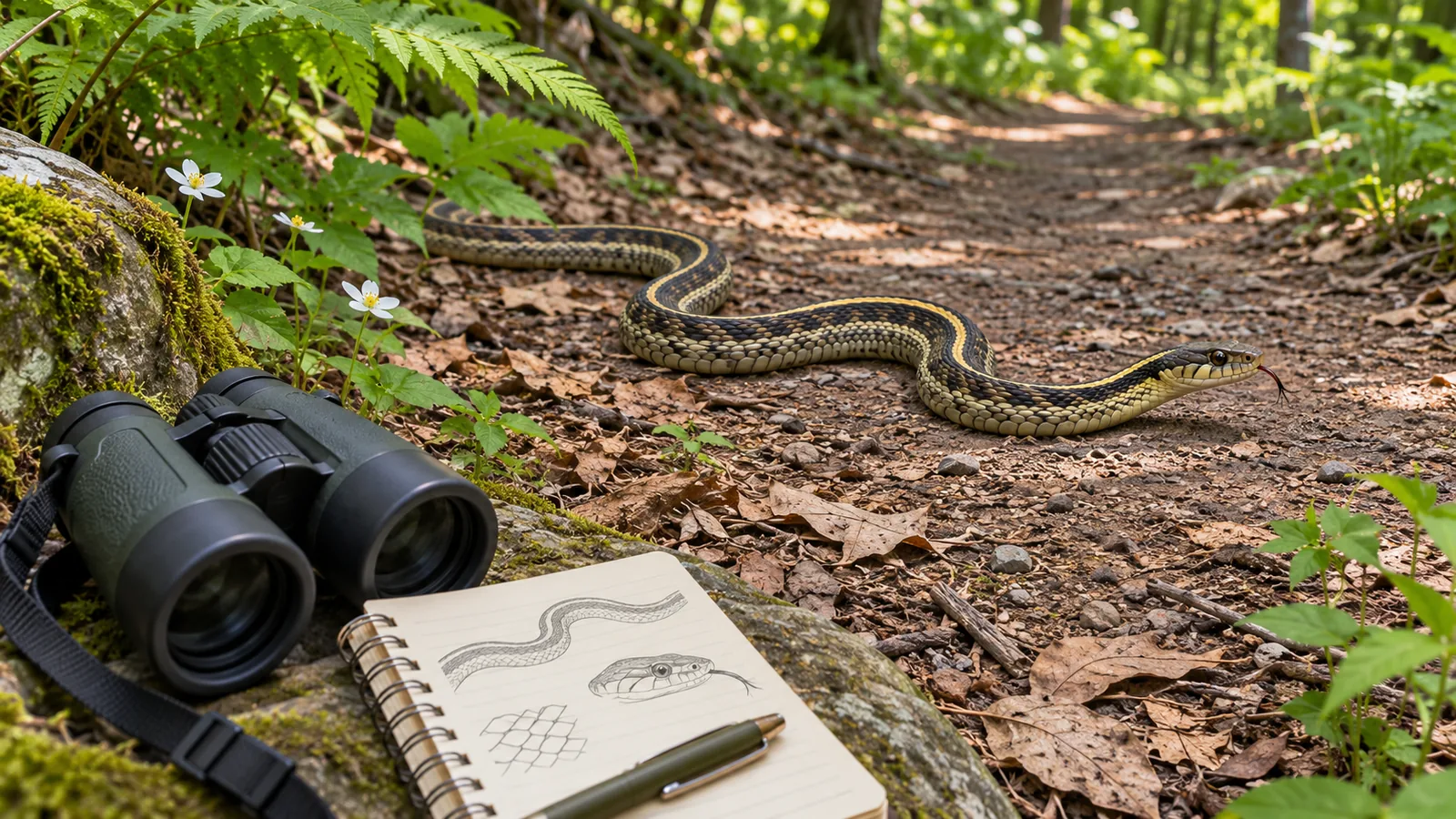
Answer: Garter snake. Garter snakes are widespread in North America, though exact species and habitats vary.9Which North American snake often has red or orange saddle-shaped markings?
Answer: Corn snake. Corn snakes commonly show reddish blotches, but color alone never confirms wild identification.
Habitat and adaptations
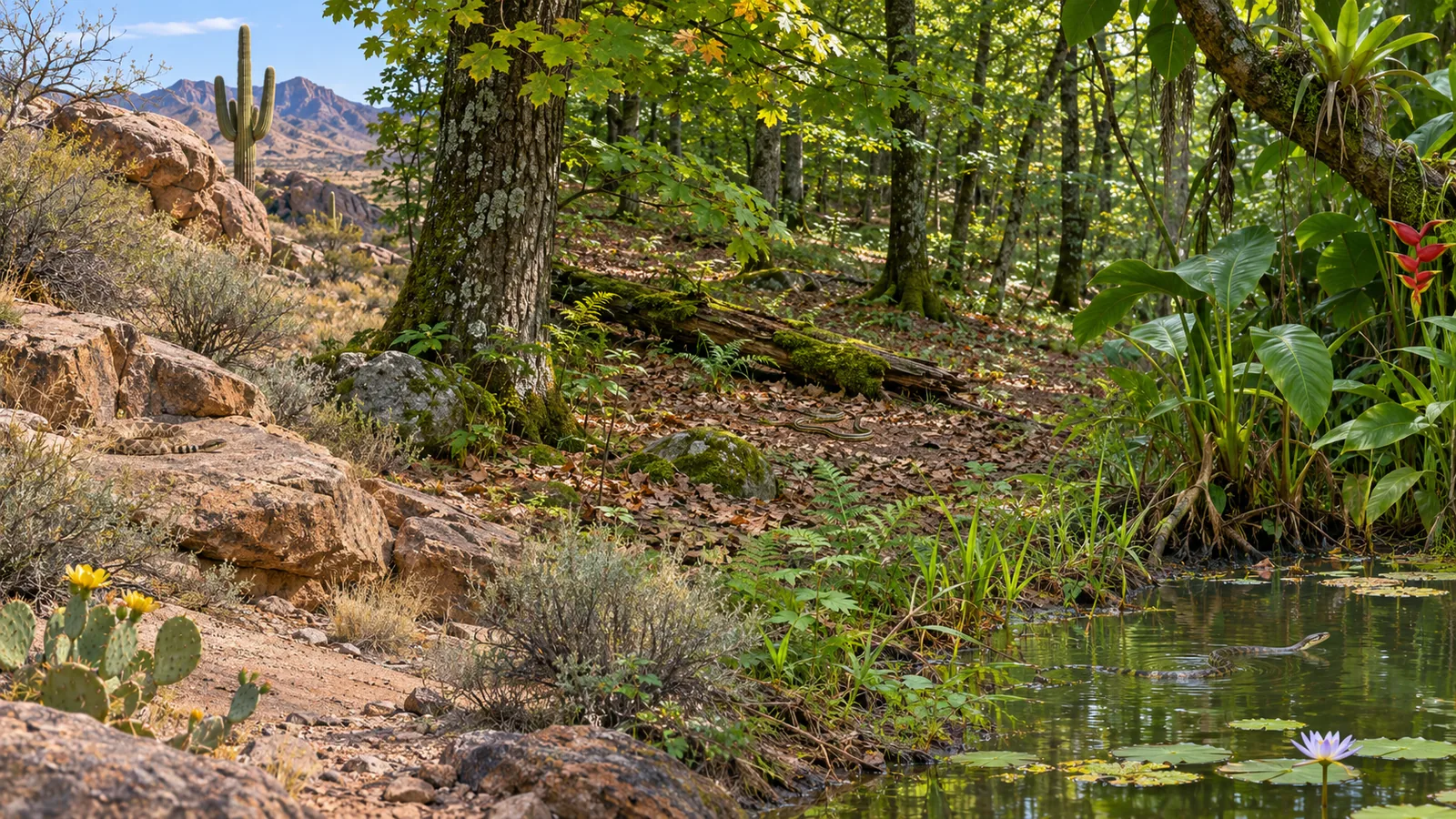
A habitat clue can narrow a family, but it cannot confirm a wild snake by itself.
10Which venomous snake has a heavy body and very long fangs?
Answer: Gaboon viper. The Gaboon viper is a large, stout African viper with long fangs.11Which snake is adapted to marine life and has a paddle-like tail?
Answer: Sea snake. Many sea snakes have laterally flattened tails suited to swimming.12Which snake is associated with bamboo-green arboreal camouflage?
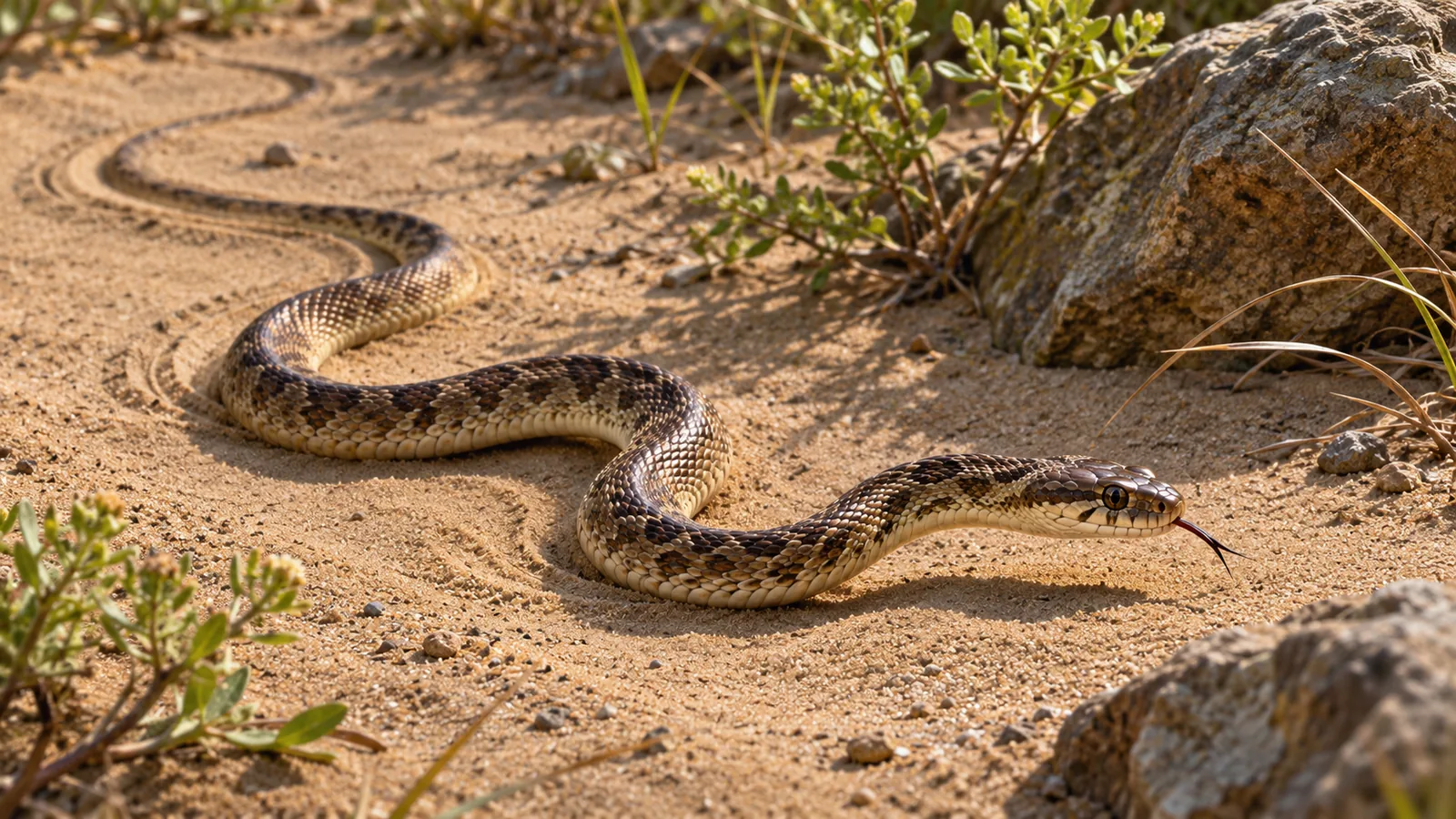
Answer: Green tree python. Green tree pythons spend much time in trees and can be bright green as adults.13Which snake is well known for living in arid sandy habitats?
Answer: Sand boa. Sand boas are adapted to digging and moving through loose substrate.14Which North American snake is sometimes mistaken for venomous lookalikes because of its red bands?
Answer: Scarlet kingsnake. Band patterns vary, so do not use a rhyme to judge a wild snake's safety.15Which constrictor has a distinctive yellow-and-brown blotched pattern and is native to South Asia?
Answer: Indian python. The Indian python is a large South Asian python; patterns vary by individual.16Which snake group includes many pit vipers?
Answer: Rattlesnakes. Rattlesnakes belong to the pit viper lineage.17Which snake can be slender and vine-like in arboreal habitats?
Answer: Vine snake. Vine snakes have elongated bodies suited to vegetation.18Which snake is commonly called a water moccasin in North America?
Answer: Cottonmouth. Cottonmouth is a common name for a North American pit viper.
Families and safe observation
Classification explains relationships. Finish with the one field rule that matters most.
19Which small burrowing snake may resemble a worm at first glance?
Answer: Blind snake. Blind snakes often have smooth, cylindrical bodies and tiny eyes.20Which snake's name describes its unusual feeding specialization?
Answer: Egg-eating snake. African egg-eating snakes are adapted to swallowing eggs; a common name can describe behavior.21Which snake family includes boas?
Answer: Boidae. Boidae is the boa family; pythons belong to Pythonidae.22Which snake family includes pythons?
Answer: Pythonidae. Pythons form a separate family from boas.23Which snake group includes cobras and many coral snakes?
Answer: Elapids. Cobras and coral snakes belong to Elapidae.24Which snake group includes vipers and rattlesnakes?
Answer: Vipers. Rattlesnakes are part of Viperidae.25What should you do with an unfamiliar wild snake?
Answer: Keep distance and contact local experts. A learning quiz cannot establish whether an individual wild snake is dangerous.
Five final snake facts
0 / 5 answered
1Do pythons and boas belong to the same family?
Answer: No. They are separate snake families despite similarities in constriction.2What does a sea snake's flattened tail help it do?
Answer: Swim. A paddle-like tail assists movement in water.3Which group contains rattlesnakes?
Answer: Vipers. Rattlesnakes are pit vipers.4Why is a color rhyme a poor field safety rule?
Answer: Patterns vary and lookalikes exist. Regional variation makes simple visual rules unsafe.5What is the safest response to an unknown wild snake?
Answer: Give it space. Observe from a distance and contact local professionals if help is needed.
Frequently asked questions
Can a photo quiz tell me if a snake is venomous?
No. Color, angle and regional lookalikes can mislead. Treat an unfamiliar wild snake as an animal to leave alone and contact local experts if necessary.
Study the animal, respect the distance
Connect each species to its habitat and family. In the wild, observe without approaching or handling an unknown snake.
Check the evidence behind the guide
Use these references to check terminology and pursue a topic in more depth. Photo quizzes help you practise observation; a single picture rarely proves a difficult identification.
When a source describes a broad group, compare its details with the exact species, model or specimen you are studying. Record the feature that supports your answer rather than relying on a name alone.