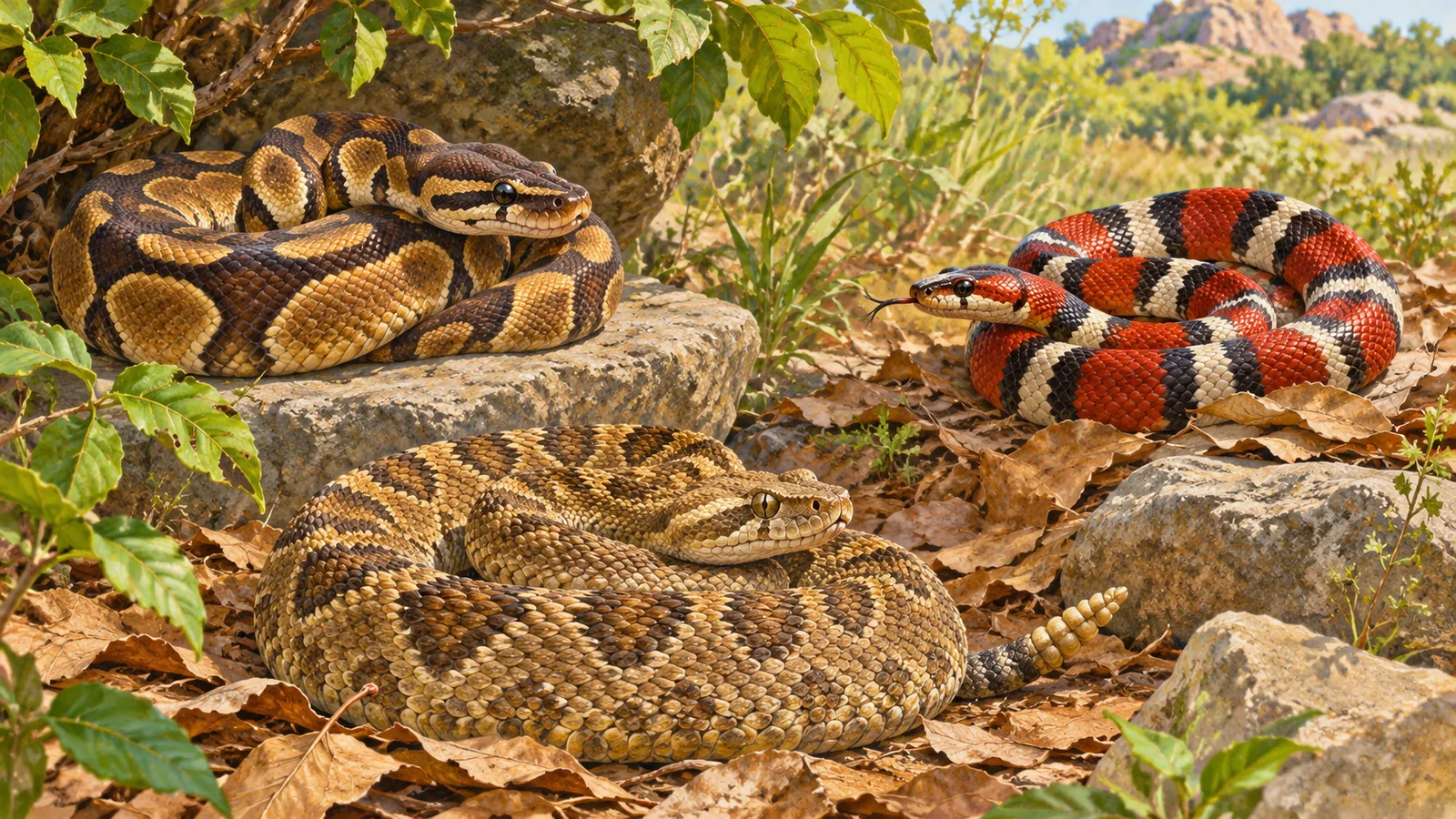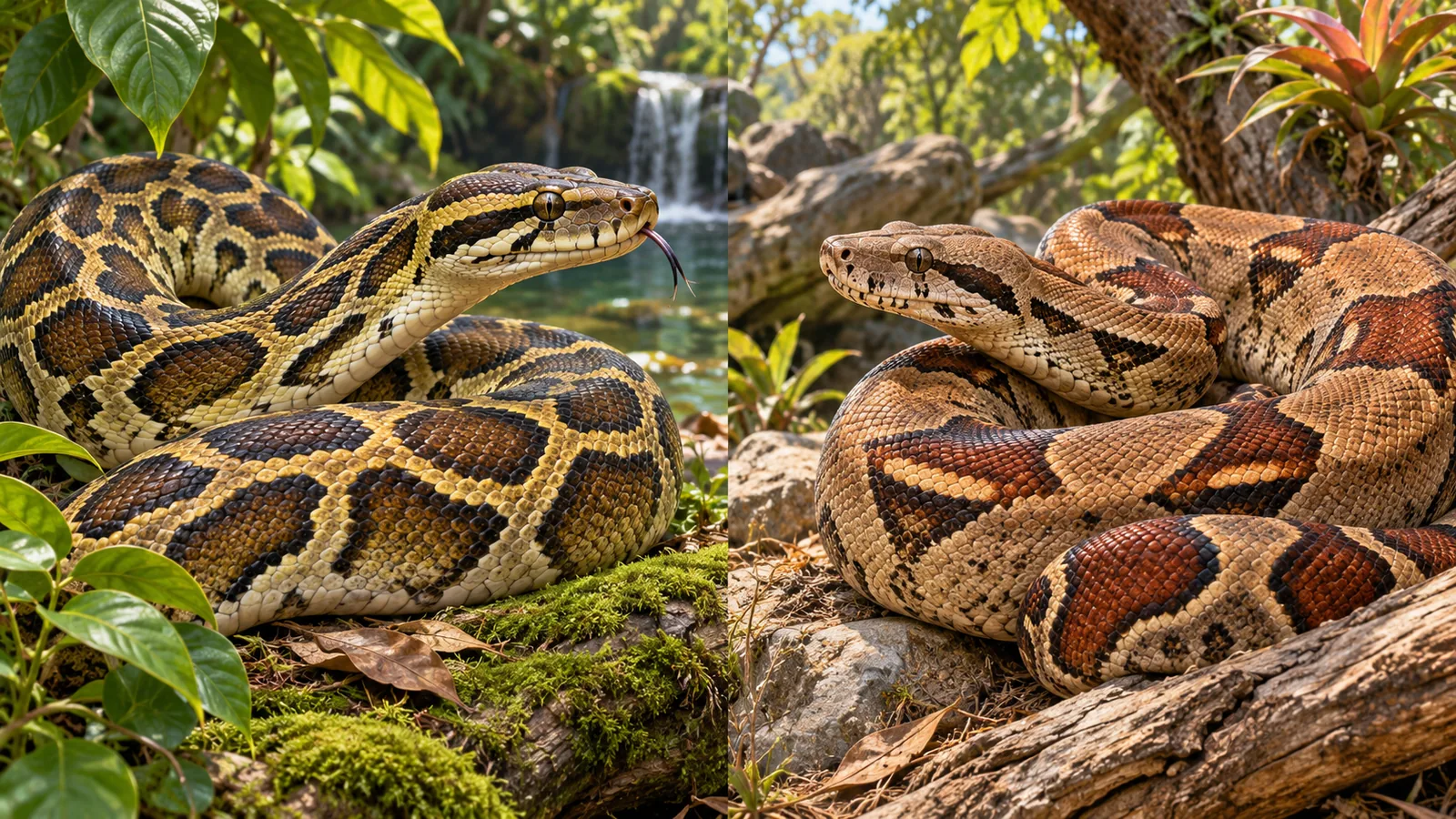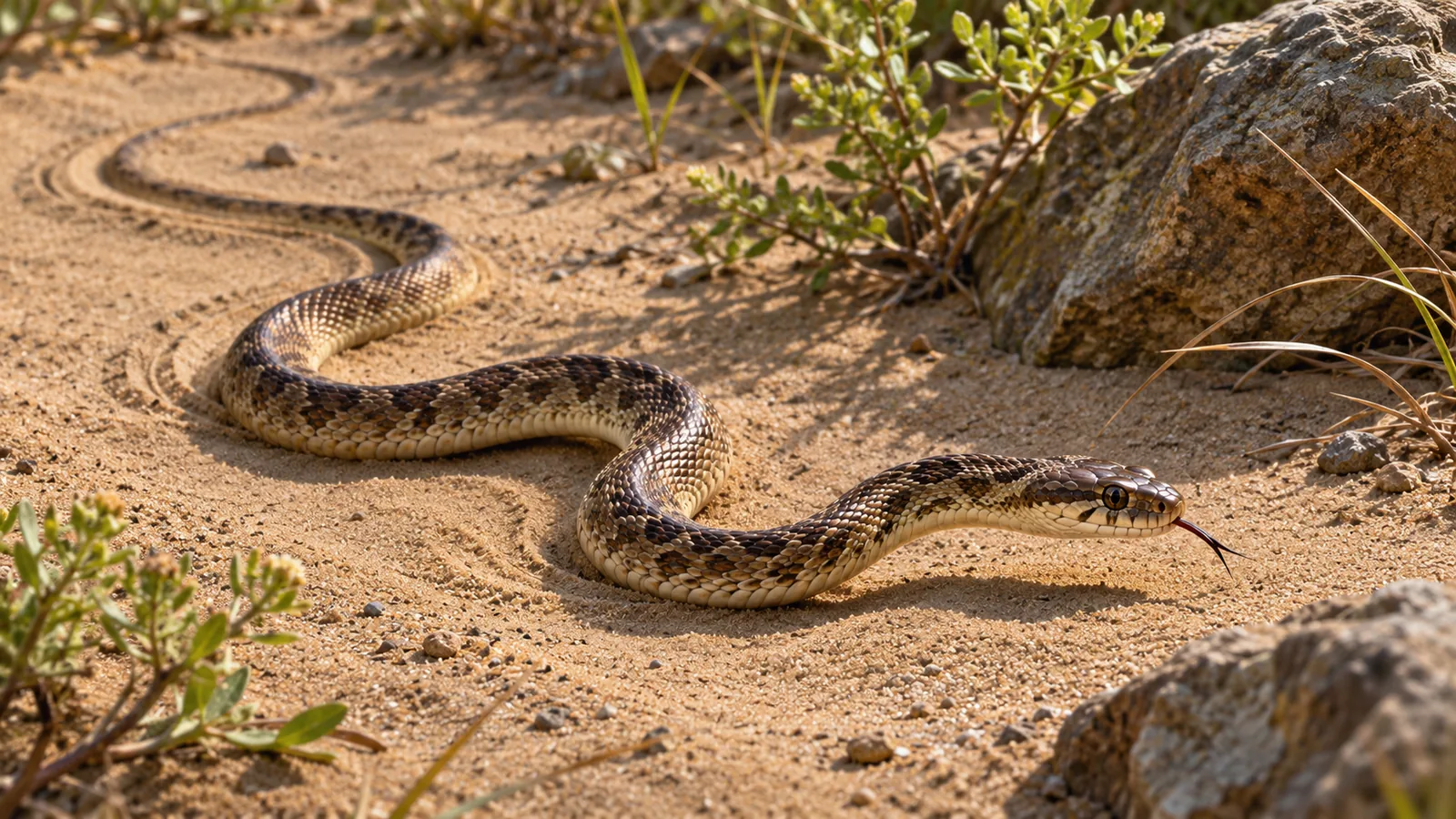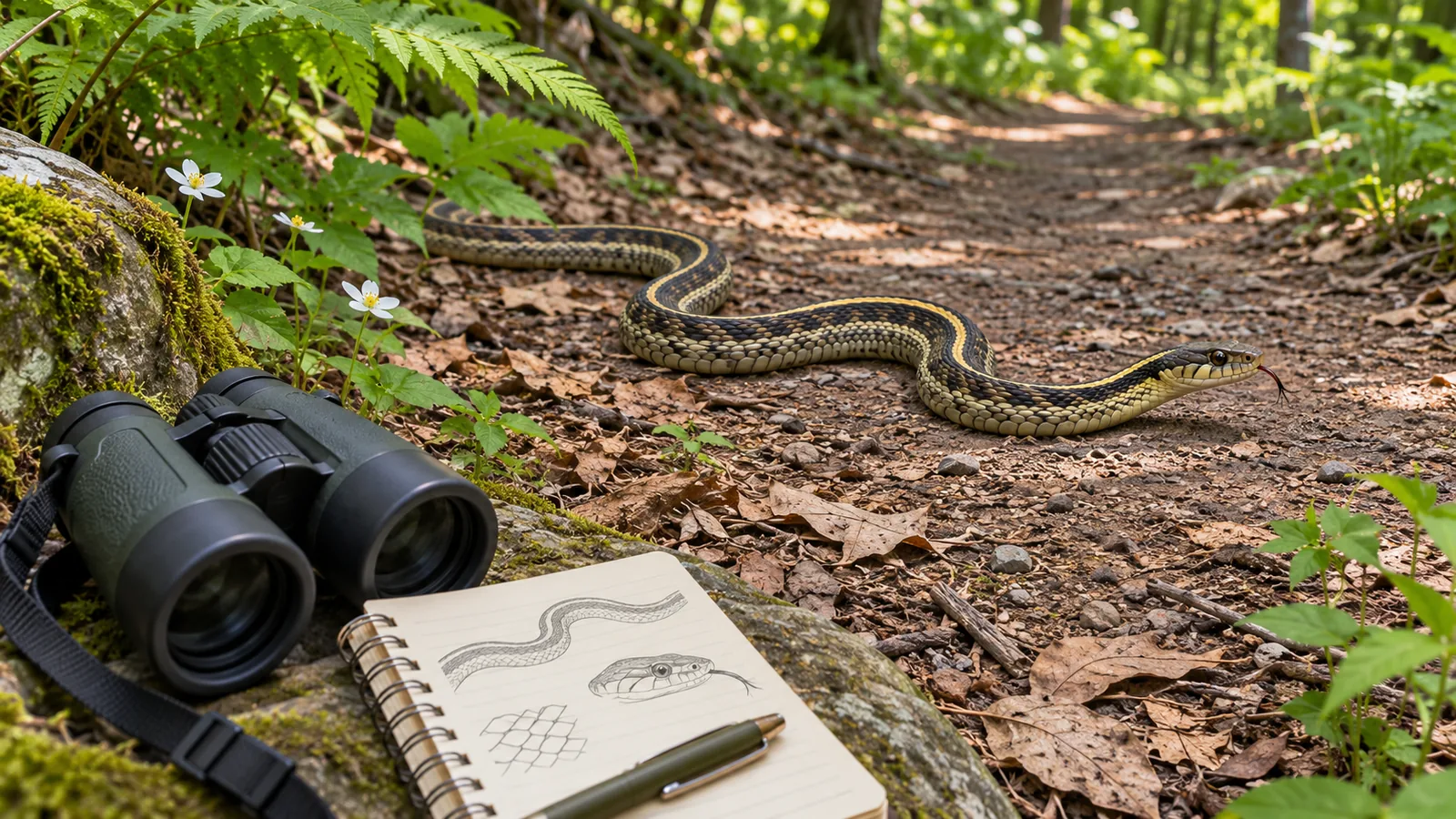
A single photo can teach you what a species looks like. It cannot reliably tell you how to act around an unknown snake in front of you. Good identification study starts with observation and ends with a checked source.
Use this as a learning method for photographs and museum specimens. Outdoors, keep your distance, do not handle an unfamiliar snake and seek qualified local help if a snake creates a problem.
Start with a verified region
Find an authoritative field guide for the exact place where the photograph was taken. A snake common in one continent may not occur naturally in another. Region narrows the candidate list before you compare colors.
Check whether a population may be introduced and whether the image's location is trustworthy. A social post without a location offers less evidence than a documented observation.
Compare several features together
Study body proportions, scale pattern, head markings, tail and habitat. Look for several traits that agree with a species account. Lighting, age and variation can change apparent color.
Avoid rules such as 'triangular head means venomous' or a rhyme about band colors. Such shortcuts fail across regions and species and are not safety rules.
Record uncertainty and seek confirmation
Write down what is visible and what is missing. A distant image might show overall pattern but hide the scales or head details needed for a close distinction. It is better to stop at 'possible genus' than invent certainty.
For a wildlife observation, use a local natural-history authority or qualified herpetologist. A quiz app is for practice, not a field safety decision.
| Evidence | Useful for study | Limit |
|---|---|---|
| Region | Narrows candidates | Introduced species exist |
| Pattern | Shows repeated markings | Age and light can alter appearance |
| Single photo | Records visible features | May hide decisive anatomy |
Check the method
0 / 4 answered
1What should you verify first for a photo of an unknown snake?
Answer: Location and regional species list. Range is a powerful first filter when the location is reliable.2Is head shape alone a safe venom test?
Answer: No. Many species and postures make that shortcut unreliable.3What is an honest result from a poor photo?
Answer: Uncertain identification. A blurry image may lack the features needed for certainty.4What should you do around an unfamiliar wild snake?
Answer: Keep distance. Give the animal space and ask local experts if intervention is needed.
Frequently asked questions
Can I use Snakes Quiz to identify a snake outdoors?
Use it to learn species from curated photos. Do not use a quiz result to judge a wild snake's safety or decide to handle it.
Be precise about what you know
Note the region and several visible traits; name uncertainty when evidence is missing. Keep wildlife observation at a safe distance.
Check the evidence behind the guide
Use these references to check terminology and pursue a topic in more depth. Photo quizzes help you practise observation; a single picture rarely proves a difficult identification.
When a source describes a broad group, compare its details with the exact species, model or specimen you are studying. Record the feature that supports your answer rather than relying on a name alone.