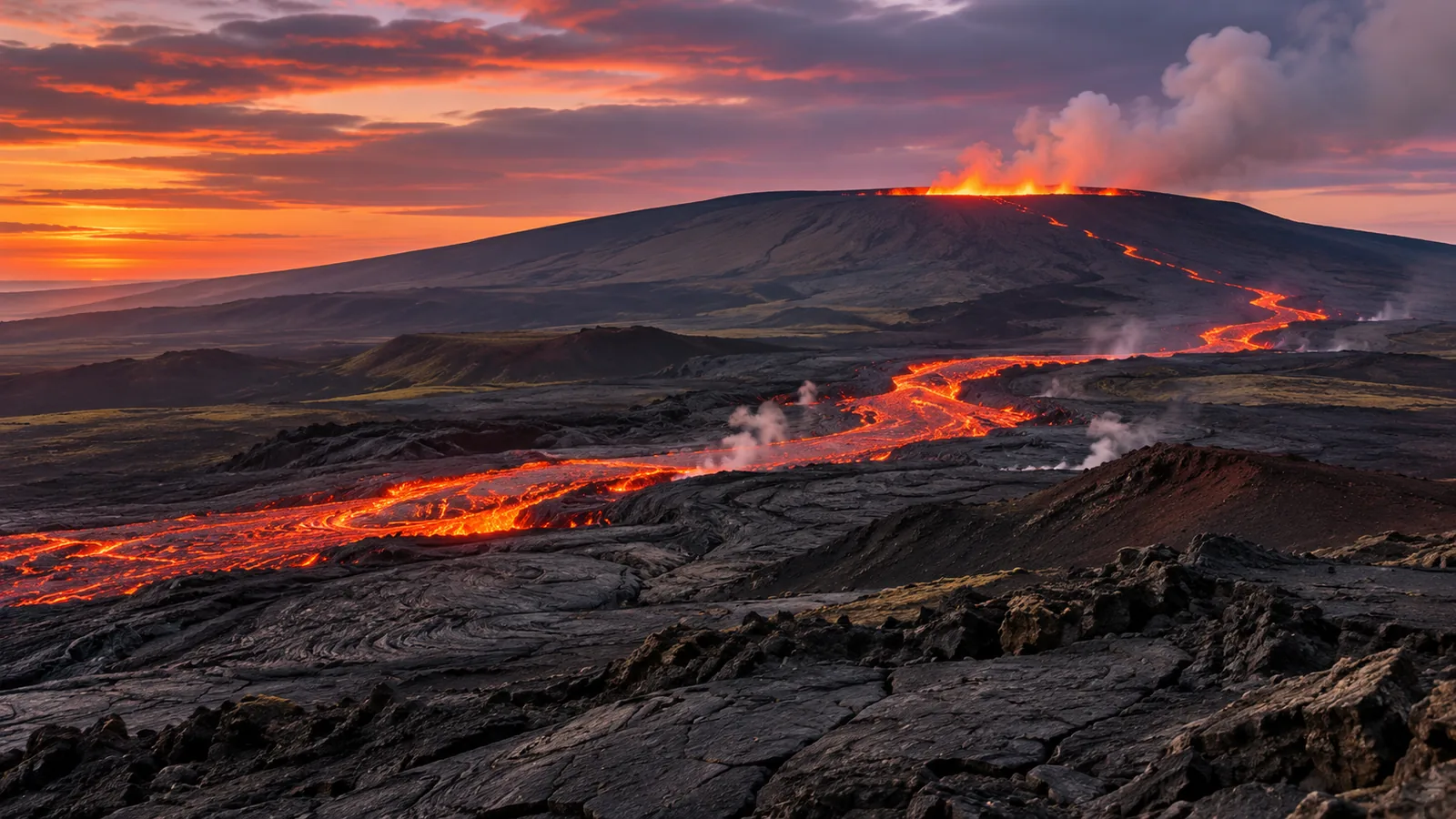
Magma and lava are both molten rock. The location changes the name: magma is below Earth's surface, and lava is molten rock that reaches the surface.
That simple distinction helps explain why volcanic rocks look different. Cooling speed, gas and magma chemistry affect the texture left behind.
Beneath the surface: magma
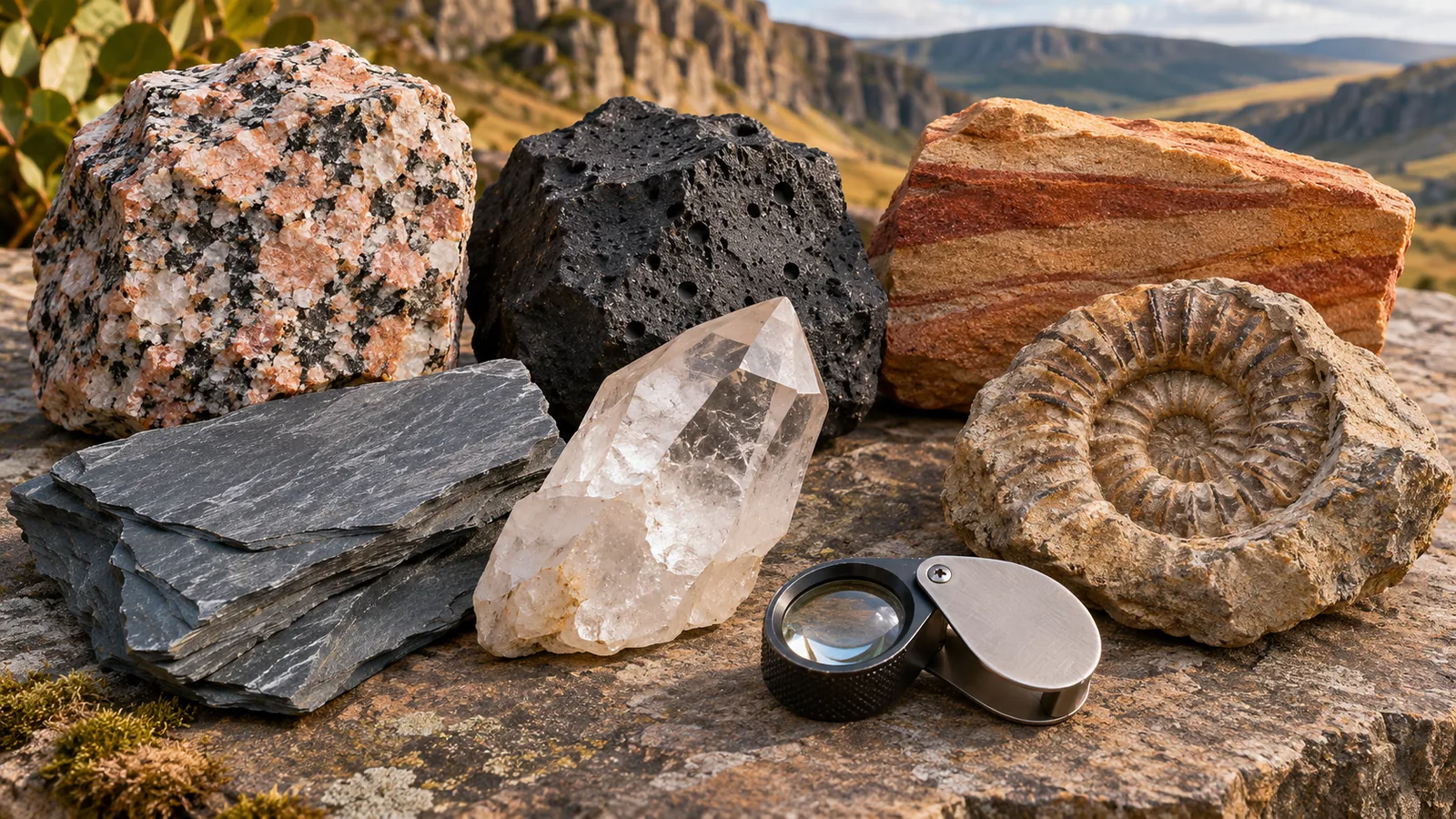
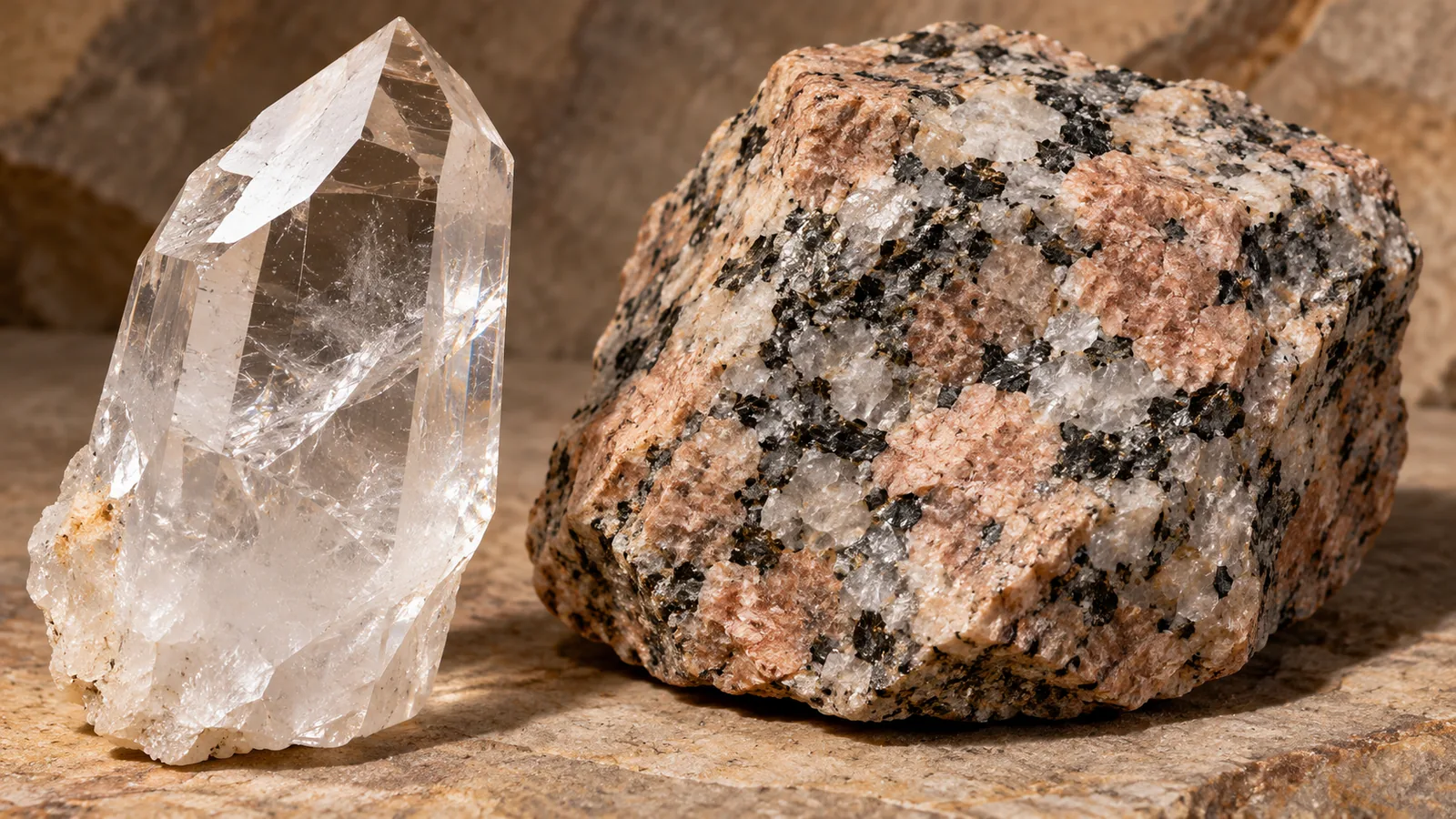
Magma can contain molten rock, crystals and dissolved gases. If it cools slowly within the crust, crystals may grow large enough to see. Granite is one example of an intrusive igneous rock.
A magma chamber is not always a huge open cave of liquid. Underground melt can be stored in complex, partly crystalline regions.
At the surface: lava and eruption products
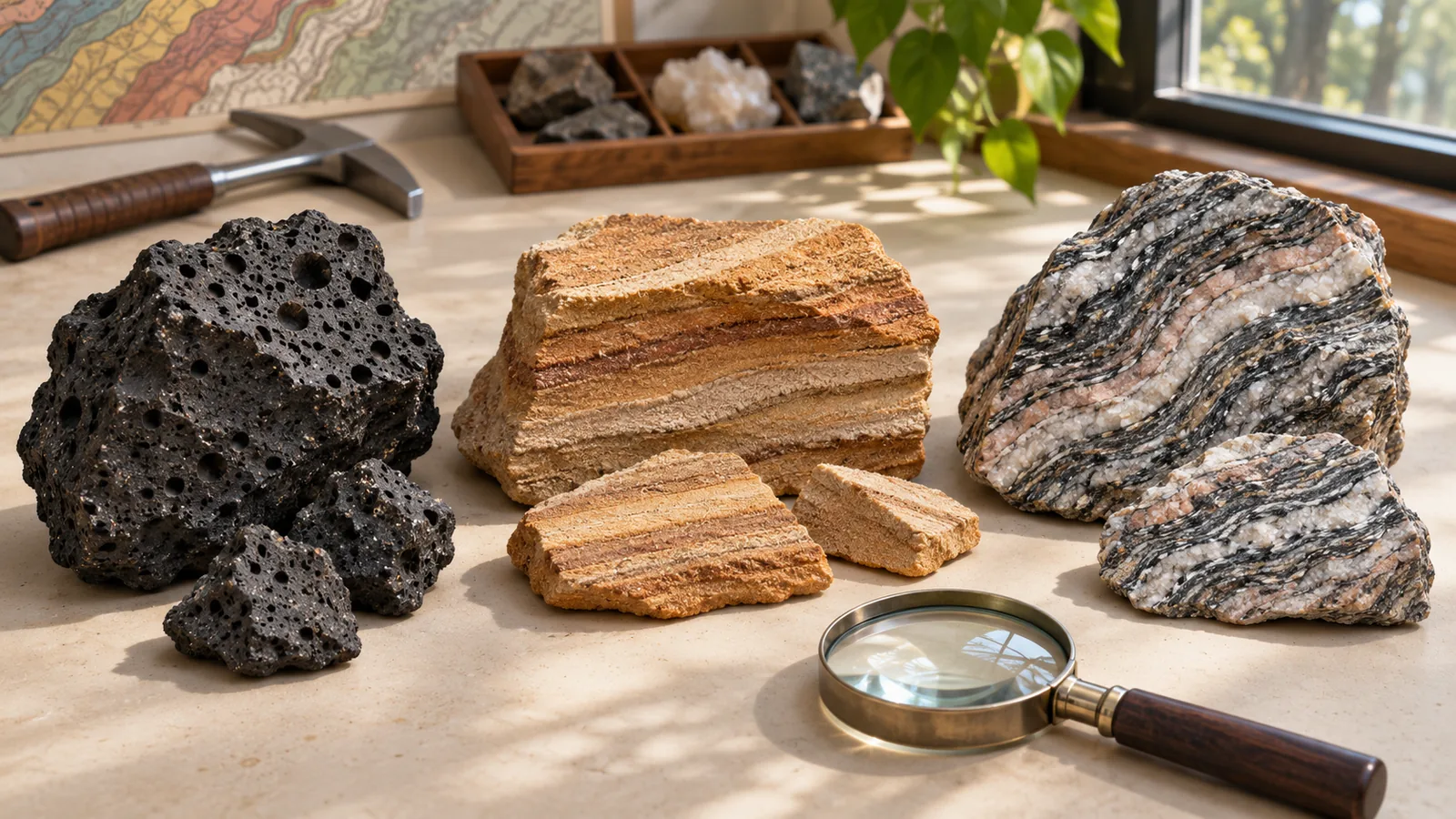
Once molten rock erupts, it is lava. A flowing lava may cool into fine-grained basalt; rapid cooling can produce glass. Gas escaping from some lavas leaves vesicles, the holes visible in pumice and scoria.
Not every eruption is a lava river. Some eruptions send ash and fragmented material into the air. Volcanic landscapes can therefore contain flows, ash deposits and other rock types.
Why volcanoes have different shapes
A broad shield volcano builds from many fluid flows. A steep stratovolcano may include layers of lava and fragmented material. The shape is a result of repeated eruptions, not a single universal volcano template.
For a photo quiz, look at slope, layers and visible flow texture. Do not infer eruption risk from a single still image; active volcano information belongs to monitoring agencies.
| Word | Meaning | Visible clue |
|---|---|---|
| Magma | Molten rock underground | Seen through intrusive igneous rocks |
| Lava | Molten rock at surface | Flow or cooled volcanic rock |
| Vesicle | Former gas bubble | Hole in volcanic rock |
Follow the melt
0 / 4 answered
1What is molten rock beneath the surface called?
Answer: Magma. Location below ground makes the term magma.2What is molten rock at the surface called?
Answer: Lava. After eruption, molten rock is called lava.3What can holes in pumice record?
Answer: Escaping gas bubbles. Vesicles preserve the space left by gas bubbles.4Which volcano is broad with gentle slopes?
Answer: Shield volcano. Repeated fluid lava flows can build a broad shield shape.
Frequently asked questions
Is lava always red?
No. Molten lava can glow, while cooled surfaces quickly darken. Color depends on temperature and viewing conditions.
Read the texture
Connect glass, small crystals or vesicles to rapid cooling and gas at the surface. Then compare the landform to a geological source.
Check the evidence behind the guide
Use these references to check terminology and pursue a topic in more depth. Photo quizzes help you practise observation; a single picture rarely proves a difficult identification.
When a source describes a broad group, compare its details with the exact species, model or specimen you are studying. Record the feature that supports your answer rather than relying on a name alone.