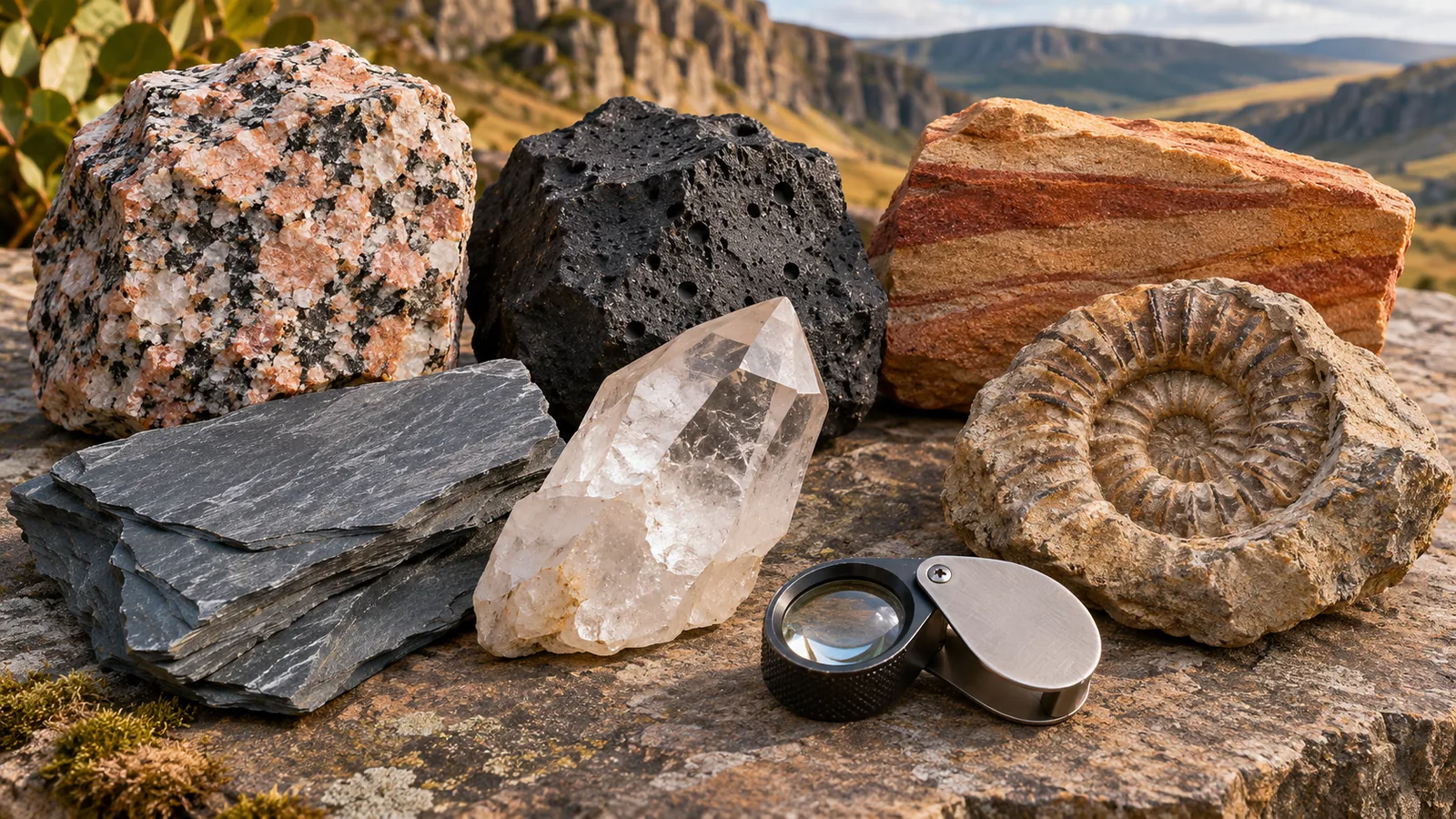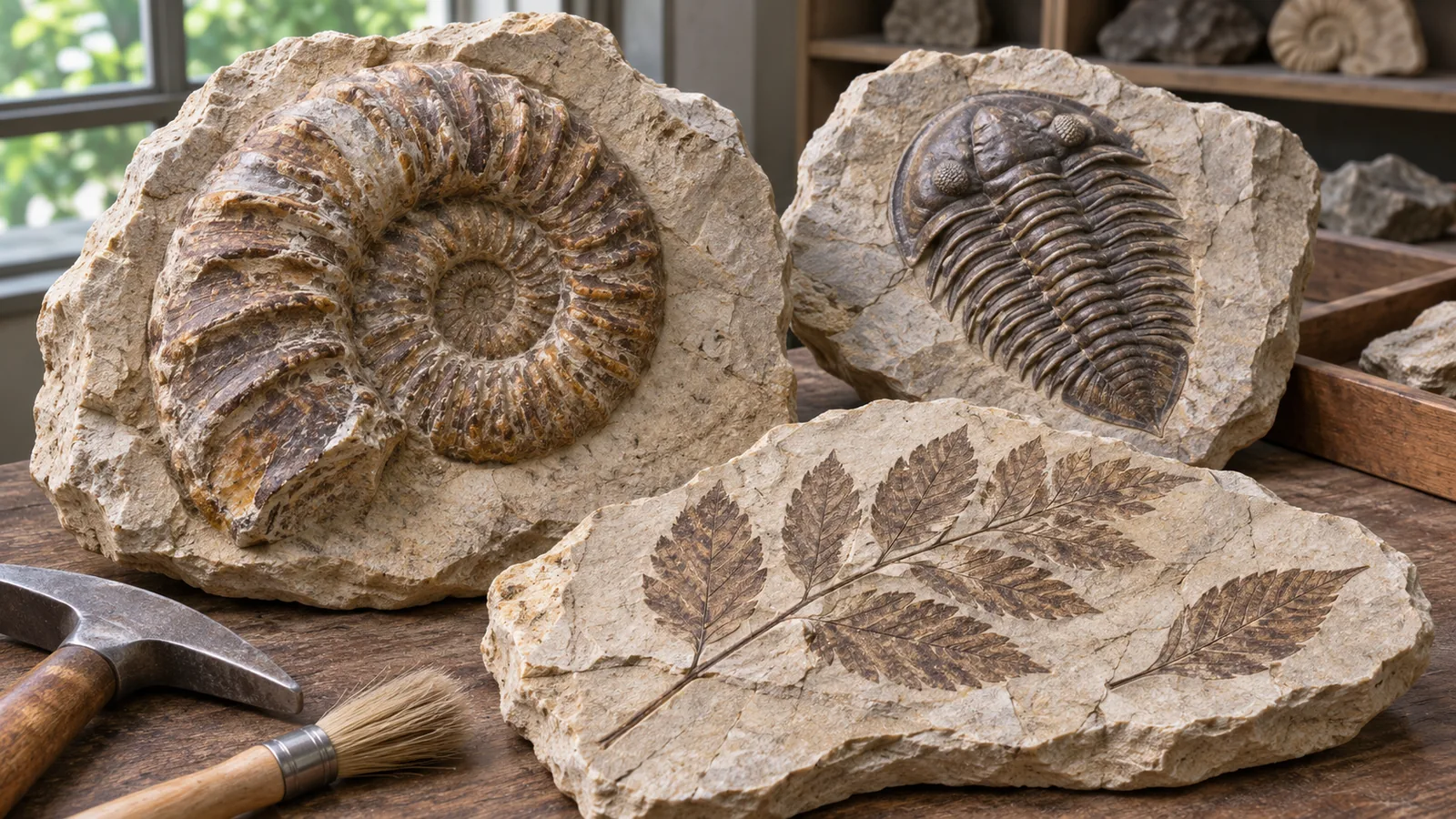
A fossil is evidence of past life preserved in geological material. It may be a shell, leaf impression, bone, track or burrow. A spiral in stone is a clue, but the surrounding rock and repeated structure matter too.
The goal of a first identification is a careful description. Naming an exact species from a weathered fragment is often impossible without context and expert comparison.
Body fossils and impressions
Shells, bones and plant parts can be preserved directly or as impressions. An ammonite often shows a coiled, chambered shell form; a trilobite fossil may show a segmented body. Leaf impressions preserve veins and outline but may lack original plant material.
A cast forms when a mold is filled with mineral material. A fossil can therefore look three-dimensional even if the original organism is gone.
Trace fossils record activity
Footprints, trails and burrows tell you an organism moved or lived in a place. They are fossils of behavior, not necessarily of body parts. A regular row of impressions may be meaningful; a random crack is not automatically a track.
Scale, orientation and the rock layer help interpret a trace. Photograph the feature with a ruler and its surroundings rather than removing it.
Use the rock as evidence
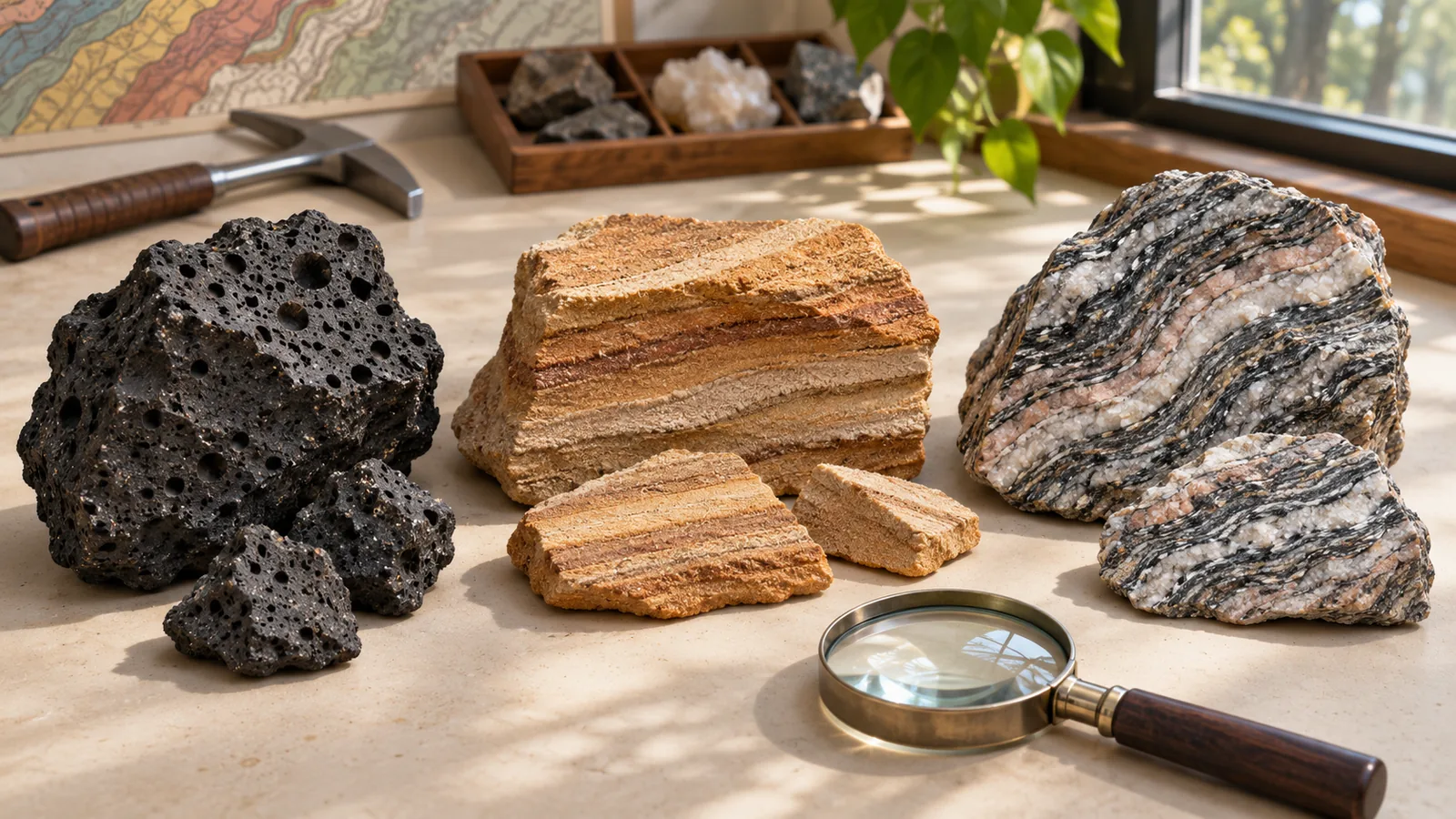
Fossils are especially associated with sedimentary rocks, where burial can preserve remains. A highly altered rock may erase delicate features. Some natural mineral growths imitate leaves or bones, so one visual resemblance is not enough.
Check local collecting rules before touching a site. Public land, protected areas and scientific sites may restrict removal. Record location responsibly and seek a museum or geological survey for unusual finds.
| Possible find | Look for | Common confusion |
|---|---|---|
| Shell fossil | Repeating shell structure | Mineral banding |
| Leaf impression | Outline plus branching veins | Dendritic mineral patterns |
| Trace fossil | Repeated track or burrow form | Random cracks or erosion |
Describe a find
0 / 4 answered
1A preserved footprint is what kind of fossil?
Answer: Trace fossil. A footprint preserves activity rather than a body part.2Where are fossils most commonly preserved?
Answer: Sedimentary rock. Burial in sediment can protect remains or impressions.3What is a useful first photo of a possible fossil?
Answer: Feature, scale and surrounding rock. Context helps distinguish a fossil from a geological pattern.4Can a mineral pattern mimic a leaf?
Answer: Yes. Some branching mineral growths resemble plants without being fossils.
Frequently asked questions
Should I collect a fossil I find?
Check the site's rules first. Photographing and recording the context is often the best first step, especially in protected or scientifically important places.
Document before naming
Record shape, scale, host rock and setting. Then compare the feature with a regional museum or geological survey reference.
Check the evidence behind the guide
Use these references to check terminology and pursue a topic in more depth. Photo quizzes help you practise observation; a single picture rarely proves a difficult identification.
When a source describes a broad group, compare its details with the exact species, model or specimen you are studying. Record the feature that supports your answer rather than relying on a name alone.