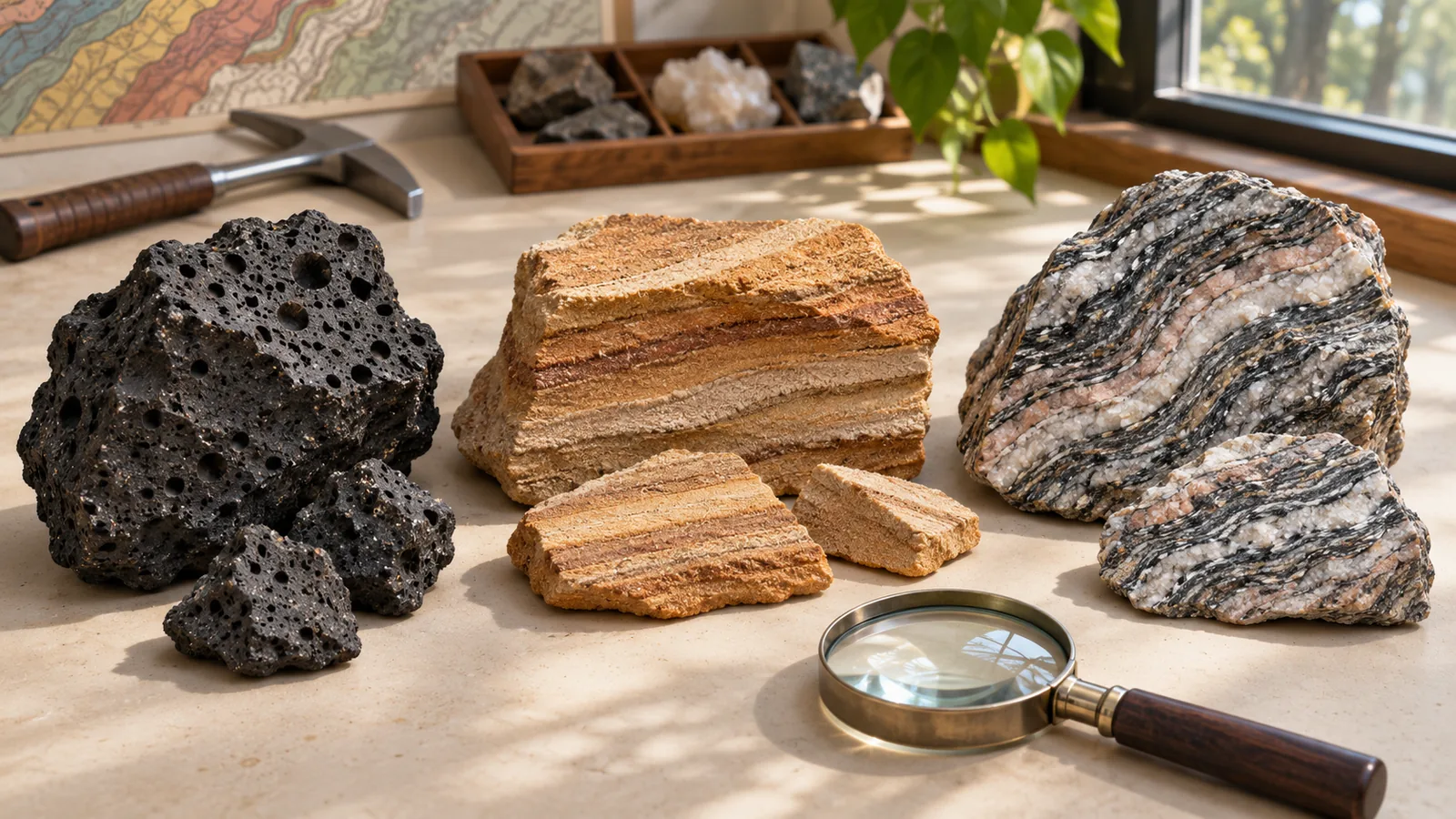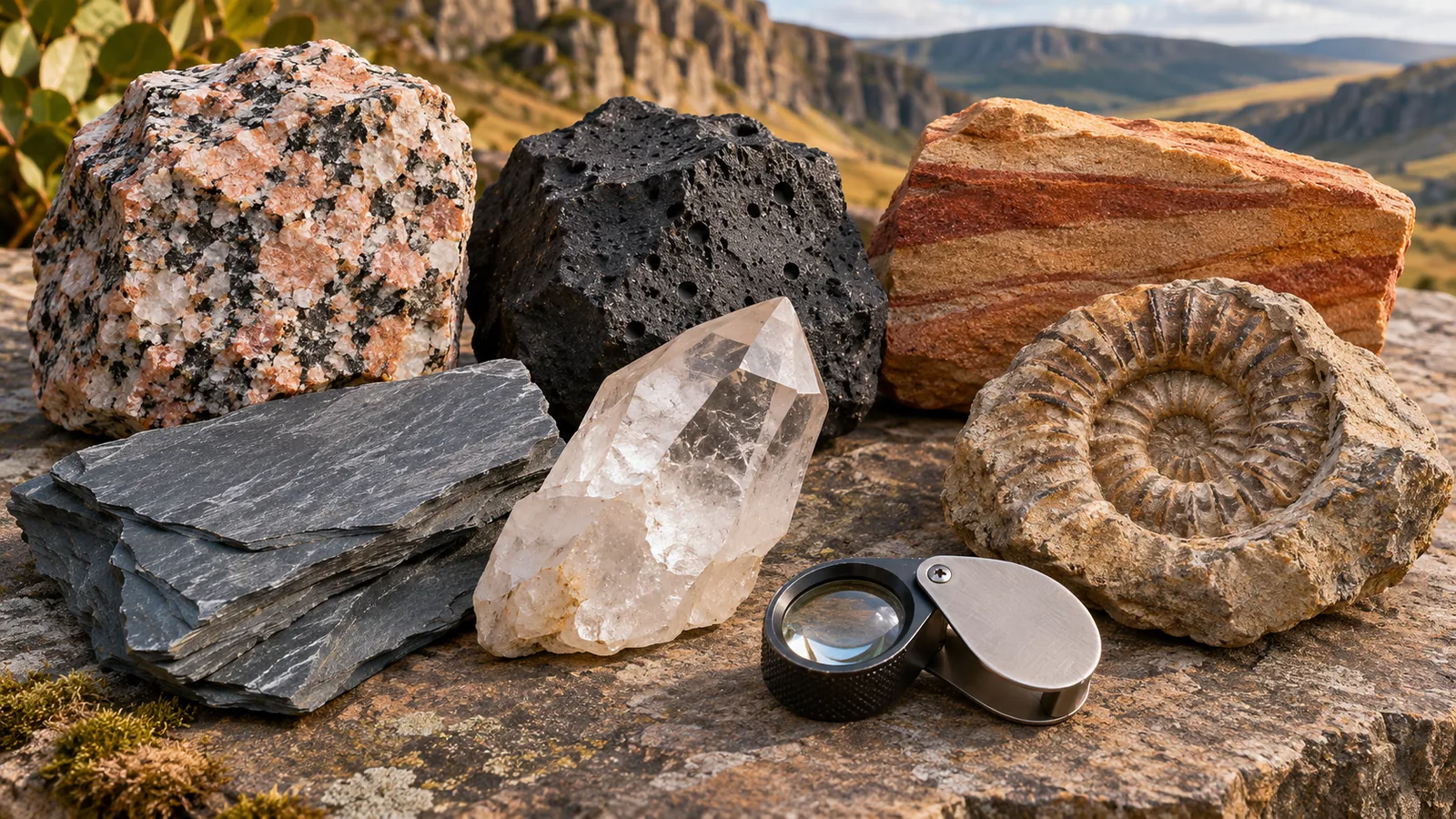
A rock is a story of process. Layers suggest deposition, interlocking crystals can point to cooling or recrystallization, and a fossil may preserve a moment from an ancient environment.
These thirty questions begin with the three major rock groups, move to familiar specimens and finish with the observations geologists use to narrow an identification. The answers explain the clue rather than asking you to memorize a label alone.
Quick takeaways
- Separate a mineral from a rock made of minerals.
- Describe texture before guessing a name.
- Use several observations; color alone misleads.
The three rock groups
Think in processes: cooling, deposition and solid-state change.
1Which rock group forms when molten material cools?
Answer: Igneous. Igneous rock forms when magma or lava solidifies.2Which rock group commonly forms from compacted layers of sediment?
Answer: Sedimentary. Sedimentary rocks can preserve visible layers of deposited material.3Which group changes under heat and pressure without fully melting?
Answer: Metamorphic. Metamorphism changes an existing rock while it remains solid.4What is a mineral?
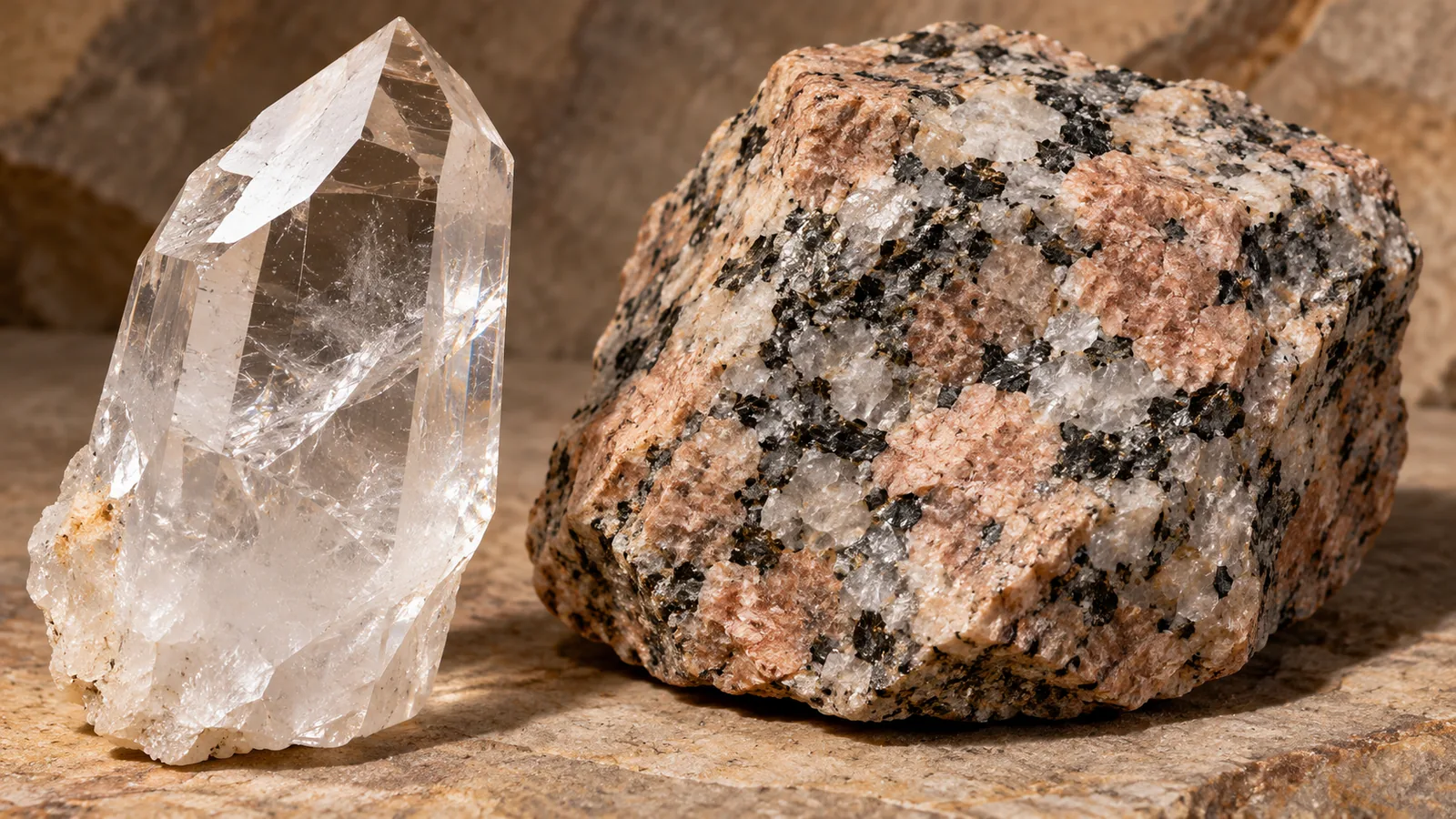
Answer: A naturally occurring crystalline solid. Minerals have characteristic composition and ordered internal structure.5Which common mineral is made of silicon dioxide?
Answer: Quartz. Quartz has the chemical formula SiO₂.6Which mineral reacts visibly with weak acid?
Answer: Calcite. Calcite commonly fizzes with dilute hydrochloric acid; use chemicals only with proper supervision.7Which mineral is common table salt?
Answer: Halite. Halite is the mineral form of sodium chloride.8Which mineral splits into thin flexible sheets?
Answer: Mica. Mica has sheet-like cleavage.9Which rock is often made mainly of quartz sand grains?
Answer: Sandstone. Sandstone is a clastic sedimentary rock made from cemented sand-size particles.10Which fine-grained sedimentary rock commonly splits into thin layers?
Answer: Shale. Shale forms from compacted mud and is often fissile.
Recognize common specimens
The same rock may vary in color; texture and composition carry more information.
11Which intrusive igneous rock often shows coarse visible crystals?
Answer: Granite. Granite cools slowly underground, allowing larger mineral crystals to grow.12Which dark igneous rock is common in lava flows?
Answer: Basalt. Basalt is a common fine-grained volcanic rock.13Which volcanic rock can look glassy rather than crystalline?
Answer: Obsidian. Obsidian forms when silica-rich lava cools rapidly into volcanic glass.14Which light volcanic rock may contain many gas bubbles?
Answer: Pumice. Pumice is full of vesicles left by gas in erupting magma.15Which rock often forms from accumulated shell fragments and carbonate sediment?
Answer: Limestone. Many limestones are carbonate sedimentary rocks with biological material.16Which metamorphic rock forms from limestone?
Answer: Marble. Heat and pressure can recrystallize limestone into marble.17Which metamorphic rock forms from sandstone?
Answer: Quartzite. Quartz grains in sandstone recrystallize into a hard interlocking quartzite.18Which metamorphic rock is often banded light and dark?
Answer: Gneiss. Gneissic banding separates minerals into visible light and dark layers.19Which fine-grained metamorphic rock can split into flat sheets?
Answer: Slate. Slate develops cleavage when fine sedimentary material is metamorphosed.20Which rock contains rounded pebbles cemented together?
Answer: Conglomerate. Rounded clasts are the useful clue for conglomerate.
Field clues and fossils
Use these terms to describe what you see before choosing a specimen name.
21Which rock contains angular fragments cemented together?
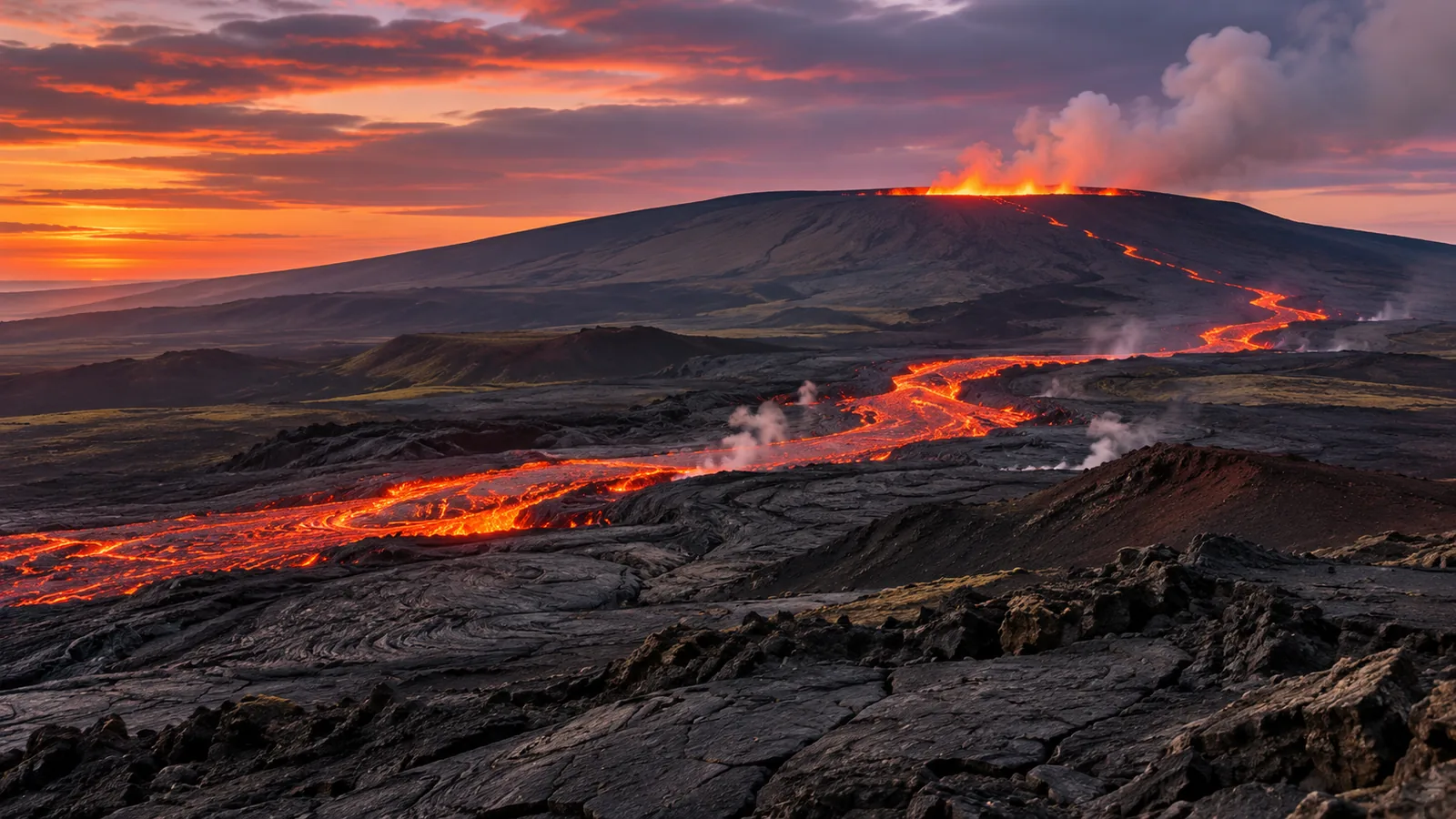
Answer: Breccia. Breccia's clasts are angular rather than rounded.22What is magma called after it reaches the surface?
Answer: Lava. Molten rock at the surface is called lava.23What does hardness describe in mineral identification?
Answer: Resistance to scratching. Hardness is tested by whether one material scratches another.24What does streak record?
Answer: Color of a mineral's powder. A streak plate reveals the powder color, which may differ from the specimen's surface.25What does cleavage describe?
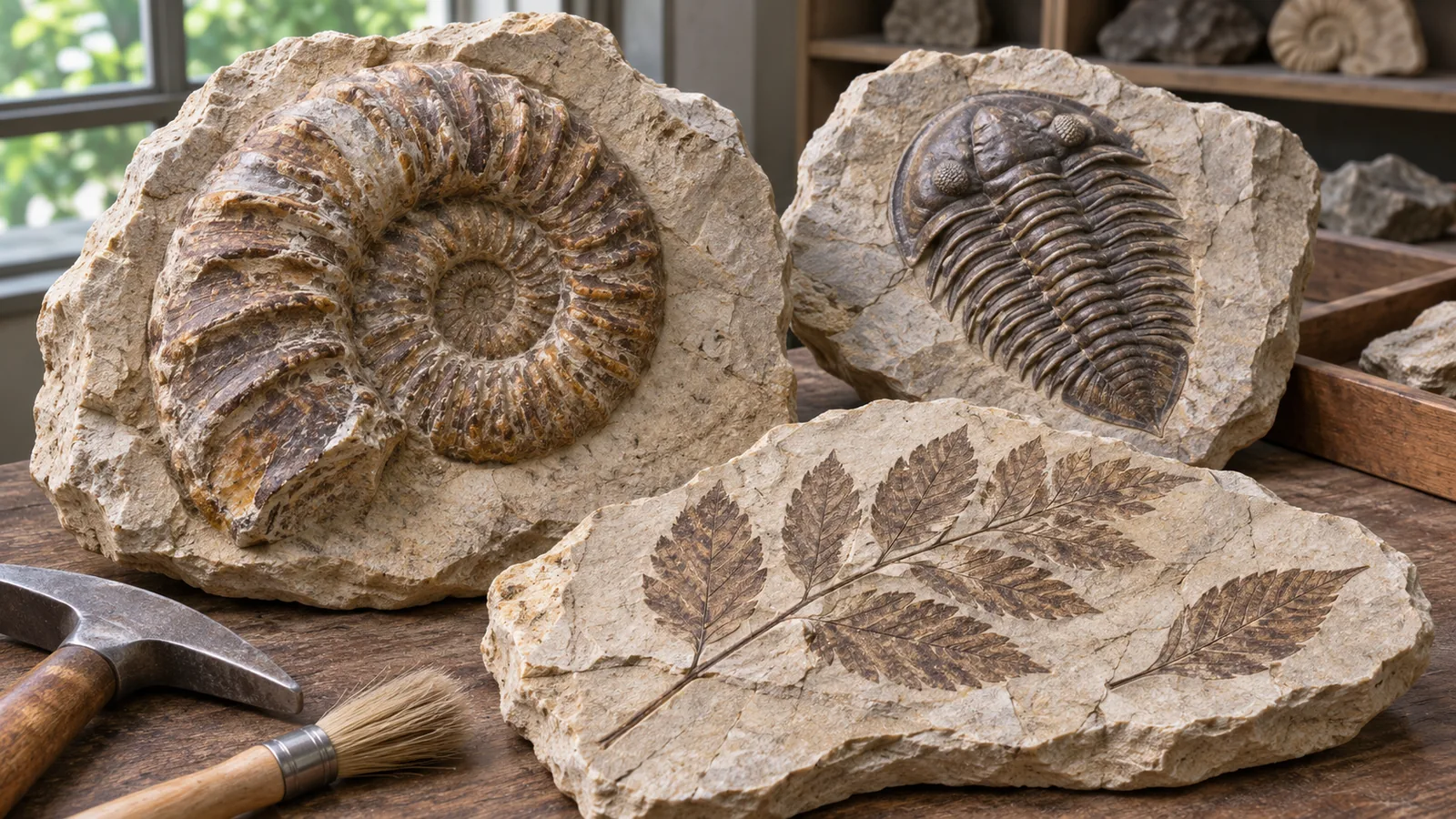
Answer: Breaking along preferred planes. Cleavage follows planes of weakness in a mineral's crystal structure.26What does a fossil trace record?
Answer: Evidence of an organism's activity. Tracks and burrows are trace fossils even when no body remains.27Which rock type most often preserves visible fossils?
Answer: Sedimentary. Burial in sediment can preserve remains; intense heat generally destroys them.28What is erosion?
Answer: Movement of weathered material. Erosion transports broken-down material by water, wind, ice or gravity.29What is deposition?
Answer: Settling of transported material. Sediment is deposited when the transporting agent loses energy.30Which observation is most useful before naming an unknown rock?
Answer: Texture, grains and layering. Several visible features together make a more reliable first classification.
A five-question field check
0 / 5 answered
1A dark fine-grained lava rock is likely which specimen?
Answer: Basalt. Basalt is a common dark volcanic rock.2Visible rounded pebbles suggest which rock?
Answer: Conglomerate. Conglomerate contains rounded clasts.3A rock with strong light-dark mineral bands suggests what?
Answer: Gneiss. Gneiss commonly displays mineral banding.4A specimen leaves a white powder on a streak plate. What did you test?
Answer: Streak. Streak is the color of a mineral's powder.5Why avoid naming a rock from color alone?
Answer: Different rocks share colors. Texture, grain size and composition distinguish many similarly colored rocks.
Frequently asked questions
Is a rock the same thing as a mineral?
No. A mineral is a naturally occurring crystalline substance with characteristic composition; a rock is an aggregate that may contain one or several minerals.
Describe before naming
Start a specimen note with grains, layers, visible crystals and any fossils. Then compare it with a trusted field guide or collection.
Check the evidence behind the guide
Use these references to check terminology and pursue a topic in more depth. Photo quizzes help you practise observation; a single picture rarely proves a difficult identification.
When a source describes a broad group, compare its details with the exact species, model or specimen you are studying. Record the feature that supports your answer rather than relying on a name alone.