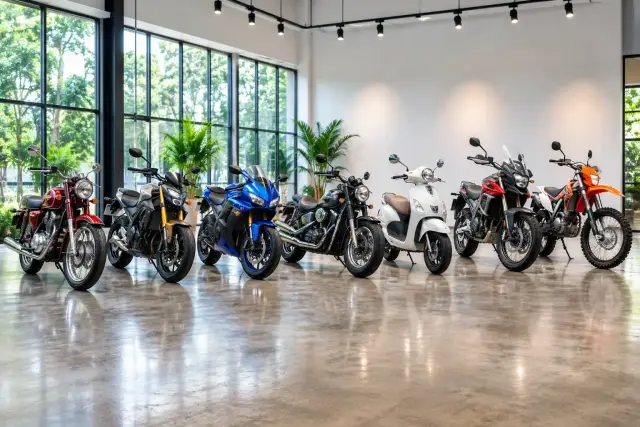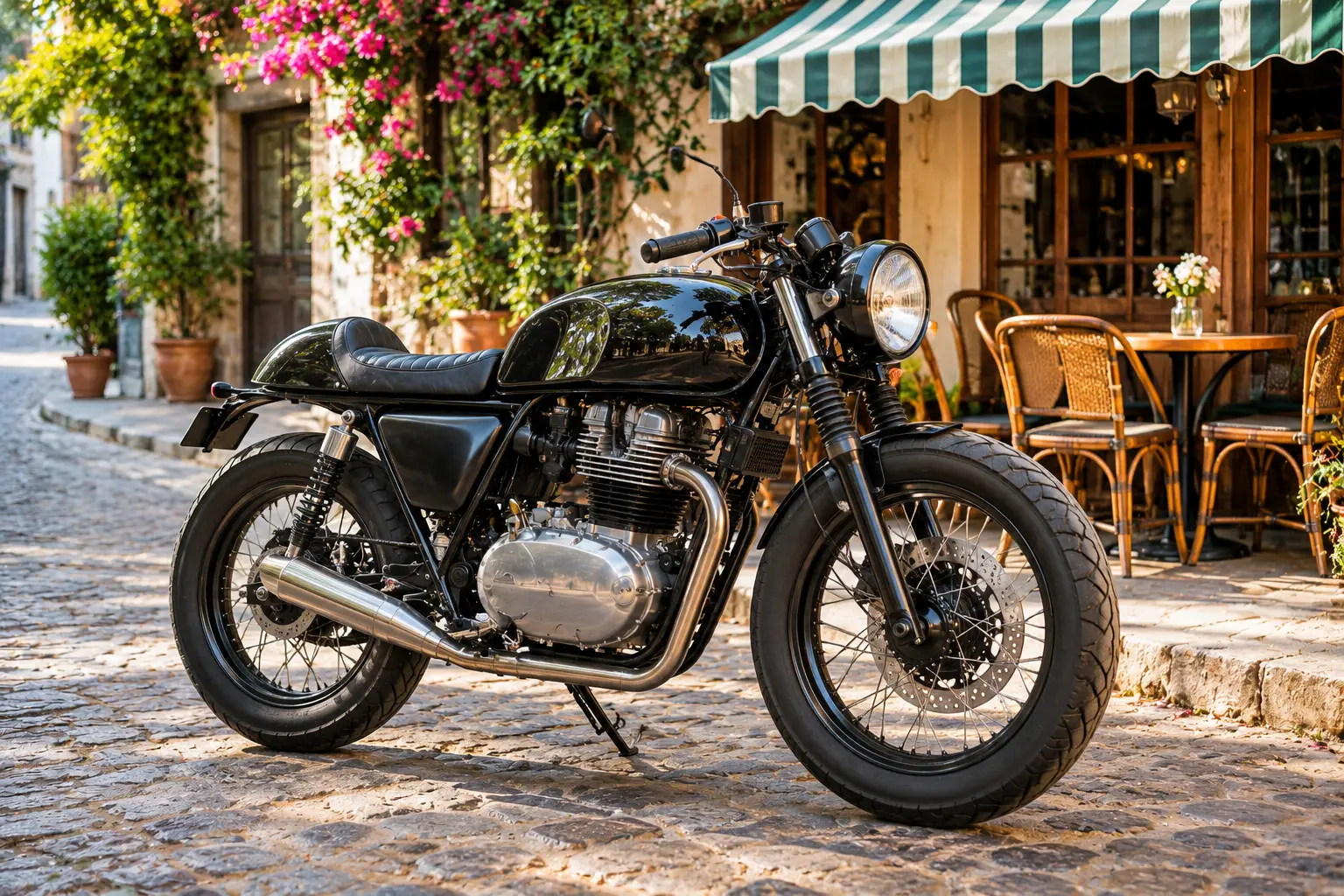
Motorcycles are grouped by what they are built to do. The quickest way to tell the types apart is to look at the riding position: where the bars, seat and footpegs sit tells you a lot about the bike.
The labels overlap, and makers often invent new ones. Treat the types below as broad families rather than strict classes.
Sport bikes, naked bikes and café racers
A sport bike is built for speed and cornering. It usually has full fairings, low handlebars and high footpegs, so the rider leans forward over the tank. The Yamaha YZF-R1 and Honda Fireblade are well-known examples.
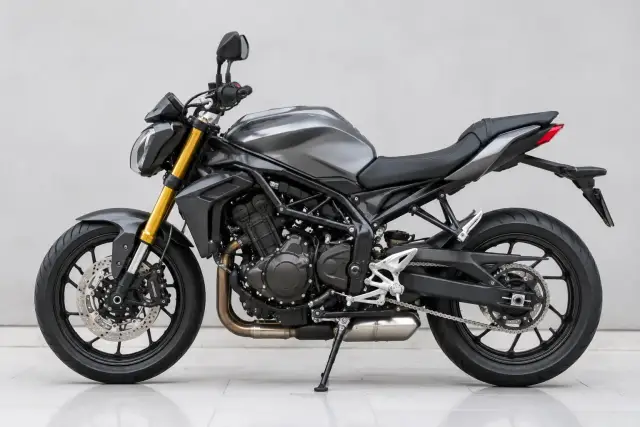
A naked bike, sometimes called a streetfighter in its most aggressive form, uses a sporty engine and chassis but leaves off most of the fairing. The bars are higher and wider, giving a more upright position. The Ducati Monster helped make the style popular in the 1990s.
The café racer comes from 1950s and 1960s Britain, when young riders stripped down their bikes to race between roadside cafés. Typical features are low bars, a long tank, a short single seat and rear-set footpegs. The Triumph Thruxton is a modern take on the look.
Cruisers, tourers and adventure bikes
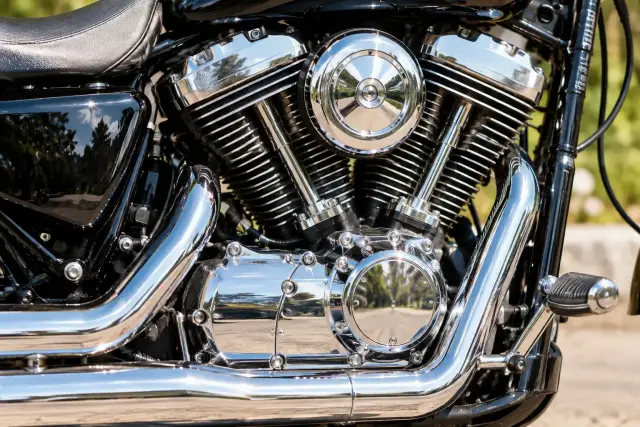
A cruiser has a low seat, forward footpegs and a relaxed, laid-back position. Many cruisers use a large V-twin, and the style is closely linked with American makers such as Harley-Davidson and Indian.
A touring bike is built for long trips with a passenger and luggage. Expect a big fairing, a tall screen, panniers and a comfortable seat. The Honda Gold Wing is a classic example.
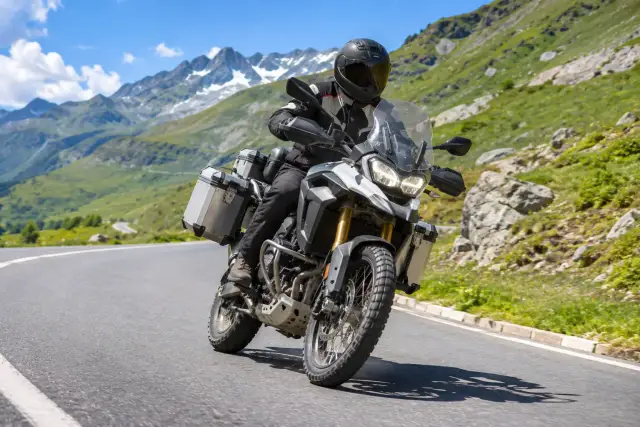
An adventure bike, or ADV, mixes touring comfort with some off-road ability. It has long-travel suspension, an upright position and often a larger front wheel. BMW's GS range is the best-known family of adventure bikes.
Off-road bikes and scooters
Dirt bikes are light, tall machines with knobbly tyres and long suspension. Motocross bikes are built for closed tracks, enduro bikes for long off-road routes, and dual-sport bikes are road-legal machines that can also handle trails.
A scooter has a step-through frame, small wheels and usually an automatic transmission, so there is no clutch lever or foot gear lever. The Vespa, first made by Piaggio in 1946, is the most famous scooter design.
| Type | Riding position | Built for | Example |
|---|---|---|---|
| Sport | Leaning forward | Speed and cornering | Yamaha YZF-R1 |
| Naked | Upright | Everyday sporty riding | Ducati Monster |
| Café racer | Low and forward | Retro style | Triumph Thruxton |
| Cruiser | Laid back, feet forward | Relaxed riding | Harley-Davidson Softail |
| Touring | Upright, sheltered | Long trips | Honda Gold Wing |
| Adventure | Upright, tall | Road and rough tracks | BMW GS |
| Dirt bike | Standing or upright | Off-road | KTM SX range |
| Scooter | Seated, feet flat | City trips | Vespa |
Name the type
0 / 4 answered
1A bike has a low seat, a laid-back position and feet placed forward. What type is it?
Answer: Cruiser. Forward footpegs and a low seat are the classic cruiser layout.2Which type is a sporty bike with most of the fairing left off?
Answer: Naked bike. Naked bikes show the engine and frame, with higher bars than a sport bike.3Where did the café racer style begin?
Answer: Britain in the 1950s and 1960s. Young British riders modified their bikes and raced between roadside cafés.4Which feature is typical of a scooter?
Answer: A step-through frame. The step-through frame lets the rider sit with feet flat on a floorboard.
Frequently asked questions
Which type of motorcycle is best for a beginner?
There is no single answer. Many learners start on a smaller naked bike, scooter or light all-rounder, but licence rules, training and personal fit matter more than the label. A qualified instructor can help you choose.
Read the riding position
Look at where the bars, seat and footpegs sit. A forward lean suggests a sport bike, feet forward a cruiser, a tall upright stance an adventure bike, and a step-through frame a scooter.
Check the evidence behind the guide
Use these references to check terminology and pursue a topic in more depth. Photo quizzes help you practise observation; a single picture rarely proves a difficult identification.
When a source describes a broad group, compare its details with the exact species, model or specimen you are studying. Record the feature that supports your answer rather than relying on a name alone.