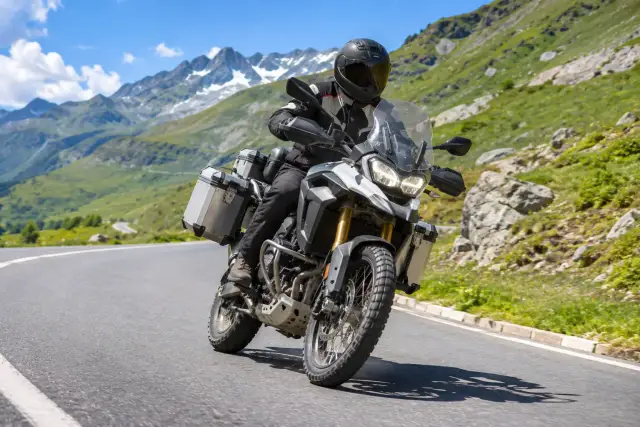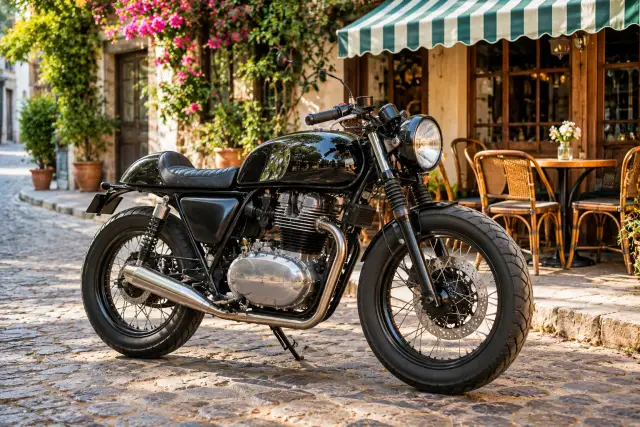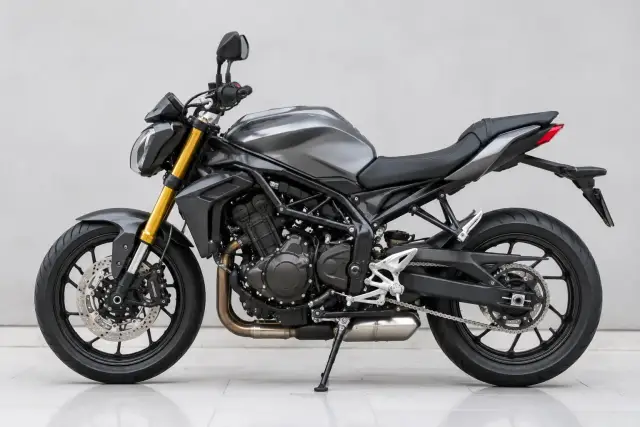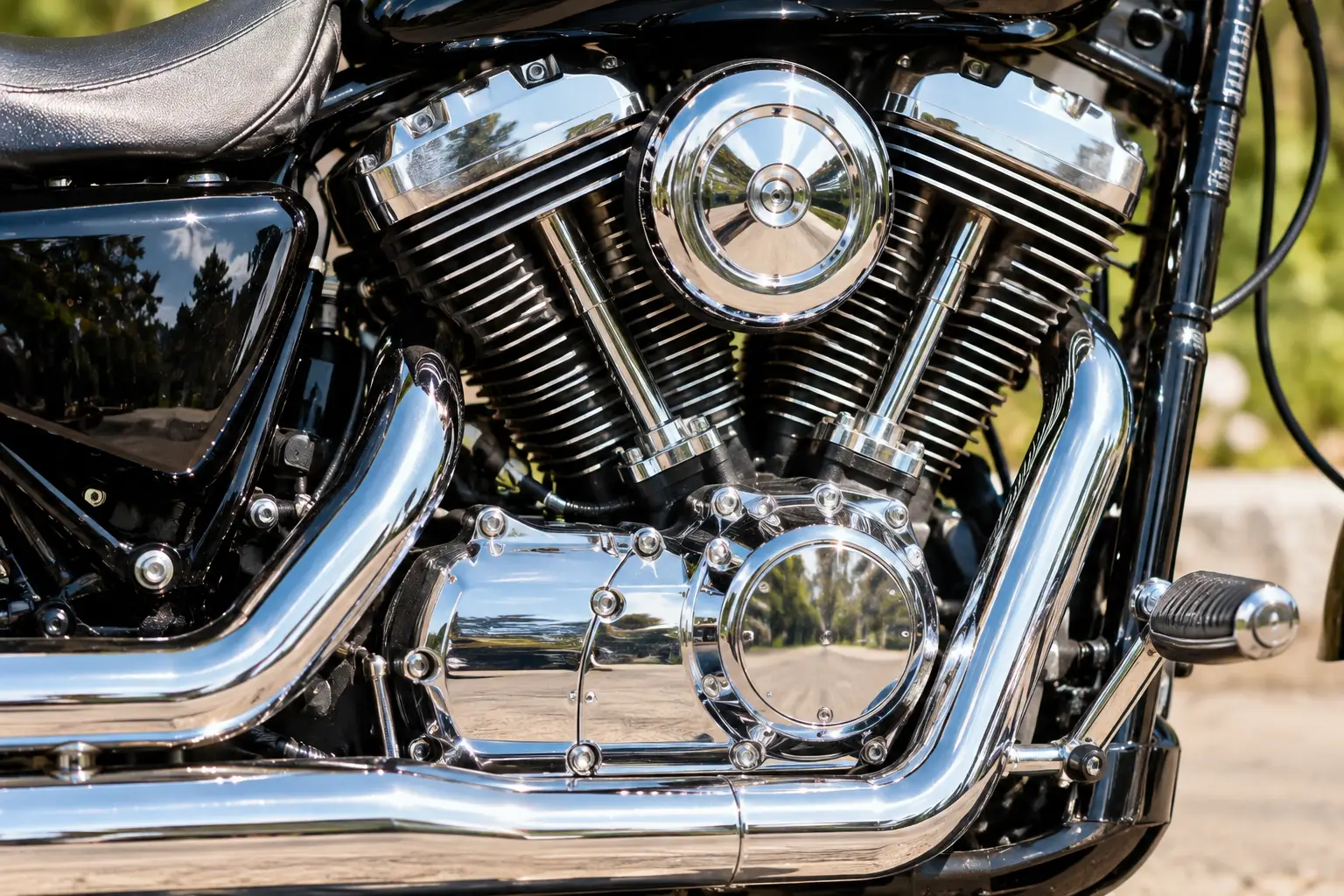
A motorcycle engine is described by how many cylinders it has and how they are arranged. The layout affects the bike's width, weight, sound and the way it delivers power.
Engine size, measured in cubic centimetres (cc), is a separate figure. A 650 cc engine can be a single, a twin or a four, and each will feel different.
Singles and parallel twins
A single-cylinder engine is simple, light and narrow. It suits dirt bikes, small commuters and classic-style bikes such as the Royal Enfield Bullet. Singles have strong pulling power at low engine speeds but tend to vibrate more.
A parallel twin has two cylinders side by side, both pointing the same way. It is compact and cheap to build, so it is common on mid-sized bikes. The Triumph Bonneville and Kawasaki Ninja 650 both use parallel twins.
V-twins and boxer twins
A V-twin has two cylinders set at an angle, forming a V. Harley-Davidson's traditional big twins use a 45-degree V, which gives their famous uneven beat. Ducati's twins use a wider 90-degree V and are often called L-twins because one cylinder lies almost flat. Moto Guzzi turns its V across the frame so the cylinders stick out each side.
A boxer twin has its two cylinders lying flat and opposed, one on each side of the crankshaft. The pistons move in and out together, like a boxer's fists. BMW has used the boxer since its first motorcycle in 1923, and the low engine helps keep the centre of gravity down.
Triples, inline-fours and V4s
An inline-four has four cylinders in a row across the frame. It is smooth and loves high engine speeds, which is why it is common on Japanese sport bikes. The 1969 Honda CB750 made the layout famous.
A triple sits between a twin and a four, offering low-down pull with smooth power higher up. Triumph is well known for triples, as is Yamaha's MT-09. A V4 packs four cylinders into a short V shape, used on bikes such as the Ducati Panigale V4 and Honda VFR.
| Layout | Cylinders | Character | Example |
|---|---|---|---|
| Single | 1 | Light, simple, pulls low down | Royal Enfield Bullet |
| Parallel twin | 2 side by side | Compact, all-round | Triumph Bonneville |
| V-twin | 2 in a V | Narrow, strong beat | Harley-Davidson, Ducati |
| Boxer | 2 flat and opposed | Low, smooth | BMW R models |
| Triple | 3 in a row | Pull plus smoothness | Triumph Speed Triple |
| Inline-four | 4 in a row | Smooth, high-revving | Honda CB750 |
| V4 | 4 in a V | Compact and powerful | Ducati Panigale V4 |
Count the cylinders
0 / 4 answered
1Which maker is most closely linked with the boxer twin?
Answer: BMW. BMW has built boxer-engined motorcycles since 1923.2What is the angle between the cylinders of Harley-Davidson's traditional big twins?
Answer: 45 degrees. The narrow 45-degree V gives the familiar Harley sound.3Why are Ducati's 90-degree twins often called L-twins?
Answer: One cylinder lies almost flat, forming an L shape. With one cylinder near horizontal and the other near upright, the engine looks like an L.4Which layout has four cylinders in a single row?
Answer: Inline-four. The inline-four is common on Japanese sport bikes.
Frequently asked questions
Is a bigger engine always faster?
Not always. Speed depends on power, weight, gearing and aerodynamics as well as engine size. A light sport bike with a smaller engine can be quicker than a heavy touring bike with a larger one.
Count, then look at the angle
Count the cylinders, then see how they are set: in a row, in a V or flat and opposed. That tells you the layout and a good deal about how the bike will feel.
Check the evidence behind the guide
Use these references to check terminology and pursue a topic in more depth. Photo quizzes help you practise observation; a single picture rarely proves a difficult identification.
When a source describes a broad group, compare its details with the exact species, model or specimen you are studying. Record the feature that supports your answer rather than relying on a name alone.