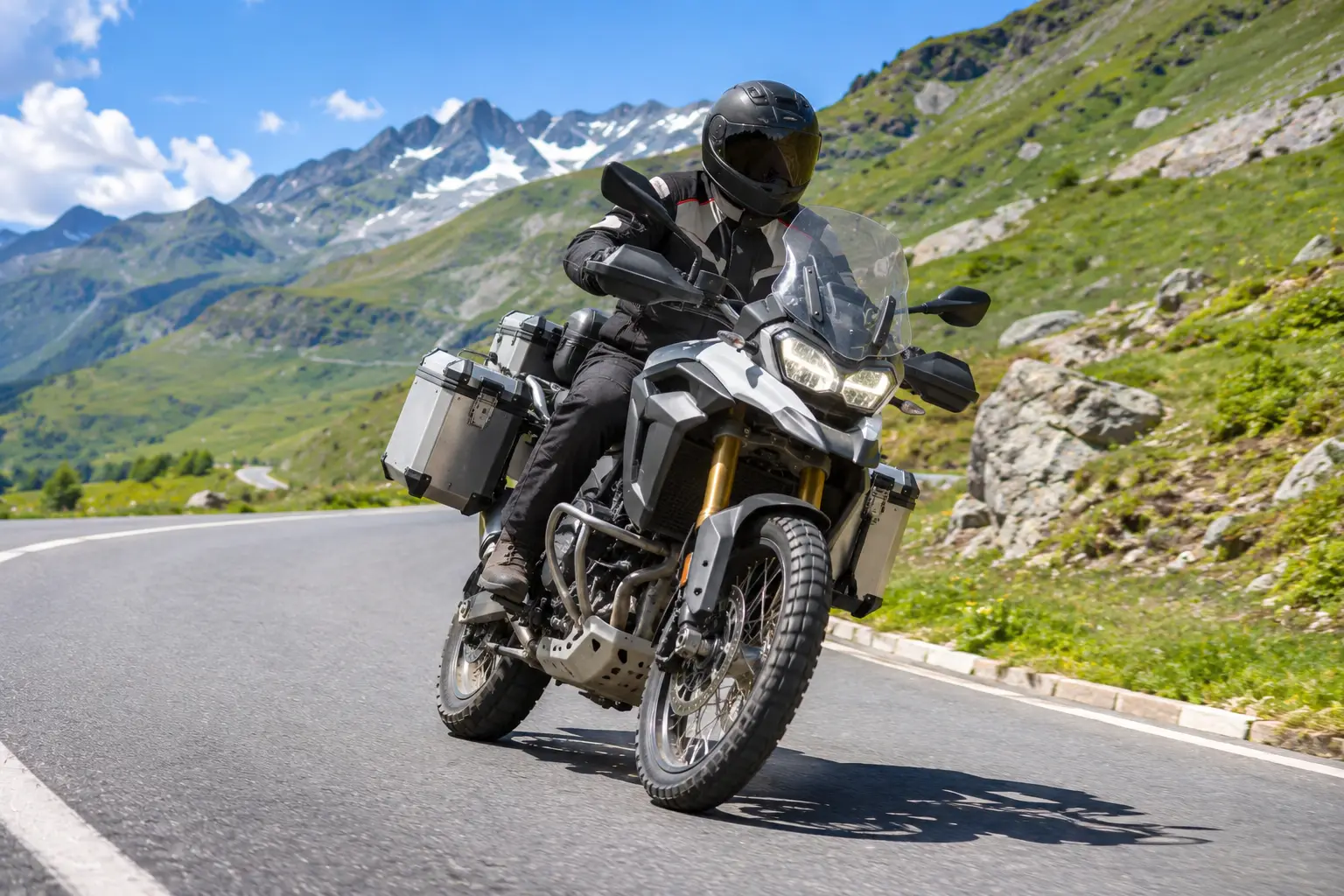
Motorcycles come from a small number of countries with strong traditions, and a few models have shaped the whole industry. Knowing where a brand comes from and what it is famous for makes a bike much easier to place.
The questions start with brands and their home countries, move on to landmark models and finish with the parts and controls found on most bikes. Read the explanation after each answer to learn the reason, not just the name.
Quick takeaways
- Japan, Italy, Germany, Austria, Britain, the United States and India are home to many major brands.
- A few models, such as the Super Cub and CB750, changed what people expected from a motorcycle.
- Most manual bikes share the same layout of hand and foot controls.
Brands and their home countries
Start with the makers. Each one has a home town or country that shapes its history.
1In which US city was Harley-Davidson founded in 1903?
Answer: Milwaukee. William Harley and Arthur Davidson built their first motorcycle in Milwaukee, Wisconsin, where the company is still based.2Which country is Ducati from?
Answer: Italy. Ducati was founded in Bologna in 1926, first making radio parts before turning to motorcycles after the Second World War.3Which country is KTM from?
Answer: Austria. KTM began as a workshop in Mattighofen, Austria, in 1934 and is best known for off-road and orange-liveried road bikes.4Which German maker is famous for its boxer-twin motorcycles?
Answer: BMW. BMW's first motorcycle, the R 32 of 1923, used a boxer twin, and the layout still defines its R models.5Which British motorcycle maker is based in Hinckley, Leicestershire?
Answer: Triumph. The modern Triumph company builds its bikes in Hinckley, continuing a name that began in Coventry.6Which motorcycle brand, now based in India, began in Redditch, England?
Answer: Royal Enfield. Royal Enfield started in Redditch and is now headquartered in Chennai, where Indian production began in the 1950s.7Which of these is one of Japan's 'big four' motorcycle makers?
Answer: Kawasaki. Japan's big four are Honda, Yamaha, Suzuki and Kawasaki. The other three options are European brands.8Which Italian maker is known for transverse V-twin engines and its factory at Mandello del Lario?
Answer: Moto Guzzi. Moto Guzzi was founded in 1921 beside Lake Como, and its V-twin sits across the frame with the cylinders poking out each side.
Famous models
These models are well known for selling in huge numbers, starting a trend or lasting for decades.
9Which Honda model is the best-selling motor vehicle of all time?
Answer: Super Cub. Honda has sold more than 100 million Cub-series bikes since 1958, more than any other motor vehicle.10Which 1969 Honda with a transverse inline-four is often called the first modern superbike?
Answer: CB750. The CB750 brought a smooth four-cylinder engine and a front disc brake to a mass-produced bike.11Which Ducati model of the early 1990s helped make the naked bike popular?
Answer: Monster. The Monster used a sporty engine and frame with no fairing, a recipe many makers later copied.12Which scooter, launched by Piaggio in 1946, takes its name from the Italian word for wasp?
Answer: Vespa. Vespa means wasp. Lambretta was a rival scooter, and Ape, meaning bee, is Piaggio's three-wheeler.13Which BMW model line is closely linked with large adventure motorcycles?
Answer: GS. The GS line began with the R 80 G/S of 1980. The letters stood for the German words for off-road and road.14Which Honda model is a long-running large touring motorcycle?
Answer: Gold Wing. The Gold Wing has been Honda's flagship touring bike since the 1970s.15Which name does Kawasaki use for its sport bikes?
Answer: Ninja. Fireblade is a Honda name, Hayabusa a Suzuki and R1 a Yamaha.16Suzuki's Hayabusa is named after which bird?
Answer: Peregrine falcon. Hayabusa is the Japanese word for the peregrine falcon, one of the fastest animals on Earth.
Parts, controls and terms
Finish with the parts and controls you will find on most motorcycles.
17On most manual motorcycles, which control is the lever on the left handlebar?
Answer: Clutch. The left lever works the clutch. The right lever works the front brake and the right grip is the throttle.18Which control usually operates the front brake?
Answer: Right handlebar lever. The front brake is the right-hand lever; the rear brake is usually a pedal by the right foot.19How do you change gear on most manual motorcycles?
Answer: With a foot lever on the left. The rider lifts or presses the left foot lever to move up or down one gear at a time.20On a typical motorcycle gearbox, where is neutral?
Answer: Between first and second gear. Most bikes use a one-down, rest-up pattern, with neutral a half-step between first and second.21What does 'cc' measure on a motorcycle engine?
Answer: Displacement in cubic centimetres. A 650 cc engine has cylinders that together sweep a volume of about 650 cubic centimetres.22What is the job of the swingarm?
Answer: It holds the rear wheel and pivots with the suspension. The swingarm pivots on the frame so the rear wheel can move up and down over bumps.23Which part holds the front wheel and lets it move up and down over bumps?
Answer: Front fork. The fork's two legs hold the front wheel and contain the front suspension, and they turn with the handlebars.24What is a fairing on a motorcycle?
Answer: Bodywork that deflects the wind. Fairings range from a small screen round the headlight to full panels covering the engine on sport and touring bikes.25What does ABS stand for on a motorcycle?
Answer: Anti-lock braking system. ABS stops the wheels locking under hard braking, and it is now standard on many new bikes.
Four final motorcycle questions
0 / 4 answered
1Triumph's Bonneville is named after which place?
Answer: Bonneville Salt Flats. The Utah salt flats were the scene of land speed records, including one set by a Triumph-powered streamliner in 1956.2In a boxer engine, how are the cylinders arranged?
Answer: Flat and opposed, one on each side. The pistons move in and out like a boxer's fists, which gives the engine its name.3What does a tachometer show?
Answer: Engine speed in revolutions per minute. The rev counter shows how fast the engine is turning; the speedometer shows road speed.4Which part on many motorcycles carries drive from the gearbox to the rear wheel?
Answer: Chain. Most bikes use a chain, though some use a belt or a shaft instead.
Frequently asked questions
Do all motorcycles use the same controls?
Most manual motorcycles follow the same layout, but scooters and some automatic bikes have no clutch lever or foot gear lever. Older bikes and a few unusual models can differ, so always check the controls on a particular bike.
Brand, model, then parts
Place a motorcycle by its maker and home country, link it to the models that made the brand famous, and learn the controls that almost every bike shares.
Check the evidence behind the guide
Use these references to check terminology and pursue a topic in more depth. Photo quizzes help you practise observation; a single picture rarely proves a difficult identification.
When a source describes a broad group, compare its details with the exact species, model or specimen you are studying. Record the feature that supports your answer rather than relying on a name alone.