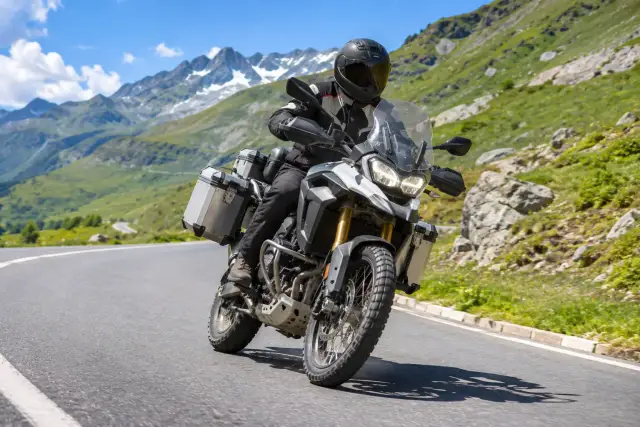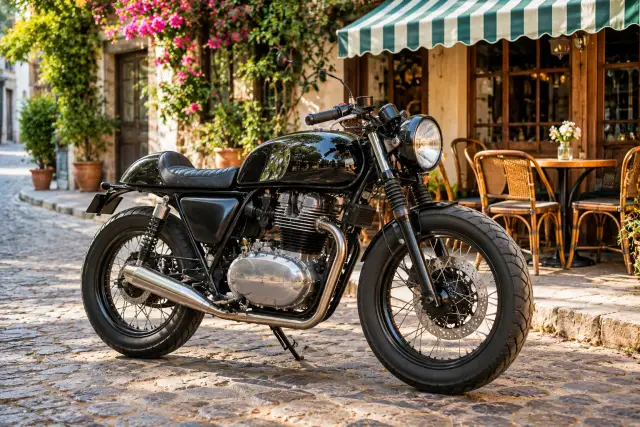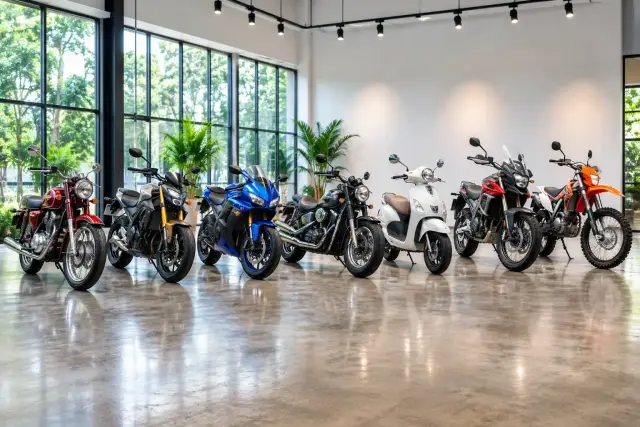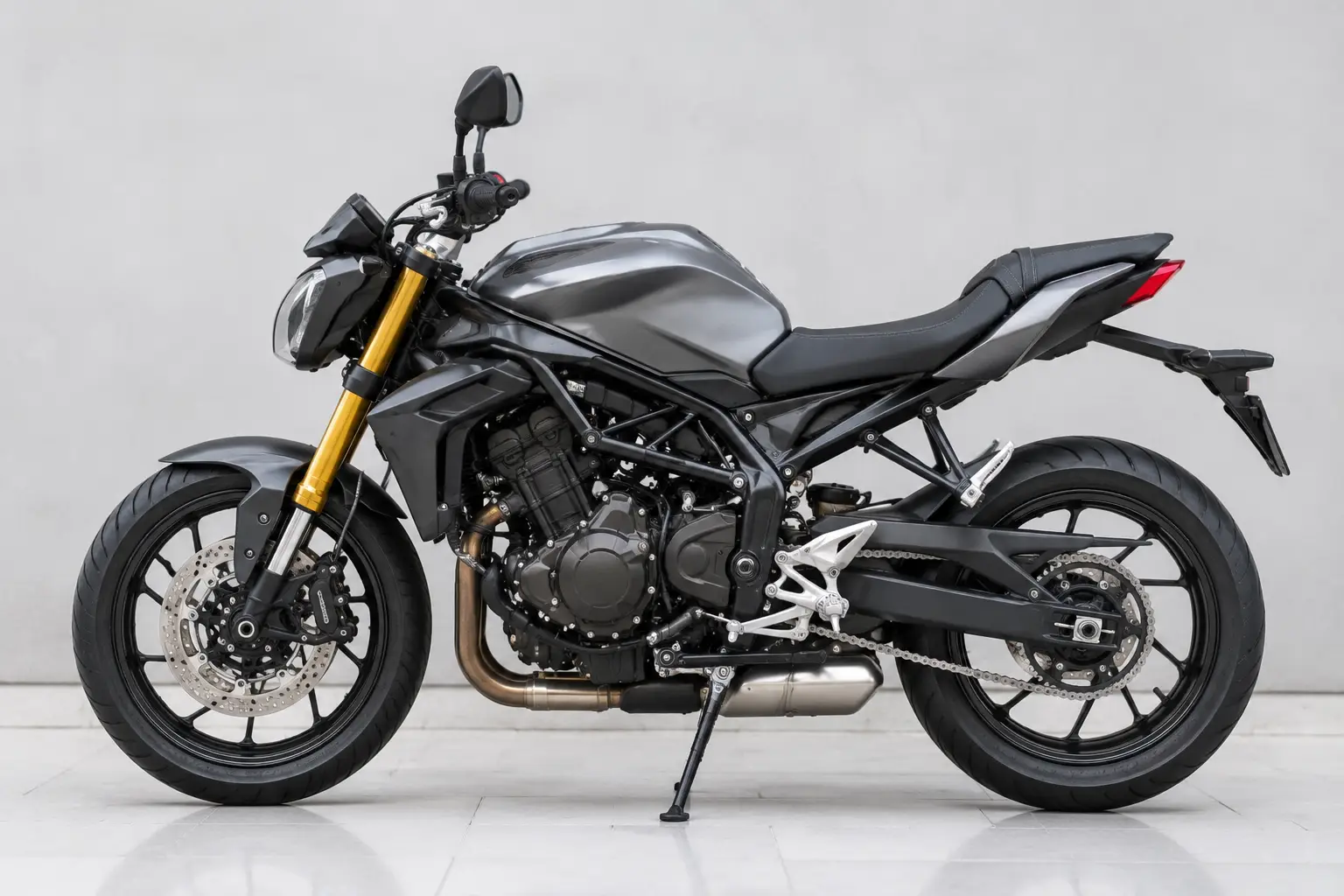
A motorcycle has fewer parts on show than a car, so it is a good machine for learning how vehicles work. Most bikes share the same basic building blocks, whatever their style.
This guide explains what each part does so you can name it in a quiz or a workshop. It is not riding instruction: learn to ride with a qualified instructor, and check the licence and training rules where you live.
Frame, suspension, wheels and brakes
The frame is the bike's skeleton. It holds the engine, carries the rider and links the front and rear wheels. Frames may be made of steel tubes, aluminium beams or other designs, and on some bikes the engine itself forms part of the structure.
At the front, the fork holds the wheel and contains the front suspension. It turns with the handlebars to steer. At the back, the swingarm holds the rear wheel and pivots on the frame, with one or two shock absorbers controlling its movement.
Most modern bikes use disc brakes. A calliper squeezes pads against a metal disc fixed to the wheel. Many new bikes also have ABS, which stops the wheels locking under hard braking.
Engine, clutch, gearbox and final drive
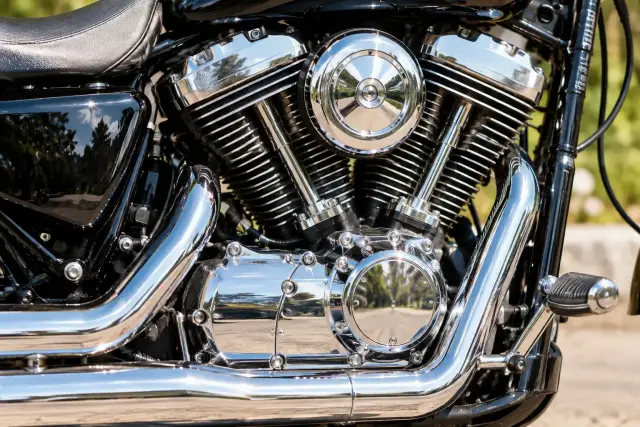
The engine burns fuel to turn a crankshaft. On electric motorcycles, a battery and electric motor do this job instead.
The clutch connects and disconnects the engine from the gearbox, so the rider can pull away smoothly and change gear. The gearbox usually has five or six gears, selected one at a time in sequence.
The final drive carries power from the gearbox to the rear wheel. Most bikes use a chain. Some cruisers use a toothed belt, and many touring bikes and BMW boxers use an enclosed shaft.
Controls and instruments
The control layout is very similar on most manual motorcycles. Scooters and automatic bikes usually have no clutch lever or foot gear lever and often use a left-hand lever for the rear brake.
The instrument panel shows road speed on the speedometer and engine speed on the tachometer, along with warning lights, the gear position on many bikes and the fuel level.
| Control | Where it is | What it does |
|---|---|---|
| Throttle | Right twist grip | Controls engine power |
| Front brake | Right handlebar lever | Brakes the front wheel |
| Clutch | Left handlebar lever | Disconnects the engine from the gearbox |
| Gear lever | Left foot | Changes gear up or down |
| Rear brake | Right foot pedal | Brakes the rear wheel |
| Switches | Both handlebars | Lights, indicators, horn and starter |
Name the part
0 / 4 answered
1Which part squeezes the brake pads against the disc?
Answer: Calliper. The calliper holds the pads and clamps them onto the spinning disc.2Which part connects and disconnects the engine from the gearbox?
Answer: Clutch. Pulling the clutch lever separates the engine from the gearbox.3Which type of final drive is fully enclosed and common on touring bikes?
Answer: Shaft. A shaft drive needs less maintenance than a chain but adds weight.4On most manual motorcycles, where is the rear brake control?
Answer: A pedal by the right foot. The left foot works the gear lever, and the right foot works the rear brake.
Frequently asked questions
Why do some motorcycles have a belt or shaft instead of a chain?
A chain is light and efficient but needs regular cleaning, lubrication and adjustment. Belts are quieter and cleaner, and shafts are enclosed and need little routine care, though they add weight.
Chassis, drivetrain, controls
Think of a motorcycle in three parts: the chassis that holds and stops it, the drivetrain that moves it, and the controls the rider uses to manage both.
Check the evidence behind the guide
Use these references to check terminology and pursue a topic in more depth. Photo quizzes help you practise observation; a single picture rarely proves a difficult identification.
When a source describes a broad group, compare its details with the exact species, model or specimen you are studying. Record the feature that supports your answer rather than relying on a name alone.