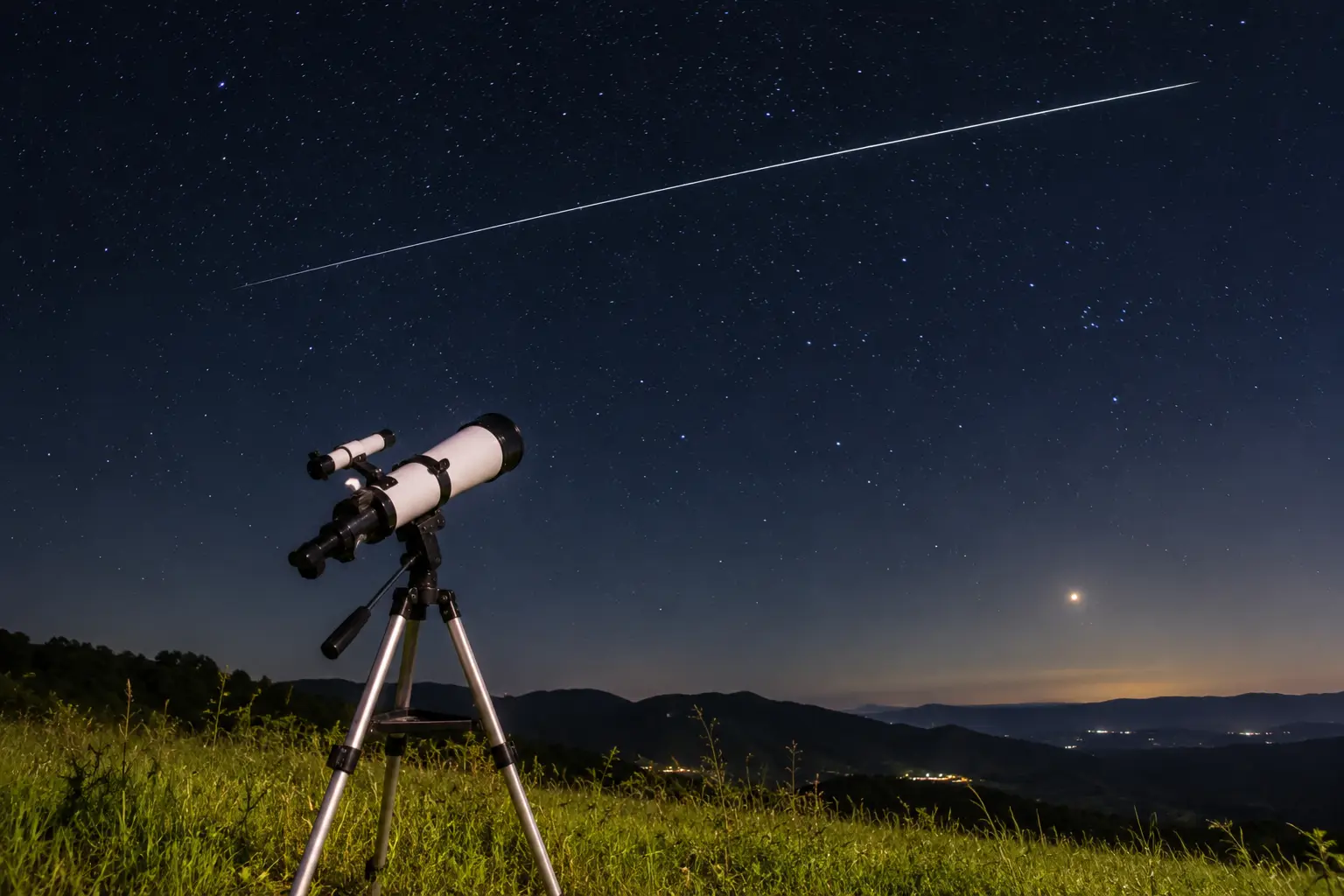
Five planets are easy to see with the naked eye: Mercury, Venus, Mars, Jupiter and Saturn. The International Space Station is often visible too. You need no equipment, only a clear sky and some idea of where and when to look.
Planets move against the background stars over weeks and months, so their positions change from year to year. A free planetarium app or an astronomy website will show what is up tonight from your location.
Planet or star?
Planets usually shine with a steadier light than stars. Stars are so far away that they appear as single points, and Earth's moving air makes them twinkle. Planets show a tiny disc, so the twinkling tends to average out, although any object can twinkle when low near the horizon.
Planets also stay close to the ecliptic, the path the Sun and Moon follow across the sky. A bright, steady 'star' near that line, especially one not on your star chart, is probably a planet. Give your eyes 20 to 30 minutes in the dark, and use a red torch, which does not spoil night vision.
The naked-eye planets
Venus is the brightest object in the night sky after the Moon. Its orbit lies inside Earth's, so it never strays far from the Sun and is seen only in the west after sunset or the east before sunrise, which is why it is called the evening or morning star. Mercury behaves the same way but stays even closer to the Sun, so it is seen only low in twilight.
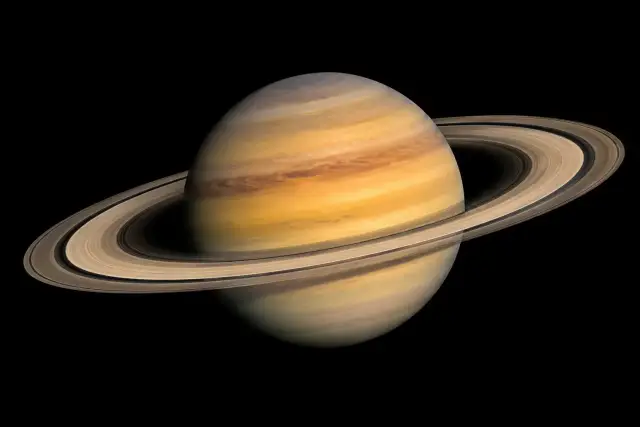
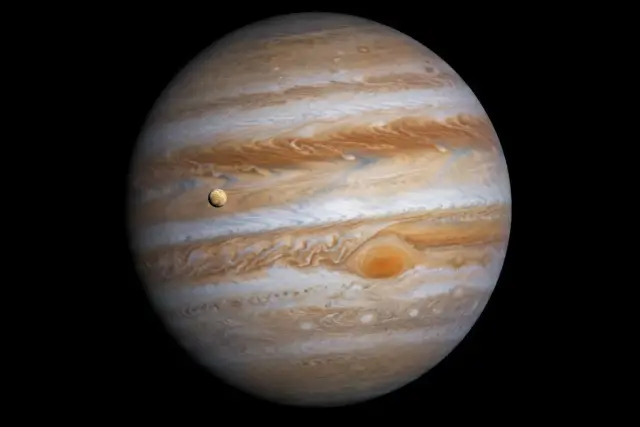
Mars looks orange-red and is brightest around opposition, when Earth passes between it and the Sun, about every 26 months. Jupiter is bright and creamy white; steady binoculars show up to four of its largest moons as tiny dots in a line. Saturn is pale yellow and fainter, and its rings need a small telescope.
| Planet | Colour and brightness | Tip |
|---|---|---|
| Mercury | Fairly bright but often hard to find | Look low near the horizon just after sunset or before sunrise |
| Venus | Brilliant white | Evening or morning sky only; far brighter than any star |
| Mars | Orange-red | Brightest near opposition, about every 26 months |
| Jupiter | Bright creamy white | Binoculars show its four largest moons |
| Saturn | Pale yellow, steady | A small telescope shows the rings |
Seeing the International Space Station
The ISS orbits about 400 kilometres up and circles Earth about every 90 minutes. From the ground it looks like a very bright, steady star gliding across the sky over a few minutes. It has no flashing lights and makes no sound, which sets it apart from aircraft.
The station shines by reflected sunlight, so the best sightings come shortly after sunset or before sunrise, when your sky is dark but the station, high above, is still in sunlight. A pass can end with the station fading out partway across the sky as it enters Earth's shadow. NASA's Spot the Station service gives times and directions for passes over your location.
Read the night sky
0 / 4 answered
1Which planet is the brightest in the night sky?
Answer: Venus. Only the Moon outshines Venus at night.2Why is Venus seen only in the evening or morning sky?
Answer: Its orbit is inside Earth's, so it never appears far from the Sun. Mercury is limited in the same way.3How can you tell the ISS from an aeroplane?
Answer: The ISS has no flashing lights. Aircraft carry blinking navigation lights; the ISS shines steadily.4Which planet's four largest moons can be seen with binoculars?
Answer: Jupiter. They look like small dots in a line near the planet.
Frequently asked questions
Why does the ISS sometimes disappear in the middle of the sky?
The station is visible only while sunlight falls on it. When it passes into Earth's shadow it stops reflecting sunlight and seems to fade out, even though it is still moving overhead.
Steady lights and moving lights
Look for bright, steady points near the Sun's path for planets, and a silent, steady light gliding across the sky at dusk or dawn for the ISS.
Check the evidence behind the guide
Use these references to check terminology and pursue a topic in more depth. Photo quizzes help you practise observation; a single picture rarely proves a difficult identification.
When a source describes a broad group, compare its details with the exact species, model or specimen you are studying. Record the feature that supports your answer rather than relying on a name alone.