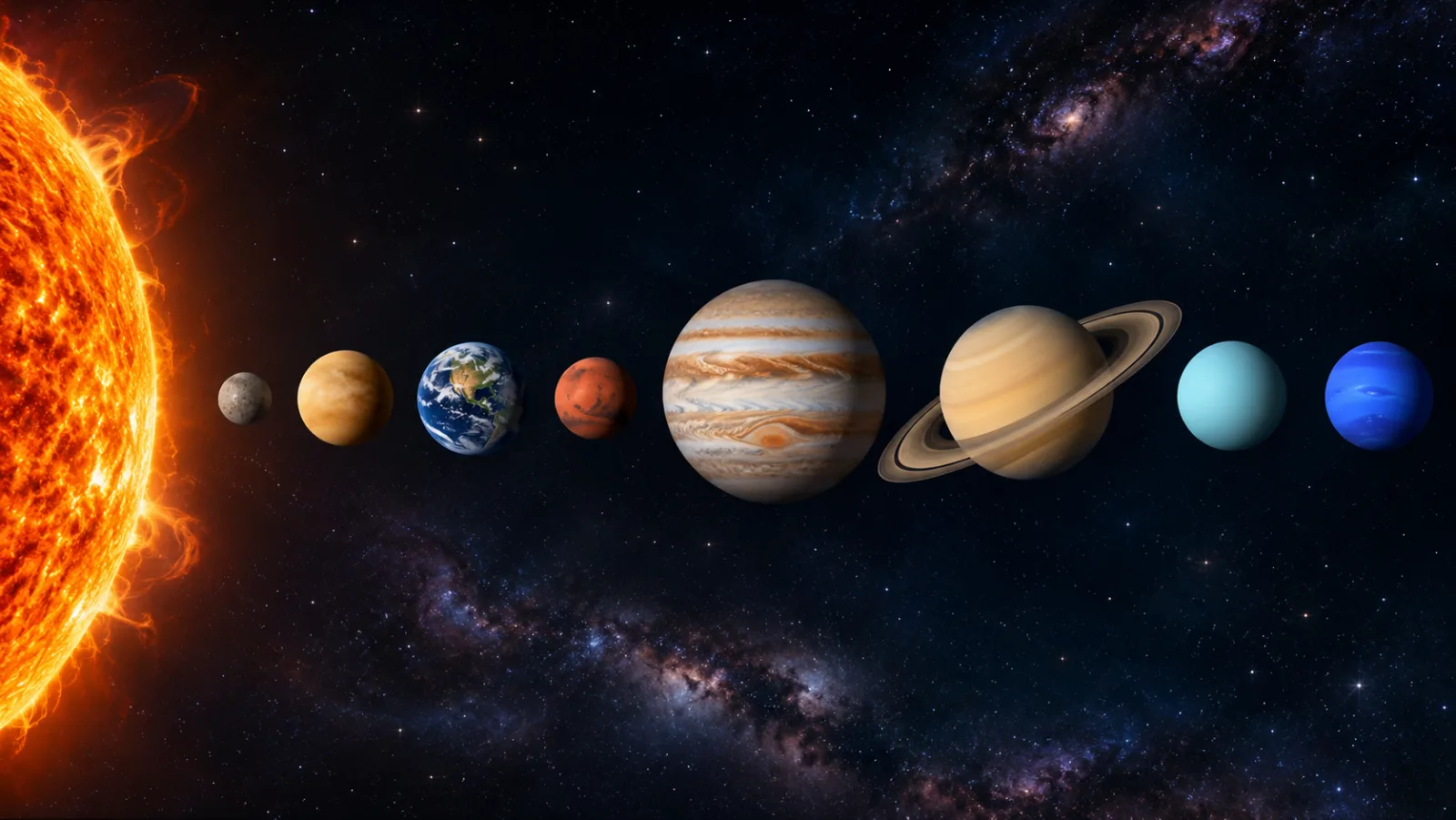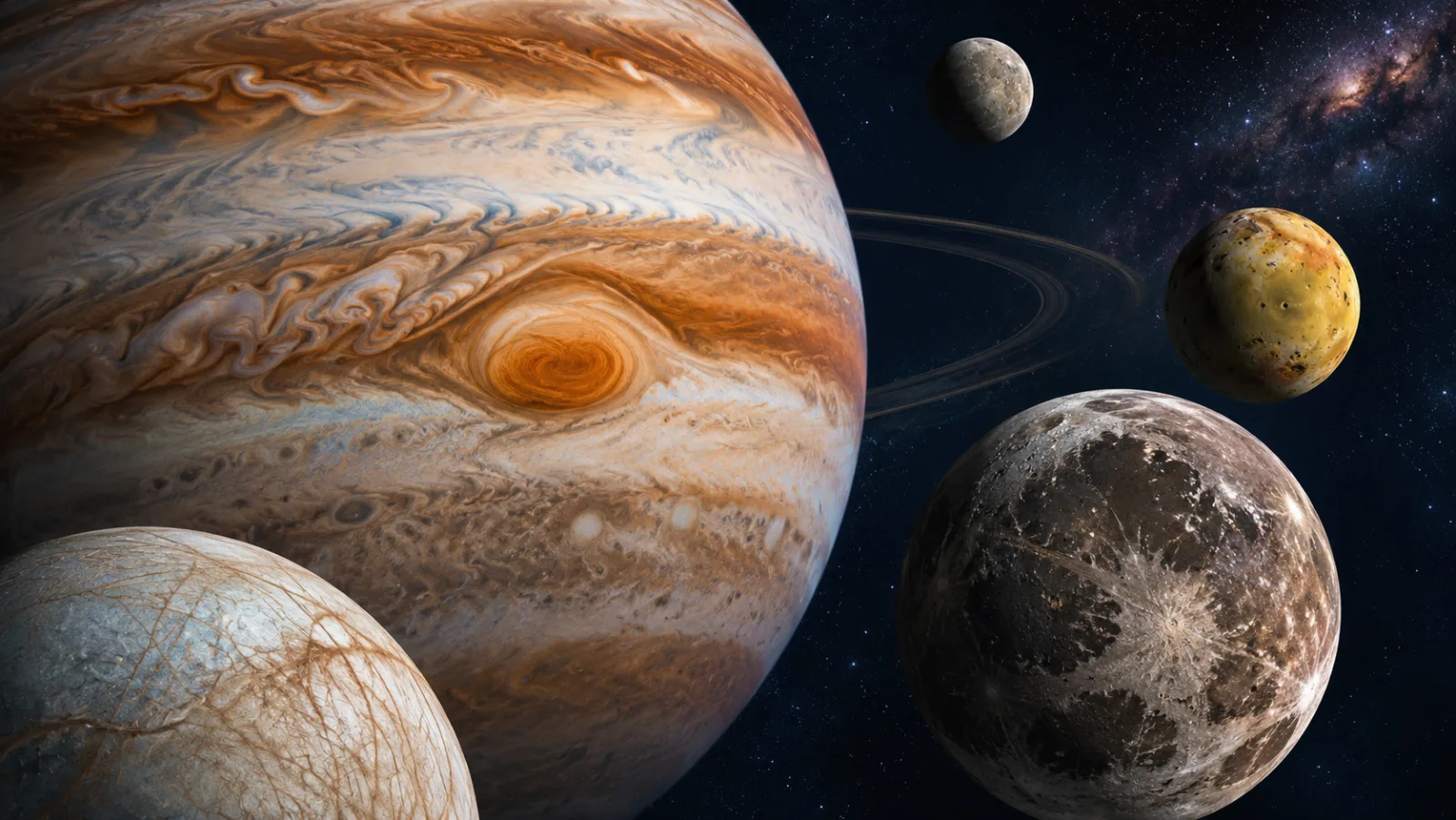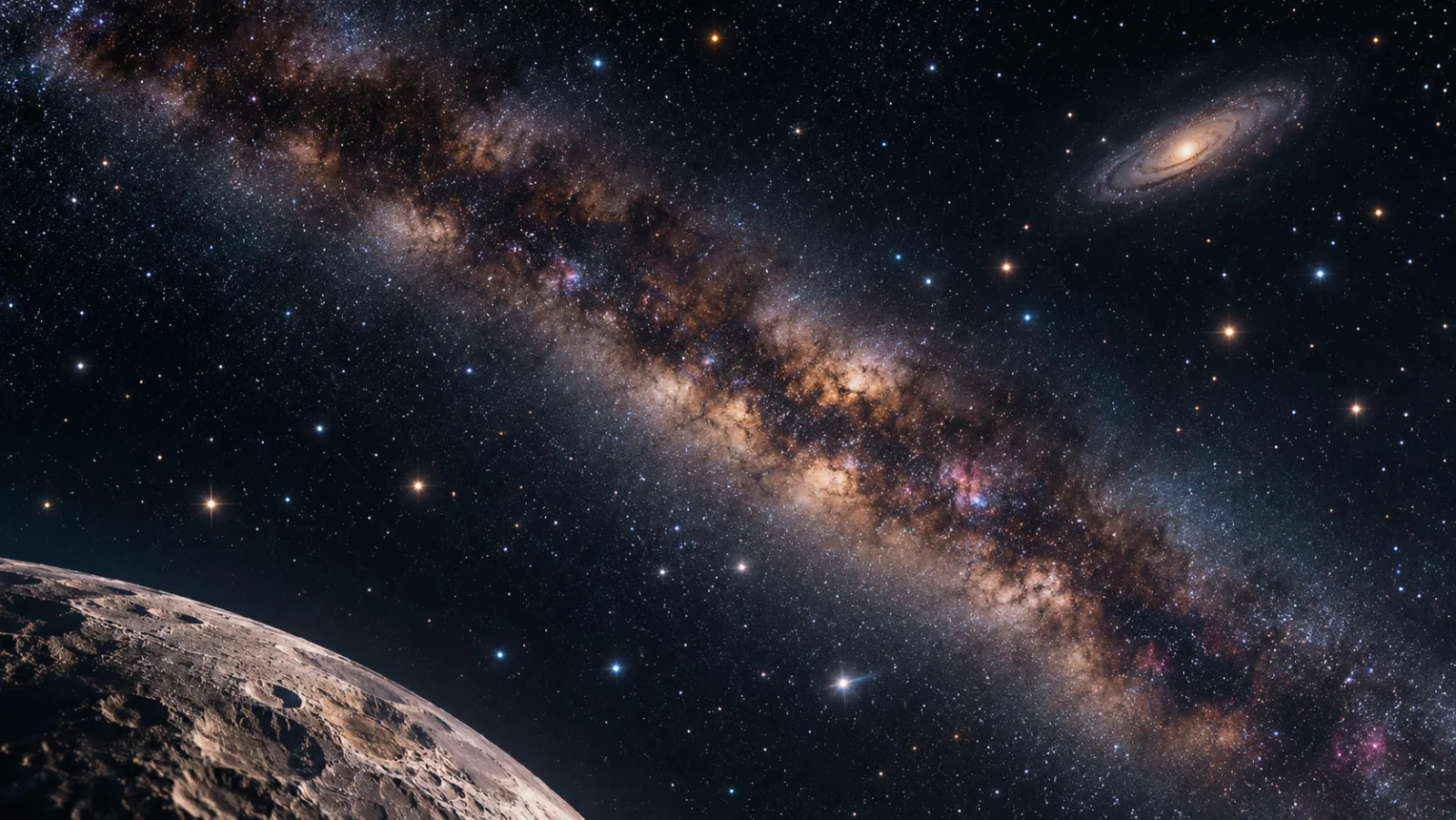
The night sky puts unlike things next to each other. A bright point may be a star in our galaxy; a fuzzy patch may be another galaxy; a constellation joins stars that only appear close from Earth. This quiz helps you keep those scales separate.
There are twenty questions in two rounds. The first covers how stars shine and change. The second moves to galaxies, familiar constellations and black holes. Choose an answer before opening the rationale.
Quick takeaways
- A star is one object; a galaxy holds many stars.
- Constellations describe our view of the sky.
- Distance and brightness are different ideas.
Stars: colour, energy and life cycles
The Sun is your reference point. Think about what a star produces and what can remain when it changes.
1What is the Sun?
Answer: A star. The Sun is our nearest star.2What process powers a star like the Sun?
Answer: Nuclear fusion. Fusion in the core releases the energy that makes the Sun shine.3Which colour generally indicates a hotter star?
Answer: Blue. Blue stars generally have hotter surfaces than red stars.4What is a red giant?
Answer: A late stage of some stars. Some stars expand and cool at the surface as they become red giants.5What is a white dwarf?
Answer: A dense stellar remnant. A white dwarf is the compact remnant left by a star like the Sun.6What is a supernova?
Answer: A stellar explosion. Some stars end in powerful explosions called supernovae.7What can form after a massive star's core collapses?
Answer: A neutron star or black hole. The remnant depends on the mass and details of the collapsing core.8What is a nebula?
Answer: A cloud of gas and dust in space. Nebulae can be sites of star formation or material from dying stars.9What does a light-year measure?
Answer: Distance. It is the distance light travels in one year.10What is an exoplanet?
Answer: A planet orbiting a star beyond the Sun. Exoplanets belong to planetary systems outside our solar system.
Galaxies and patterns in the sky
A galaxy is a physical system. A constellation is a pattern or region we define from our view of the sky.
11What is the name of the galaxy containing our solar system?
Answer: The Milky Way. The Sun and its planets are within the Milky Way.12What is a galaxy made of?
Answer: Stars, gas, dust and dark matter. Gravity binds a galaxy's stars and other matter together.13What kind of galaxy is the Milky Way?
Answer: Barred spiral. The Milky Way is a barred spiral galaxy.14Which nearby large galaxy is also called M31?
Answer: Andromeda. M31 is the Andromeda Galaxy.15What is a constellation?
Answer: A named region and pattern in the sky. Constellations help divide and describe the sky as seen from Earth.16How many bright stars make up Orion's Belt?
Answer: Three. Three prominent stars form the short line called Orion's Belt.17Which star is currently near the north celestial pole?
Answer: Polaris. Polaris, in Ursa Minor, serves as today's North Star.18What is a black hole's event horizon?
Answer: A boundary beyond which light cannot escape. The event horizon marks the point of no return for light and matter.19What is the shape of an elliptical galaxy?
Answer: Smooth and roughly oval. Elliptical galaxies generally look smooth and rounded or elongated.20Why can stars in one constellation be far apart in space?
Answer: The pattern depends on our viewpoint. A constellation's apparent pattern does not imply the stars are physically close.
Five-question sky check
Finish by sorting objects by scale.
0 / 5 answered
1Which is larger: a star or a galaxy?
Answer: A galaxy. A galaxy contains many stars.2Which of these is a star?
Answer: The Sun. The Sun is the star at the centre of our solar system.3Which is a galaxy?
Answer: Andromeda. Andromeda is a galaxy outside the Milky Way.4What does a constellation name describe?
Answer: A region of the sky. Constellations define regions and apparent patterns seen from Earth.5What is a nebula?
Answer: A cloud of gas and dust. Nebulae are clouds of gas and dust in space.
Frequently asked questions
Is the solar system a galaxy?
No. The solar system is the Sun and objects bound to it. It lies inside the much larger Milky Way galaxy.
Are constellation stars next to one another?
They can appear close in our sky while being far apart in three-dimensional space.
Sort the sky by scale
Draw four nested labels—planet, star system, galaxy and universe—and place a familiar example beside each. Then revisit the questions that confused one level with another.
Move from a star to a galaxy
Draw a simple scale diagram with the Sun, solar system and Milky Way. Mark constellations as apparent sky regions rather than physical clusters. Then revisit any question where those levels became mixed.
NASA's pages explain stars, galaxies and black holes in more depth and are useful for checking a surprising answer.