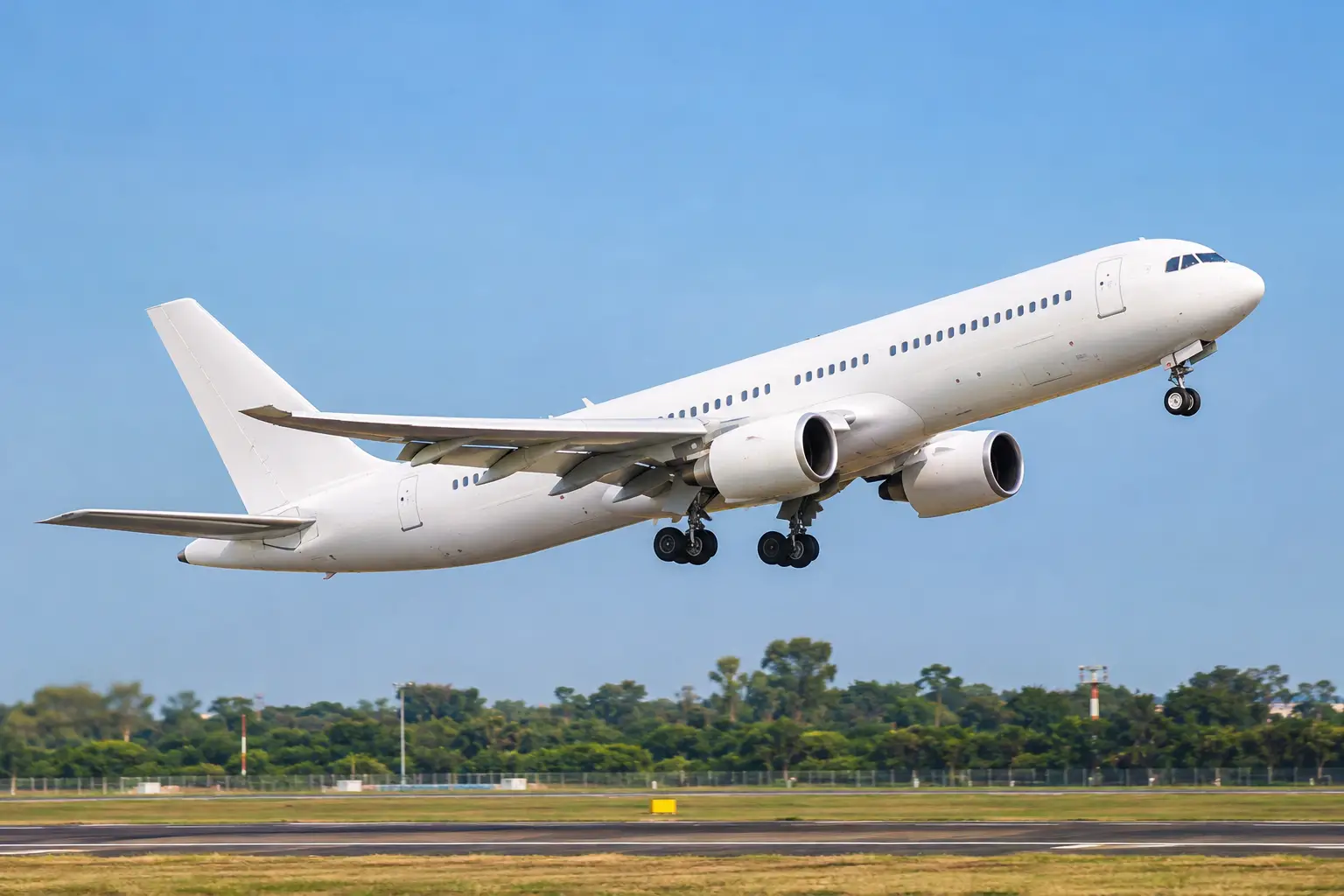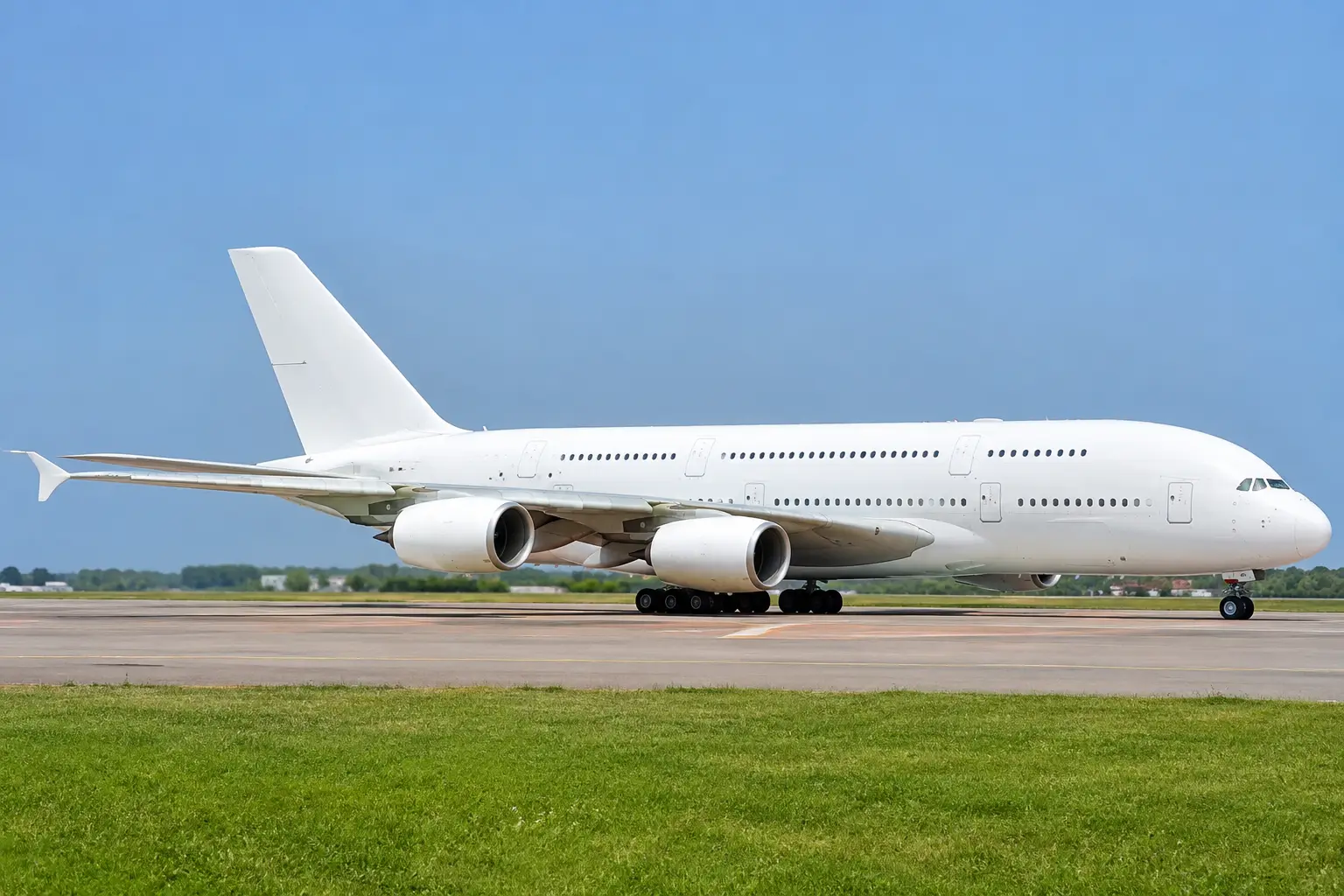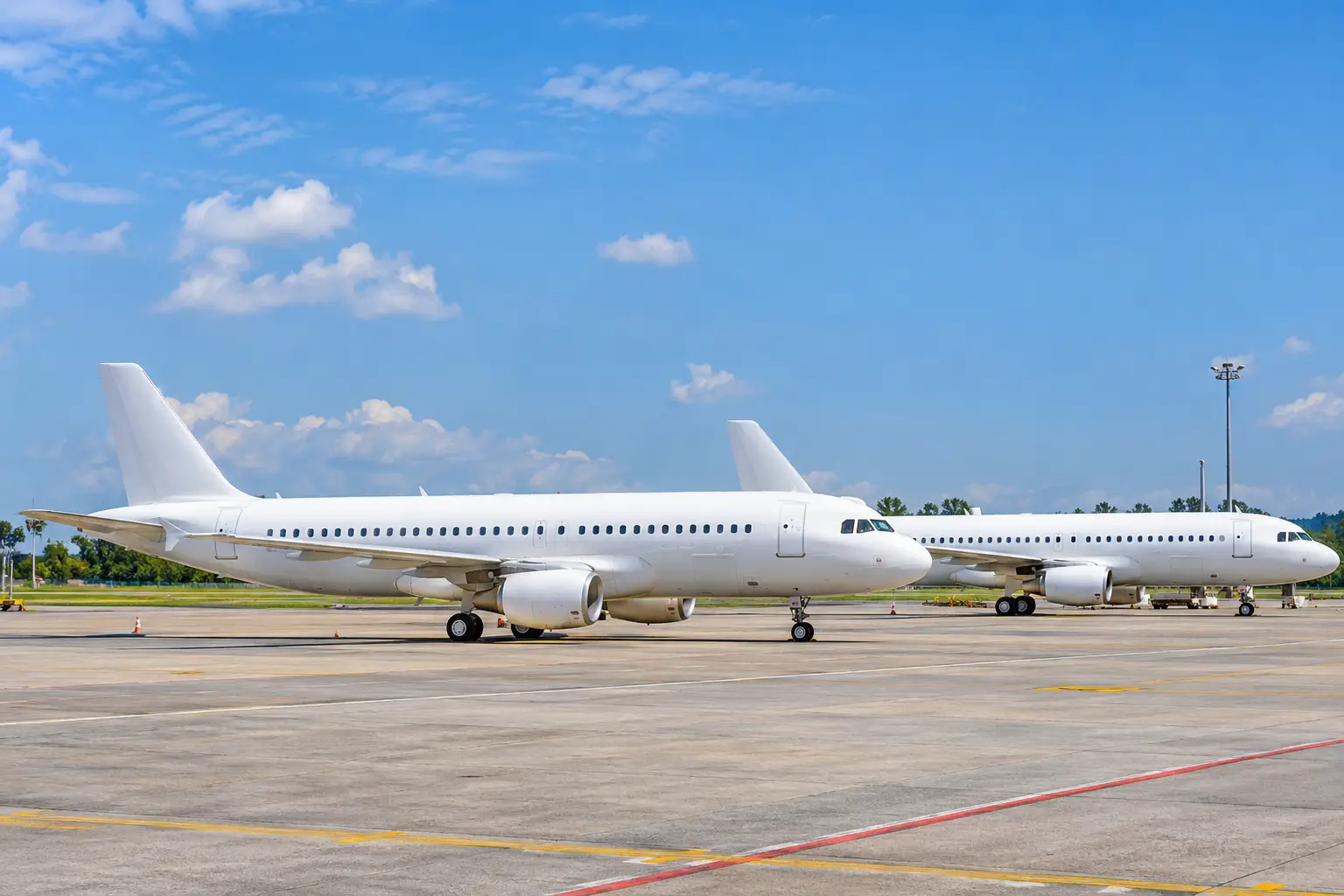
Airline paint changes, but the shape of an aircraft does not. Spotters identify airliners by looking at a few fixed features in the same order every time.
Work from the biggest clue to the smallest: how many engines, how wide the body is, then the nose, wingtips and tail. Each step removes several candidates.
Start with engines and body width
Count the engines first. Two engines under the wings covers most modern airliners. Four engines points to older or very large types such as the 747, A340 or A380. A third engine in the tail suggests a DC-10, MD-11 or older trijet.
Then judge the body. Single-aisle jets such as the 737 and A320 have one row of passenger windows on a slim fuselage and shorter landing gear. Widebody jets such as the 777, 787 and A350 have a much fatter fuselage and main gear with four or six wheels per leg.
Look at the nose and cockpit windows
The Boeing 737 has a pointed nose and its engines sit close to the ground, so the bottom of each engine cover is flattened. The A320 family has a rounder nose, and its engines sit higher under the wing.
The A350's cockpit windows are framed by a dark band that spotters call a 'mask'. The 787 has four large cockpit windows and a smooth, rounded nose with no sharp corners.
Check the wingtips and tail
Wingtips are one of the quickest clues. Many A320s have upturned 'sharklets'. Newer 737s have tall winglets, and the 737 MAX has a split tip pointing up and down. The 787 and 777 have long, swept-back raked tips with no winglet.
Engine covers help too. The 787 and 737 MAX have sawtooth edges, called chevrons, at the back of their engine nacelles to reduce noise. A tail-mounted engine pair at the rear of the fuselage marks regional jets such as the CRJ family.
| Clue | Boeing example | Airbus example |
|---|---|---|
| Single-aisle nose | 737: pointed | A320: rounded |
| Wingtip | 737 MAX: split winglet | A320neo: sharklet |
| Long-haul twin | 787: chevron engines | A350: dark window mask |
Spot the airliner
0 / 4 answered
1What is the best first clue when identifying an airliner?
Answer: The number and position of the engines. Engines narrow the list fastest, and paint can change.2Which single-aisle airliner has a more pointed nose and low-slung engines?
Answer: Boeing 737. The 737's engines sit close to the ground, with flattened lower covers.3What are the sawtooth edges on some engine covers called?
Answer: Chevrons. Chevrons on the 787 and 737 MAX reduce engine noise.4Which airliner is known for a dark 'mask' around its cockpit windows?
Answer: Airbus A350. The A350's window frame gives it a distinctive mask-like look.
Frequently asked questions
Why not just read the airline name?
Airlines fly many types in the same colours, and leased aircraft change paint. Shape features stay the same, so they identify the type reliably.
Use the same order every time
Engines, body width, nose, wingtips, tail. Following that order turns a quick glance into a confident identification.
Check the evidence behind the guide
Use these references to check terminology and pursue a topic in more depth. Photo quizzes help you practise observation; a single picture rarely proves a difficult identification.
When a source describes a broad group, compare its details with the exact species, model or specimen you are studying. Record the feature that supports your answer rather than relying on a name alone.