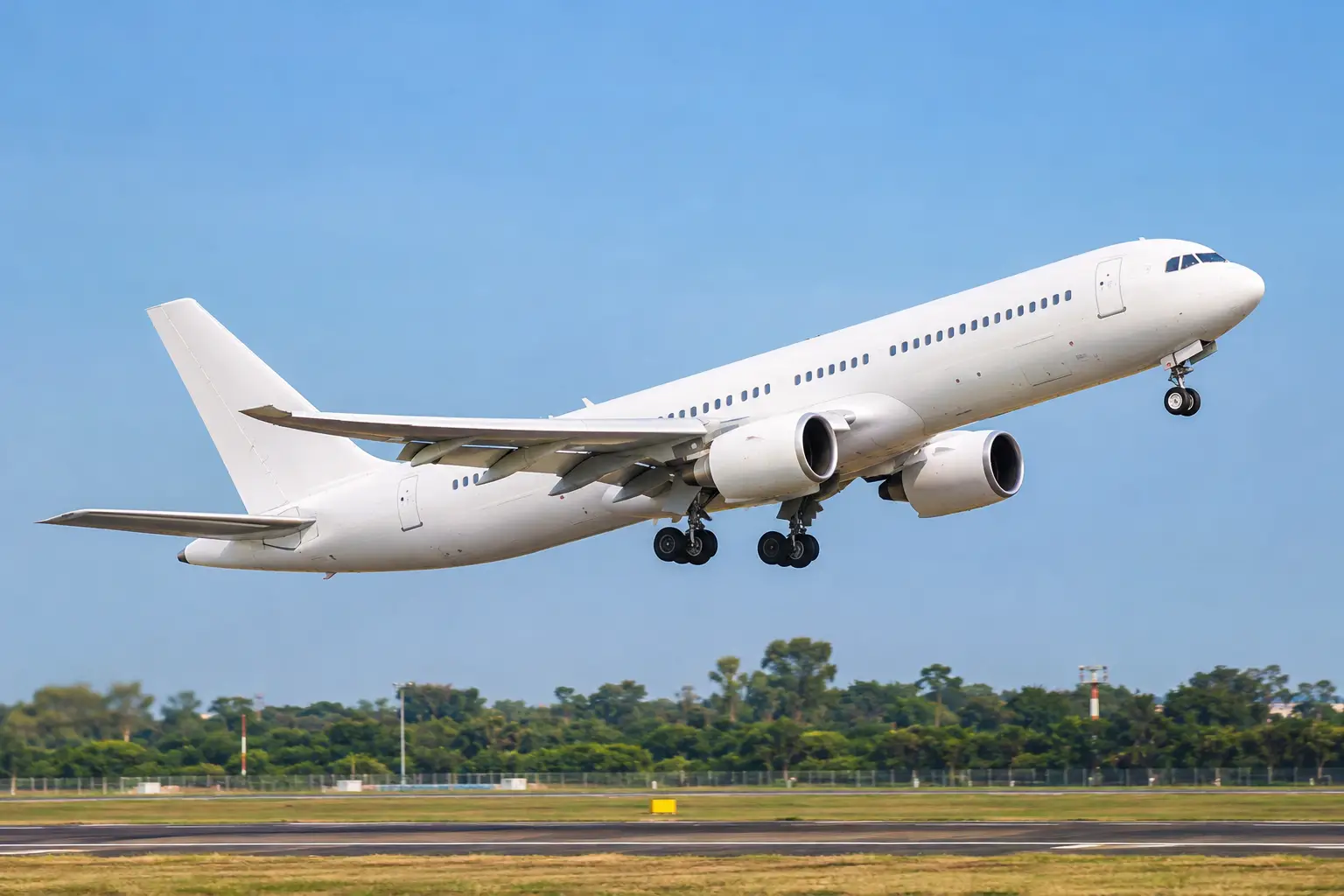
Aircraft come in more shapes than most people notice: single-aisle airliners, double-deck giants, tandem-rotor helicopters, swing-wing fighters and cargo planes built to carry other planes.
These twenty-five questions move from airliners and aviation history to helicopters, cargo aircraft and military jets. Each answer comes with a short note so you learn the reason, not just the name.
Quick takeaways
- Count the engines and see where they sit.
- Check the wing shape and wingtips.
- Rotorcraft differ by how they handle torque.
Airliners and aviation history
Start with the passenger jets you see at airports and the aircraft that made them possible.
1Which company builds the 737 family of airliners?
Answer: Boeing. The Boeing 737 first flew in 1967 and became one of the best-selling jet airliners ever built.2Which Airbus family is the main single-aisle rival to the Boeing 737?
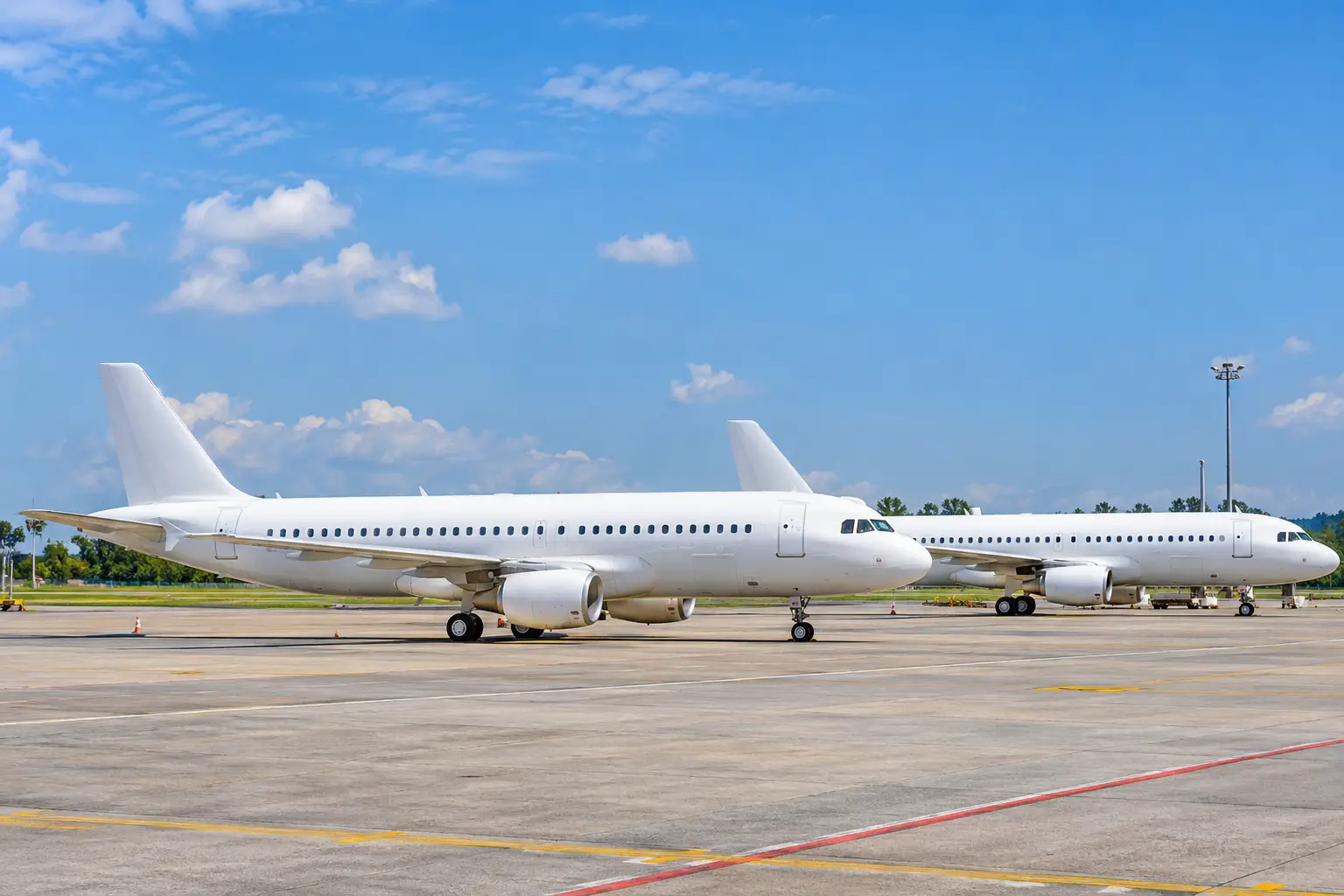
Answer: A320 family. The A320 family, including the A319 and A321, competes directly with the 737 on short and medium routes.3Which airliner has two passenger decks along its full length?
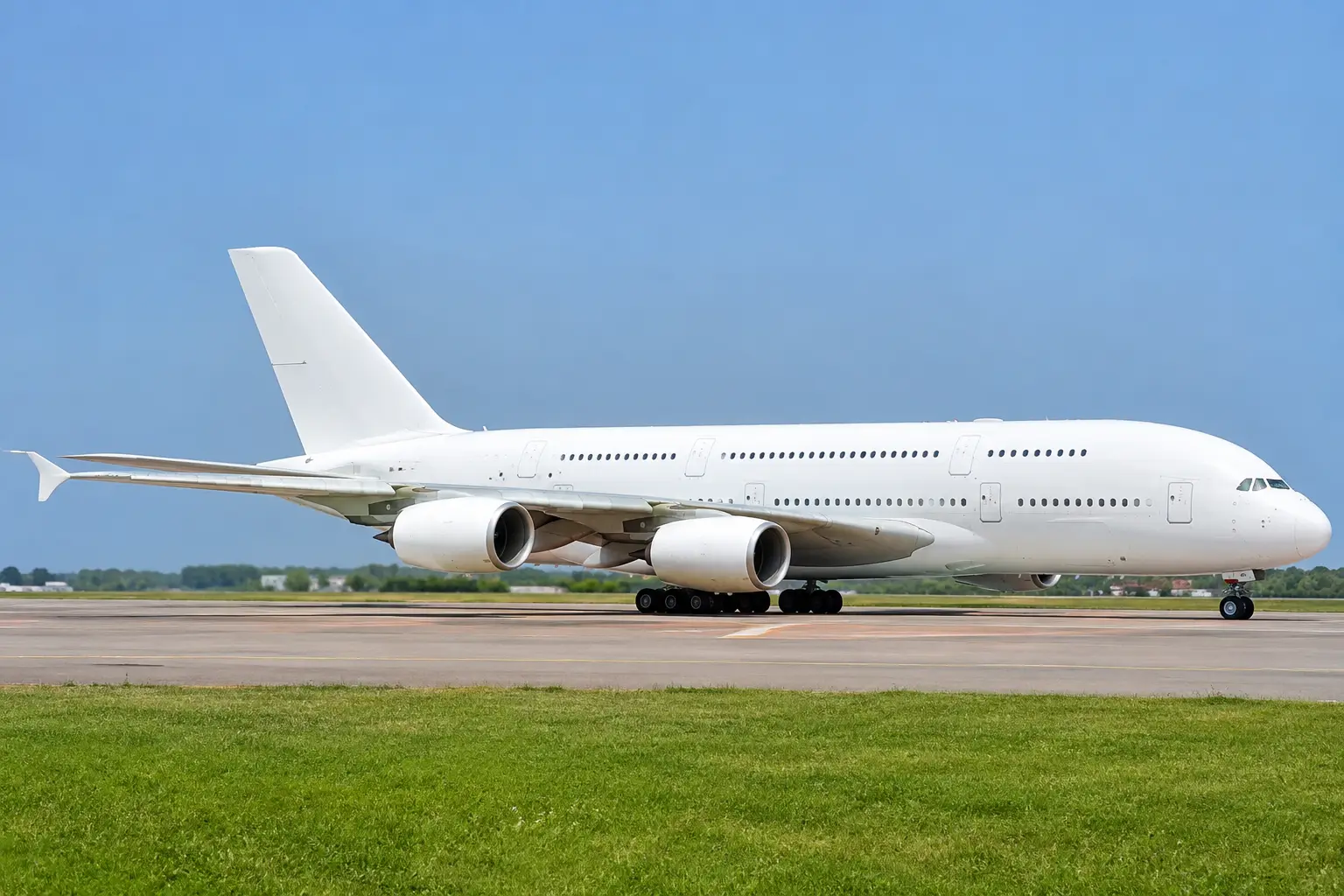
Answer: Airbus A380. The A380's upper deck runs the whole length of the fuselage; the 747's covers only the front.4What gives the Boeing 747 its famous hump?
Answer: A short upper deck over the front of the cabin. The 747's upper deck sits behind the cockpit and gives the front fuselage its distinctive raised shape.5Which supersonic airliner flew with British Airways and Air France until 2003?
Answer: Concorde. Concorde entered service in 1976 and cruised at about twice the speed of sound until it was retired in 2003.6Which Boeing airliner makes heavy use of carbon-fibre composites in its structure?
Answer: Boeing 787 Dreamliner. Boeing says about half of the 787's primary structure by weight is composite material.7Where are the engines on most modern single-aisle airliners such as the A320 and 737?
Answer: Under the wings. Underwing engines are easy to reach for maintenance and help balance the wing in flight.8Which three-engine airliner carried one engine high in its tail fin?
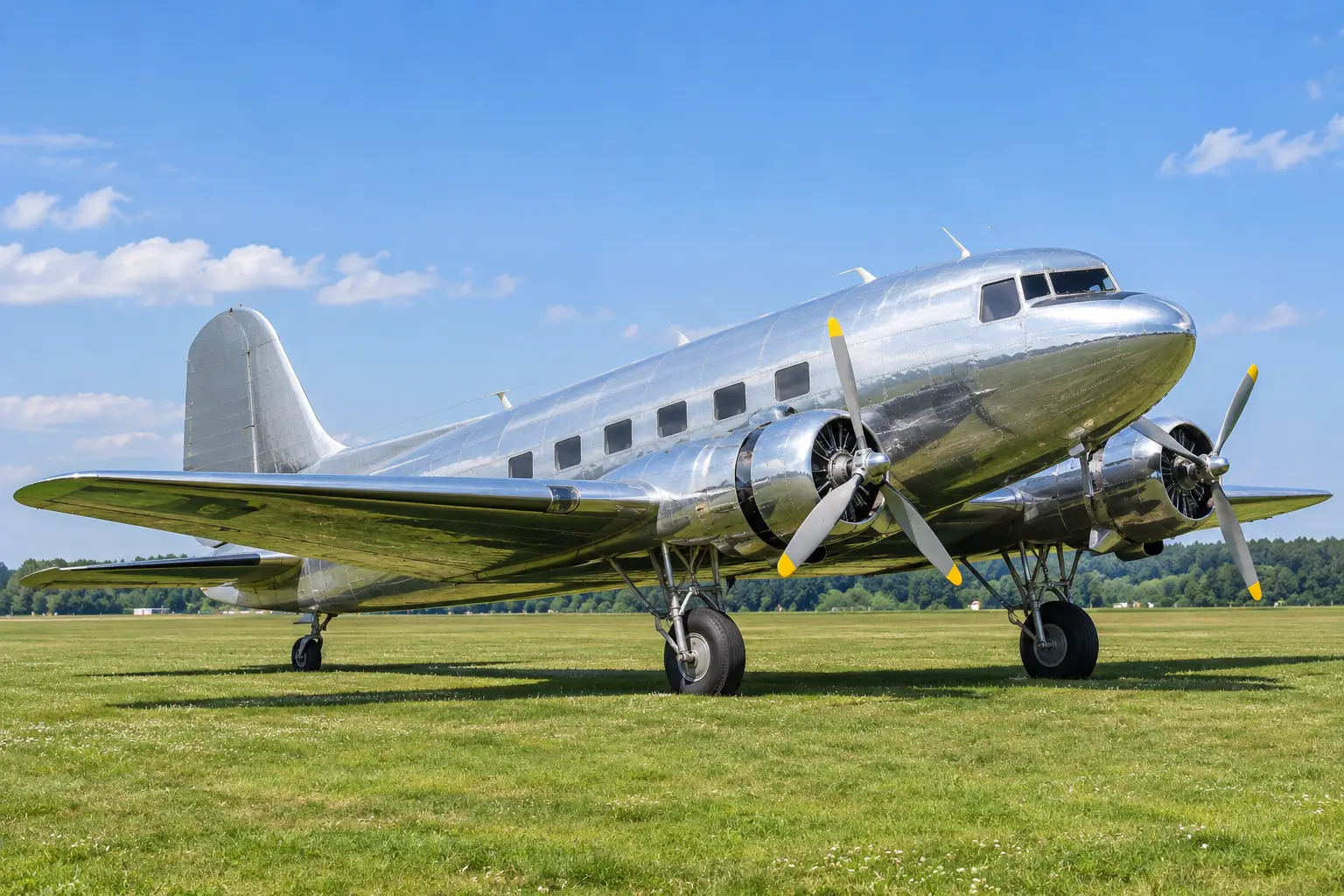
Answer: McDonnell Douglas DC-10. The DC-10 and its successor the MD-11 had a third engine mounted in the base of the tail fin.9Who made the first sustained, controlled powered aeroplane flights in 1903?
Answer: The Wright brothers. Orville and Wilbur Wright flew at Kitty Hawk, North Carolina, on 17 December 1903.10Which aircraft began the first regular jet airliner service in 1952?
Answer: de Havilland Comet. BOAC flew the Comet from 1952; early accidents led to major lessons about metal fatigue.
Helicopters and cargo aircraft
Rotors, tilting engines and outsized cargo bays all solve different problems.
11What gives a helicopter its lift instead of fixed wings?
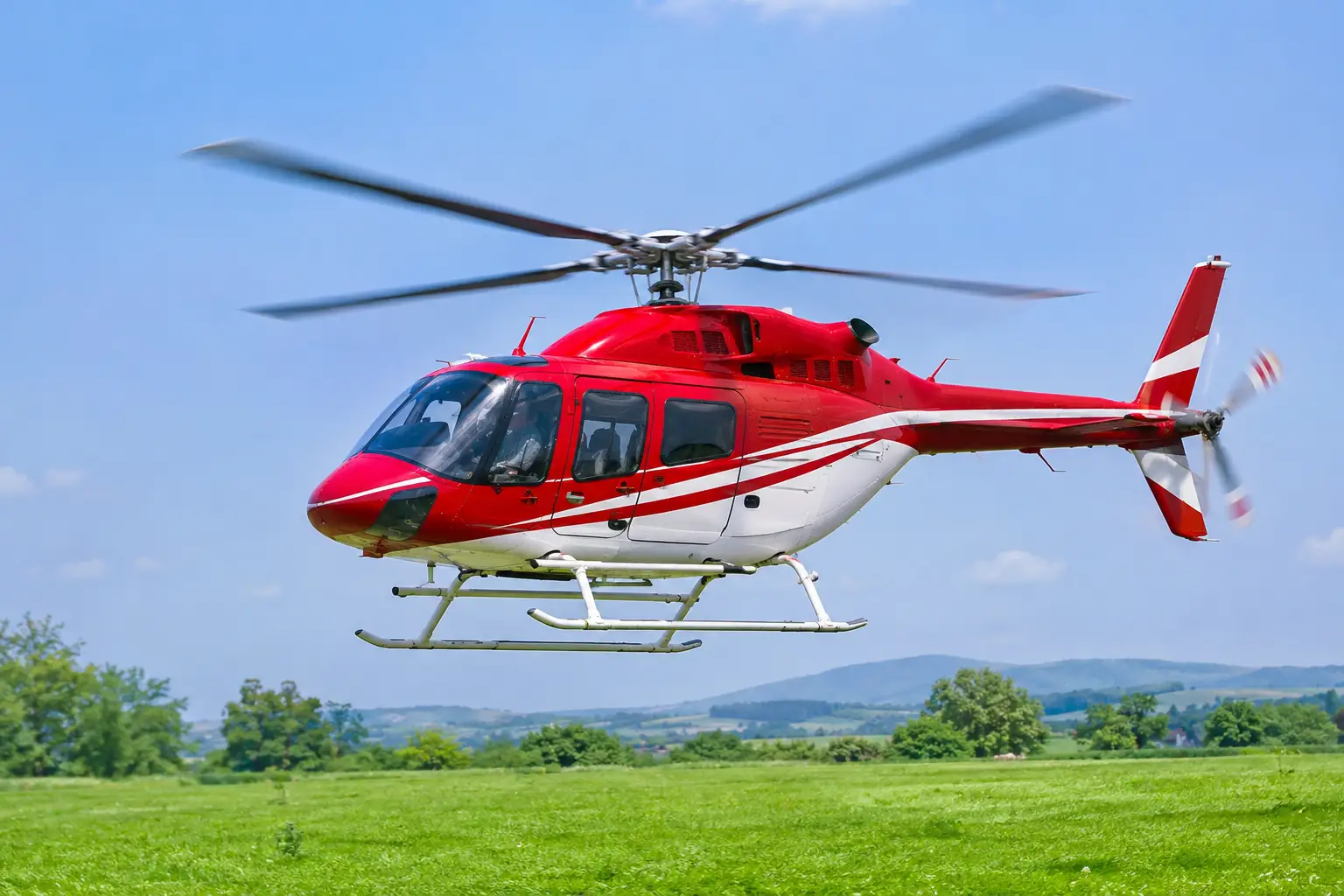
Answer: A rotating main rotor. Each rotor blade is a narrow wing; spinning the blades moves air over them and creates lift.12What does a conventional helicopter's tail rotor mainly counter?
Answer: Torque from the main rotor. Without a tail rotor, the fuselage would tend to spin the opposite way to the main rotor.13Which helicopter uses two large rotors, one at each end?
Answer: Boeing CH-47 Chinook. The Chinook's tandem rotors turn in opposite directions, so it needs no tail rotor.14Which military aircraft tilts its rotors to fly like a helicopter or a turboprop plane?
Answer: V-22 Osprey. The Osprey takes off vertically, then tilts its engine nacelles forward for faster cruising flight.15Which four-engine turboprop has served as a military transport since the 1950s?
Answer: Lockheed C-130 Hercules. The C-130 first flew in 1954 and is still built in updated versions; the other three are jets.16Which six-engine cargo aircraft, built as a single example, was the heaviest aircraft ever flown?
Answer: Antonov An-225 Mriya. The only An-225 was destroyed in 2022 during the war in Ukraine.17Which Airbus freighter has a bulging upper fuselage for carrying aircraft parts?
Answer: Airbus Beluga. The Beluga's huge cargo bay carries wings and fuselage sections between Airbus factories.
Military jets and aircraft parts
Finish with famous military aircraft and the surfaces that steer every plane.
18Which single-engine American fighter is known for its frameless bubble canopy?
Answer: F-16 Fighting Falcon. The F-16 has one engine and a clear canopy; the other three fighters listed have two engines.19Which fighter has wings that swing forward and back in flight?
Answer: F-14 Tomcat. The F-14's variable-sweep wings spread for slow flight and fold back for high speed.20Which aircraft used flat, angled facets to scatter radar waves?
Answer: F-117 Nighthawk. The F-117's faceted shape was an early, practical stealth design.21Which aircraft holds the record as the fastest crewed air-breathing jet?
Answer: SR-71 Blackbird. In 1976 an SR-71 set an absolute speed record of about 3,530 km/h.22What shape is a delta wing seen from above?
Answer: A triangle. Delta wings, named after the Greek letter, appear on Concorde and many fighter jets.23What do winglets on a wingtip mainly do?
Answer: Reduce drag from wingtip vortices. Upturned tips weaken the swirling air at the wingtip, which saves fuel.24Which Brazilian manufacturer builds the E-Jet family of regional airliners?
Answer: Embraer. Embraer's E-Jets, such as the E175 and E195, serve shorter routes with about 70 to 140 seats.25Which tail surface mainly moves an aircraft's nose up or down?
Answer: Elevator. Elevators control pitch, ailerons control roll and the rudder controls yaw.
Five final aircraft questions
0 / 5 answered
1How many engines does an Airbus A380 have?
Answer: Four. The A380 has four engines under its wings, like the Boeing 747.2Which helicopter needs no tail rotor because its two rotors turn in opposite directions?
Answer: Boeing CH-47 Chinook. The Chinook's tandem rotors cancel each other's torque.3Which control surface steers an aircraft's nose left or right?
Answer: Rudder. The rudder on the tail fin controls yaw.4In which year did Concorde make its last passenger flights?
Answer: 2003. British Airways and Air France retired Concorde in 2003.5What is a winglet?
Answer: An upturned wingtip that reduces drag. Winglets weaken wingtip vortices and save fuel.
Frequently asked questions
Is this quiz useful for aircraft spotting?
Yes. The questions cover the clues spotters use, such as engine count, engine position, wing shape and rotor layout. Practise them on real photos to make them stick.
Read the shape, then the name
Most aircraft can be narrowed down from a few features: engines, wings, tail and rotors. Learn those first and the model names follow.
Check the evidence behind the guide
Use these references to check terminology and pursue a topic in more depth. Photo quizzes help you practise observation; a single picture rarely proves a difficult identification.
When a source describes a broad group, compare its details with the exact species, model or specimen you are studying. Record the feature that supports your answer rather than relying on a name alone.