Powered flight is just over a century old. In that time a handful of aircraft changed what flying could do and who could afford it.
The aircraft below are not simply the fastest or the biggest. Each solved a problem that shaped the aircraft that came after it.
First flights and the first real airliner
On 17 December 1903 the Wright brothers flew the Wright Flyer at Kitty Hawk, North Carolina. Their key idea was control: warping the wings to roll the aircraft and steering it in three directions. The original Flyer is in the Smithsonian's National Air and Space Museum.
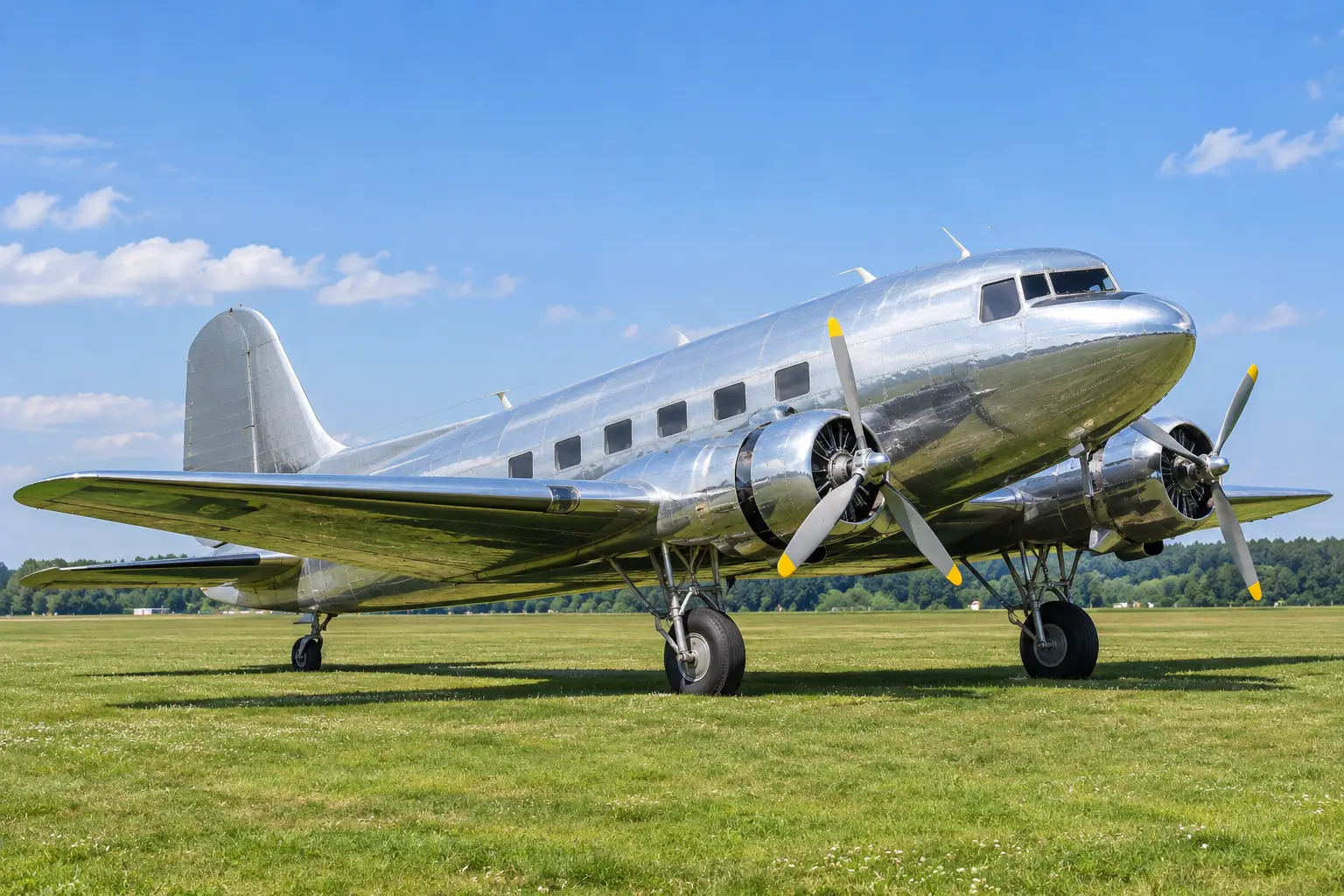
The Douglas DC-3 first flew in 1935. It was fast, reliable and large enough that airlines could earn money from passengers alone, without depending on airmail contracts. Thousands were built, and a few still fly today.
The jet age
The de Havilland Comet started the first regular jet airliner service in 1952. Fatal accidents in 1954 were traced to metal fatigue around openings in the pressurised cabin, and the investigation changed how airliners are designed and tested.
The Boeing 707 entered service with Pan Am in 1958 and made jet travel common across the Atlantic. In 1970 the 747 introduced the widebody era, with twin aisles and far more seats per flight.
Speed and new materials
Concorde began supersonic passenger service in 1976 and crossed the Atlantic in about three and a half hours. It was retired in 2003. It remains the only supersonic airliner to have flown long-term scheduled services.
The Boeing 787 entered service in 2011 with a structure made largely of carbon-fibre composites. Lighter materials and new engines cut fuel use, and composite structures are now standard on new long-haul aircraft.
| Aircraft | Year | Why it matters |
|---|---|---|
| Wright Flyer | 1903 | First controlled powered flights |
| Douglas DC-3 | 1935 | Made passenger airlines profitable |
| de Havilland Comet | 1952 | First jet airliner service |
| Boeing 747 | 1970 | First widebody airliner |
| Concorde | 1976 | Supersonic passenger service |
| Boeing 787 | 2011 | Composite airliner structure |
Put aviation in order
0 / 4 answered
1Where did the Wright brothers make their first powered flights?
Answer: Kitty Hawk, North Carolina. They flew near Kitty Hawk on 17 December 1903.2Which aircraft made passenger airlines profitable in the 1930s?
Answer: Douglas DC-3. The DC-3 could earn money carrying passengers alone.3What did the Comet accident investigations reveal?
Answer: Metal fatigue in the pressurised cabin. The findings changed how airliner cabins are designed and tested.4Which airliner introduced the widebody era in 1970?
Answer: Boeing 747. The 747's twin-aisle cabin carried far more passengers per flight.
Frequently asked questions
Where can I see these aircraft?
The Smithsonian's National Air and Space Museum holds the original Wright Flyer, and several Concordes and early airliners are on display in museums in the UK, France and the United States.
Each one solved a problem
Control, profit, jet speed, capacity, supersonic travel and lighter materials. Remember the problem each aircraft solved and its place in history is easy to recall.
Check the evidence behind the guide
Use these references to check terminology and pursue a topic in more depth. Photo quizzes help you practise observation; a single picture rarely proves a difficult identification.
When a source describes a broad group, compare its details with the exact species, model or specimen you are studying. Record the feature that supports your answer rather than relying on a name alone.