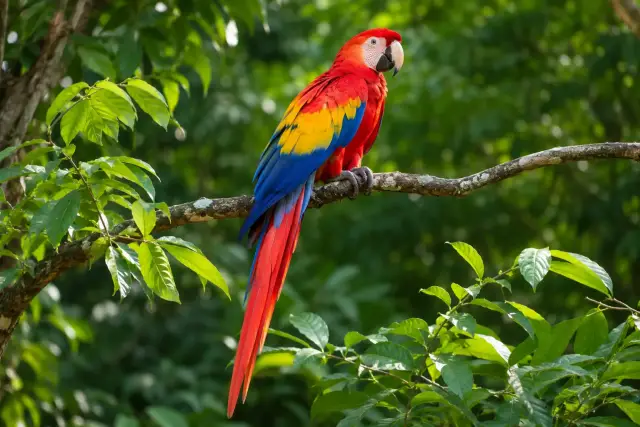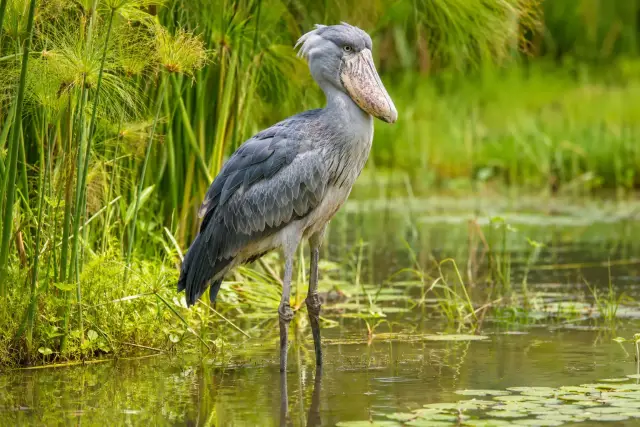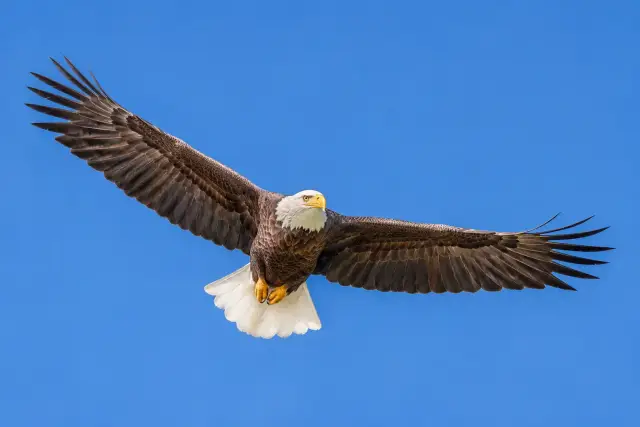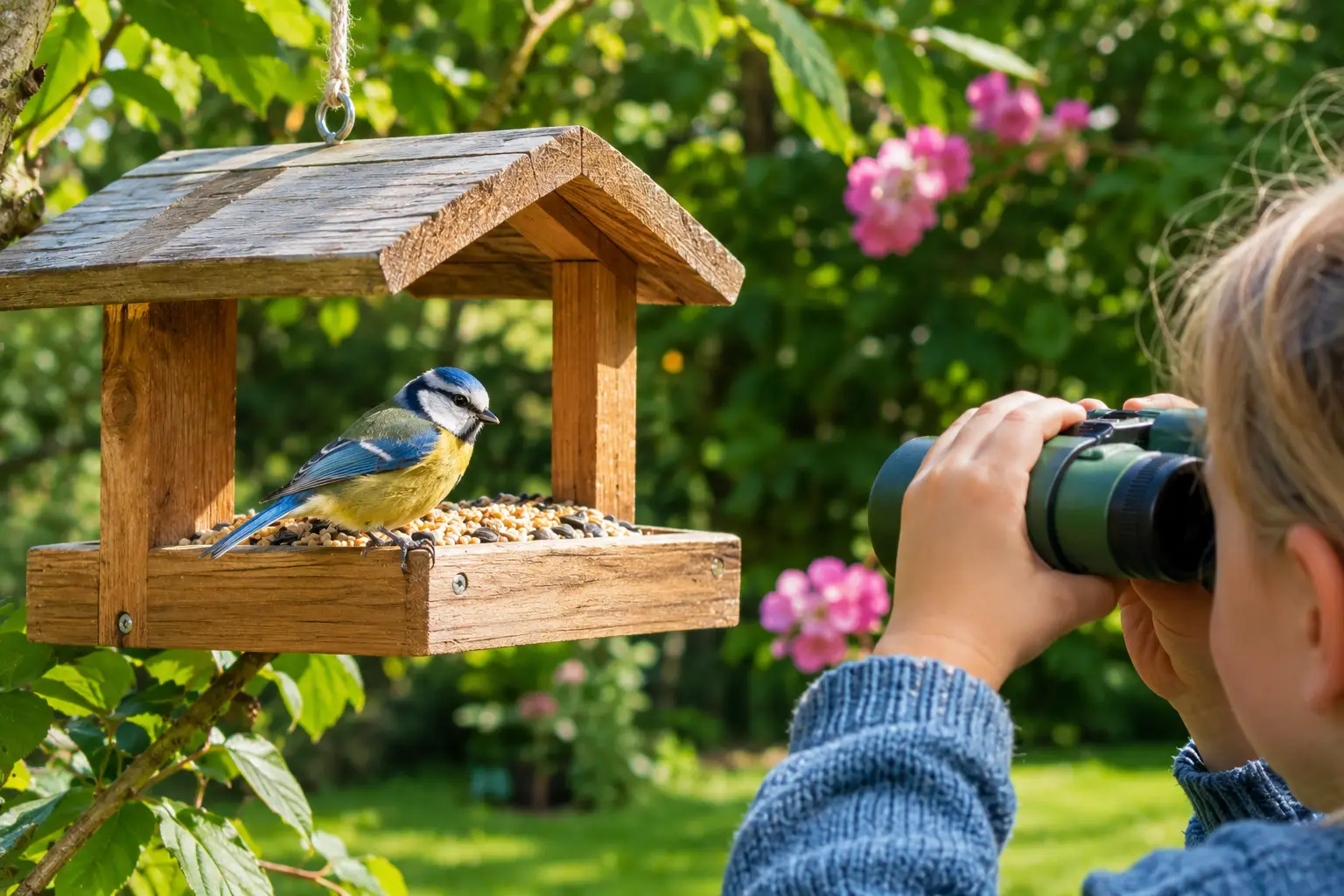
This bird quiz for kids has 25 easy questions with answers, written in simple words for children aged about six to eleven. Every answer comes with a short, true fact, so children learn something new even when they guess wrong.
The questions are split into four rounds: bird bodies, eggs and nests, amazing bird skills, and birds around the world. Read a question aloud, let your child pick one of the four answers, then share the fact. You can play one round at a time or all 25 in one go.
Quick takeaways
- Feathers are the one thing every bird has and no other animal does.
- All birds hatch from eggs, and chicks break out using a tiny egg tooth on the beak.
- Some birds cannot fly at all: ostriches run, and penguins use their wings to swim.
- Many birds migrate, making long journeys each year to find food and places to nest.
Round 1
What makes a bird a bird?
Scientists say an animal is a bird if it has feathers, a beak with no teeth, two legs and lays hard-shelled eggs. Birds are also warm-blooded, like us, so their bodies make their own heat.
Feathers do lots of jobs. They keep birds warm and dry, help them fly and show off bright colours to other birds. Start with these six questions about how a bird's body works.
1Which of these do all birds have, and no other animal alive today?
Answer: Feathers. Bats and insects have wings, and turtles have beaks, but only birds grow feathers. Even birds that cannot fly, like ostriches and penguins, are covered in them.2How many toes do most birds have on each foot?
Answer: Four. Most birds have four toes on each foot. A few are different: emus have three, and the ostrich has only two.3What is the hard, pointed mouth of a bird called?
Answer: A beak. A beak, also called a bill, is bone covered in the same tough material as your fingernails. Birds have no teeth, so the beak does the grabbing, cracking and tearing.4Why are the bones of most flying birds so light?
Answer: Many of them are hollow, with air spaces inside. Many bird bones are hollow, with thin struts inside that keep them strong. Light bones make it easier for a bird to get off the ground.5Birds are warm-blooded. What does that mean?
Answer: Their bodies make their own heat. Like us, birds make their own body heat, so they can stay active on cold days. Most birds are a little warmer inside than people, at around 40 to 42°C.6How do birds keep their feathers clean and in good order?
Answer: By preening them with their beak. Preening means combing and tidying each feather with the beak. Many birds spread oil from a gland near the tail as they go, which helps keep the feathers waterproof.
Round 2
Bird eggs, nests and baby birds
Every bird starts life inside an egg. A parent sits on the eggs to keep them warm, which is called incubating. When the chick is ready, it pecks its way out, which can take hours.
Many baby birds have special names, just like puppies and kittens. The table after the questions lists some of them.
7What do baby birds use to break out of their eggs?
Answer: A tiny tooth-like tip on the beak. Chicks have a little bump called an egg tooth on the tip of the beak. They use it to chip through the shell, and it falls off or wears away soon after hatching.8What do most birds build to hold their eggs and chicks?
Answer: A nest. Nests come in many shapes, from cups of grass and mud to piles of sticks and holes in trees. Some birds, like many seabirds, lay their eggs on bare rock instead.9What is a baby swan called?
Answer: A cygnet. A young swan is a cygnet. Ducklings are baby ducks, goslings are baby geese and owlets are baby owls.10What do we call a young bird that has grown its feathers and just left the nest?
Answer: A fledgling. A fledgling has its first set of flight feathers but is still learning to fly and find food. Its parents often keep feeding it for a while after it leaves the nest.11In emperor penguins, who keeps the egg warm through the Antarctic winter?
Answer: The father, on his feet. The female lays one egg and goes to sea to feed. The male balances it on his feet under a warm fold of skin for about two months, without eating.12What do most songbird parents feed their chicks?
Answer: Insects and other small creatures. Chicks need lots of protein to grow fast. Even many seed-eating birds, such as sparrows, feed their babies insects and caterpillars.
| Bird | Name for a baby |
|---|---|
| Duck | Duckling |
| Swan | Cygnet |
| Goose | Gosling |
| Owl | Owlet |
| Eagle | Eaglet |
| Most other birds | Chick or nestling |
Round 3
Amazing things birds can do
A bird's beak and feet tell you a lot about how it lives. A long thin beak can reach into flowers, a pouch can scoop up fish, and a strong pointed beak can chip into wood.
Some birds have given up flying altogether. They have swapped it for running fast or swimming deep. See how many of these bird skills you know.
13Which bird is the fastest runner?
Answer: The ostrich. Ostriches can sprint at about 70 km/h on their long, strong legs. They cannot fly, but they can outrun most animals.14Which bird drums on trees with its beak to find insects and make a nest hole?
Answer: The woodpecker. Woodpeckers have strong, chisel-like beaks and tough skulls. They also drum on wood to send messages to other woodpeckers.15Which water bird has a big stretchy pouch under its beak for scooping up fish?
Answer: The pelican. A pelican's pouch works like a fishing net. It scoops up fish and water, then squeezes the water out before swallowing.16Which rainforest bird of Central and South America has a huge, colourful beak?
Answer: The toucan. A toucan's beak looks heavy but is light, with a spongy structure inside. Hornbills look a little similar but live in Africa and Asia.17Penguins cannot fly. What do they use their wings for?
Answer: Swimming. A penguin's wings are stiff flippers. Penguins flap them underwater, so they seem to fly through the sea.18What sweet liquid do hummingbirds sip from flowers?
Answer: Nectar. Hummingbirds lap up nectar with a long tongue. They also catch tiny insects, which give them protein.19Which clever black bird is known for using sticks as tools to get food?
Answer: The crow. New Caledonian crows shape sticks and leaves into hooks to pull grubs out of holes. Crows are among the cleverest of all birds.
Tip: After each answer, ask your child to copy the bird: flap like a penguin, hover like a hummingbird or tap like a woodpecker. It helps the fact stick.
Round 4
Birds around the world
There are around 11,000 kinds of birds, and they live on every continent, from icy Antarctica to hot deserts and steamy rainforests. Some stay in one place all their lives. Others fly thousands of kilometres every year.
This last round visits birds from different parts of the world, and finishes with a famous show-off.
20Why do polar bears never catch penguins in the wild?
Answer: They live at opposite ends of the world. Polar bears live in the Arctic, in the far north. Wild penguins live in the southern half of the world, so the two never meet.21Which large flightless bird appears with the kangaroo on Australia's coat of arms?
Answer: The emu. The kangaroo and the emu hold up the shield on Australia's coat of arms. Wild emus are found only in Australia.22Which black-and-white seabird with a colourful beak is nicknamed the sea parrot?
Answer: The puffin. Atlantic puffins grow a bright orange, yellow and blue-grey beak for the breeding season. They nest in burrows on clifftops and islands.23Which birds often fly in a V shape when they migrate?
Answer: Geese. Flying in a V saves energy. Each bird gets a little lift from the air swirling off the wing tips of the bird in front.24What is it called when birds make a long journey each year to find food and a place to nest?
Answer: Migration. Migration is a regular journey between two places. Swallows, for example, nest in Europe in summer and fly to Africa for the winter.25What is a male peafowl, with a huge fan of 'eye' feathers, called?
Answer: A peacock. The male is the peacock and the female is the peahen. He spreads his long train of feathers to impress her.
Bonus round: five more for kids
Five extra questions that are not in the rounds above.
0 / 5 answered
1Which of these animals is a bird?
Answer: A penguin. Penguins have feathers and beaks and lay eggs, so they are birds, even though they swim instead of fly. Bats are mammals, and bees and butterflies are insects.2What is the dawn chorus?
Answer: Lots of birds singing together early in the morning. In spring many birds sing hardest around sunrise, mainly to claim a territory and attract a mate. Sound carries well in the still morning air.3What do owls cough up after a meal?
Answer: Pellets of fur and bones. Owls often swallow small prey whole. The parts they cannot digest, like fur and bones, are squeezed into a pellet and coughed up later.4Which pink bird is famous for resting on one leg?
Answer: The flamingo. Flamingos often stand on one leg, even when they sleep. Their pink colour comes from the tiny shrimps and algae they eat.5Which bird lays most of the eggs that people eat?
Answer: The chicken. Chickens come from a wild Asian bird called the red junglefowl. A good laying hen can lay an egg almost every day.
Frequently asked questions
What are good bird questions to ask a child?
Start with questions children can work out by looking: how many legs does a bird have, what are feathers for, and why do ducks have flat beaks? Then add surprising ones, such as which bird runs fastest (the ostrich) or why penguins have wings. Questions that link to birds they can see in a garden or park keep children curious for longest.
How can I teach my child about birds?
Put up a feeder near a window and keep a picture guide beside it so your child can match what they see. Count birds together, listen for songs on walks and talk about what each bird eats. A photo game such as the Birds Quiz app lets children practise naming birds from real pictures, which makes the next garden visitor easier to recognise.
What is the most common bird in the world?
The chicken is the most numerous bird on Earth, with tens of billions kept on farms at any time. Among wild birds, the red-billed quelea, a small finch-like bird of African grasslands, is often named as the most numerous, living in huge flocks that can contain millions of birds.
Why can't some birds fly?
Some birds lost the need to fly. Ostriches and emus grew big and strong and escape danger by running, while penguins turned their wings into flippers for swimming. Others, like the kiwi and the kakapo, lived on islands with no ground predators, so flying gave them little advantage. All of them still have feathers and wings, even if the wings are small.
Why do birds sing?
Most birdsong is about two things: telling other birds that a territory is taken and attracting a mate. That is why singing peaks in spring, when birds are pairing up and nesting. Birds also make shorter calls all year to keep in touch with their flock or to warn others when a cat or hawk is near.
Keep the bird questions coming
Children remember bird facts best when they can link them to a real bird. Use the four rounds as a game, then go outside and look for feathers, beaks and nests in your own garden or park.
- Play one round a day and keep score on a sheet of paper.
- Put up a feeder and ask your child to name each visitor.
- Try the photo rounds in Birds Quiz to learn real birds by sight.
Check the evidence behind the guide
Use these references to check terminology and pursue a topic in more depth. Photo quizzes help you practise observation; a single picture rarely proves a difficult identification.
When a source describes a broad group, compare its details with the exact species, model or specimen you are studying. Record the feature that supports your answer rather than relying on a name alone.