Birds of prey, or raptors, are birds that hunt with their feet. They grab prey with strong, curved talons and tear it with a hooked bill. That shared toolkit makes them look alike at first, but each group has its own body plan, built for a different way of hunting.
Once you know what to look for, wing shape alone will usually tell you whether a bird is an eagle, a hawk or a falcon, and owls give themselves away with their flat faces. Start with the quick comparison, then read the details for each group.
Quick takeaways
- Eagles: very large, with long, broad wings and 'fingered' wingtips.
- Hawks: medium-sized, either short-winged forest hunters or broad-winged soarers.
- Falcons: pointed wings built for speed. Owls: flat faces and silent flight.
At a glance
Quick comparison
Use this table as a cheat sheet. Wing shape and when the bird is active are the two most useful clues in the field.
| Group | Size | Wings | Active | Hunting style |
|---|---|---|---|---|
| Eagles | Large to huge | Long, broad, fingered tips | Day | Soar, then snatch fish or mammals |
| Hawks | Small to medium | Short and rounded, or broad | Day | Ambush in woods, or soar and drop |
| Falcons | Small to medium | Long, slim, pointed | Day | Fast chases and steep dives |
| Owls | Small to large | Broad and rounded, silent | Mostly night | Listen, then glide down silently |
Group 1
Eagles: the heavyweights
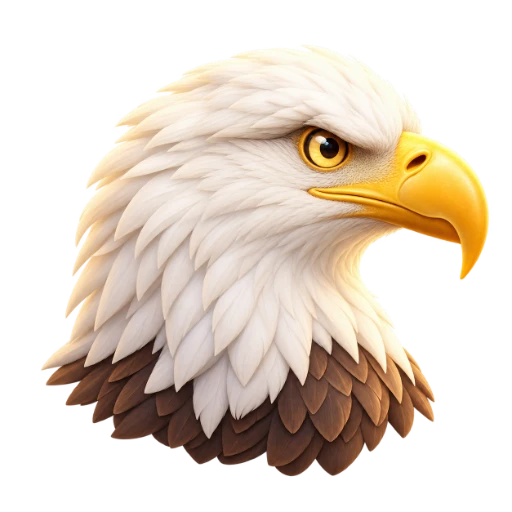
Eagles are the largest birds of prey in most places. They have long, broad wings with the outer feathers spread like fingers when they soar, a heavy, deep bill and powerful legs. Many, like the golden eagle, have feathers all the way down to their toes.
Eagles tend to soar on rising warm air and spot prey from high above. Fish eagles, such as the bald eagle and the African fish eagle, snatch fish from the surface of the water.
- Look for: a large, flat-winged silhouette and a big head that sticks out in front.
- Fun fact: the bald eagle isn't bald. 'Bald' comes from an old word for white, describing its white head.
Group 2
Hawks: woodland ambushers and soarers
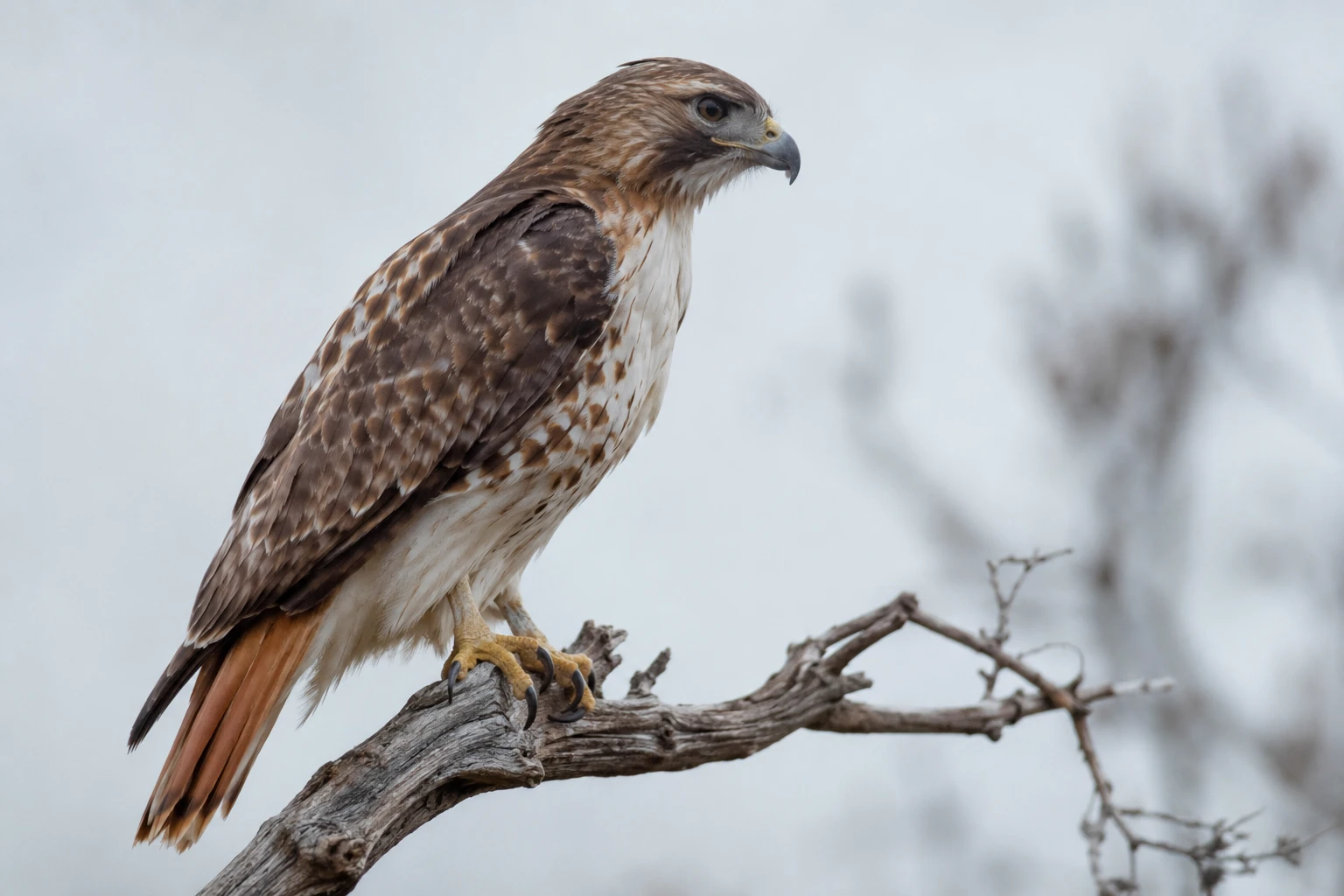
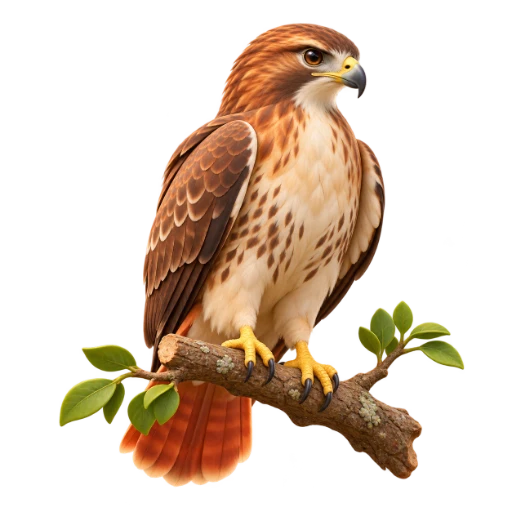
'Hawk' covers two main types. Accipiters, such as the Eurasian sparrowhawk and Cooper's hawk, have short, rounded wings and long tails for twisting through trees after small birds. Buteos, such as the red-tailed hawk and common buzzard, have broad wings and short, fanned tails and spend a lot of time soaring in circles.
In Europe and much of Asia, buteos are usually called buzzards, while in North America 'buzzard' often refers to vultures, which causes plenty of confusion.
- Accipiter flight: a few quick flaps, then a glide (flap-flap-glide).
- Buteo flight: slow, wide circles on broad wings.
Group 3
Falcons: built for speed
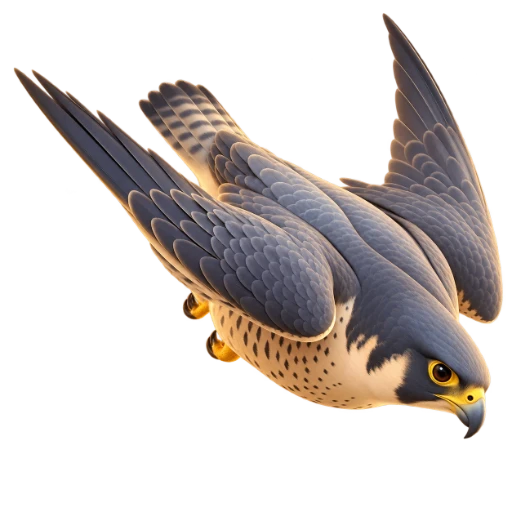
Falcons have long, slim, pointed wings, like a swept-back jet, and quick, powerful wingbeats. The peregrine falcon dives on flying birds at more than 300 km/h. Smaller falcons like the kestrel hover over fields to hunt rodents and insects.
Look closely at a falcon's bill and you'll see a notch on the upper edge called a tomial tooth, which helps it kill prey quickly. Falcons also tend to have dark 'moustache' stripes under the eyes, which may cut glare from the sun.
Surprisingly, DNA studies show falcons are more closely related to parrots and songbirds than to hawks and eagles. Their similar look is a case of convergent evolution.
Group 4
Owls: the night hunters
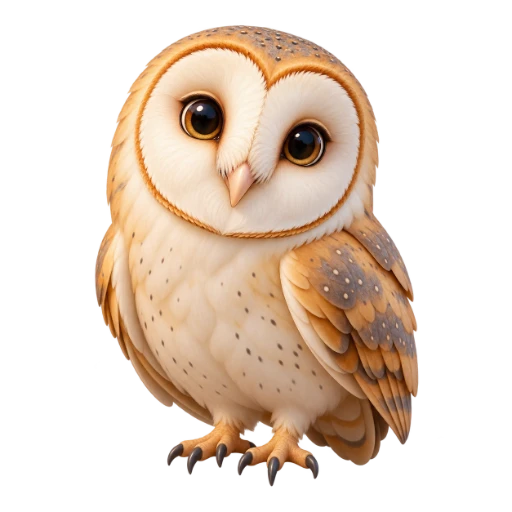
Owls are the easiest raptors to spot by shape: a big, round head, forward-facing eyes and a flat facial disc that works like a satellite dish, funnelling sound to their ears. In some owls, such as the barn owl, one ear opening sits higher than the other, which helps them pinpoint a mouse by sound alone.
Their flight is almost silent. Soft, comb-like edges on the wing feathers break up the turbulence that makes noise. Most owls hunt at night, but some, like the snowy owl and short-eared owl, also hunt by day.
- Look for: a big round head, no visible neck and a slow, floating flight.
- Tell-tale sign: owl pellets, small bundles of bone and fur coughed up under roosts.
In the field
Five tips for identifying birds of prey
- Check the wingtips first: fingered (eagle or buteo), rounded (accipiter or owl) or pointed (falcon).
- Compare the tail with the wings: long tails suggest accipiters, short fanned tails suggest buteos.
- Note the time of day: a raptor hunting at dusk or at night is most likely an owl.
- Watch the hunting style: hovering suggests a kestrel, a high-speed dive a peregrine.
- Remember that females are usually larger than males in most raptors, sometimes much larger.
Quiz: name that raptor
Five questions to check you can tell them apart.
0 / 5 answered
1Which group has long, slim, pointed wings built for speed?
Answer: Falcons. Pointed wings are the falcon's trademark, perfect for fast chases and dives.2What does the flat facial disc of an owl do?
Answer: Funnels sound to its ears. The disc works like a dish, collecting faint sounds so owls can hunt in the dark.3Falcons are more closely related to which birds than to hawks?
Answer: Parrots. DNA studies place falcons near parrots and songbirds. They look like hawks through convergent evolution.4Why is the bald eagle called 'bald'?
Answer: From an old word meaning white. 'Bald' once meant white, describing the bird's white head.5In most birds of prey, which sex is larger?
Answer: Females. Female raptors are usually larger, an unusual pattern called reversed size dimorphism.
Frequently asked questions
What is the difference between a hawk and an eagle?
Eagles are generally much larger, with longer, broader wings, a heavier bill and a bigger head. Hawks are small to medium-sized. Both belong to the same family (Accipitridae), so the difference is mostly size and build.
What is the difference between a falcon and a hawk?
Falcons have long, pointed wings and a notched bill and are fast fliers. Hawks have rounder or broader wings. Falcons are in a separate family and are more closely related to parrots than to hawks.
Are owls birds of prey?
Yes. Owls hunt with talons and a hooked bill like other raptors, though they belong to their own group, Strigiformes, and most hunt at night.
What is the largest bird of prey?
By wingspan, the Andean condor (a New World vulture) is often named, at around 3 m. Among eagles, the Steller's sea eagle and harpy eagle are among the heaviest.
Wings first, then everything else
When a raptor flies overhead, look at its wings before anything else: fingered and huge means eagle, short and rounded or broad and soaring means hawk, pointed means falcon. If it's dusk and the bird has a big round head, think owl.
- Next time you see a large bird soaring, check its wingtips.
- Learn one local eagle, hawk, falcon and owl species as your anchors.
- Practise on photos so the shapes become second nature.
Practice identifying a bird of prey from its silhouette
Start with wing shape, tail length and flight style before using plumage. Watch whether the bird soars, hovers or powers along with fast wingbeats, then note its size against a familiar bird. Distance and lighting can change how colors appear, so a silhouette is often the better first clue.
Audubon's raptor guide explains what to watch for in flight. Compare its examples with the distinctions in this article, and treat a brief distant sighting as a tentative identification.