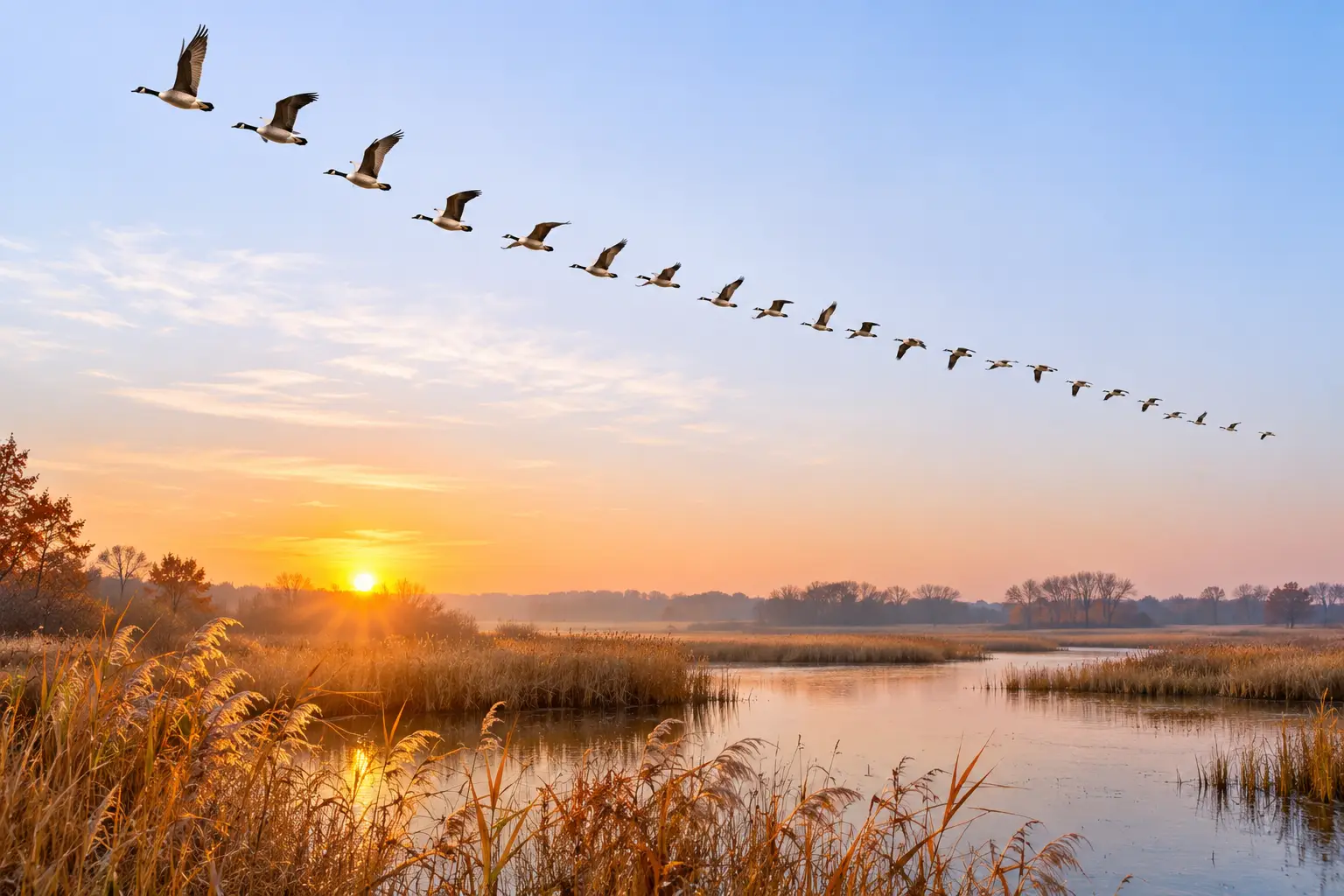
Birds migrate to follow food and to breed where long summer days and plentiful insects give their chicks the best start. They find their way using the sun, the stars, Earth's magnetic field and remembered landmarks, often combining several of these on one journey.
Migration ranges from short hops downhill for the winter to journeys of tens of thousands of kilometres a year. This guide explains what triggers it, how navigation works, which birds hold the records and where to go to see it happen.
Quick takeaways
- Most migration is about food: birds leave places where it runs out and return when it is plentiful again.
- Day length and hormones tell birds when to go; they fatten up beforehand to fuel the trip.
- Birds navigate with several compasses, including the sun, star patterns and Earth's magnetic field.
- Spring and autumn, especially at dawn and along coasts, are the best times to watch.
Why do birds migrate?
The short answer is food. In the far north, summer brings long days and a flood of insects, fresh plants and fish. That is an excellent place to raise chicks, but in winter the insects vanish, water freezes and days shrink to a few hours of light. Birds that cannot survive on what is left fly to places where food is still available, then return when the north turns productive again.
Breeding in a seasonal place has other advantages. Long days give parents more hours to feed their young, and there can be fewer predators and competitors than in the tropics. The cost is the journey itself, which is dangerous and uses a great deal of energy. Migration persists because, for these species, the benefits outweigh the risks.
Not every bird migrates, and those that do differ a lot. In North America, more than half of the breeding species migrate to some degree. Many others stay put all year, especially seed-eaters and woodpeckers that can find food in winter. Some species are partial migrants: in the European robin, for example, many northern birds move south while many British birds stay.
Long-distance migrants
Birds such as swallows, swifts and many warblers move between continents, often from Europe to Africa or from North to South America.
Short-distance migrants
Some birds move only a few hundred kilometres, enough to escape snow and frozen ground.
Altitudinal migrants
In mountains, some birds simply move downhill for the winter and back up to breed.
Irruptive species
Waxwings, crossbills and snowy owls move south in large numbers only in some years, usually when food runs short in the north or after a bumper breeding season.
How do birds know when to migrate?
The main cue is day length. As days lengthen in spring or shorten in late summer, changes in a bird's hormones prepare it for the journey. Birds start eating far more than usual and store the surplus as fat, which is the fuel for migration. A small songbird can greatly increase its weight in a couple of weeks.
Caged migratory birds kept indoors still become restless at the right time of year, hopping and fluttering, often at night. German scientists named this Zugunruhe, meaning migratory restlessness. Studies of it show that migration timing is partly inborn: birds have an internal calendar that keeps running even without outside cues, and light resets it.
Weather decides the exact night of departure. In autumn, many birds in the Northern Hemisphere leave after a cold front passes and the wind turns to blow from the north, giving them a tailwind. In spring they ride southerly winds back. That is why birdwatchers watch weather forecasts as closely as they watch the calendar.
Shorebirds such as the bar-tailed godwit take preparation to extremes. Before their ocean crossing they put on large amounts of fat and shrink organs they will not use in flight, such as parts of the gut, then rebuild them after arrival.
The longest bird migrations
The Arctic tern makes the longest regular migration known. It breeds around the Arctic and spends the northern winter in the Southern Ocean near Antarctica. Tracking studies found that terns take winding routes that follow winds and food, adding up to around 70,000 km or more in a year. Because it lives in two polar summers, it probably sees more daylight than any other animal.
The bar-tailed godwit holds the record for the longest non-stop flight. Godwits from Alaska fly south over the Pacific to New Zealand and eastern Australia without landing, feeding or drinking. In 2022 a young tagged bird flew about 13,500 km in roughly 11 days. Other remarkable travellers are much smaller: the northern wheatear, a songbird weighing about 25 g, flies from Alaska to Africa.
Distances in the table are approximate, because routes vary between individuals and years, and tracking keeps revealing longer journeys.
| Bird | Journey | Approximate distance | Why it stands out |
|---|---|---|---|
| Arctic tern | Arctic breeding grounds to the Southern Ocean and back | Around 70,000 km a year, sometimes more | Longest regular migration of any animal |
| Bar-tailed godwit | Alaska to New Zealand or eastern Australia | About 11,000 to 13,500 km in one flight | Longest non-stop flight tracked in a bird |
| Northern wheatear | Alaska to sub-Saharan Africa | Up to about 14,500 km each way | A tiny songbird crossing Asia |
| Amur falcon | East Asia to southern Africa | More than 10,000 km each way | Crosses the Arabian Sea from India to East Africa |
| Barn swallow | Britain to South Africa | Roughly 10,000 km each way | Feeds on insects caught in flight along the way |
| Ruby-throated hummingbird | Eastern North America to Central America | Many cross the Gulf of Mexico non-stop, about 800 km | Weighs only about 3 g |
| Bar-headed goose | Central Asia to South Asia over the Himalayas | Crossings above 6,000 m in places | Copes with very thin, cold air |
Migration flyways and how to watch bird migration
Migrating birds tend to follow broad corridors called flyways. In North America, wildlife managers traditionally divide them into four: the Atlantic, Mississippi, Central and Pacific flyways. Worldwide, conservation groups recognise larger systems such as the East Atlantic Flyway, used by shorebirds between the Arctic and West Africa, and the East Asian–Australasian Flyway, used by godwits and many other shorebirds that refuel on the mudflats of the Yellow Sea.
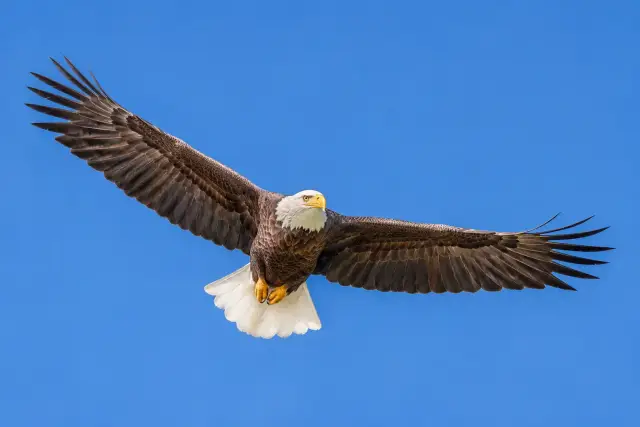
Large soaring birds, such as storks, eagles and vultures, avoid crossing wide stretches of water because the rising warm air they ride forms over land. They funnel through narrow land bridges and short sea crossings, creating some of the best migration spectacles on Earth.
You do not need to travel far to see migration, though. In spring and autumn, visit a local park, wood or coastline early in the morning, when night migrants have just landed to feed. In autumn, the days after a cold front often bring the most birds. Coastal headlands and islands concentrate tired birds, and on calm nights you can hear the thin flight calls of songbirds passing overhead.
Several tools help you plan. Weather radar picks up large flights of birds at night, and projects such as BirdCast in the United States turn it into migration forecasts. Checklist sites such as eBird show which species are being seen near you. World Migratory Bird Day, held twice a year in May and October, is a good excuse to join a guided walk.
| Place | Where | What to see |
|---|---|---|
| Strait of Gibraltar | Spain and Morocco | Storks and raptors crossing between Europe and Africa |
| Bosphorus | Istanbul, Turkey | Streams of storks and raptors, especially in late summer and autumn |
| Eilat | Southern Israel | Huge numbers of raptors heading north in spring |
| Veracruz | Mexico | The 'River of Raptors': millions of hawks and vultures each autumn |
| Cape May | New Jersey, USA | Autumn songbirds, hawks and shorebirds on the Atlantic Flyway |
| Platte River | Nebraska, USA | Vast gatherings of sandhill cranes in early spring |
| Falsterbo | Southern Sweden | Autumn raptors and finches leaving Scandinavia |
Tip: Turn off unnecessary outdoor lights during peak migration nights. Bright lights draw night migrants off course and into buildings.
Check your migration knowledge
Five questions on the ideas in this guide.
0 / 5 answered
1What is Zugunruhe?
Answer: The restlessness caged birds show at migration time. The German word means migratory restlessness. Caged birds hop and flutter at the right season, showing that migration timing is partly inborn.2In Stephen Emlen's planetarium experiments, how did young indigo buntings learn which way was north?
Answer: From the way the night sky rotates around the pole star. Buntings raised under a planetarium sky learned to treat the centre of rotation as north, whichever star was placed there.3Which four flyways are traditionally used to manage migratory birds in North America?
Answer: Atlantic, Mississippi, Central and Pacific. These four flyways are used by wildlife agencies in the United States and Canada to plan surveys and manage waterfowl.4Why do many small songbirds migrate at night?
Answer: The air is cooler and calmer, and fewer predators are about. Night flight saves water and energy and avoids hawks. The birds then land at dawn and spend the day feeding.5Which flyway do Alaskan bar-tailed godwits belong to?
Answer: The East Asian–Australasian Flyway. Godwits fly south over the Pacific to New Zealand and Australia, then return north via the coasts of East Asia, including the Yellow Sea.
Frequently asked questions
How do birds know where to migrate?
Young birds inherit a basic direction and rough distance, which is why many first-time migrants travel alone and still arrive in the right region. On the way they steer with the sun, the stars and Earth's magnetic field. As they gain experience, they learn landmarks and stopover sites, so adults navigate more accurately than first-year birds.
How far can birds fly without stopping?
The bar-tailed godwit holds the record. Godwits fly non-stop from Alaska to New Zealand or eastern Australia, and one tracked in 2022 covered about 13,500 km in around 11 days without landing. Many smaller birds also make long non-stop legs, such as ruby-throated hummingbirds crossing roughly 800 km of the Gulf of Mexico.
When do birds migrate?
In the Northern Hemisphere, spring migration runs mainly from March to May and autumn migration from August to November, though shorebirds can start south as early as July. Timing varies by species and latitude. Most small songbirds travel at night, while hawks, storks and other soaring birds travel by day using rising warm air.
Do all birds migrate?
No. Many birds stay in the same area all year, especially in mild climates and among species that can find winter food, such as many woodpeckers, tits and seed-eaters. Others are partial migrants, where some individuals move and others stay. In North America, more than half of breeding species migrate to some degree.
How can I see bird migration?
Go out early on spring and autumn mornings to parks, woods or coasts, where night migrants land to feed. Check migration forecasts and local sightings online, and visit a hotspot such as a headland or a wetland. Learning to recognise common species first helps you spot the new arrivals, and the Birds Quiz app is a quick way to practise.
Migration is happening near you
Migration is driven by food and breeding, timed by day length and steered by the sun, the stars and the magnetic field. Some birds cross oceans, but you can watch the same movement in a local park on a spring or autumn morning.
- Note the first swallow, swift or warbler you see each spring and compare dates year to year.
- Check a migration forecast before a dawn walk in autumn.
- Practise recognising migrants from photos in Birds Quiz.
Check the evidence behind the guide
Use these references to check terminology and pursue a topic in more depth. Photo quizzes help you practise observation; a single picture rarely proves a difficult identification.
When a source describes a broad group, compare its details with the exact species, model or specimen you are studying. Record the feature that supports your answer rather than relying on a name alone.