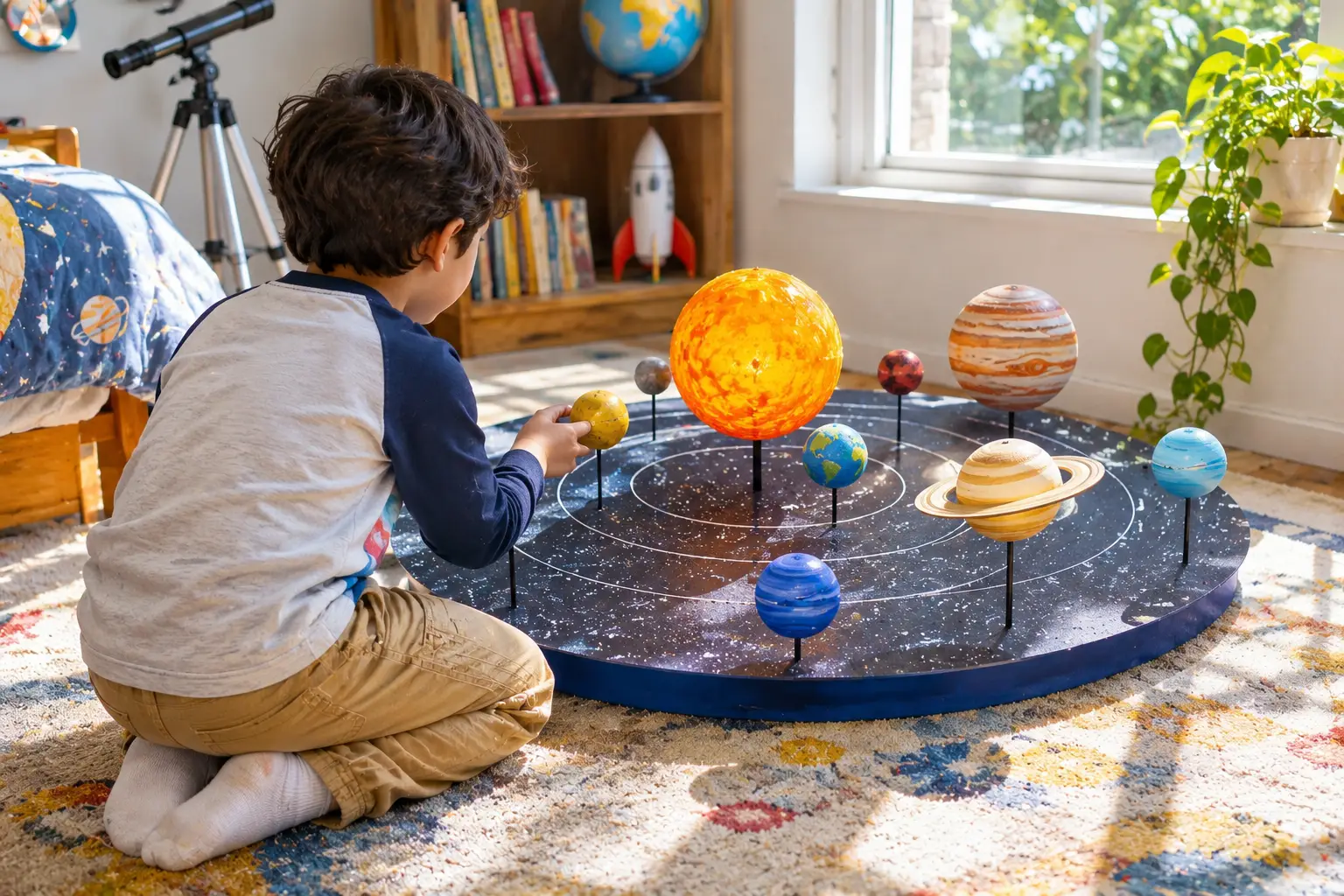
This astronomy quiz for kids has 25 easy questions and answers about the Sun, the Moon, the planets, the stars, gravity and astronauts. Each answer has a short, simple note that explains why it is right.
It works well for children aged about 7 to 11, at home or in class. Read a question aloud, let your child choose, then read the note together. Younger children may need help with a few words such as 'gravity' and 'orbit'.
Quick takeaways
- The Sun is a star made of hot gas, and its light takes about 8 minutes to reach us.
- The Moon has no light of its own; it reflects sunlight.
- Gravity pulls things together, keeping us on the ground and the planets in their orbits.
- Never look straight at the Sun, even with sunglasses.
Round 1
Questions about the Sun
The Sun is a star, a giant ball of very hot gas. It is so big that about a million Earths could fit inside it. It gives us light and warmth, and without it nothing could live on Earth.
The Sun does not really move across the sky. It looks as if it does because Earth is spinning.
1How long does sunlight take to reach Earth?
Answer: About 8 minutes. Light is the fastest thing there is, but the Sun is about 150 million kilometres away. So the sunlight you see left the Sun about 8 minutes ago.2Why do we have day and night?
Answer: Earth spins, so each side faces the Sun and then turns away. Earth turns once about every 24 hours. When your side faces the Sun it is daytime, and when it faces away it is night.3Why does the Sun look so much bigger and brighter than the stars we see at night?
Answer: It is much closer to us than any other star. The Sun is an ordinary star. Many stars are bigger and brighter, but they are so far away that they look like tiny points.4What is the Sun made of?
Answer: Very hot gas, mostly hydrogen. The Sun is a giant ball of hot gas. Deep inside, hydrogen is squeezed together to make helium, and that gives off light and heat.5Why should you never look straight at the Sun?
Answer: Its light can damage your eyes. Sunlight is strong enough to hurt the back of your eyes, even with sunglasses. Ask an adult to help you use safe ways to view it, such as special eclipse glasses.
Round 2
Questions about the Moon
The Moon is Earth's closest neighbour in space, about 384,000 kilometres away. It travels around Earth about once a month. Twelve astronauts have walked on it, all between 1969 and 1972.
The Moon has no air, no weather and no liquid water on its surface, so it is very different from Earth.
6Where does moonlight come from?
Answer: Sunlight bouncing off the Moon. The Moon is a big ball of rock. It shines because sunlight bounces off its surface, a bit like light off a mirror, only much dimmer.7What are the round holes all over the Moon called?
Answer: Craters. Most craters were made by space rocks crashing into the Moon long ago. With no wind or rain to wear them down, they stay for billions of years.8Why will the astronauts' footprints stay on the Moon for a very long time?
Answer: There is no wind or rain to wipe them away. The Moon has almost no air, so there is no weather. Footprints left by the Apollo astronauts could last for millions of years.9Is there air to breathe on the Moon?
Answer: No, astronauts have to bring their own air. The Moon has almost no atmosphere. Astronauts carry air in their spacesuits and spacecraft.10Why can astronauts jump much higher on the Moon?
Answer: The Moon's gravity is weaker than Earth's. Gravity on the Moon is about one sixth as strong as on Earth, so a big jump carries you much higher and you float down slowly.
Round 3
Questions about the planets
Eight planets travel around the Sun. The four closest are small and rocky. The four farther out are giants made mostly of gas and ice. A fun way to remember their order is: My Very Easy Method Just Speeds Up Naming.
11What do we call the path a planet follows around the Sun?
Answer: An orbit. The Sun's gravity keeps each planet travelling around it on a path called an orbit. Earth takes one year to go round once.12Which is the only planet where we know living things are found?
Answer: Earth. Earth has liquid water, air to breathe and the right temperature for life. Scientists are searching for signs of tiny life elsewhere, but none has been found yet.13Could you stand on Jupiter?
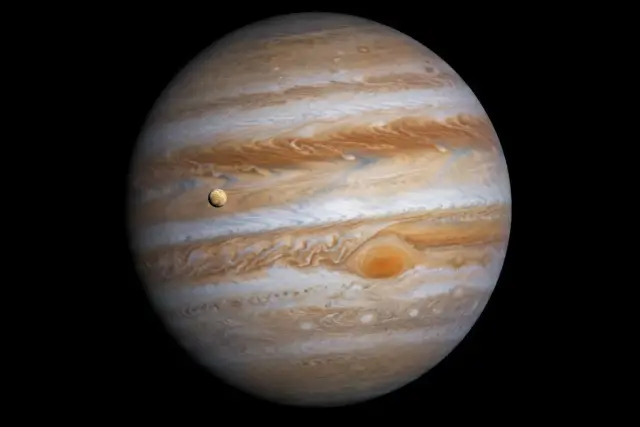
Answer: No, it has no solid surface to stand on. Jupiter is a giant ball of gas, mostly hydrogen and helium. The deeper you go, the thicker and hotter it gets, with no ground to land on.14Which planet is so light for its size that it would float in a giant bath of water?
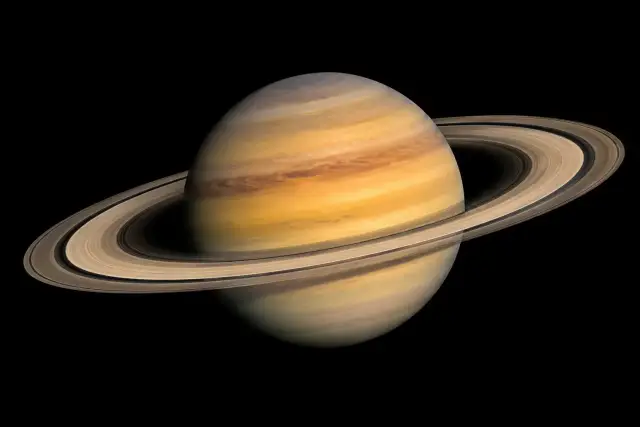
Answer: Saturn. Saturn is huge but mostly made of light gases, so it is less dense than water. Of course, there is no bath big enough to try it.15Mercury is the closest planet to the Sun. What are its nights like?
Answer: Freezing cold, because it has almost no air to hold in heat. Mercury's daytime side is scorching, but without a blanket of air the heat escapes, and the night side drops far below freezing.16Which planet has the fastest winds in the solar system?
Answer: Neptune. Winds on Neptune can blow at around 2,000 kilometres per hour, far faster than the strongest hurricane on Earth.
| Planet | Order from the Sun | One fact to remember |
|---|---|---|
| Mercury | 1st | Smallest planet; very hot days and freezing nights |
| Venus | 2nd | Hottest planet, covered in thick clouds |
| Earth | 3rd | The only planet where we know there is life |
| Mars | 4th | Red dusty desert with a giant volcano |
| Jupiter | 5th | Biggest planet, with a giant storm |
| Saturn | 6th | Bright rings made of ice and rock |
| Uranus | 7th | Spins tipped over on its side |
| Neptune | 8th | Farthest planet, with the fastest winds |
Round 4
Questions about stars and gravity
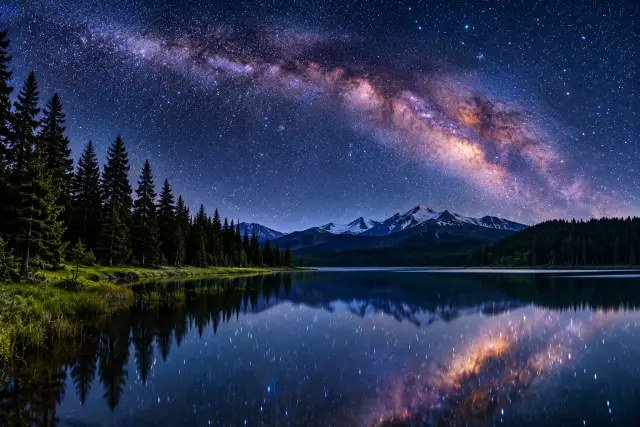
Stars are suns. They look tiny only because they are so far away. On a clear, dark night away from city lights, you can see a few thousand of them with just your eyes.
Gravity is the invisible pull that holds it all together. It keeps your feet on the ground, keeps the Moon going around Earth and keeps Earth going around the Sun.
17Why do stars seem to twinkle?
Answer: Moving air around Earth bends their light. Starlight passes through layers of moving air before it reaches your eyes. The air bends the light this way and that, so the star seems to flicker.18Why can't we see the stars during the day?
Answer: The Sun's bright light outshines them. The stars are still there in the daytime sky. The sunlit sky is simply far too bright for us to see their faint light.19Which star is closest to Earth?
Answer: The Sun. The Sun is our very own star. The next closest star, Proxima Centauri, is so far away that its light takes over four years to reach us.20The group of stars called the Plough, or the Big Dipper, belongs to which constellation?
Answer: The Great Bear. The Plough is the brightest part of Ursa Major, the Great Bear. Two of its stars point towards Polaris, the North Star.21What makes a ball fall back down when you throw it up?
Answer: Gravity. Gravity is a pull between things that have mass. Earth is so big that its pull brings the ball, and you, back down to the ground.
Round 5
Questions about astronauts and space tools
Astronauts live and work on the International Space Station, which circles Earth about 400 kilometres up. Everything there is different: water floats in blobs, food comes in packets and there is no up or down.
22Why do astronauts float inside the International Space Station?
Answer: They and the station are falling around Earth together. Gravity still pulls on the station, but it moves sideways so fast that it keeps falling around Earth instead of into it. Everything inside falls together, so it all floats.23How do astronauts sleep on the space station?
Answer: In sleeping bags fixed to a wall. With no up or down, astronauts zip themselves into sleeping bags tied in place so they do not drift around and bump into things.24What is a scientist who studies stars and planets called?
Answer: An astronomer. An astronomer studies space, often from Earth. An astronaut is someone who travels into space. Some people are both.25What tool do astronomers use to see things that are very far away?
Answer: A telescope. A telescope collects much more light than your eye can, so faint, faraway objects look brighter and clearer. A microscope is for tiny things close up.
Five bonus questions
Five more easy questions to finish. Can you get them all?
0 / 5 answered
1Can you hear sounds in space?
Answer: No, because sound needs air to travel through. Sound travels by making air wobble. Space is almost empty, so astronauts use radios to talk to each other.2About how long does the Moon take to travel once around Earth?
Answer: About a month. The Moon takes about 27 days to go around Earth once, which is close to the length of a month.3About how many times does the International Space Station go around Earth each day?
Answer: About 16 times. The station zooms around Earth about every 90 minutes, so astronauts on board see about 16 sunrises and sunsets every day.4Which scientist is famous for explaining gravity, with a story about a falling apple?
Answer: Isaac Newton. Newton worked out that the same pull that makes an apple fall also keeps the Moon going around Earth.5Why do astronauts wear spacesuits when they go outside the space station?
Answer: To give them air and protect them from heat, cold and harmful rays. A spacesuit is like a tiny spacecraft. It carries air to breathe and shields the astronaut from very hot and very cold temperatures.
Frequently asked questions
What is astronomy for kids?
Astronomy is the science of everything in space: the Sun, the Moon, planets, stars, comets and galaxies. For children it usually starts with simple ideas, such as why we have day and night, why the Moon changes shape and what the planets are like. Watching the sky together and asking questions is the best way to begin.
What are easy space facts for kids?
Good starter facts are that the Sun is a star, sunlight takes about 8 minutes to reach Earth, the Moon shines with reflected sunlight, and there are eight planets. Jupiter is the biggest planet, Saturn would float in water, and Neptune has the fastest winds. Astronauts float because they are falling around Earth with their spacecraft.
How can I teach my child about space at home?
Start with the real sky. Look at the Moon over a few weeks and draw how its shape changes, and spot bright planets near sunset. Make a model of the solar system from fruit or paper balls. Short quizzes help too: the Solar System Quiz app on Android has easy daily questions you can answer together.
Why do astronauts float in space?
Astronauts float because they and their spacecraft are falling around Earth together, not because there is no gravity. The space station travels sideways so fast, about 28,000 kilometres per hour, that it keeps missing Earth as it falls. Everything inside falls at the same rate, so people, food and tools all seem to float.
Is it safe for kids to look at the Sun?
No. Nobody should look straight at the Sun, because its light can damage the eyes, and sunglasses do not protect you. To see the Sun safely, use certified solar eclipse glasses with an adult, or make a pinhole projector from card so you look at an image of the Sun on paper, never at the Sun itself.
Big ideas in simple words
Children can learn real astronomy in small steps: the Sun is a star, the Moon reflects sunlight, gravity holds everything together and astronauts float because they are falling around Earth.
- Go outside on a clear evening and find the Moon and one bright planet.
- Use the planet table to learn the order of the planets with the memory sentence.
- Answer a few easy daily questions together in the Solar System Quiz app.
Check the evidence behind the guide
Use these references to check terminology and pursue a topic in more depth. Photo quizzes help you practise observation; a single picture rarely proves a difficult identification.
When a source describes a broad group, compare its details with the exact species, model or specimen you are studying. Record the feature that supports your answer rather than relying on a name alone.