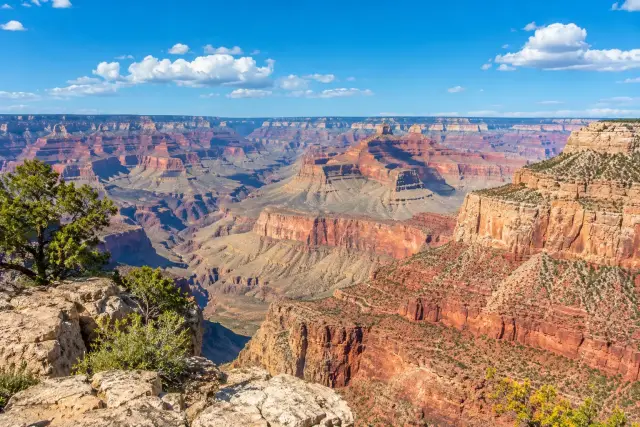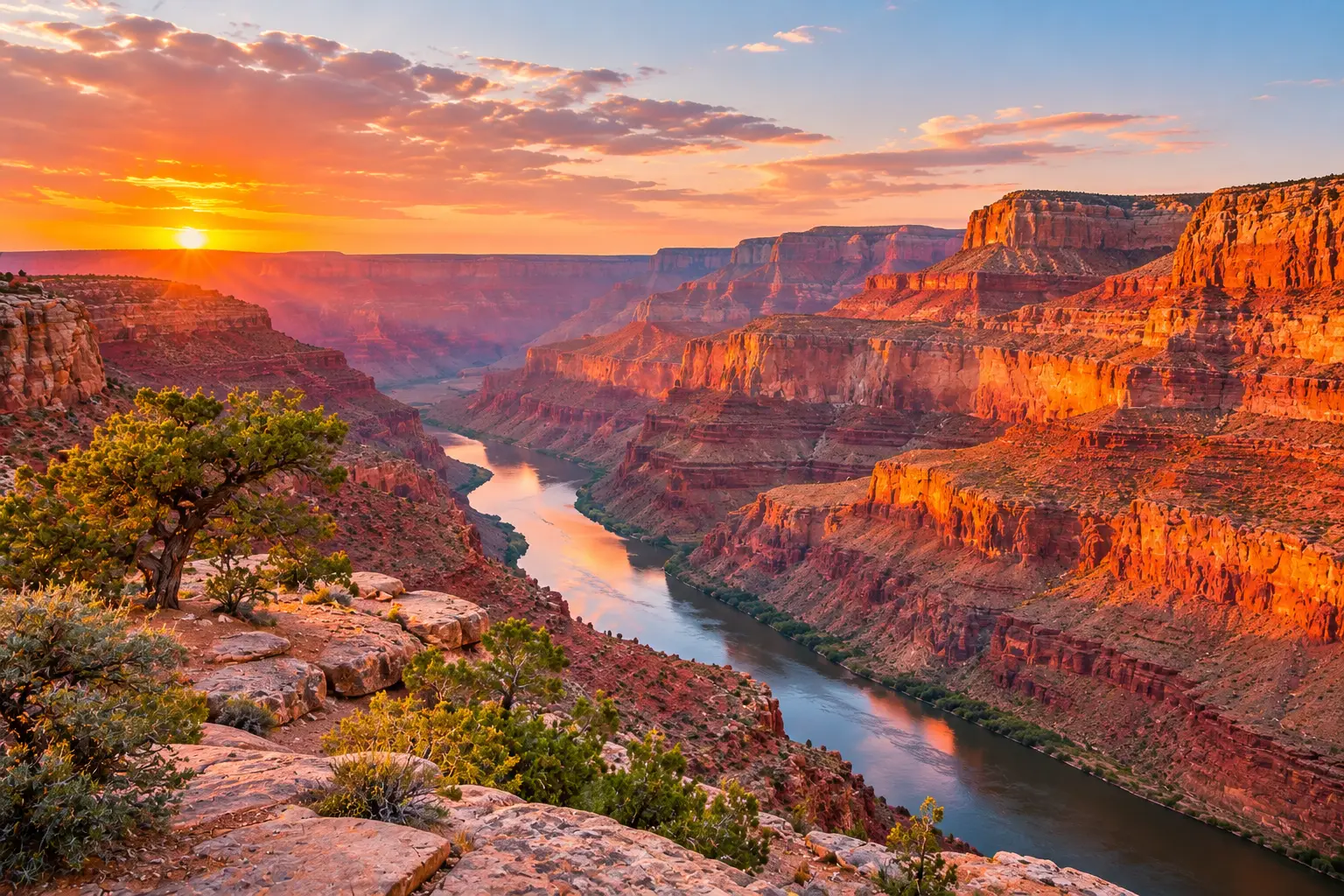
The United States has more than 25 UNESCO World Heritage Sites. Roughly half are natural sites, mostly national parks such as Yellowstone, the Grand Canyon and Yosemite. The rest are cultural sites, from ancient earthworks and pueblos to Independence Hall, the Statue of Liberty and Frank Lloyd Wright's buildings, plus one mixed site in Hawaii.
This guide lists every US site by category with the year it was inscribed, then explains what each group shows about the country. The United States was the first country to ratify the World Heritage Convention, in 1973, and two of its sites were in the first group listed in 1978. The most recent addition is the Okefenokee National Wildlife Refuge, inscribed in 2026.
Quick takeaways
- Yellowstone and Mesa Verde were among the first twelve World Heritage Sites, inscribed in 1978.
- Most US natural sites are national parks, and two are shared with Canada.
- Cultural sites include Native American earthworks and pueblos as well as colonial and modern buildings.
- Papahānaumokuākea, off Hawaii, is the only US site listed for both natural and cultural value.
Natural sites
Natural World Heritage Sites in the USA
Most US natural sites are national parks run by the National Park Service. Yellowstone, the world's first national park, was inscribed in 1978 for its geysers, hot springs and volcanic system. The Grand Canyon and the Everglades followed in 1979, and the Everglades remains the largest subtropical wilderness in the United States, home to manatees, American crocodiles and the Florida panther.
The 1980s added the western and eastern giants. Redwood National and State Parks protect coast redwoods, the tallest trees on Earth. Mammoth Cave in Kentucky is the longest known cave system in the world. Olympic National Park in Washington combines glaciers, temperate rainforest and wild Pacific coast. The Great Smoky Mountains are known for their forests and their great variety of salamanders, and Yosemite for its granite cliffs, waterfalls and giant sequoias.
Hawaiʻi Volcanoes National Park, inscribed in 1987, contains Kīlauea and Mauna Loa, two of the most active volcanoes on Earth. Carlsbad Caverns in New Mexico, inscribed in 1995, has more than a hundred caves, including the deep Lechuguilla Cave. Two sites are shared with Canada: the huge glacier-and-mountain wilderness that includes Alaska's Wrangell–St Elias and Glacier Bay, and Waterton-Glacier International Peace Park, created in 1932 as the world's first international peace park.
The newest US natural site is the Okefenokee National Wildlife Refuge in Georgia and Florida, inscribed in 2026. It is a vast blackwater swamp and peatland at the headwaters of the Suwannee and St Marys rivers, listed for its wetland habitats and the wildlife they support, from alligators to wading birds.
| Natural site | Inscribed | State |
|---|---|---|
| Yellowstone National Park | 1978 | Wyoming, Montana, Idaho |
| Grand Canyon National Park | 1979 | Arizona |
| Everglades National Park | 1979 | Florida |
| Kluane / Wrangell–St Elias / Glacier Bay / Tatshenshini-Alsek (with Canada) | 1979 | Alaska |
| Redwood National and State Parks | 1980 | California |
| Mammoth Cave National Park | 1981 | Kentucky |
| Olympic National Park | 1981 | Washington |
| Great Smoky Mountains National Park | 1983 | North Carolina, Tennessee |
| Yosemite National Park | 1984 | California |
| Hawaiʻi Volcanoes National Park | 1987 | Hawaii |
| Carlsbad Caverns National Park | 1995 | New Mexico |
| Waterton-Glacier International Peace Park (with Canada) | 1995 | Montana |
| Okefenokee National Wildlife Refuge | 2026 | Georgia, Florida |
Tip: World Heritage status does not change how a US park is run day to day. Entry fees, permits and opening dates are set by the National Park Service or the agency that manages each site, so always check that agency's own website before you travel.
Cultural sites
Native American sites on the World Heritage List
Some of the oldest US cultural sites were built by Native American peoples long before Europeans arrived. Mesa Verde in Colorado, inscribed in 1978, protects Ancestral Puebloan cliff dwellings such as Cliff Palace, built into alcoves in canyon walls. Chaco Culture in New Mexico, inscribed in 1987, includes the great houses of Chaco Canyon, the centre of a network of roads and settlements across the Four Corners region around 850 to 1150 AD.
Taos Pueblo, inscribed in 1992, is a multi-storey adobe settlement in New Mexico that has been lived in for centuries and is still home to the Taos people. Cahokia, in Illinois, was inscribed in 1982. It was the largest pre-Columbian settlement north of Mexico, and its Monks Mound is the largest earthen mound of its kind in the Americas.
Two listings recognise much older earthworks. The Monumental Earthworks of Poverty Point in Louisiana, inscribed in 2014, were built by hunter-gatherers more than 3,000 years ago. The Hopewell Ceremonial Earthworks in Ohio, inscribed in 2023, are huge geometric enclosures built about 2,000 years ago, some aligned with the rising and setting of the Moon.
These sites change the usual picture of American history. Long before European settlement, people in North America built towns, ceremonial centres and road networks, traded copper, shells and obsidian over great distances, and tracked the movements of the Sun and Moon. Several listings are managed jointly with tribal nations, whose members are descendants of the builders.
Built without farming
Poverty Point is unusual because the people who built it lived mainly by hunting, fishing and gathering.
Still lived in
Taos Pueblo is a living community, not an abandoned ruin.
A giant mound
Monks Mound at Cahokia has a base roughly as large as that of the Great Pyramid of Giza.
Cultural sites
Colonial, national and modern landmarks
The list also tells the story of European colonisation and the new nation. La Fortaleza and San Juan National Historic Site in Puerto Rico, inscribed in 1983, are Spanish fortifications guarding San Juan Bay. The San Antonio Missions in Texas, inscribed in 2015, are five 18th-century Spanish missions, including the Alamo. The Moravian Church Settlements listing, extended in 2024, added the Historic Moravian Bethlehem District in Pennsylvania, founded in 1741, alongside Moravian towns in Denmark, Germany and Northern Ireland.
Independence Hall in Philadelphia, inscribed in 1979, is where the Declaration of Independence and the US Constitution were debated and signed. The Statue of Liberty, inscribed in 1984, was a gift from France and was dedicated in 1886. Monticello and the University of Virginia in Charlottesville, inscribed in 1987, show Thomas Jefferson's work as an architect.
The 20th-Century Architecture of Frank Lloyd Wright, inscribed in 2019, groups eight buildings, among them Fallingwater in Pennsylvania, the Guggenheim Museum in New York, Taliesin and Taliesin West, and the Robie House and Unity Temple in Illinois. It was inscribed while the United States was outside UNESCO, because the World Heritage Convention is a separate treaty from UNESCO membership.
Wright's buildings were chosen for how they changed architecture worldwide. He called his approach 'organic architecture': buildings that grow out of their sites, with open plans that flow from room to room and long, low lines that echo the landscape. Fallingwater, built over a waterfall in the Pennsylvania woods, is the best-known example.
| Cultural site | Inscribed | State or territory |
|---|---|---|
| Mesa Verde National Park | 1978 | Colorado |
| Independence Hall | 1979 | Pennsylvania |
| Cahokia Mounds State Historic Site | 1982 | Illinois |
| La Fortaleza and San Juan National Historic Site | 1983 | Puerto Rico |
| Statue of Liberty | 1984 | New York |
| Chaco Culture | 1987 | New Mexico |
| Monticello and the University of Virginia in Charlottesville | 1987 | Virginia |
| Taos Pueblo | 1992 | New Mexico |
| Monumental Earthworks of Poverty Point | 2014 | Louisiana |
| San Antonio Missions | 2015 | Texas |
| The 20th-Century Architecture of Frank Lloyd Wright | 2019 | Several states |
| Hopewell Ceremonial Earthworks | 2023 | Ohio |
| Moravian Church Settlements (Bethlehem added) | 2024 | Pennsylvania |
Mixed site and visiting
The one mixed site, and how to visit US heritage sites
Papahānaumokuākea, inscribed in 2010, covers the remote Northwestern Hawaiian Islands and the ocean around them, one of the largest marine protected areas in the world. It is listed for its coral reefs, seabirds and endangered species, and for its deep importance to Native Hawaiian culture as a place connected to the origins of life and the spirits of ancestors. Access is strictly controlled, so very few people visit.
Most other US sites are easy to visit. The big national parks are busy in summer, and some, such as Yosemite at peak times, have used timed-entry reservations. Check the National Park Service page for the park before you travel. The 'America the Beautiful' annual pass covers entry fees at national parks and many other federal sites.
Several sites are good for a regional trip. New Mexico alone has Chaco Culture, Taos Pueblo and Carlsbad Caverns. Philadelphia's Independence Hall is a short train ride from New York's Statue of Liberty, and the Frank Lloyd Wright buildings let you plan a route across six states.
In the west, a single road trip can link several natural sites. Yellowstone is a long day's drive from Waterton-Glacier, and the Grand Canyon is within a day's drive of Mesa Verde and Chaco Culture. In the east, the Great Smoky Mountains and Mammoth Cave are close enough to visit in one week. Allow extra time at the remote sites: Chaco Canyon is reached by rough dirt roads, and Alaska's glacier parks are best seen by boat or small plane.
Tip: Many tribal and pueblo sites have their own visitor rules, such as no photography in certain areas or closures for ceremonies. Check before you go and follow local guidance.
Check the US list
Four questions on the sites in this guide.
0 / 4 answered
1Which two US sites were in the first group inscribed in 1978?
Answer: Yellowstone and Mesa Verde. They were among the first twelve sites on the World Heritage List.2Which US site is listed for both natural and cultural value?
Answer: Papahānaumokuākea. It is the only mixed site in the United States, inscribed in 2010.3Which Kentucky World Heritage Site is the longest known cave system in the world?
Answer: Mammoth Cave National Park. Mammoth Cave was inscribed in 1981. Carlsbad Caverns, also listed, is in New Mexico.4Which famous Texas mission is part of the San Antonio Missions World Heritage Site?
Answer: The Alamo. The Alamo began as Mission San Antonio de Valero. The other three are in California and Arizona.
Frequently asked questions
How many World Heritage Sites are in the United States?
The United States has more than 25 World Heritage Sites, split between natural, cultural and one mixed site. The total changes when the World Heritage Committee meets each summer, and the most recent US addition was the Okefenokee National Wildlife Refuge in 2026. For the current figure, check the United States page on UNESCO's World Heritage Centre website.
What was the first World Heritage Site in the USA?
Two US sites were inscribed together in 1978, in the first group of twelve sites ever listed: Yellowstone National Park and Mesa Verde National Park. Yellowstone, created in 1872, was already the world's first national park. Mesa Verde protects Ancestral Puebloan cliff dwellings. The United States had been the first country to ratify the World Heritage Convention, in 1973.
Is the Statue of Liberty a UNESCO World Heritage Site?
Yes. The Statue of Liberty was inscribed in 1984 as a masterpiece of the 19th century and a powerful symbol of liberty and immigration. Designed by Frédéric Auguste Bartholdi, with an iron frame engineered by Gustave Eiffel's firm, it was a gift from France and was dedicated in New York Harbor in 1886.
Are all US national parks World Heritage Sites?
No. Only a minority are. Famous parks such as Yellowstone, Yosemite and the Grand Canyon are listed, but others, including Zion, Arches, Rocky Mountain and Acadia, are not. A park joins the list only if the US government nominates it and the World Heritage Committee agrees it has Outstanding Universal Value. National park status alone is not enough.
How can I learn the US World Heritage Sites?
Split them into three groups: natural parks, Native American sites and colonial or modern landmarks. Then learn one feature for each, such as Mammoth Cave being the longest known cave system or Poverty Point being more than 3,000 years old. To practise recognising famous landmarks from photos, try World Heritage Sites Quiz, which has photo rounds on national parks and monuments.
Parks, pueblos and landmarks
US World Heritage Sites fall into three clear groups: great natural parks, ancient Native American sites, and landmarks of colonial and modern history. Papahānaumokuākea is the one site that bridges nature and culture.
- Learn the natural sites first, since most are well-known national parks.
- Add the Native American sites in age order, from Poverty Point to Taos Pueblo.
- Test yourself on national parks and monuments in World Heritage Sites Quiz.
Check the evidence behind the guide
Use these references to check terminology and pursue a topic in more depth. Photo quizzes help you practise observation; a single picture rarely proves a difficult identification.
Each UNESCO listing page gives the year of inscription, the criteria it meets and a short description. Check those details rather than relying on a travel photo alone.