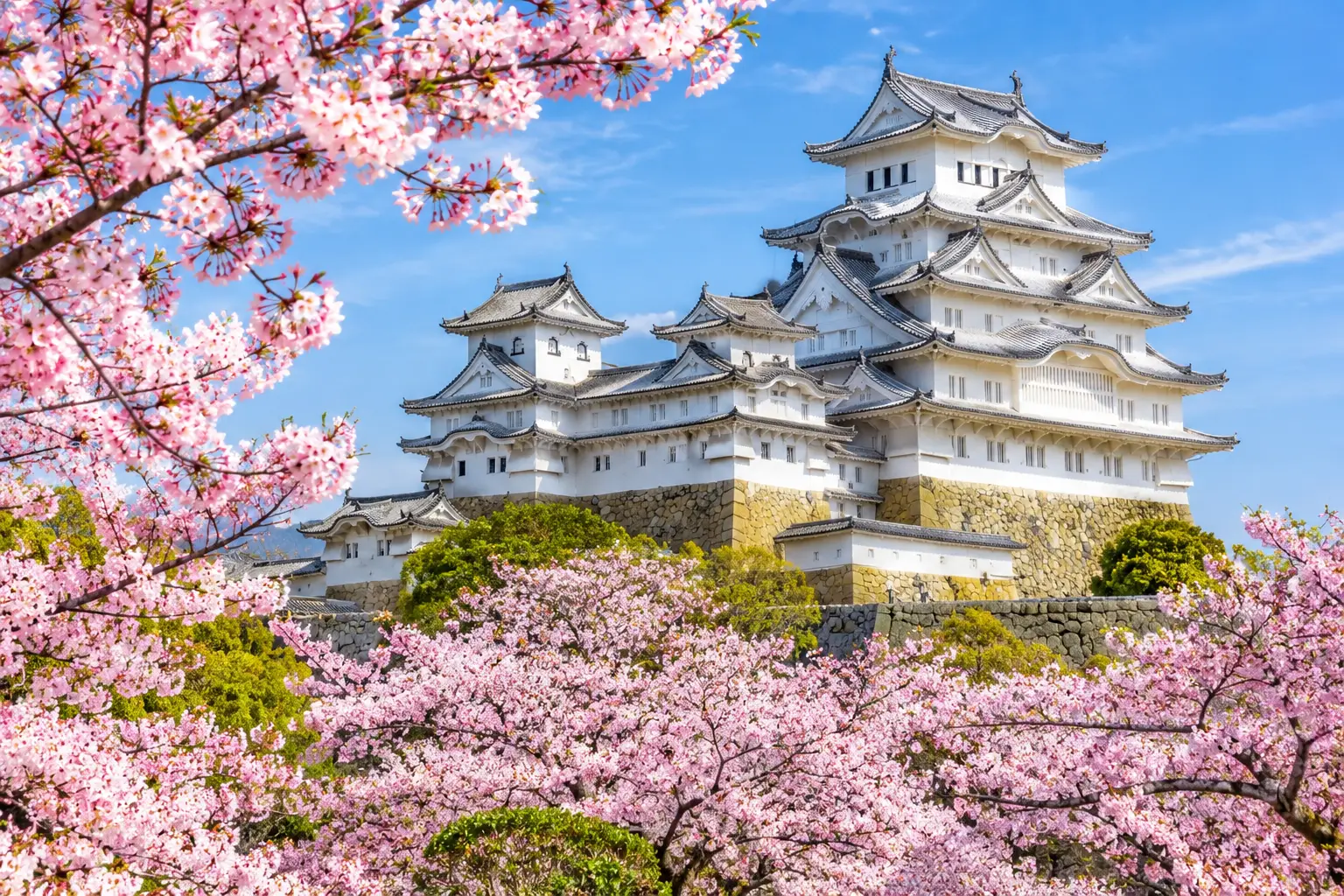
Japan's UNESCO World Heritage Sites include Himeji Castle, the temples and shrines of Kyoto and Nara, the floating torii of Itsukushima, Mount Fuji, the thatched villages of Shirakawa-go and the Hiroshima Peace Memorial. Most are cultural sites; five are natural, including the ancient cedar forests of Yakushima.
Japan joined the World Heritage Convention in 1992 and its first four sites were inscribed in 1993. It now has more than 25. This guide groups them by theme, gives a table of every site with its year, and ends with tips for seeing several on one trip.
Quick takeaways
- Japan's first four sites, in 1993, were Himeji Castle, Hōryū-ji, Yakushima and Shirakami-Sanchi.
- Mount Fuji is listed as a cultural site, for its role in religion and art, not as a natural site.
- Kyoto's listing is a group of 17 temples, shrines and a castle, not the whole city.
- The newest site, the Ancient Capitals of Asuka and Fujiwara, was inscribed in 2026.
Castles and capitals
Himeji Castle, Kyoto and Nara
Himeji Castle, inscribed in 1993, is the finest surviving example of an early 17th-century Japanese castle. Its white plastered walls and layered roofs give it the nickname White Heron Castle. The main keep was completed in the early 1600s, and the castle survived the bombing of Himeji in the Second World War. A major restoration of the keep finished in 2015.
The Historic Monuments of Ancient Kyoto, inscribed in 1994, are 17 separate sites in Kyoto, Uji and Ōtsu. Kyoto was the imperial capital from 794 until 1868. The listed sites include Kiyomizu-dera, Kinkaku-ji (the Golden Pavilion), Ginkaku-ji, the rock garden of Ryōan-ji, Nijō Castle and the Byōdō-in in Uji. Some famous Kyoto places, such as the Fushimi Inari shrine, are not part of the listing.
Nara was the capital before Kyoto, from 710 to 784. The Historic Monuments of Ancient Nara, inscribed in 1998, include Tōdai-ji with its great bronze Buddha, Kasuga Taisha shrine with its primeval forest and the site of the Heijō Palace. Nearby, the Buddhist Monuments in the Hōryū-ji Area, inscribed in 1993, include some of the oldest surviving wooden buildings in the world.
In 2026 the Ancient Capitals of Asuka and Fujiwara joined the list. They cover the palace sites, temples and tombs of the 6th to early 8th centuries in Nara Prefecture, when Japan's early state took shape. Fujiwara-kyō was laid out on a grid in the Chinese style, a model later followed in Nara and Kyoto.
Capitals in order
Asuka and Fujiwara, then Nara from 710, then Kyoto from 794 until 1868.
Not all of Kyoto
The Kyoto listing is 17 named sites; the rest of the city is outside it.
Sacred places
Shrines, pilgrim routes and Mount Fuji
Itsukushima Shinto Shrine, inscribed in 1996, stands on the island of Miyajima in Hiroshima Bay. Its halls are built over the water, and at high tide the great red torii gate seems to float. The shrine's present layout dates from the 12th century, when the warlord Taira no Kiyomori rebuilt it.
Fujisan, inscribed in 2013, is listed as a cultural site rather than a natural one. UNESCO recognised Mount Fuji as a sacred place of pilgrimage and as a source of artistic inspiration, most famously in Hokusai's woodblock prints. The listing has 25 parts, including the summit, shrines, lakes and the Miho no Matsubara pine beach.
The Sacred Sites and Pilgrimage Routes in the Kii Mountain Range, inscribed in 2004, link three holy areas south of Osaka and Nara: Yoshino and Ōmine, the Kumano Sanzan shrines and Kōyasan, the mountain monastery of Shingon Buddhism. The Kumano Kodō trails between them are still walked by pilgrims and hikers.
Other sacred sites include the Shrines and Temples of Nikkō (1999), where the richly decorated Tōshō-gū honours the shogun Tokugawa Ieyasu, Hiraizumi (2011) with its Pure Land Buddhist temples and gardens, and the Sacred Island of Okinoshima (2017), an island so holy that only a few priests may land.
Tip: Check the tide times before you visit Itsukushima. The torii looks as if it floats at high tide, while at low tide you can walk out to its base.
Villages and modern history
Shirakawa-go, Hiroshima and Japan's industrial heritage
The Historic Villages of Shirakawa-go and Gokayama, inscribed in 1995, are known for their gasshō-zukuri farmhouses. The name means 'praying hands', after the steep thatched roofs that shed heavy mountain snow. The large attics were used to raise silkworms. Families still live in many of the houses.
The Hiroshima Peace Memorial, or Genbaku Dome, inscribed in 1996, is the ruin of a building that stood close to the hypocentre of the atomic bomb dropped on 6 August 1945. Designed by the Czech architect Jan Letzel and completed in 1915, it has been kept exactly as it was left, as a symbol of the hope for peace.
Several sites record Japan's mining and industrial past. The Iwami Ginzan Silver Mine (2007) produced large quantities of silver in the 16th and 17th centuries. The Tomioka Silk Mill (2014), opened in 1872 with French technology, helped Japan mass-produce raw silk. The Sites of Japan's Meiji Industrial Revolution (2015) include shipyards, steelworks and coal mines, among them Hashima Island. The Sado Island Gold Mines were added in 2024.
Other cultural sites cover very different periods: the prehistoric Jōmon sites of northern Japan (2021), the keyhole-shaped burial mounds of the Mozu-Furuichi Kofun Group near Osaka (2019), the Gusuku sites of the Ryukyu Kingdom in Okinawa (2000), the Hidden Christian Sites in the Nagasaki Region (2018) and Le Corbusier's National Museum of Western Art in Tokyo, part of a listing shared with six other countries (2016).
Natural sites
Japan's natural World Heritage Sites
Yakushima, an island south of Kyushu, was one of Japan's first sites in 1993. Its mountain forests hold ancient Japanese cedars, known locally as yakusugi, many more than a thousand years old. The most famous, Jōmon Sugi, is thought to be thousands of years old. The island is also one of the wettest places in Japan.
Shirakami-Sanchi, also inscribed in 1993, protects one of the largest untouched beech forests in East Asia, on the border of Aomori and Akita in northern Honshu. Shiretoko, inscribed in 2005, is a peninsula in Hokkaido where seasonal sea ice reaches further south than almost anywhere else in the Northern Hemisphere, supporting brown bears, sea eagles and salmon.
The Ogasawara Islands, inscribed in 2011, lie about 1,000 kilometres south of Tokyo and have never been joined to a continent, so many of their plants and land snails are found nowhere else. The most recent natural site, inscribed in 2021, covers forests on Amami-Ōshima, Tokunoshima, northern Okinawa and Iriomote, home to rare animals such as the Amami rabbit and the Iriomote cat.
| Site | Type | Inscribed | Where |
|---|---|---|---|
| Buddhist Monuments in the Hōryū-ji Area | Cultural | 1993 | Nara |
| Himeji-jo | Cultural | 1993 | Hyōgo |
| Yakushima | Natural | 1993 | Kagoshima |
| Shirakami-Sanchi | Natural | 1993 | Aomori, Akita |
| Historic Monuments of Ancient Kyoto | Cultural | 1994 | Kyoto, Shiga |
| Historic Villages of Shirakawa-go and Gokayama | Cultural | 1995 | Gifu, Toyama |
| Hiroshima Peace Memorial (Genbaku Dome) | Cultural | 1996 | Hiroshima |
| Itsukushima Shinto Shrine | Cultural | 1996 | Hiroshima |
| Historic Monuments of Ancient Nara | Cultural | 1998 | Nara |
| Shrines and Temples of Nikkō | Cultural | 1999 | Tochigi |
| Gusuku Sites of the Kingdom of Ryukyu | Cultural | 2000 | Okinawa |
| Sacred Sites and Pilgrimage Routes in the Kii Mountain Range | Cultural | 2004 | Wakayama, Nara, Mie |
| Shiretoko | Natural | 2005 | Hokkaido |
| Iwami Ginzan Silver Mine | Cultural | 2007 | Shimane |
| Hiraizumi | Cultural | 2011 | Iwate |
| Ogasawara Islands | Natural | 2011 | Tokyo |
| Fujisan | Cultural | 2013 | Shizuoka, Yamanashi |
| Tomioka Silk Mill and Related Sites | Cultural | 2014 | Gunma |
| Sites of Japan's Meiji Industrial Revolution | Cultural | 2015 | Several prefectures |
| The Architectural Work of Le Corbusier (shared) | Cultural | 2016 | Tokyo |
| Sacred Island of Okinoshima | Cultural | 2017 | Fukuoka |
| Hidden Christian Sites in the Nagasaki Region | Cultural | 2018 | Nagasaki, Kumamoto |
| Mozu-Furuichi Kofun Group | Cultural | 2019 | Osaka |
| Amami-Ōshima, Tokunoshima, northern Okinawa and Iriomote | Natural | 2021 | Kagoshima, Okinawa |
| Jōmon Prehistoric Sites in Northern Japan | Cultural | 2021 | Hokkaido, Aomori, Iwate, Akita |
| Sado Island Gold Mines | Cultural | 2024 | Niigata |
| Ancient Capitals of Asuka and Fujiwara | Cultural | 2026 | Nara |
Planning a visit
How to see Japan's World Heritage Sites on one trip
Many of the best-known sites lie along the main rail line between Tokyo and Hiroshima. A typical route takes in Kyoto, a day trip to Nara, Himeji Castle on the way west, then Hiroshima's Peace Memorial and the ferry to Miyajima for Itsukushima. Mount Fuji and Nikkō are easy side trips from Tokyo.
Shirakawa-go is reached by bus from Takayama or Kanazawa, and it is especially popular in winter, when the snow-covered roofs are lit up on a few evenings each year. Yakushima needs a ferry or flight from Kagoshima and at least two days if you want to hike to Jōmon Sugi.
Japan's temples and shrines are places of worship. Follow the signs on where photography is allowed, take your shoes off where asked, and keep voices low in halls and gardens. At Fuji, the official climbing season runs only in summer, and climbers on the main trails now pay an entry fee.
A Japan Rail Pass or regional rail passes can make a heritage route cheaper, but check whether they cover the trains you need, since prices and rules have changed in recent years. Kyoto's famous temples are busiest from late March to early April for cherry blossom and in November for autumn colour, so arrive at opening time if you visit then.
Check Japan's heritage
Five questions on the sites in this guide.
0 / 5 answered
1Why is Himeji Castle nicknamed White Heron Castle?
Answer: Its white walls and layered roofs look like a bird taking flight. The white plaster walls give the castle its elegant, bird-like look.2What are the gasshō-zukuri houses of Shirakawa-go known for?
Answer: Steep thatched roofs that shed heavy snow. Gasshō-zukuri means 'praying hands', after the shape of the roofs.3Which ancient trees is Yakushima famous for?
Answer: Japanese cedars. The island's cedars, called yakusugi, include trees more than a thousand years old.4Which city was Japan's capital from 710 to 784, before Kyoto?
Answer: Nara. Nara was the capital from 710 to 784. After ten years at Nagaoka-kyō, the court moved to Kyoto in 794.5Which Hokkaido peninsula is a natural World Heritage Site?
Answer: Shiretoko. Shiretoko was inscribed in 2005 for its sea ice, wildlife and links between sea and land.
Frequently asked questions
How many UNESCO World Heritage Sites are in Japan?
Japan has more than 25 World Heritage Sites. Most are cultural, and five are natural; there are no mixed sites. The number grows when the World Heritage Committee adds new sites each summer, and the most recent addition was the Ancient Capitals of Asuka and Fujiwara in 2026. The UNESCO World Heritage Centre website gives the current total.
What were Japan's first World Heritage Sites?
Japan's first four sites were inscribed in December 1993: Himeji Castle, the Buddhist Monuments in the Hōryū-ji Area, Yakushima and Shirakami-Sanchi. That first group was a balance of two cultural sites and two natural ones. The Historic Monuments of Ancient Kyoto followed in 1994, and Shirakawa-go and Gokayama in 1995.
Is Mount Fuji a natural World Heritage Site?
No. Mount Fuji was inscribed in 2013 as a cultural site, under the name 'Fujisan, sacred place and source of artistic inspiration'. UNESCO recognised its role in Japanese religion and pilgrimage and its influence on art, including Hokusai's famous prints. The listing includes the summit, shrines, lakes and a pine beach, not just the mountain's natural features.
Is Fushimi Inari a UNESCO World Heritage Site?
No. Fushimi Inari Taisha, famous for its tunnels of red torii gates, is one of Kyoto's most visited shrines, but it is not one of the 17 sites in the Historic Monuments of Ancient Kyoto. Listed Kyoto sites include Kiyomizu-dera, Kinkaku-ji, Ginkaku-ji, Ryōan-ji and Nijō Castle. Fame and World Heritage status do not always go together.
Which Japanese World Heritage Sites are best for a first trip?
For a first trip, Kyoto, Nara, Himeji Castle, Hiroshima's Peace Memorial and Itsukushima can all be reached along one rail route, with Mount Fuji and Nikkō as day trips from Tokyo. Learning to recognise these places before you go makes the visit richer, and World Heritage Sites Quiz has photo rounds on temples, castles and shrines to practise with.
Castles, capitals, shrines and forests
Japan's World Heritage Sites follow its history, from Jōmon villages and early capitals to castles, industrial sites and the Hiroshima Peace Memorial. Its natural sites, from Yakushima to Shiretoko, protect forests and wildlife found nowhere else.
- Learn the capitals in order: Asuka and Fujiwara, Nara, then Kyoto.
- Remember that Mount Fuji is a cultural site, listed for religion and art.
- Practise naming Japanese temples, castles and shrines in World Heritage Sites Quiz.
Check the evidence behind the guide
Use these references to check terminology and pursue a topic in more depth. Photo quizzes help you practise observation; a single picture rarely proves a difficult identification.
Each UNESCO listing page gives the year of inscription, the criteria it meets and a short description. Check those details rather than relying on a travel photo alone.