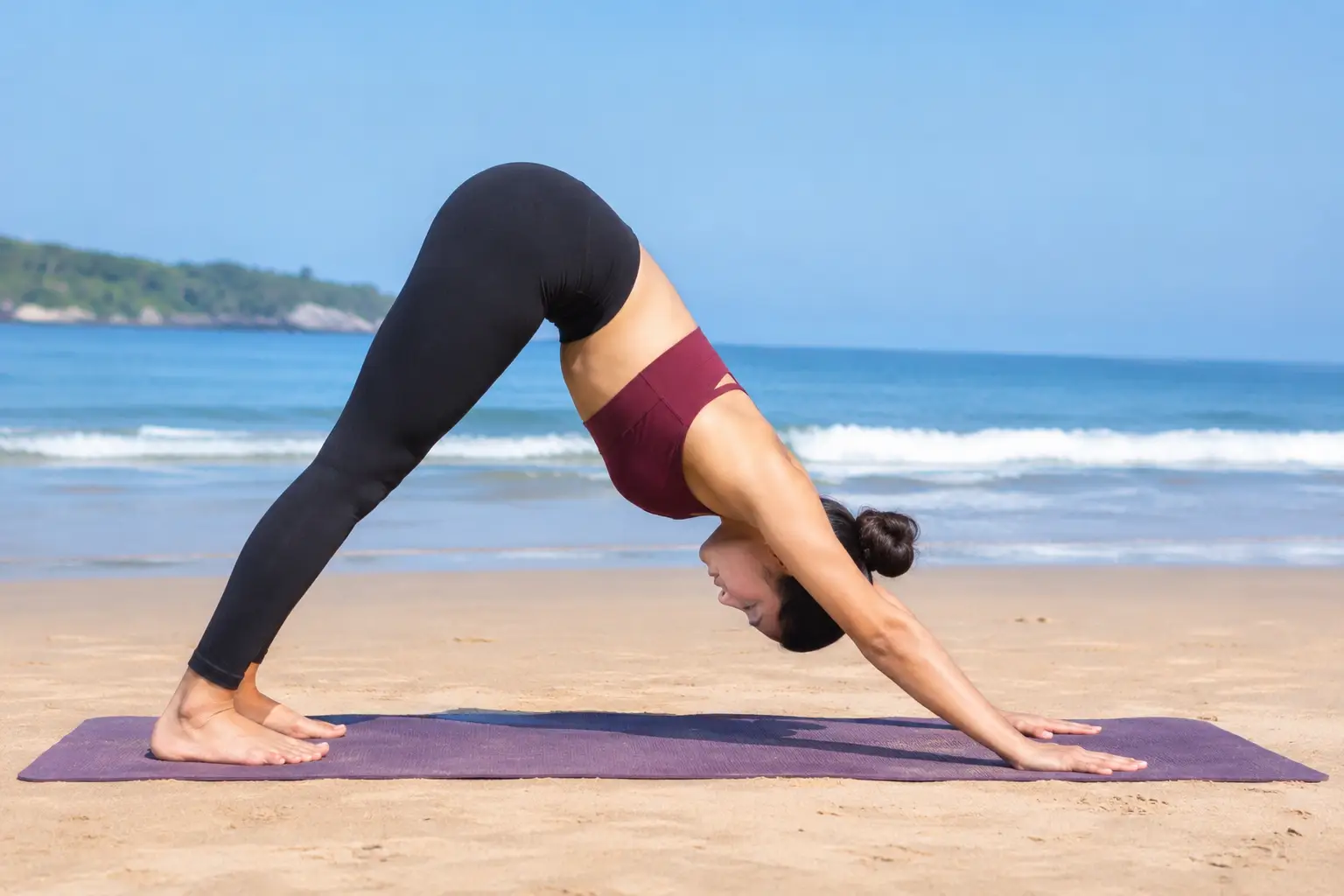
Surya Namaskar, the Sun Salutation, links a series of poses into one flowing sequence. It is often used to warm up at the start of a class.
There are several versions. The twelve-step sequence below is a common one taught in India. Other styles, such as Ashtanga, use Surya Namaskar A and B, which differ slightly.
Steps 1 to 6
1. Pranamasana, Prayer pose: stand with the palms together at the chest. 2. Hasta Uttanasana, Raised Arms pose: reach the arms up and back. 3. Hasta Padasana, also called Padahastasana, Standing Forward Bend: fold forward toward the feet.
4. Ashwa Sanchalanasana, Equestrian or Low Lunge pose: step one leg back. 5. Dandasana, Stick or Plank pose: bring both legs back into a straight line. Some versions use Parvatasana here instead. 6. Ashtanga Namaskara, Salute with Eight Parts: lower the knees, chest and chin, so the feet, knees, hands, chest and chin touch the floor.
Steps 7 to 12
7. Bhujangasana, Cobra pose: slide forward and lift the chest. 8. Parvatasana, Mountain pose, a version of Downward-Facing Dog: lift the hips into an inverted V.
9. Ashwa Sanchalanasana again, stepping the same leg forward. 10. Hasta Padasana, folding forward. 11. Hasta Uttanasana, reaching up. 12. Pranamasana, returning to Prayer pose. One full round usually repeats the sequence leading with the other leg.
| Step | Sanskrit name | English name |
|---|---|---|
| 1, 12 | Pranamasana | Prayer pose |
| 2, 11 | Hasta Uttanasana | Raised Arms pose |
| 3, 10 | Hasta Padasana | Standing Forward Bend |
| 4, 9 | Ashwa Sanchalanasana | Equestrian pose |
| 5 | Dandasana | Stick or Plank pose |
| 6 | Ashtanga Namaskara | Salute with Eight Parts |
| 7 | Bhujangasana | Cobra pose |
| 8 | Parvatasana | Mountain or Downward Dog |
Breath and pace
Movements are usually matched to the breath: breathe in when the body opens or lifts, and out when it folds forward. Beginners should move slowly and skip any step that strains the back or wrists, ideally with a teacher's guidance.
Follow the flow
0 / 4 answered
1What does Surya Namaskar mean?
Answer: Sun Salutation. Surya means sun and namaskar means greeting.2Which pose begins and ends the twelve-step sequence?
Answer: Pranamasana. Pranamasana is Prayer pose.3In Ashtanga Namaskara, how many body parts touch the floor?
Answer: Eight. Ashta means eight: feet, knees, hands, chest and chin.4When do you usually breathe out in the sequence?
Answer: When folding forward. Exhale to fold, inhale to open or lift.
Frequently asked questions
Why do different classes teach different Sun Salutations?
Different traditions developed their own versions. Hatha classes in India often teach the twelve-step sequence, while Ashtanga and vinyasa classes use Surya Namaskar A and B.
Twelve steps, one loop
The Sun Salutation goes out and back through the same poses, so learning the first half teaches you most of the second.
Check the evidence behind the guide
Use these references to check terminology and pursue a topic in more depth. Photo quizzes help you practise observation; a single picture rarely proves a difficult identification.
Learn new poses with a qualified teacher, and check with a doctor first if you have an injury, are pregnant or have a health condition. A quiz teaches names, not safe technique.