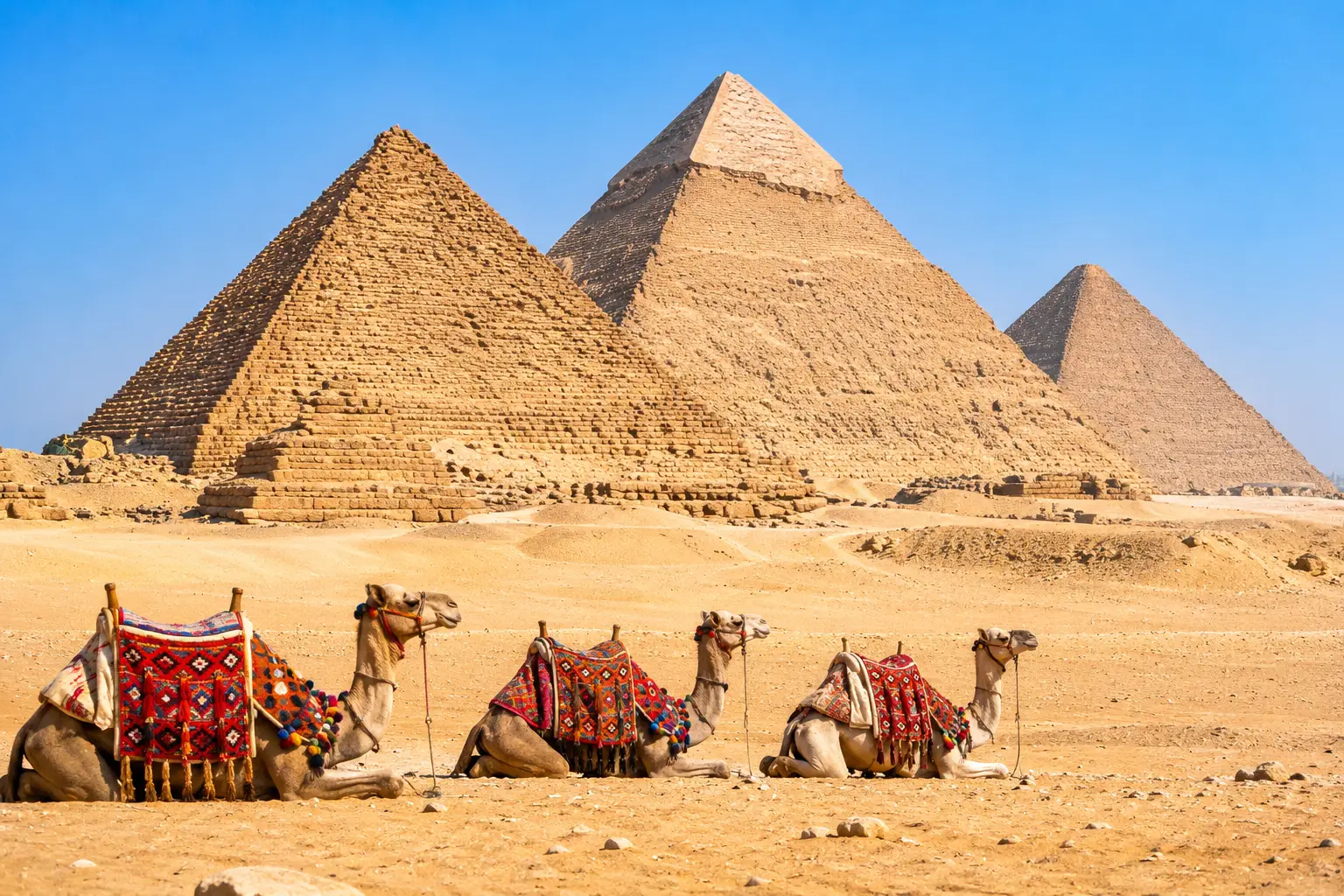
There are two famous lists of seven wonders. The ancient list, compiled by Greek writers more than 2,000 years ago, has only one survivor: the Great Pyramid of Giza. The modern list, the New7Wonders of 2007, came from a public vote run by a private foundation, not by UNESCO.
This quiz takes both lists in turn. The first two rounds cover the ancient wonders and how six of them were lost. The last two cover the 2007 winners, how the vote worked and a few facts that link the two lists. Each answer has a short note so you remember the story, not just the name.
Quick takeaways
- The seven ancient wonders all stood around the eastern Mediterranean and the Middle East; only the Great Pyramid survives.
- Earthquakes and fire destroyed most of the lost wonders, and the Hanging Gardens may never have existed.
- The New7Wonders were chosen in 2007 by a public vote organised by a private Swiss-based foundation.
- UNESCO had no role in the 2007 vote, although all seven winners are, or are part of, World Heritage Sites.
Round 1
What were the Seven Wonders of the Ancient World?
Greek travellers and poets called them theamata, 'things to be seen'. The list was a kind of sightseeing guide to the world they knew, which is why every wonder lies around the eastern Mediterranean and in Mesopotamia. Different writers named slightly different sights until the familiar seven settled down.
The seven are the Great Pyramid of Giza, the Hanging Gardens of Babylon, the Statue of Zeus at Olympia, the Temple of Artemis at Ephesus, the Mausoleum at Halicarnassus, the Colossus of Rhodes and the Lighthouse of Alexandria. They were never all standing at once for long: the Colossus fell only about 54 years after it was finished.
1Which of the Seven Wonders of the Ancient World is the only one still standing?
Answer: The Great Pyramid of Giza. The Great Pyramid is also the oldest of the seven, finished around 2560 BC. The other six were destroyed or have vanished.2Which Greek poet wrote one of the earliest surviving lists of the seven wonders, in the 2nd century BC?
Answer: Antipater of Sidon. Antipater's short poem names seven sights, with the Walls of Babylon in place of the Lighthouse. Homer and Sappho lived centuries before most of the wonders were built.3Which king is traditionally credited with building the Hanging Gardens of Babylon?
Answer: Nebuchadnezzar II. Later writers said Nebuchadnezzar built the gardens for his homesick wife. No record from his own reign mentions them.4Why do some historians doubt that the Hanging Gardens ever existed?
Answer: No confirmed remains have been found at Babylon. Babylon has been excavated, but no structure there has been securely identified as the gardens. Some scholars think the story grew from gardens elsewhere.5Which god did the Colossus of Rhodes depict?
Answer: Helios, the sun god. The people of Rhodes raised the giant statue of their patron god after surviving a long siege around 305 BC.6Which sculptor made the Statue of Zeus at Olympia?
Answer: Phidias. Phidias made the seated figure from ivory and gold over a wooden frame in the 5th century BC. Archaeologists have found his workshop at Olympia.7The word 'mausoleum' comes from the tomb of which ruler?
Answer: Mausolus. Mausolus ruled Caria from Halicarnassus. His tomb was so admired that his name became the word for any grand tomb.8In which modern country did both the Temple of Artemis and the Mausoleum stand?
Answer: Turkey. Ephesus lies near modern Selçuk and Halicarnassus is modern Bodrum, both on Turkey's Aegean coast.
| Wonder | Modern country | Built | What happened to it |
|---|---|---|---|
| Great Pyramid of Giza | Egypt | c. 2560 BC | Still standing |
| Hanging Gardens of Babylon | Iraq | c. 600 BC, by tradition | No confirmed remains found |
| Statue of Zeus at Olympia | Greece | 5th century BC | Lost in late antiquity |
| Temple of Artemis at Ephesus | Turkey | 6th century BC, rebuilt after 356 BC | Burned, rebuilt, later ruined |
| Mausoleum at Halicarnassus | Turkey | 4th century BC | Damaged by earthquakes; stone reused |
| Colossus of Rhodes | Greece | 3rd century BC | Toppled by an earthquake |
| Lighthouse of Alexandria | Egypt | 3rd century BC | Wrecked by earthquakes |
Round 2
How were the lost wonders destroyed?
Earthquakes did most of the damage. The eastern Mediterranean is seismically active, and tall structures such as the Colossus and the Lighthouse were especially at risk. Fire, neglect and the reuse of good building stone finished off the rest.
Some pieces survive in museums. Sculptures from the Mausoleum and fragments of the Temple of Artemis are in the British Museum in London, and blocks thought to come from the Lighthouse lie on the seabed off Alexandria.
9What brought down the Colossus of Rhodes?
Answer: An earthquake. An earthquake around 226 BC snapped the statue at the knees, little more than half a century after it was finished. It was never rebuilt.10What was the Colossus of Rhodes mainly made of?
Answer: Bronze. Bronze plates were fixed over an iron frame, with stone used to weigh the structure down. The statue was about 30 metres tall.11What destroyed the Temple of Artemis at Ephesus in 356 BC?
Answer: A fire started deliberately. A man named Herostratus set it alight to make his name famous. The temple was rebuilt, then fell into ruin in late antiquity.12The Lighthouse of Alexandria stood on which island, whose name became the word for lighthouse in several languages?
Answer: Pharos. French 'phare', Italian and Spanish 'faro' all come from Pharos. Earthquakes had wrecked the tower by the 14th century.13What happened to much of the stone from the Mausoleum at Halicarnassus?
Answer: Crusader knights reused it to build a castle at Bodrum. Earthquakes had already damaged the tomb. The Knights of St John took its stone for their castle in the 15th and early 16th centuries.
Tip: Link each lost wonder to its cause: Colossus and Lighthouse, earthquakes; Temple of Artemis, arson; Mausoleum, earthquakes then stone robbing.
Round 3
What are the New7Wonders of the World?
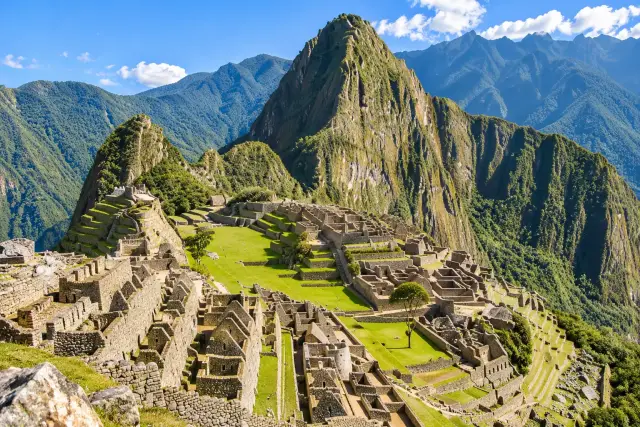
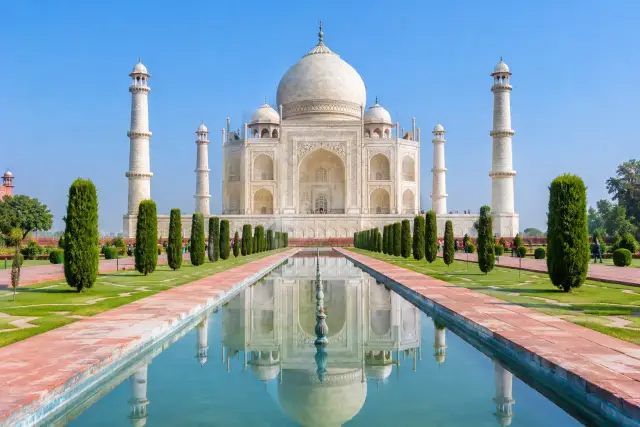
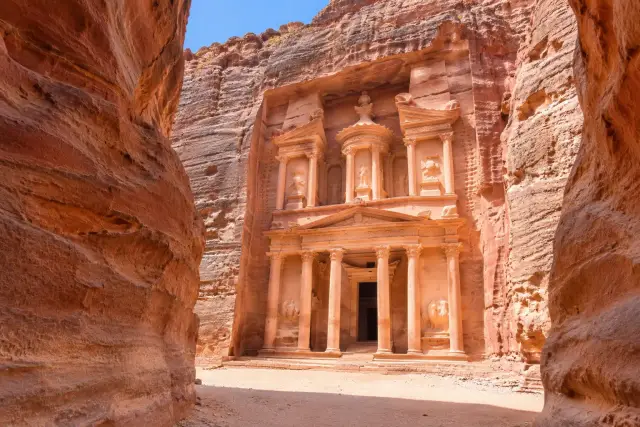
In 2007 a campaign run by the New7Wonders Foundation asked the public to choose seven modern wonders. The winners were the Great Wall of China, Petra in Jordan, Christ the Redeemer in Brazil, Machu Picchu in Peru, Chichen Itza in Mexico, the Colosseum in Rome and the Taj Mahal in India.
The campaign was private and commercial. UNESCO took no part and pointed out that a popular vote cannot measure the things its experts assess, such as authenticity and how well a site is protected. Even so, every winner is a World Heritage Site in its own right or part of one.
14In which year were the New7Wonders of the World announced?
Answer: 2007. The results were announced on 7 July 2007, a date chosen because it reads 07/07/07.15In which city was the New7Wonders result announced?
Answer: Lisbon. The ceremony was held in a football stadium in Lisbon, Portugal.16Who organised the New7Wonders vote?
Answer: A private Swiss-based foundation. The New7Wonders Foundation ran the campaign. UNESCO was not involved and said its own World Heritage List works in a completely different way.17Which ancient wonder was given honorary status in the 2007 vote, rather than being voted on?
Answer: The Great Pyramid of Giza. After objections from Egypt, the organisers removed the pyramids from the vote and named them an honorary candidate as the only surviving ancient wonder.18Which of these is NOT one of the New7Wonders of 2007?
Answer: Angkor Wat. Angkor was one of the finalists but missed the final seven. The winners were the Great Wall, Petra, Christ the Redeemer, Machu Picchu, Chichen Itza, the Colosseum and the Taj Mahal.19On which mountain does the statue of Christ the Redeemer stand?
Answer: Corcovado. The statue looks over Rio de Janeiro from the top of Corcovado, about 700 metres above the city. Sugarloaf is a separate peak by the bay.20Which Roman emperor opened the Colosseum in AD 80?
Answer: Titus. Vespasian began the amphitheatre and his son Titus opened it with games said to have lasted 100 days. It was built on land Nero had used for his palace grounds.21Which American explorer brought Machu Picchu to international attention in 1911?
Answer: Hiram Bingham. Local farmers already knew the ruins and guided Bingham there. His photographs in National Geographic made the site famous abroad.
Round 4
How do the ancient and modern lists compare?
The ancient list reflects one culture's view of a small part of the world. The 2007 list spans four continents but reflects which countries mobilised the most voters. Neither list is official, and neither claims to name the seven greatest places on Earth.
The New7Wonders Foundation later ran a second vote for natural wonders, announced in 2011. Its winners were the Amazon, Ha Long Bay, Iguazu Falls, Jeju Island, Komodo, the Puerto Princesa Underground River and Table Mountain.
22How many of the New7Wonders are in the Americas?
Answer: Three. Machu Picchu, Chichen Itza and Christ the Redeemer are in the Americas. Three more are in Asia and one, the Colosseum, is in Europe.23How were the final New7Wonders chosen?
Answer: By a public vote online and by phone. An expert panel narrowed the nominations to 21 finalists, then the public voted. Anyone could vote, and some people voted many times.24Which dynasty built most of the Great Wall sections visitors see today, such as Badaling?
Answer: The Ming dynasty. Earlier walls were mostly rammed earth. The brick and stone walls near Beijing were largely built or rebuilt by the Ming from the 14th to the 17th centuries.25Which waterfall was named one of the New7Wonders of Nature in 2011?
Answer: Iguazu Falls. Iguazu, on the border of Argentina and Brazil, joined the Amazon, Table Mountain, Jeju Island, Komodo, Ha Long Bay and the Puerto Princesa Underground River.
Five more wonder questions
Five new questions to check what you remember from both lists.
0 / 5 answered
1Chichen Itza stands on which peninsula?
Answer: The Yucatán Peninsula. The Maya city is in the Mexican state of Yucatán, about two hours' drive from Cancún.2Beside which river does the Taj Mahal stand?
Answer: The Yamuna. The Taj Mahal sits on the south bank of the Yamuna in Agra, with Agra Fort further along the same river.3What was the Statue of Zeus at Olympia covered in?
Answer: Ivory and gold. Phidias used ivory for the skin and gold for the robe, over a wooden core. This technique is called chryselephantine.4In which year was the statue of Christ the Redeemer completed?
Answer: 1931. Work took nine years. That makes it by far the youngest of the New7Wonders.5Who ruled Caria after Mausolus died and carried on work on his tomb?
Answer: His wife Artemisia. Artemisia II was both his sister and his wife. She ruled after him and continued the tomb, which famous Greek sculptors decorated.
Frequently asked questions
What are the 7 wonders of the world?
It depends which list you mean. The ancient wonders are the Great Pyramid of Giza, the Hanging Gardens of Babylon, the Statue of Zeus, the Temple of Artemis, the Mausoleum at Halicarnassus, the Colossus of Rhodes and the Lighthouse of Alexandria. The New7Wonders of 2007 are the Great Wall, Petra, Christ the Redeemer, Machu Picchu, Chichen Itza, the Colosseum and the Taj Mahal.
Which of the seven ancient wonders still exist?
Only the Great Pyramid of Giza still stands, and it is the oldest of the seven, finished around 2560 BC. The other six were destroyed by earthquakes, fire or the reuse of their stone, and the Hanging Gardens of Babylon may never have existed. Fragments of the Mausoleum and the Temple of Artemis survive in museums, including the British Museum in London.
Who chose the New 7 Wonders of the World?
The public did, through an online and telephone vote organised by the New7Wonders Foundation, a private organisation based in Switzerland. Experts first cut the nominations to 21 finalists. The winners were announced in Lisbon on 7 July 2007. UNESCO was not involved, and it stressed that the vote had nothing to do with its own World Heritage List.
Is the Great Wall of China visible from space?
Not in the way the popular claim suggests. The wall is long but narrow, and close to the colour of the land around it, so astronauts in low Earth orbit say it is extremely hard to pick out with the naked eye. From the Moon it is certainly invisible. Cities, roads and airports are far easier to see from orbit.
How can I learn to recognise the wonders of the world?
Learn each wonder with three facts: where it is, who built it and one distinctive feature, such as the Colosseum's arches or Petra's carved facades. Then practise with photos, because recognising a place by sight is a different skill from knowing its name. World Heritage Sites Quiz shows you landmark photos and asks you to name the place.
Two lists, one survivor
The ancient wonders were a Greek sightseeing list, and only the Great Pyramid still stands. The New7Wonders came from a public vote in 2007 and spread across four continents, but they are not an official UNESCO list.
- Learn the ancient seven with the cause of each one's loss.
- Learn the 2007 seven with the country of each one.
- Practise naming famous landmarks from photos in World Heritage Sites Quiz.
Check the evidence behind the guide
Use these references to check terminology and pursue a topic in more depth. Photo quizzes help you practise observation; a single picture rarely proves a difficult identification.
Each UNESCO listing page gives the year of inscription, the criteria it meets and a short description. Check those details rather than relying on a travel photo alone.