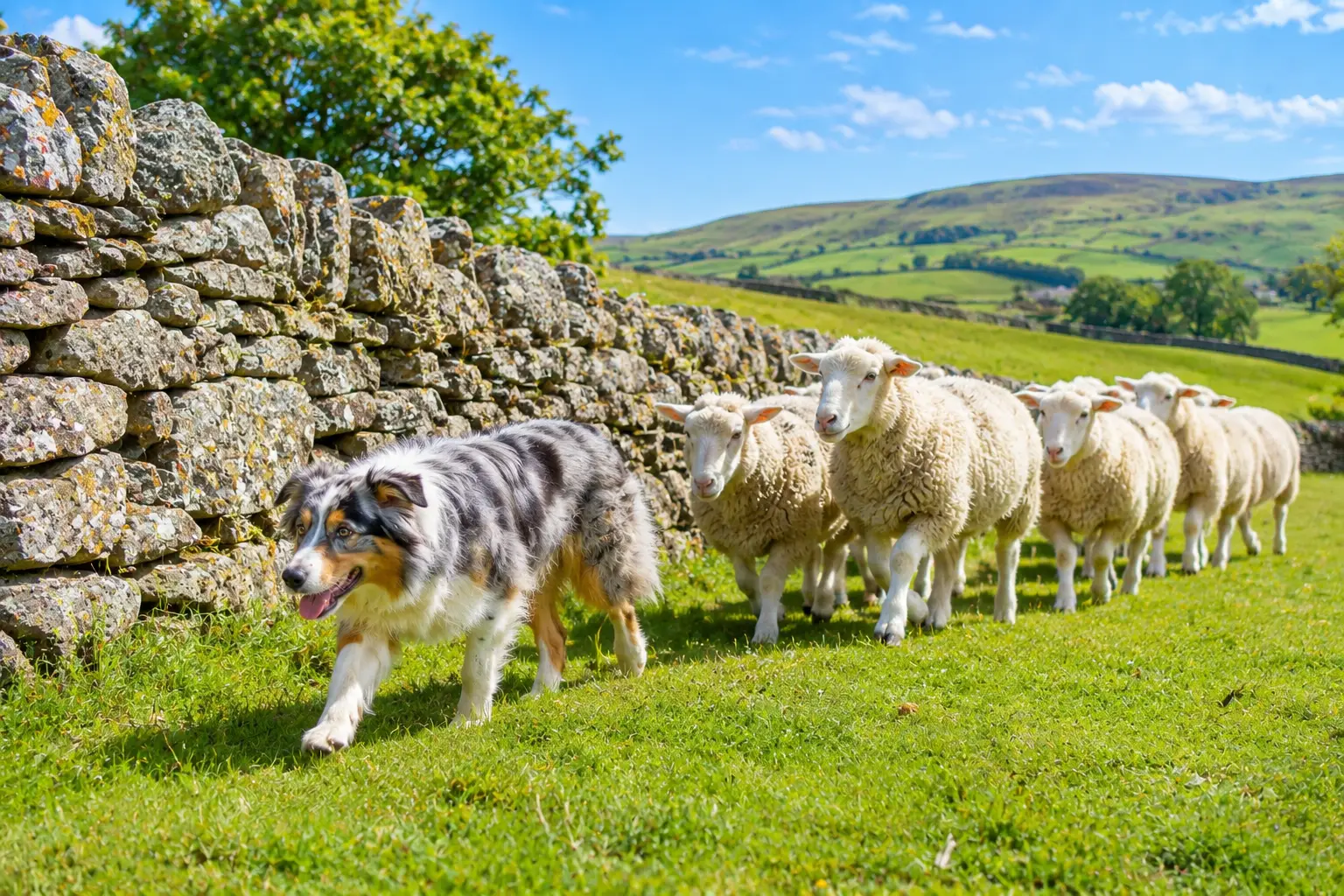
Herding dog breeds were developed to move and control livestock such as sheep and cattle. The best known include the Border Collie, Australian Shepherd, German Shepherd, Collie, Shetland Sheepdog, the two Welsh Corgis, the Belgian shepherd breeds and the Old English Sheepdog, and they work in different styles: gathering, heeling, driving or tending.
A gathering dog runs wide around the flock and brings it back to the shepherd. A heeler nips at the heels of cattle to push them forward. A tending dog patrols the edge of a grazing flock like a moving fence. Knowing the style explains a great deal about each breed's build, temperament and needs as a pet.
Quick takeaways
- Herding instinct is a softened form of the hunting sequence: stalk and chase, but no kill.
- Gathering breeds like the Border Collie head the stock; heelers like Corgis drive it from behind.
- German Shepherds and Belgian breeds were bred as tending and all-round farm dogs.
- Livestock guardian dogs, such as the Great Pyrenees, protect flocks but do not herd them.
What do herding dogs do?
Herding works because it borrows from the wolf's hunting sequence: searching, stalking, chasing and gripping. Centuries of breeding kept the early steps and toned down the later ones. A good herding dog stalks and pressures sheep, but does not harm them.
Breeders shaped that instinct to suit local farming. On open hills with scattered sheep, shepherds needed dogs that would run long distances and gather. Cattle drovers needed tough, low dogs that would push stubborn animals along roads. Farmers on the European mainland, with sheep grazing between unfenced crops, needed dogs to keep a flock in place all day.
Herding dogs are not the same as livestock guardian dogs. Guardians such as the Great Pyrenees, Anatolian Shepherd and Komondor live with the flock and protect it from predators, but they do not move it. The AKC places guardians in its Working Group and herders in its Herding Group, which it created in 1983 by splitting them out of the Working Group.
Gathering dogs: Border Collie, Collie and Shetland Sheepdog
Gathering dogs, also called headers, run out in a wide arc to get beyond the flock, then bring it back towards the shepherd. Sheepdog handlers break the work into stages: the outrun, the lift, when the dog first moves the sheep, and the fetch, when it brings them in. The traditional commands 'come bye' and 'away to me' send the dog clockwise and anticlockwise around the flock.
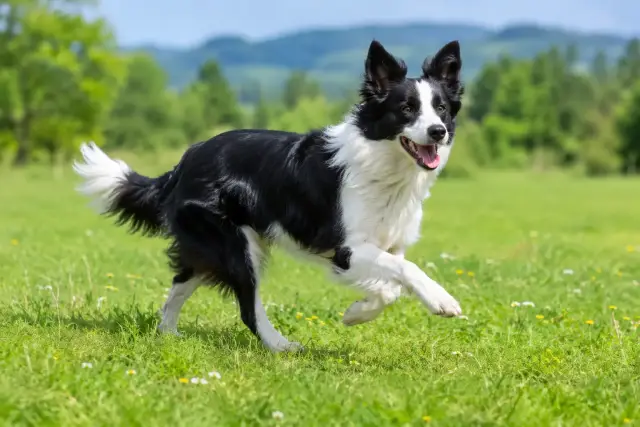
The Border Collie is the master of this style. It was developed on the borders of England and Scotland, and most modern Border Collies trace back to a dog called Old Hemp, born in Northumberland in 1893. Border Collies are 'strong-eyed': they crouch, stare hard at the sheep and control them with that fixed gaze. The first recorded sheepdog trial took place at Bala in Wales in 1873, and trials still test exactly these skills.
The Collie, in Rough and Smooth coats, comes from Scotland and works in a more upright, 'loose-eyed' style, with less staring and crouching. Lassie made the Rough Collie famous worldwide. The Shetland Sheepdog, from the Shetland Islands north of Scotland, looks like a small Collie but is a separate breed, standing about 33 to 41 cm (13 to 16 in). It was bred to manage small island sheep and ponies.
Tip: Watch a Border Collie with a ball and you will often see the same crouch and stare it would use on sheep.
Heelers and drovers: Corgis, cattle dogs and the Old English Sheepdog
Heelers drive livestock from behind by nipping at their heels. This suits cattle, which are less likely than sheep to move away from a dog's stare and more likely to turn and kick. A low-set dog can nip and duck under the kick. The Welsh Corgis are the classic example: small, long-bodied dogs that once moved cattle to market in Wales.
There are two Corgi breeds. The Cardigan Welsh Corgi has a long, fox-like tail, rounder ears and a heavier build, and its colours include blue merle. The Pembroke Welsh Corgi is a little lighter, with more pointed ears, and its tail is naturally short or, where docking is legal, often docked. The Cardigan is often said to be the older of the two.
The Australian Cattle Dog, also called the Blue or Red Heeler, was developed in New South Wales in the 1800s to move tough cattle over huge distances, and dingo crosses are part of its ancestry. It is compact, muscular and extremely tough. The Old English Sheepdog, the shaggy 'bobtail', was a drover's dog in the west of England, used to drive cattle and sheep to market. A popular story says drovers docked their tails to show they were working dogs exempt from tax, though this is hard to prove.
In New Zealand, the Huntaway takes a different approach again: it drives sheep forward with a deep, loud bark rather than a stare or a nip.
Tending and all-round dogs: German Shepherd, Belgian breeds and Australian Shepherd
Tending is the traditional style of the German and Belgian shepherd dogs. On the mainland of Europe, flocks grazed on open land beside crops, with no fences. The dog patrolled the boundary all day, keeping sheep off the crops and moving the flock along roads when needed. AKC herding trials include a tending course to test this style.
The German Shepherd was founded as a breed in Germany in 1899 as a herding dog, before its intelligence and trainability made it a police, military and guide dog. Belgium produced four closely related shepherd dogs: the long black Groenendael (called the Belgian Sheepdog by the AKC), the long-coated Tervuren, the short-coated Malinois and the rough-coated Laekenois. The FCI treats them as one breed in four varieties; the AKC recognises them as four separate breeds.
The Australian Shepherd is a flexible, loose-eyed worker that handles both sheep and cattle, gathering or driving as needed. Despite its name, it was developed on ranches in the western United States. Many Aussies have merle coats, blue or odd-coloured eyes and naturally short tails.
| Breed | Origin | Main working style | AKC height at shoulder |
|---|---|---|---|
| Border Collie | England-Scotland border | Gathering, strong eye | 18 to 22 in (about 46 to 56 cm) |
| Collie (Rough and Smooth) | Scotland | Gathering, loose eye | 22 to 26 in (about 56 to 66 cm) |
| Shetland Sheepdog | Shetland Islands, Scotland | Gathering | 13 to 16 in (about 33 to 41 cm) |
| Australian Shepherd | Western United States | Versatile, loose eye | 18 to 23 in (about 46 to 58 cm) |
| Pembroke Welsh Corgi | Wales | Heeling cattle | 10 to 12 in (about 25 to 30 cm) |
| Cardigan Welsh Corgi | Wales | Heeling cattle | 10.5 to 12.5 in (about 27 to 32 cm) |
| Australian Cattle Dog | Australia | Heeling cattle | 17 to 20 in (about 43 to 51 cm) |
| Old English Sheepdog | England | Driving to market | 21 in and up (about 53 cm and up) |
| German Shepherd | Germany | Tending | 22 to 26 in (about 56 to 66 cm) |
| Belgian Malinois and other Belgian shepherds | Belgium | Tending, all-round farm work | 22 to 26 in (about 56 to 66 cm) |
Are herding dogs good pets?
Herding breeds are bright, alert and eager to work with people, which makes them rewarding to train. In Stanley Coren's well-known 1994 ranking of working intelligence, the Border Collie came first and the German Shepherd third. The same traits make them demanding. A bored herding dog will invent its own job, such as chasing cars, cyclists or the cat.
Expect a strong response to movement. Many herders try to round up running children, and heelers may nip at ankles. This is instinct, not aggression, but it needs gentle, early training and plenty of other outlets. Herding trials, herding instinct tests, agility, obedience and scent games all give these dogs something to think about.
Training suits these breeds well, because most were bred to watch a handler and respond to small signals. Short, frequent sessions with clear rewards work better than long drills, and many herders learn new cues in a handful of repetitions. The flip side is that they also learn bad habits quickly, so consistency from everyone in the house matters. Puzzle feeders, scent work and trick training help on days when a long walk is not possible.
Size and coat vary a lot within the group. A Corgi or Sheltie fits a smaller home if it gets enough exercise, while a Border Collie or Malinois needs hours of activity and training every day. Long double coats on Collies, Shelties and Old English Sheepdogs shed heavily and need regular brushing.
Exercise
Most herding breeds need at least one to two hours of activity a day, including training that works the brain.
Nipping
Heelers in particular may nip at heels; redirect it early with toys and calm training.
Sound sensitivity
Many herders are alert to noise and movement and can become reactive without socialising.
Dog sports
Herding, agility and obedience give these breeds a job when there is no farm.
Header, heeler or tender?
Test what you learned about herding styles and breeds.
0 / 5 answered
1What does the command 'come bye' tell a sheepdog to do?
Answer: Circle the flock clockwise. 'Come bye' sends the dog clockwise around the sheep, and 'away to me' sends it anticlockwise.2How does a heeler usually move cattle?
Answer: By nipping at their heels from behind. Heelers such as Corgis and Australian Cattle Dogs push cattle forward from behind and duck under kicks.3Which of these is a livestock guardian rather than a herding breed?
Answer: Great Pyrenees. The Great Pyrenees protects flocks from predators but does not move them, so the AKC places it in the Working Group.4Which Welsh Corgi breed has a long, fox-like tail?
Answer: Cardigan Welsh Corgi. The Cardigan always has a long tail, while the Pembroke's tail is naturally short or, in some countries, docked.5In which year did the AKC create its Herding Group?
Answer: 1983. Before 1983 the herding breeds were part of the AKC Working Group.
Frequently asked questions
What is the best herding dog breed?
For sheep, the Border Collie is widely regarded as the best herding dog, thanks to its speed, stamina and controlling stare, and it dominates sheepdog trials. For cattle, many ranchers prefer heelers such as the Australian Cattle Dog, or versatile breeds like the Australian Shepherd. The best choice depends on the livestock, the land and the handler's style.
Why do herding dogs nip?
Nipping is part of the herding instinct. Heelers were bred to nip at the heels of cattle to move them, and many herding breeds will try the same on running children or other pets. It is not usually aggression, but it should be redirected early with toys, calm training and enough exercise, and children should be taught not to run from the dog.
What is the difference between a herding dog and a livestock guardian dog?
A herding dog moves livestock under a handler's direction, gathering, driving or tending the flock. A livestock guardian dog, such as the Great Pyrenees or Anatolian Shepherd, lives with the animals and protects them from predators without moving them. Guardians are usually large, calm and independent, while herders are quick, responsive and closely focused on their handler.
Is the German Shepherd a herding dog?
Yes. The German Shepherd was founded in 1899 as a sheep herding dog and is in the AKC Herding Group. It was bred for tending, patrolling the edge of a grazing flock like a living fence. Most German Shepherds today work as police, military or assistance dogs or live as pets, but some still herd and compete in herding trials.
How can I learn to tell herding breeds apart?
Start with size and coat. Corgis are low and long, Shelties look like small Collies, and Border Collies are medium-sized with a crouching style. Belgian breeds differ mainly in coat type and colour. Practise with photos: Dogs Quiz has breed rounds with real dog pictures, which help fix these differences in your memory.
The job explains the dog
Herding breeds share a softened hunting instinct but use it in different ways. Gatherers head the flock, heelers drive cattle from behind and tending dogs patrol a boundary. Those styles shaped each breed's build, temperament and needs at home.
- Match a herding breed's energy to the time you can give it each day.
- Try herding instinct tests, agility or scent games to give a herder a job.
- Learn to spot each herding breed from photos with Dogs Quiz.
Check the evidence behind the guide
Use these references to check terminology and pursue a topic in more depth. Photo quizzes help you practise observation; a single picture rarely proves a difficult identification.
When a source describes a broad group, compare its details with the exact species, model or specimen you are studying. Record the feature that supports your answer rather than relying on a name alone.