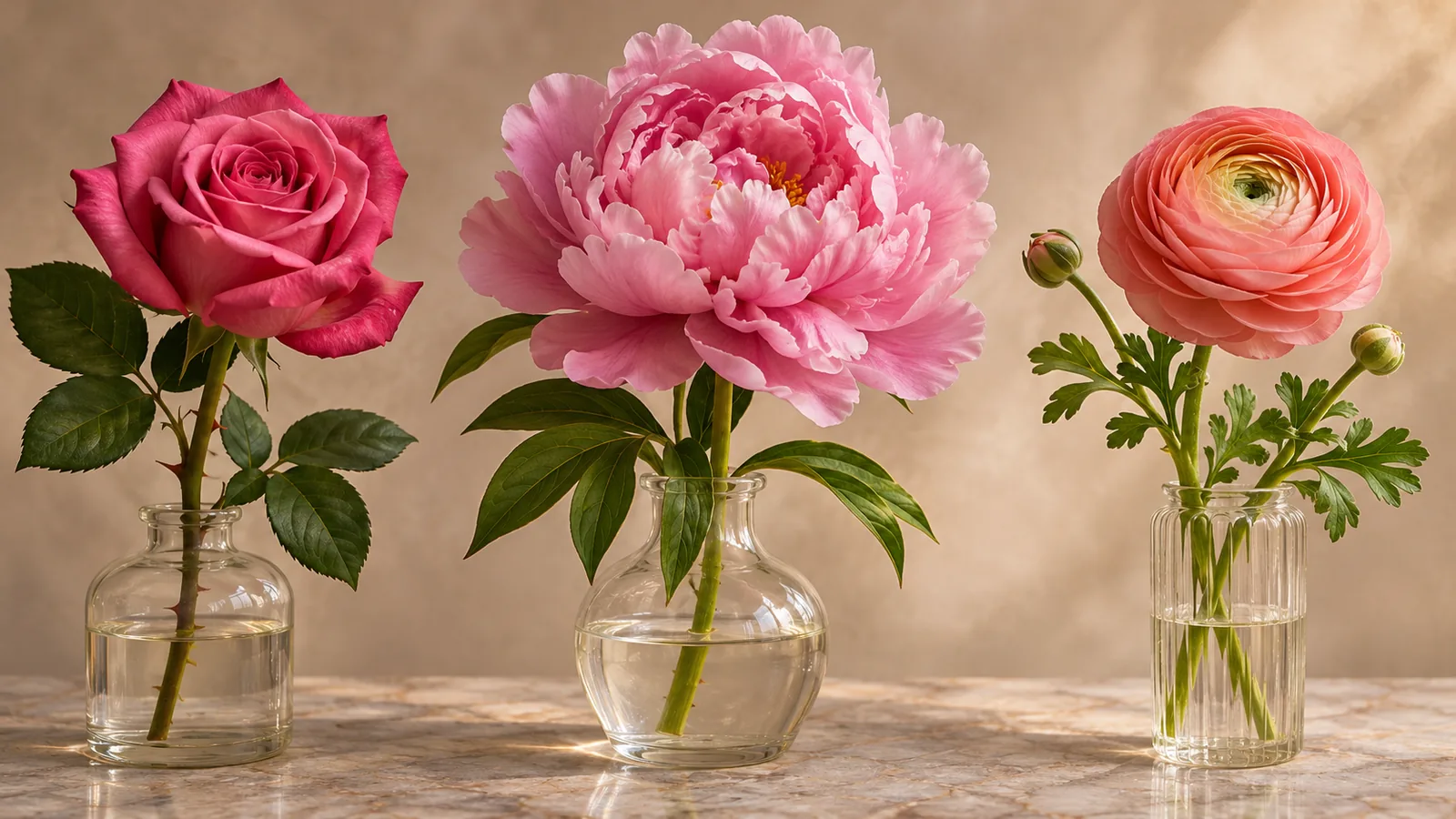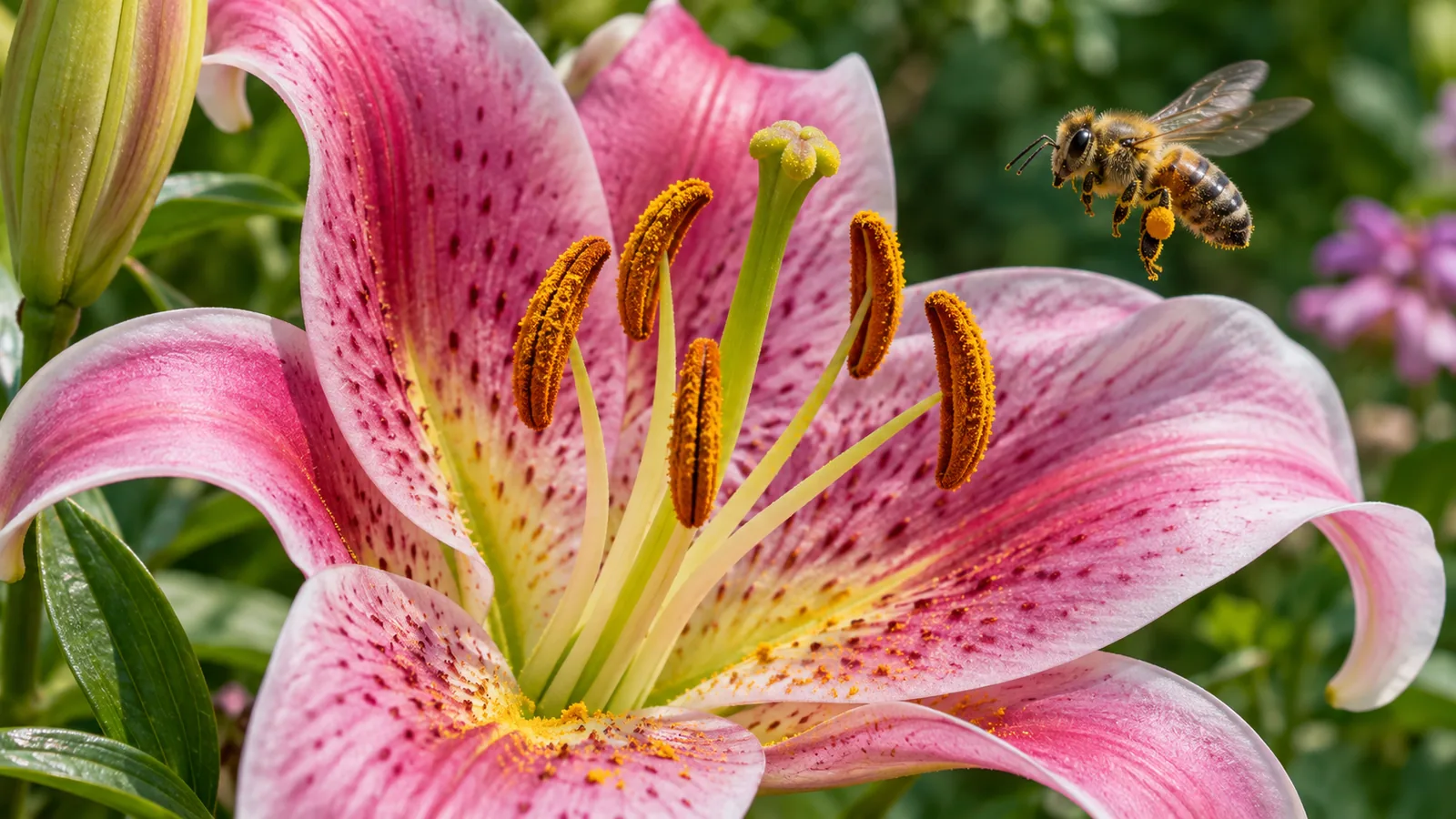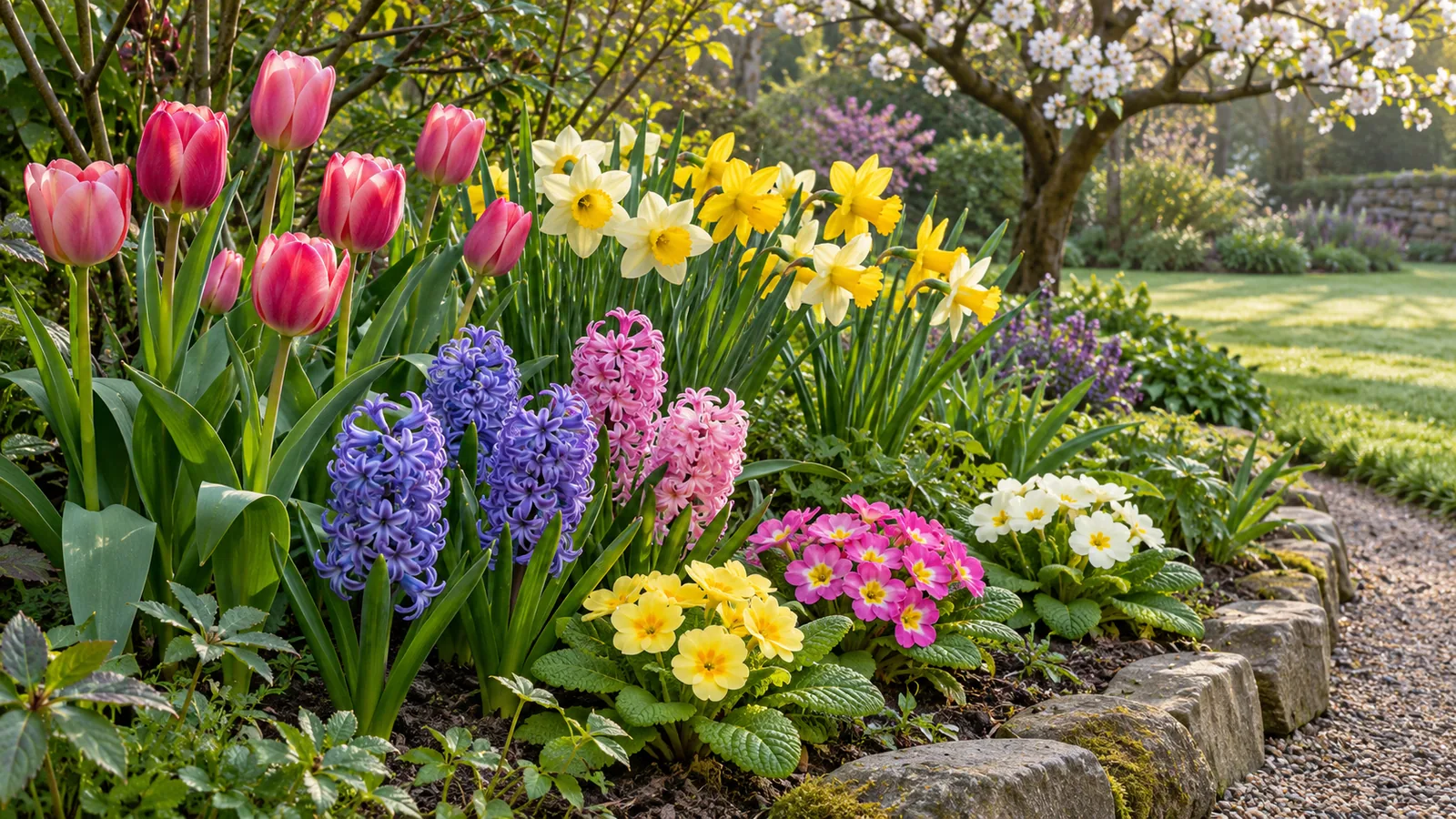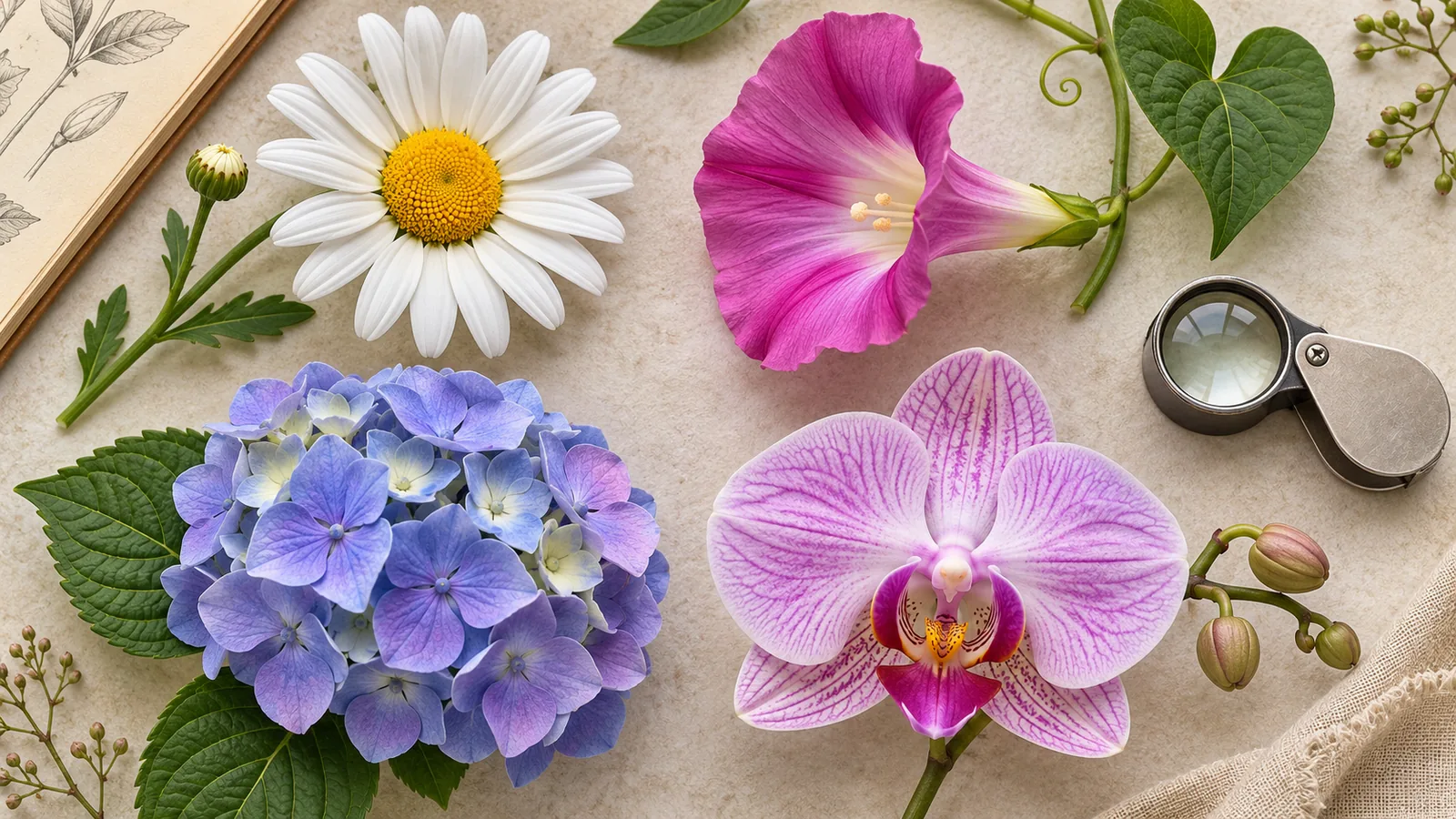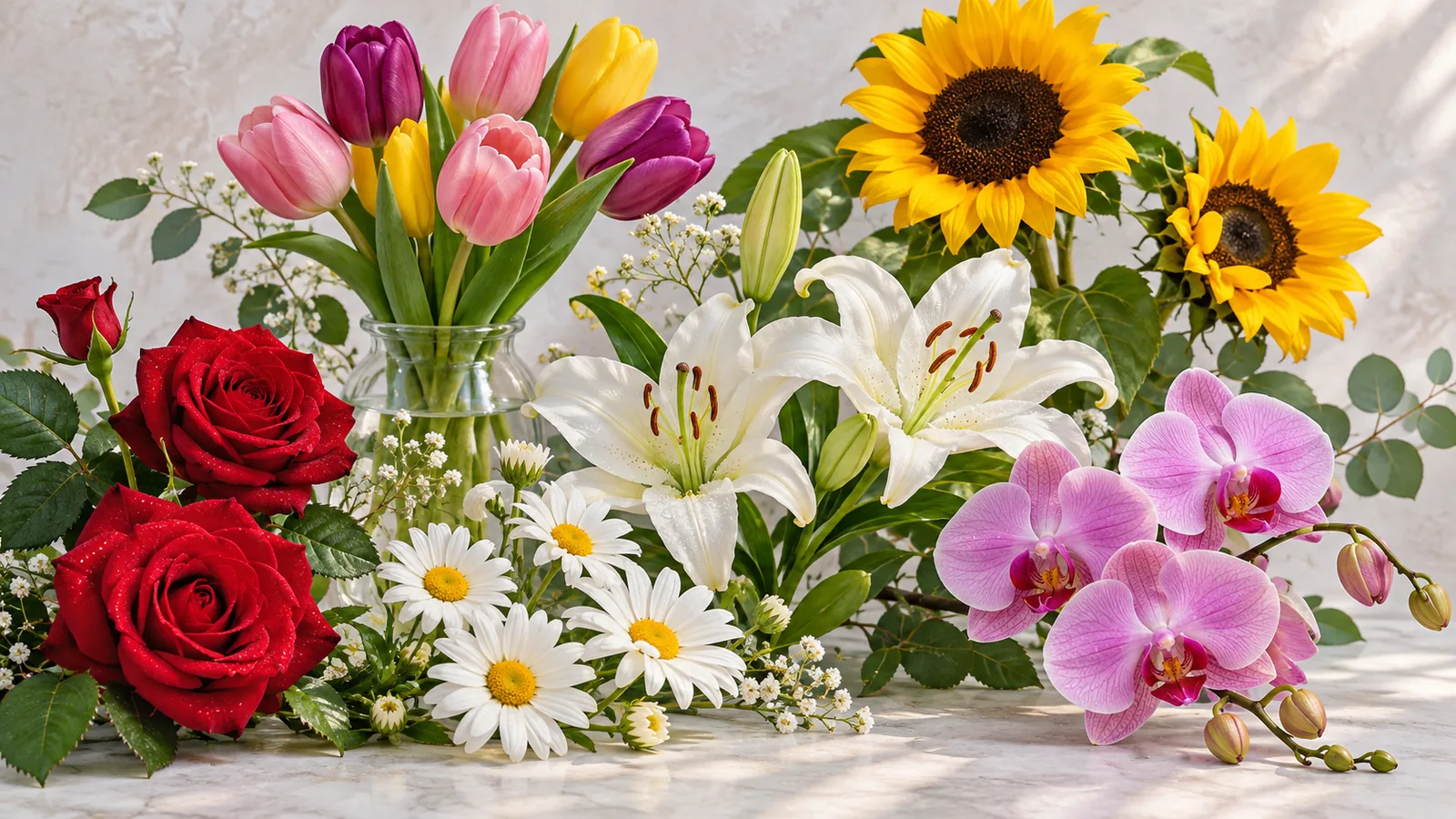
Flower color is memorable but rarely enough. A daisy's disk, a daffodil's central corona or an orchid's specialized lip gives you a much better clue.
These thirty text questions cover different flower forms. Use them to learn the clue, then look at several photographs; cultivars and species within a group can look very different.
Quick takeaways
- Look at flower shape and arrangement before color.
- Some 'flowers' are heads of many small florets.
- Use foliage and season as supporting clues.
Familiar blooms
Start with the flower features most people can see at a glance.
1Which flower is famous for a thorny shrub and layered blooms?
Answer: Rose. Roses are woody shrubs or climbers with familiar layered flowers; prickles are common.2Which spring bulb often has one cup-shaped flower on an upright stem?
Answer: Tulip. Tulips are spring bulbs with a recognizable cup-like bloom.3Which flower has a trumpet-like central corona surrounded by tepals?
Answer: Daffodil. The daffodil's corona is the distinctive central cup or trumpet.4Which plant commonly carries a large head of many tiny florets around a dark center?
Answer: Sunflower. A sunflower head is a composite inflorescence, not one giant simple flower.5Which flower's familiar white head has ray florets around a yellow disk?
Answer: Daisy. Daisies are composite flower heads with ray and disk florets.6Which flower often has six showy tepals and prominent long stamens?
Answer: Lily. Many lilies display six tepals and conspicuous pollen-bearing stamens.7Which flower group is known for a highly specialized lip called a labellum?
Answer: Orchid. Many orchids have a specialized petal called the labellum.8Which flower has upright falls and standards in many garden varieties?
Answer: Iris. Iris blooms often show three outer falls and three inner standards.9Which flower often has a large rounded head of many small blossoms?
Answer: Hydrangea. Many hydrangea flower heads contain numerous small flowers.10Which flower commonly has papery petals around a dark central capsule?
Answer: Poppy. Poppies often have delicate petals and a recognizable central seed capsule.
Garden favorites
Compare layered petals, spikes, clusters and climbing habits.
11Which large garden perennial can have a rounded bloom with many soft petals?
Answer: Peony. Double peonies can form lush layered blooms, though single peonies also exist.12Which flower often resembles a small layered rose on a slender stem?
Answer: Ranunculus. Florist ranunculus can have many thin overlapping petals.13Which aromatic plant bears narrow flower spikes often colored purple?
Answer: Lavender. Lavender typically has fragrant foliage and narrow flower spikes.14Which spring flower forms a dense spike of small fragrant bell-like blooms?
Answer: Hyacinth. Hyacinths make compact clusters of many small flowers.15Which climbing flower often has fragrant, pea-like blooms?
Answer: Sweet pea. Sweet peas are climbing legumes with characteristic pea-family flowers.16Which flower has a papery, globe-like head made of many small florets?
Answer: Allium. Ornamental alliums often produce spherical umbels of small flowers.17Which plant's familiar yellow flower head later becomes a puffball of seeds?
Answer: Dandelion. Dandelion seed heads develop after its composite yellow flower head.18Which flower group often has trumpet-shaped blooms climbing a trellis?
Answer: Morning glory. Morning glories are climbing vines with funnel-shaped flowers.19Which flower has a long tubular bloom frequently associated with hummingbirds?
Answer: Fuchsia. Many fuchsias have pendant tubular flowers visited by pollinators.20Which flower often appears as a broad flat face with a dark central blotch?
Answer: Pansy. Pansy flowers commonly have a broad face and distinctive dark markings.
Different shapes and settings
Finish with flower heads, woodland flowers and aquatic blooms.
21Which flower has star-shaped blooms clustered in a ball-like head?
Answer: Agapanthus. Agapanthus carries many small flowers in a rounded umbel.22Which flower group is known for tall spikes of tubular blooms in cottage gardens?
Answer: Foxglove. Foxgloves carry rows of tubular flowers on tall spikes; the plant is toxic.23Which flower often has a central cone surrounded by drooping petals?
Answer: Echinacea. Echinacea is a coneflower with a prominent central disk.24Which flower has flat-topped clusters of tiny blooms and finely divided leaves?
Answer: Yarrow. Yarrow commonly has finely cut foliage and broad flower clusters.25Which spring woodland flower has small blue bell-shaped blooms?
Answer: Bluebell. Bluebells form nodding bell-shaped flowers, though different species share the name.26Which flower has a central disk and vivid orange or yellow ray florets?
Answer: Marigold. Garden marigolds are composite flowers with many ray-like florets.27Which flowering shrub often carries clusters of fragrant four-petaled blooms?
Answer: Lilac. Lilacs make fragrant panicles of small flowers, often in spring.28Which flower group includes large dinner-plate cultivars and many petal shapes?
Answer: Dahlia. Dahlias have a very wide range of flower-head forms and sizes.29Which water plant is known for broad floating leaves and showy flowers?
Answer: Water lily. Water lilies grow in water with floating leaves and surface flowers.30Which flower has a flat cluster of small blooms often used in borders and pollinator gardens?
Answer: Verbena. Many verbenas bear small flowers in clustered heads.
Five final flower clues
0 / 5 answered
1Which spring flower has a central corona?
Answer: Daffodil. The corona is the daffodil's cup or trumpet.2Which plant has a flower head with ray and disk florets?
Answer: Daisy. A daisy head contains many small flowers.3Which group often has a specialized lip?
Answer: Orchid. The orchid labellum is a modified petal.4Which garden flower often has many thin overlapping petals?
Answer: Ranunculus. Florist ranunculus can form tightly layered blooms.5What should you check when two flowers look alike?
Answer: Foliage and flower structure. Leaves, center and arrangement provide independent clues.
Frequently asked questions
Can flower color identify a species?
Usually not by itself. Many species and cultivated varieties share colors, and lighting changes photographs.
Look past the color
Describe the center, petal arrangement and leaves before choosing a flower name. Then confirm with a reliable botanical source.
Check the evidence behind the guide
Use these references to check terminology and pursue a topic in more depth. Photo quizzes help you practise observation; a single picture rarely proves a difficult identification.
When a source describes a broad group, compare its details with the exact species, model or specimen you are studying. Record the feature that supports your answer rather than relying on a name alone.