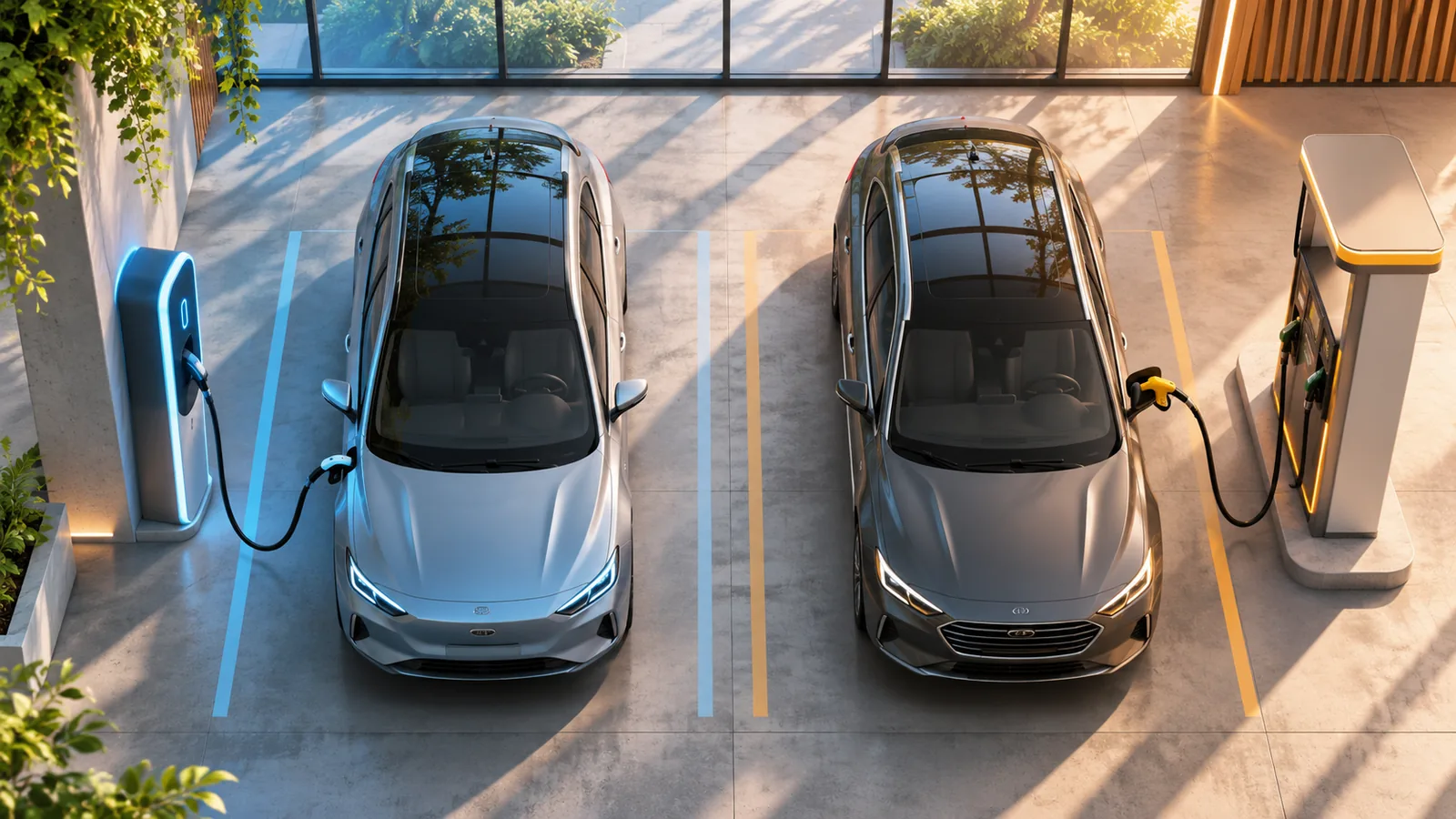
An electric motor can be present in three very different cars. The useful question is where the energy comes from and whether the vehicle can drive without its combustion engine.
The US Department of Energy distinguishes battery electric vehicles (BEVs), plug-in hybrids (PHEVs) and conventional hybrids (HEVs). All use electric drive to some degree, but they are not charged or fueled the same way.
Battery electric: electricity is the fuel
A BEV has no conventional combustion engine. A battery stores electricity from an external charger, and an electric motor drives the wheels. Regenerative braking can return some motion energy to the battery, but it does not replace charging.
A BEV has no tailpipe emissions while driving. Electricity generation and battery production still have environmental impacts, so 'zero emission' needs context.
Plug-in hybrid: two energy sources
A PHEV has a combustion engine and an electric motor with a battery that can be charged from the grid. It can cover some trips in electric mode; when the battery's usable charge is low, the engine can provide propulsion. Electric range varies by model.
Plugging it in matters. A PHEV driven mostly on fuel without charging behaves differently from one regularly charged for short trips.
Conventional hybrid: no charging plug
An HEV also combines an engine with one or more electric motors, but its traction battery is charged by the engine and regenerative braking, not an external plug. The electric system can help at low speed or during acceleration, depending on the design.
A hybrid's dashboard may show electric-only movement briefly, but that does not make it a battery electric car.
| Type | Combustion engine? | Plug in? |
|---|---|---|
| BEV | No | Yes |
| PHEV | Yes | Yes |
| HEV | Yes | No |
Follow the energy
0 / 4 answered
1Which type has no conventional combustion engine?
Answer: BEV. A battery electric vehicle runs on electric motors and battery energy.2Which hybrid can charge from an external plug?
Answer: PHEV. The P in PHEV stands for plug-in.3How does a conventional hybrid recharge its traction battery?
Answer: Engine and regenerative braking. An HEV does not need an external charger.4Does regenerative braking eliminate the need to charge a BEV?
Answer: No. It recovers some energy that would otherwise be lost; the vehicle still needs external energy.
Frequently asked questions
Is every hybrid a plug-in hybrid?
No. Conventional hybrids do not plug in; plug-in hybrids have larger externally rechargeable batteries.
Read the power source
BEV means battery and plug, no engine. PHEV means engine plus plug. HEV means engine plus electric assistance, without a plug.
Check the evidence behind the guide
Use these references to check terminology and pursue a topic in more depth. Photo quizzes help you practise observation; a single picture rarely proves a difficult identification.
When a source describes a broad group, compare its details with the exact species, model or specimen you are studying. Record the feature that supports your answer rather than relying on a name alone.