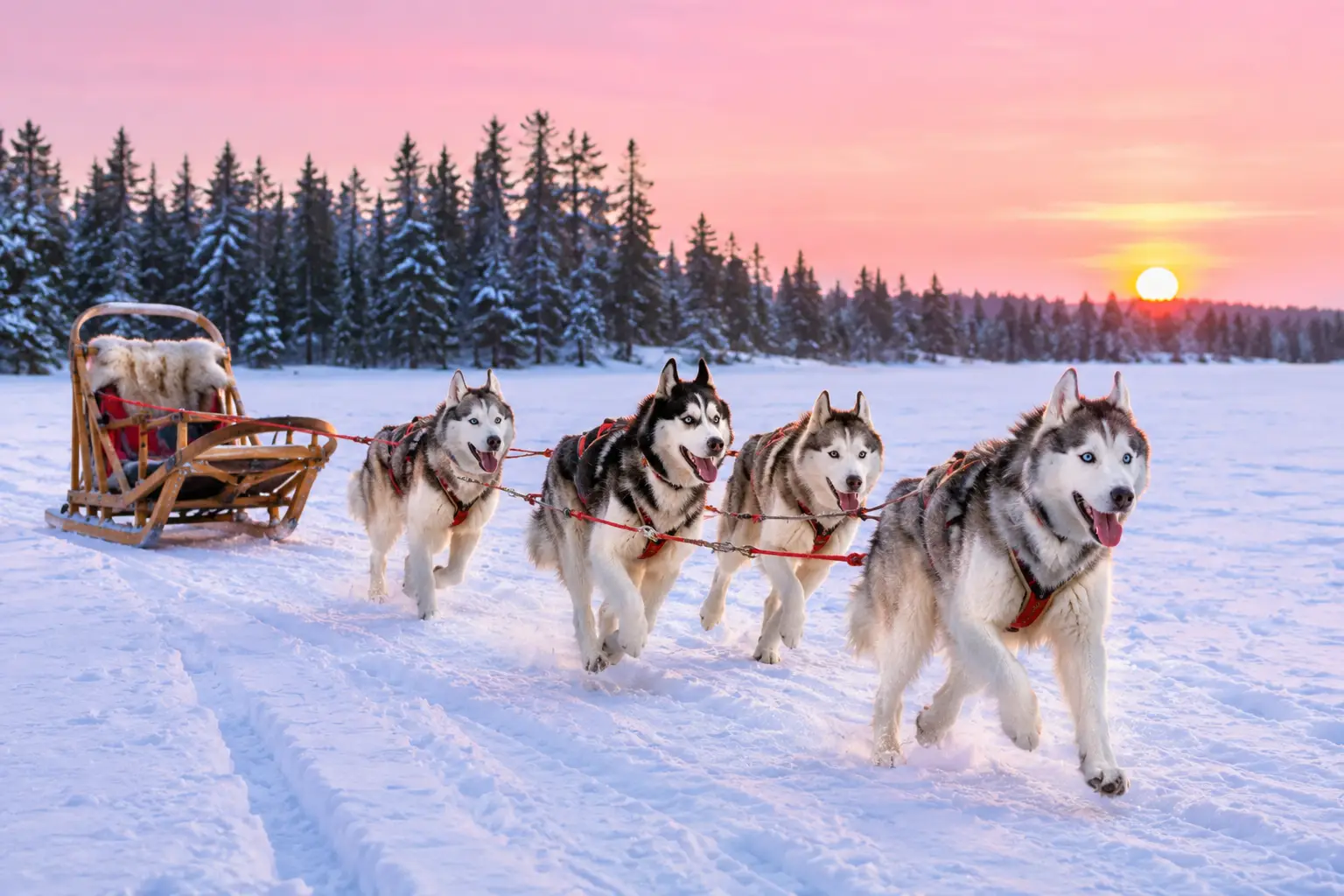
These 25 dog trivia questions and answers cover how a dog's body works, how and when dogs were domesticated, famous working dogs such as Laika, Balto and Hachiko, and a few unusual breeds. Every answer has a short explanation, so the quiz works for pub quizzes, classrooms and dog lovers who want to learn.
The questions get a little harder as you go. Biology terms such as 'tapetum lucidum' tend to catch people out, while the famous dog stories are easier if you know your history. Where a fact is still debated, such as the date of domestication, the answer gives the range most researchers accept.
Quick takeaways
- Dogs were the first domesticated animal, tamed by hunter-gatherers at least 15,000 years ago.
- In the 1925 serum run, Togo ran the longest stretch and Balto led the final leg into Nome.
- The tapetum lucidum gives dogs their eyeshine and better vision in dim light.
- The AKC lists the Irish Wolfhound as its tallest breed.
Round 1
Dog biology trivia: eyes, noses and feet
A dog's body is built for a hunter that works by nose, moves at dawn and dusk and covers long distances on its toes. Many of its features have names that come up again and again in breed standards and vet books.
The table compares a few numbers for dogs and people. They are typical figures for healthy adults; individual dogs and breeds vary.
1What is the scientific name for the domestic dog?
Answer: Canis familiaris. Many scientists write it as Canis lupus familiaris, treating the dog as a form of the grey wolf. Felis catus is the cat, Canis latrans the coyote and Vulpes vulpes the red fox.2What is the name of a dog's 'third eyelid'?
Answer: Nictitating membrane. The nictitating membrane sweeps across the eye from the inner corner. It protects the eye and helps spread tears.3What makes a dog's eyes shine when they are caught in headlights?
Answer: The tapetum lucidum. The tapetum lucidum is a reflective layer behind the retina. It bounces light back through the eye, which helps dogs see in dim light and causes eyeshine.4Where are the sweat glands that help a dog cool down?
Answer: In its paw pads. Dogs sweat a little through their paw pads, which is why they can leave damp prints on a hot day. Panting does most of their cooling.5Dogs walk on their toes rather than flat on the whole foot. What is this called?
Answer: Digitigrade. Dogs and cats are digitigrade. Humans and bears are plantigrade, walking on the whole sole, and horses are unguligrade, walking on the tips of their hooves.6What does a dog's vomeronasal organ, also called Jacobson's organ, mainly detect?
Answer: Chemical signals such as pheromones. The organ sits in the floor of the nasal cavity, above the roof of the mouth. It picks up chemical messages from other animals that ordinary smell receptors miss.7What is a dewclaw?
Answer: A small claw higher up on the inside of the leg. Dewclaws do not touch the ground when a dog stands. Most dogs have them on the front legs, and some breeds, such as the Great Pyrenees, have double dewclaws on the hind legs.8On a dog's head, what is the 'stop'?
Answer: The step where the forehead meets the muzzle. Breed standards describe the stop because it varies so much. A Boxer has a clearly marked stop, while a Bull Terrier has almost none.
| Feature | Dog | Human |
|---|---|---|
| Adult teeth | 42 | 32 |
| Types of colour-sensing cone cells | Two | Three |
| Normal body temperature | About 38.3 to 39.2 °C (101 to 102.5 °F) | About 37 °C (98.6 °F) |
| Highest sounds heard | Roughly 45,000 Hz or more | About 20,000 Hz |
| Length of pregnancy | About 63 days | About 9 months |
Round 2
When and how were dogs domesticated?
Dogs descend from an ancient population of wolves, and the grey wolf is their closest living relative. Domestication happened among hunter-gatherers, long before anyone grew crops. Researchers still debate exactly where and when, but most agree it was at least 15,000 years ago.
Once dogs lived with people, they turned up everywhere in human culture: in graves, in Roman mosaics, in Greek epics and even in the names of stars.
9Which animal is generally thought to be the first that people domesticated?
Answer: The dog. Dogs were domesticated by hunter-gatherers before farming began. Goats, cats and horses were all domesticated later, after people had started to farm.10Roughly how long ago were dogs domesticated, according to most researchers?
Answer: At least 15,000 years ago. Most estimates place it at least 15,000 years ago, and some genetic studies suggest earlier. A dog buried with two people at Bonn-Oberkassel in Germany is about 14,000 years old.11Which people first domesticated dogs?
Answer: Hunter-gatherers. Dogs lived alongside people long before farming, towns or writing. Ancient Egypt and Rome came many thousands of years later.12What does the Latin warning 'Cave canem' mean?
Answer: Beware of the dog. The words appear in a famous floor mosaic at the entrance to the House of the Tragic Poet in Pompeii, the Roman town buried by Vesuvius in AD 79.13In Homer's Odyssey, what is the name of the dog who recognises Odysseus after twenty years away?
Answer: Argos. Odysseus returns home in disguise, but old Argos knows him at once, wags his tail and then dies. Cerberus and Orthrus are monstrous dogs from other Greek myths.14Sirius, nicknamed the Dog Star, lies in which constellation?
Answer: Canis Major. Canis Major means 'the greater dog'. Sirius is the brightest star in the night sky, and the 'dog days' of summer were named after the time of year when it rises with the Sun.
Round 3
Famous working dogs: Laika, Balto, Togo and more
Some dogs became famous for a single act, others for years of loyalty. In January 1925 a diphtheria outbreak threatened Nome, a remote town in Alaska, and the medicine could only reach it by dog sled. About 20 mushers and over 100 dogs carried it in relays through blizzards.
The stories below are well documented, but popular retellings often stretch them. The explanations stick to what is recorded.
15Which spacecraft carried Laika into orbit in November 1957?
Answer: Sputnik 2. Laika was a stray from the streets of Moscow. Sputnik 2 was not built to return, and she died within hours of launch, most likely from overheating.16What disease were sled dog teams racing to stop in Nome, Alaska, during the 1925 serum run?
Answer: Diphtheria. Teams of mushers and dogs relayed diphtheria antitoxin about 674 miles (1,085 km) across Alaska in about five and a half days, in deep winter.17A statue of Balto, the sled dog who led the last leg of the 1925 serum run, stands in which park?
Answer: Central Park, New York. The statue was unveiled in December 1925, while Balto was still alive. He led Gunnar Kaasen's team into Nome with the medicine.18Which dog led musher Leonhard Seppala's team over the longest and most dangerous stretch of the 1925 serum run?
Answer: Togo. Togo's team crossed the frozen Norton Sound and covered far more ground than any other. Balto became more famous because he ran the final leg into Nome.19Hachiko, the loyal Akita, waited every day for his late owner at which Tokyo railway station?
Answer: Shibuya Station. Hachiko met Professor Hidesaburo Ueno at Shibuya each evening. After Ueno died in 1925, Hachiko kept returning for almost ten years, and a bronze statue of him stands outside the station.20In 1966 a collie named Pickles found what under a hedge in south London?
Answer: The stolen World Cup trophy. The Jules Rimet Trophy was stolen in March 1966, months before England hosted the World Cup. Pickles sniffed it out, wrapped in newspaper, a week later.21Which British award for animals is often called the animals' Victoria Cross?
Answer: The Dickin Medal. Maria Dickin, founder of the PDSA veterinary charity, created the medal in 1943 for animals serving in war. Dogs, pigeons, horses and a cat have received it.
Round 4
Unusual breeds and breed records
Breed records need care. 'Tallest breed' means the breed with the tallest standard or average height, which is not the same as the tallest individual dog ever measured. Record dogs come and go, but breed standards change slowly.
Finish with four breeds that stand out for their feet, their height, their lack of hair and their love of water.
22Which breed has at least six toes on each foot and was bred to hunt puffins?
Answer: Norwegian Lundehund. Its extra toes and unusually flexible joints helped it climb steep sea cliffs and squeeze into puffin burrows on Norway's coast.23Which breed does the American Kennel Club describe as the tallest of all its breeds?
Answer: Irish Wolfhound. The AKC standard asks for males of at least 32 inches (81 cm) at the shoulder. Individual Great Danes have held the record for the tallest single dog.24Which hairless breed from Mexico has a history going back to the Aztecs?
Answer: Xoloitzcuintli. The Xolo comes in hairless and coated varieties. Its name links it with Xolotl, an Aztec god associated with the underworld.25Which large breed has webbed feet and is famous for rescuing people from water?
Answer: Newfoundland. Newfoundlands have webbed feet, a water-resistant double coat and great strength. Fishermen used them to haul nets and pull people from the sea.
Five tie-breaker questions
Use these five extra questions to break a tie or test what stuck.
0 / 5 answered
1Which Alaskan sled dog race, first run in 1973, is often linked to the 1925 serum run?
Answer: The Iditarod. The Iditarod runs from Anchorage to Nome along a historic trail, and the race honours Alaska's sled dog heritage, including the serum run.2According to the famous Edinburgh story, Greyfriars Bobby was which breed?
Answer: Skye Terrier. The story says Bobby guarded his master's grave in Greyfriars Kirkyard for many years. A statue of him stands nearby.3Where on a dog is its height measured?
Answer: At the withers, the top of the shoulders. The withers are the highest point of the shoulder blades. Measuring there gives a fair figure whatever the dog does with its head.4Dogs, wolves, foxes and jackals all belong to which animal family?
Answer: Canidae. Canidae is the dog family. Felidae is the cat family, Ursidae the bears and Mustelidae the weasels and otters.5How many types of colour-sensing cone cells do dogs have?
Answer: Two. With two cone types, dogs see blues and yellows but confuse reds and greens, much like a person with red-green colour blindness.
Frequently asked questions
When were dogs first domesticated?
Most researchers say at least 15,000 years ago, and some genetic studies point to an earlier date. Dogs were domesticated by hunter-gatherers from an ancient wolf population, well before farming began, which makes them the first domesticated animal. Where it happened is still debated, and it may have happened in more than one region.
Who was Balto?
Balto was a Siberian Husky who led musher Gunnar Kaasen's team on the final leg of the 1925 serum run, carrying diphtheria antitoxin into Nome, Alaska. He became a national celebrity, and a statue of him was unveiled in New York's Central Park that December. Many historians argue another dog, Togo, deserves more credit for the longest stretch.
What happened to Laika the space dog?
Laika, a stray from Moscow, was launched on the Soviet Sputnik 2 in November 1957 and became the first animal to orbit Earth. The spacecraft was not designed to come back. Officials said for decades that she lived for several days, but in 2002 it was revealed she died within hours, most likely from overheating.
What is the tallest dog breed?
The American Kennel Club describes the Irish Wolfhound as the tallest of its breeds, with males at least 32 inches (81 cm) at the shoulder. The Great Dane is similar in height, and individual Great Danes have held the record for the tallest dog. So the answer depends on whether you mean a breed or a single dog.
How can I get better at dog trivia?
Learn breeds by group and by job, then add one memorable story or record to each. Famous dogs such as Balto, Hachiko and Laika come up often, as do anatomy words like dewclaw and withers. Short daily practice helps most: Dogs Quiz lets you name breeds from real photos in a few minutes a day.
Biology, history and a few good stories
Dog trivia rewards a mix of science and stories. Learn a handful of anatomy terms, the basic timeline of domestication and the true versions of famous dog stories, and you will answer most questions with confidence.
- Use rounds 1 and 2 for a general quiz and save rounds 3 and 4 for dog lovers.
- Check famous dog stories against their recorded versions before quoting numbers.
- Practise naming breeds from photos in Dogs Quiz to round out your trivia.
Check the evidence behind the guide
Use these references to check terminology and pursue a topic in more depth. Photo quizzes help you practise observation; a single picture rarely proves a difficult identification.
When a source describes a broad group, compare its details with the exact species, model or specimen you are studying. Record the feature that supports your answer rather than relying on a name alone.