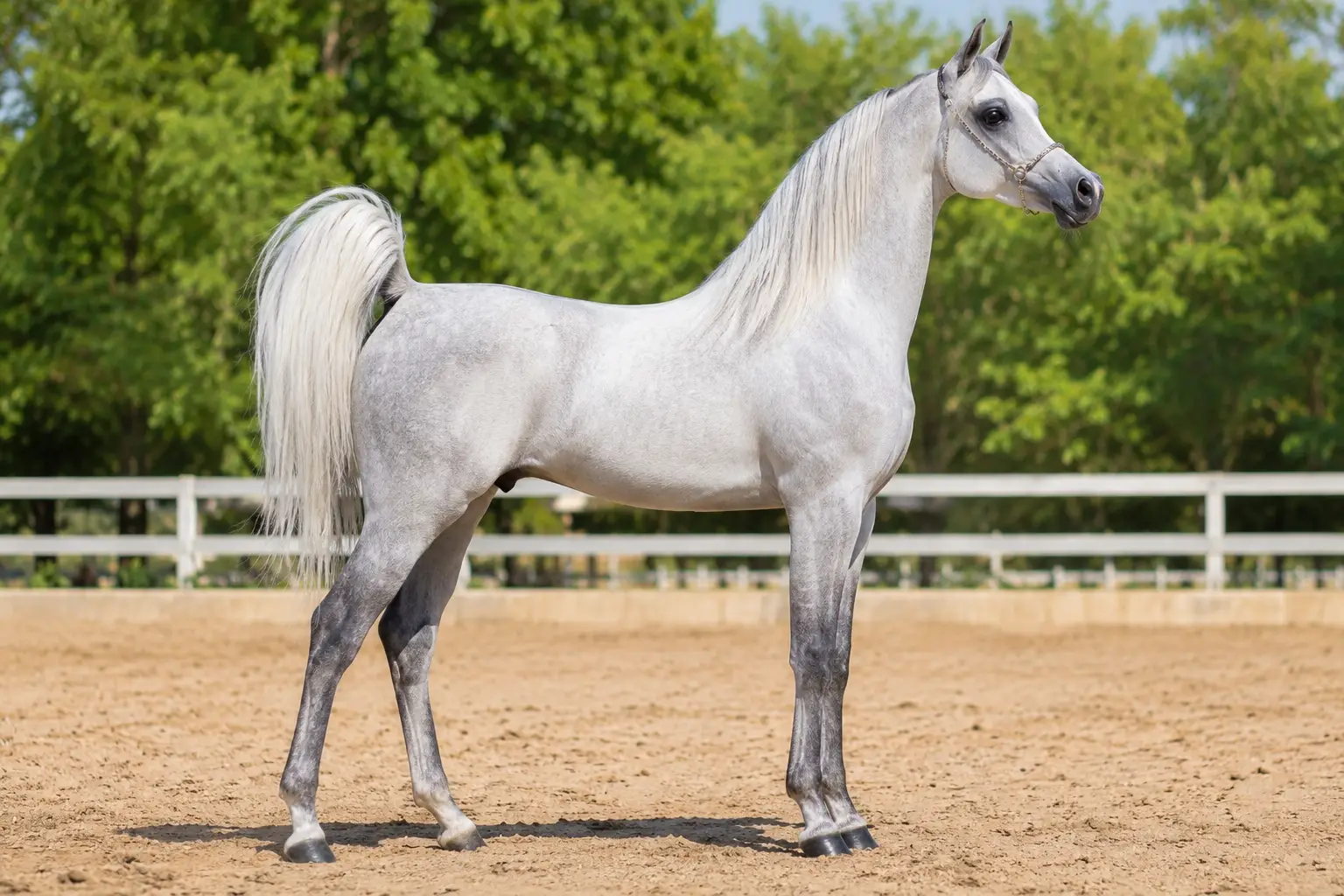
Many horses look similar at first glance. A few features, read in order, separate the main breeds quickly.
Look at the horse in profile. Check the head, the overall build, the legs and the coat, then the tail carriage.
Head profile and build
The Arabian has a dished, concave face, large eyes and small ears. Some Iberian and draft breeds have a straight or slightly convex 'Roman' nose.
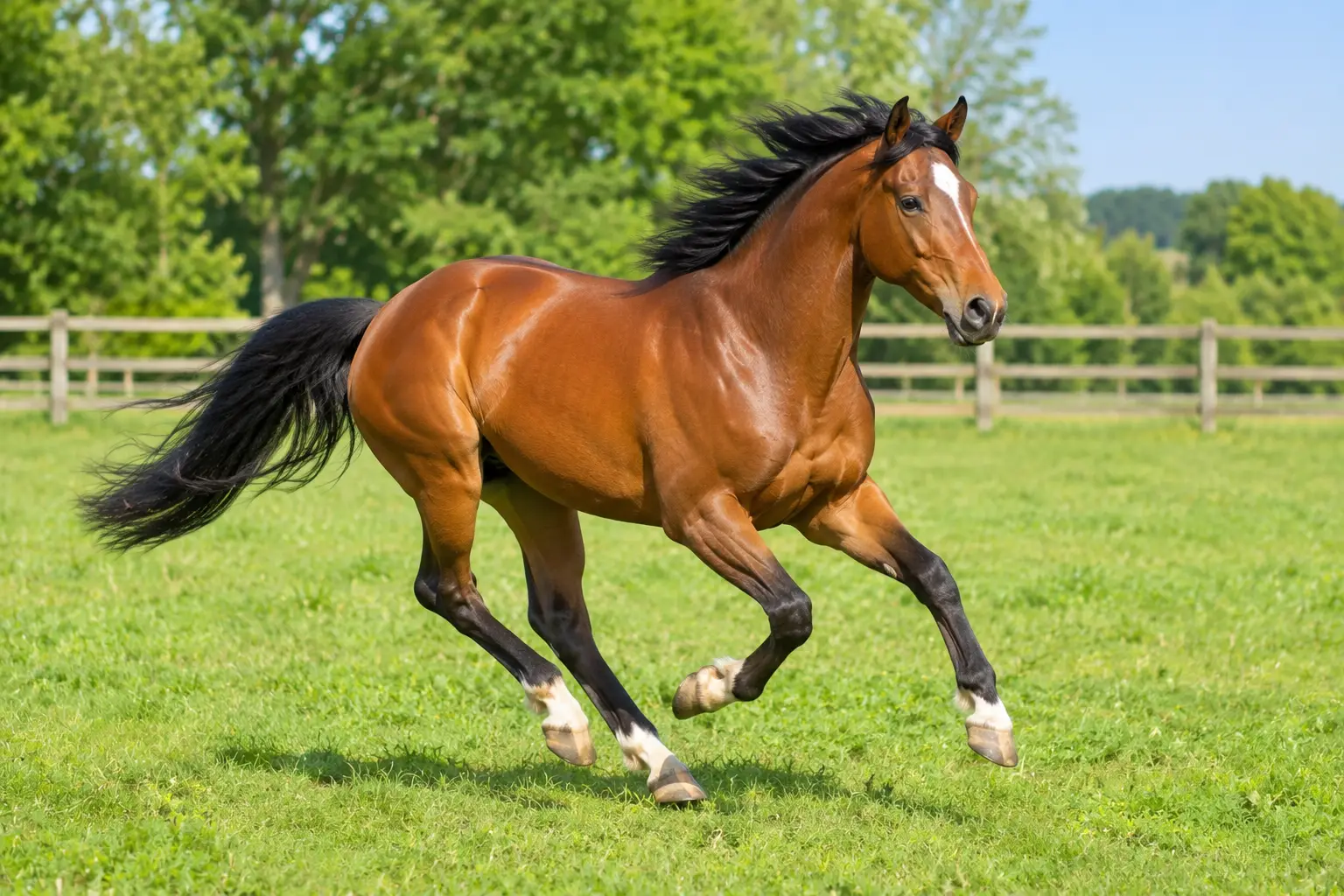
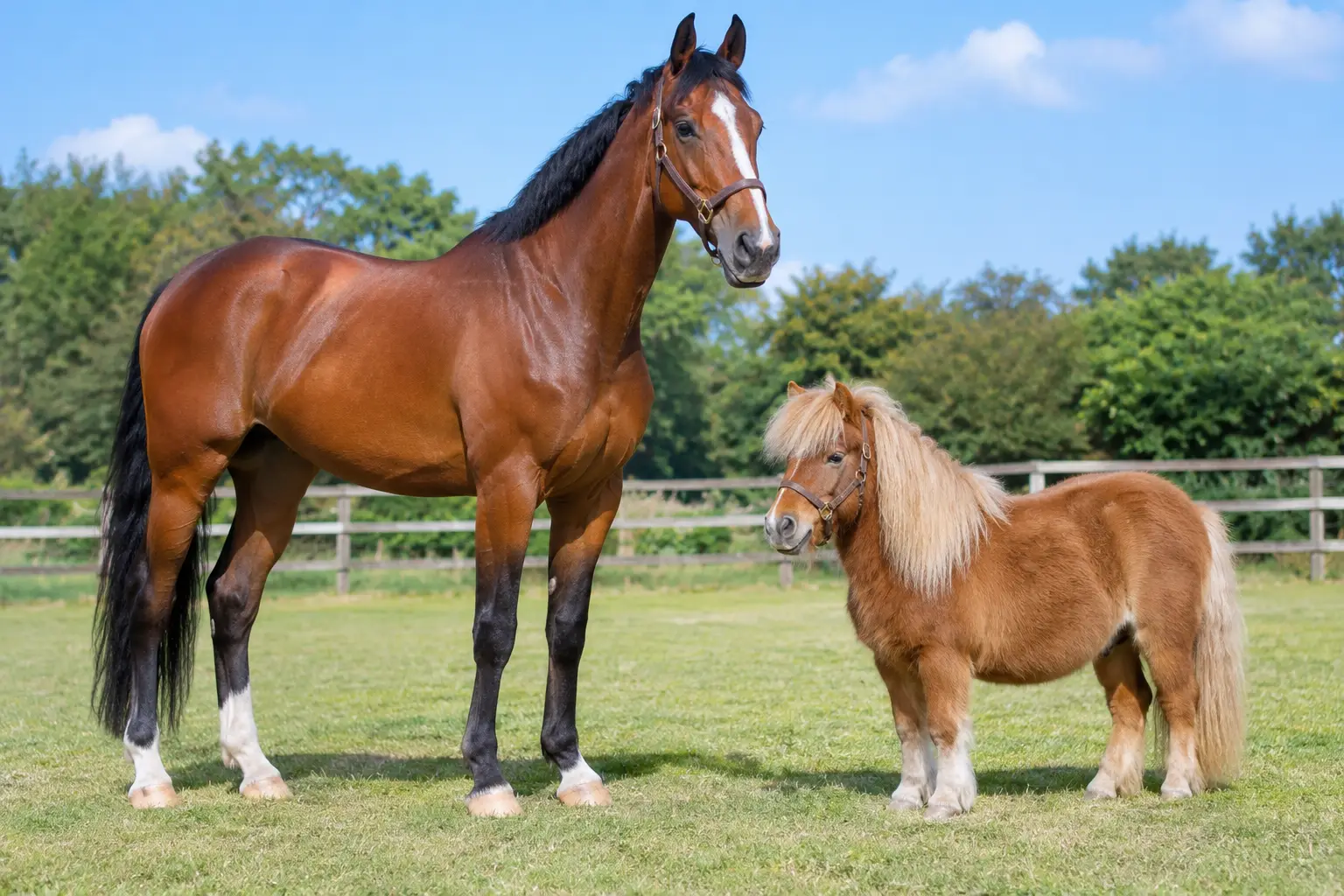
Body shape tells you the type. Long legs and a lean frame suggest a Thoroughbred. A deep chest, short back and heavy muscle suggest a draft horse. A compact, muscular body with powerful hindquarters suggests a Quarter Horse.
Legs, feathering and coat
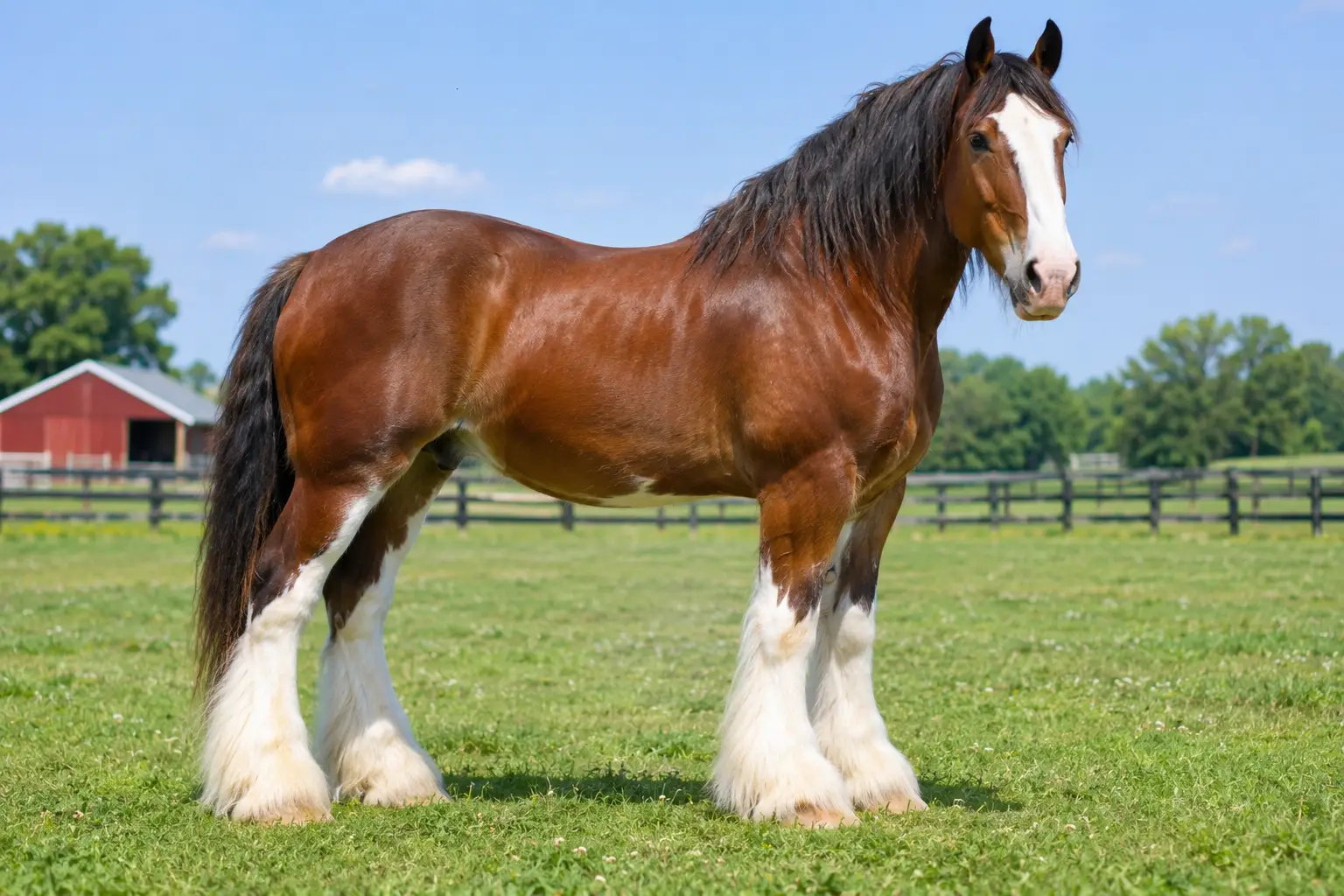
Heavy feathering on the lower legs points to breeds such as the Clydesdale, Shire or Friesian. Clean, fine legs are typical of hot bloods.
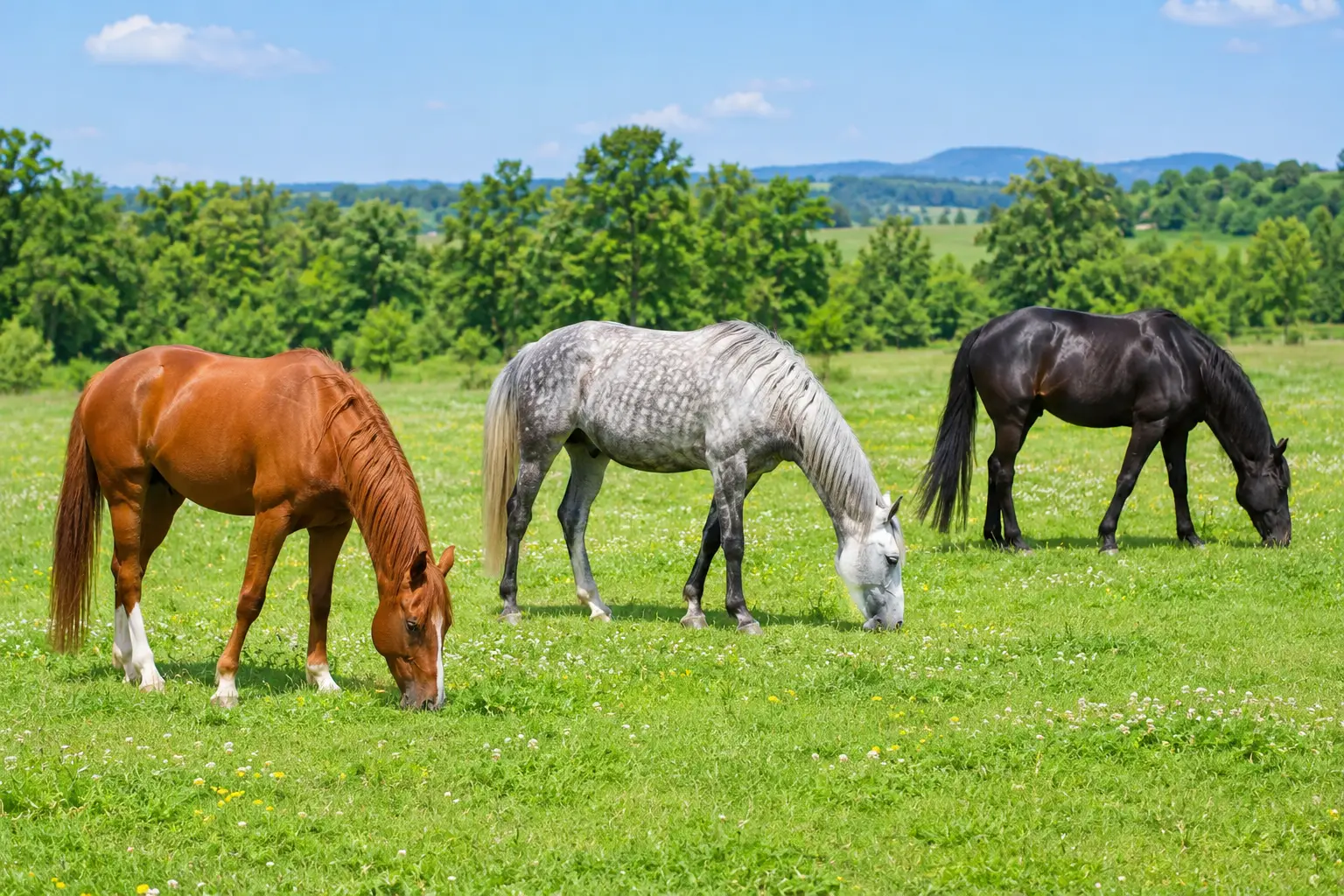
Colour alone rarely identifies a breed, but some patterns are strong clues. Leopard spots suggest an Appaloosa, solid black with a long wavy mane suggests a Friesian, and a metallic sheen suggests an Akhal-Teke.
Tail carriage and papers
Arabians carry their tails high, especially when moving. Gaited breeds show their smooth extra gaits in motion, which a still photo cannot capture.
Many horses are crossbreds, and photos can mislead. Breed registries record pedigrees, and DNA testing can confirm parentage. Use visual clues as a starting point, not final proof.
| Clue | What it suggests | Example breeds |
|---|---|---|
| Dished face, high tail | Arabian type | Arabian |
| Heavy feathering | Draft or Friesian | Clydesdale, Shire |
| Leopard spots | Spotted breed | Appaloosa |
| Metallic sheen | Desert hot blood | Akhal-Teke |
Read the horse
0 / 4 answered
1Which breed is most associated with a dished face?
Answer: Arabian. The concave profile is the Arabian's trademark.2Heavy feathering on the lower legs suggests which kind of horse?
Answer: A draft breed. Clydesdales and Shires have heavy feathering.3Which breed is suggested by leopard spots?
Answer: Appaloosa. Leopard spotting is a hallmark Appaloosa pattern.4What can confirm a horse's parentage?
Answer: DNA testing. Registries and DNA tests confirm parentage.
Frequently asked questions
Can I identify a breed from colour alone?
Rarely. Most colours appear in many breeds. A few patterns, such as Appaloosa spots, are strong clues, but build and head shape are more reliable.
Shape before colour
Read the head, the build and the legs before the coat. Shape narrows the breed far more reliably than colour does.
Check the evidence behind the guide
Use these references to check terminology and pursue a topic in more depth. Photo quizzes help you practise observation; a single picture rarely proves a difficult identification.
When a source describes a broad group, compare its details with the exact species, model or specimen you are studying. Record the feature that supports your answer rather than relying on a name alone.