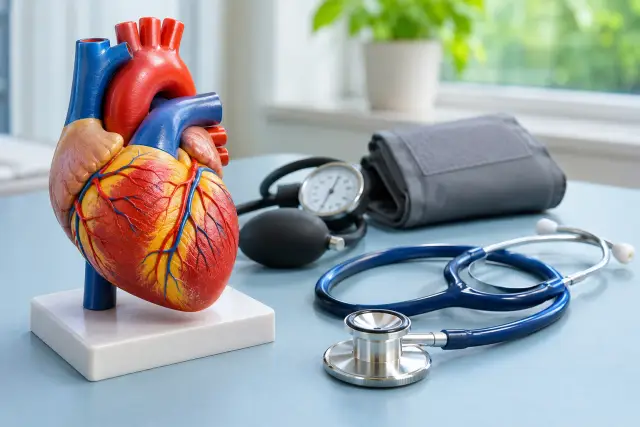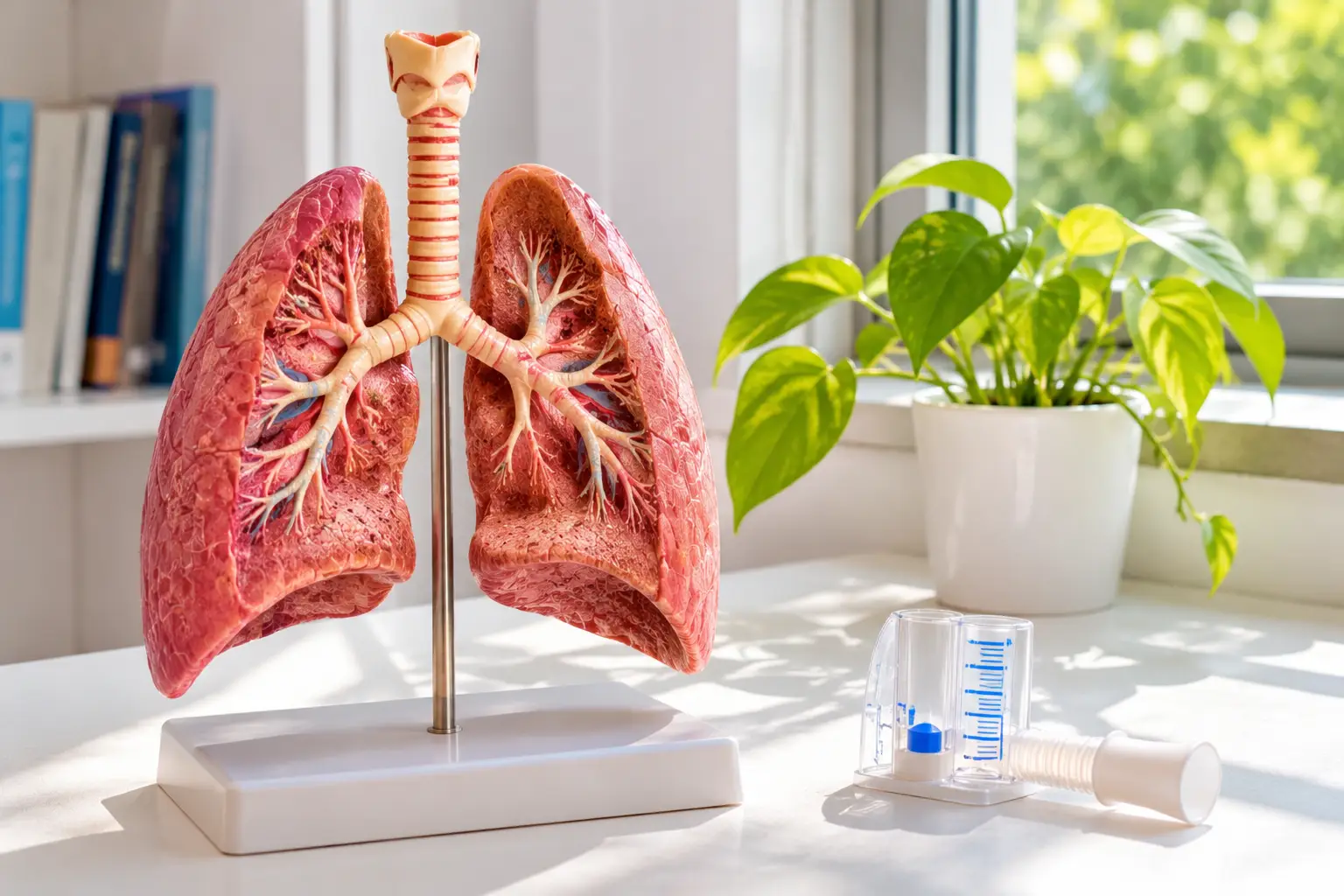
Physiology MCQs test whether you can predict how the body responds when something changes: a gradient, a hormone, a nerve signal or a gas pressure. The 25 questions below cover the five areas that come up most in medical exams, from membrane transport to digestion, and each answer explains the mechanism rather than just naming it.
We start with a short guide to what physiology covers and why examiners lean on it. Then come five rounds of five questions: cell membrane transport, nerve and muscle, respiratory, endocrine and gastrointestinal physiology.
Every question is an original practice item. Pick an option to see the answer, why it is right and why the most tempting wrong option is wrong.
Quick takeaways
- Most physiology questions ask which way a value moves, so learn the normal mechanism first and reason from it.
- Gradients, feedback loops and pressure differences explain a large share of the subject.
- Short calculations, such as alveolar ventilation, reward knowing the formula and reading the stem carefully.
- Physiology underpins pathology and pharmacology, so gaps here show up across every later subject.
The basics
What physiology covers and why it matters in medical exams
Physiology is the study of how normal body systems work: how cells keep their internal environment stable, how signals travel, and how organs cooperate to deliver oxygen, fuel and water where they are needed.
It matters in exams because almost every clinical question rests on it. A drop in blood pressure, a high potassium or a breathless patient all make sense only when you know what normal looks like. Examiners test this by changing one thing in the stem and asking what happens next.
The best approach is to learn a small number of core principles well. Diffusion, gradients, negative feedback and pressure-flow-resistance relationships come up again and again across systems.
| System | Core idea | Typical exam angle |
|---|---|---|
| Cell membrane | Gradients and transporters move ions and molecules | Which transporter, and does it need energy? |
| Nerve and muscle | Ion channels create action potentials | Which ion moves in each phase? |
| Respiratory | Pressure gradients drive gas exchange | Ventilation, compliance and gas transport |
| Endocrine | Hormones work through feedback loops | Predict hormone levels after a change |
| Gastrointestinal | Secretion, digestion and absorption along the gut | Which hormone or segment is responsible? |
Tip: When a question asks what happens to a value, write the normal mechanism in one line first. Most wrong answers come from skipping that step.
Round 1
How substances cross the cell membrane
The cell membrane is a lipid bilayer, so small non-polar molecules such as oxygen and carbon dioxide cross it easily, while ions and glucose need proteins. Primary active transport uses ATP directly. Secondary active transport uses the energy stored in an ion gradient, usually sodium, that a primary pump created.
Simple diffusion
Down a gradient, no protein and no energy, for example oxygen crossing the alveolar wall.
Facilitated diffusion
Down a gradient through a carrier or channel, for example glucose via GLUT transporters.
Active transport
Against a gradient, powered by ATP directly (primary) or by another ion's gradient (secondary).
1For each molecule of ATP it uses, what does the sodium-potassium pump (Na+/K+ ATPase) move?
Answer: 3 sodium ions out and 2 potassium ions in. The pump moves 3 Na+ out of the cell and 2 K+ in per ATP, which keeps intracellular sodium low and potassium high and makes the pump slightly electrogenic. The reversed ratio is the tempting pick because both numbers look familiar, but it would make the inside of the cell more positive, not more negative.2How is glucose taken up from the gut lumen into an intestinal epithelial cell?
Answer: Secondary active transport with sodium through SGLT1. SGLT1 on the luminal membrane couples glucose entry to sodium moving down its gradient, which the basolateral Na+/K+ ATPase maintains. GLUT2 is the tempting answer because it does carry glucose in these cells, but it sits on the basolateral side and lets glucose leave the cell into the blood.3The resting membrane potential of a typical nerve cell lies closest to the equilibrium potential of which ion?
Answer: Potassium. At rest the membrane is far more permeable to potassium than to other ions, so the resting potential (about −70 mV) sits close to the potassium equilibrium potential. Sodium is the tempting choice because it is so important in action potentials, but its equilibrium potential is strongly positive, about +60 mV.4A sample of red blood cells is placed in 0.45% sodium chloride solution. What happens to the cells?
Answer: Water enters, so they swell and may burst. 0.45% saline is hypotonic compared with plasma, so water moves into the cells by osmosis and they swell, with some undergoing haemolysis. Shrinking is the tempting answer, but that happens in a hypertonic solution; 0.9% saline is the isotonic one.5According to Fick's law of diffusion, which change increases the rate at which a gas diffuses across a membrane?
Answer: A larger surface area for exchange. Diffusion rate is proportional to surface area, the concentration (or partial pressure) difference and the gas's diffusion coefficient, and inversely proportional to membrane thickness. A thicker membrane is the tempting choice because it sounds like more membrane to cross, but extra thickness slows diffusion, which is why fibrosis of the alveolar wall impairs gas exchange.
Round 2
How nerves fire and muscles contract
A nerve action potential is a fast sequence of channel openings: sodium rushes in to depolarise the membrane, then sodium channels inactivate and potassium leaves to repolarise it. At the neuromuscular junction, acetylcholine opens nicotinic receptors on the muscle, and the resulting action potential releases calcium from the sarcoplasmic reticulum to start contraction.
6What causes the rapid upstroke (depolarisation) of a neuronal action potential?
Answer: Opening of voltage-gated sodium channels. Once threshold is reached, voltage-gated sodium channels open and sodium rushes in, driving the membrane potential towards positive values. Calcium entry is the tempting answer because it shapes the action potential in cardiac muscle and some other cells, but in a typical neurone the upstroke is a sodium event.7In a myelinated axon, where are voltage-gated sodium channels concentrated?
Answer: At the nodes of Ranvier. Sodium channels cluster at the nodes, so the action potential jumps from node to node (saltatory conduction), which is much faster than continuous conduction. The internode is the tempting choice because it makes up most of the axon's length, but it is insulated by myelin and has few sodium channels.8In skeletal muscle, calcium released from the sarcoplasmic reticulum binds which protein to start contraction?
Answer: Troponin C. Calcium binding to troponin C shifts tropomyosin away from the myosin-binding sites on actin, so cross-bridges can form. Calmodulin is the tempting answer because it is the calcium sensor in smooth muscle, where it activates myosin light-chain kinase, but skeletal muscle uses the troponin system.9A 28-year-old woman has drooping eyelids and double vision that get worse through the day, and her arm weakness worsens with repeated use. Antibodies against which structure are most likely?
Answer: Nicotinic acetylcholine receptors on the motor end plate. This is myasthenia gravis, in which antibodies against postsynaptic nicotinic receptors reduce the response to acetylcholine, so weakness grows with repeated use. Presynaptic calcium channels are the tempting choice because they are the target in Lambert-Eaton syndrome, but that condition usually affects limb muscles first and strength briefly improves with repeated effort.10Why can't a second action potential be triggered during the absolute refractory period, however strong the stimulus?
Answer: Voltage-gated sodium channels are inactivated. After opening, sodium channels enter an inactivated state and cannot reopen until the membrane repolarises, so no stimulus can fire the cell. Hyperpolarisation is the tempting answer, but it explains the relative refractory period, when a stronger than usual stimulus can still trigger an action potential.
Round 3
Breathing, gas exchange and gas transport
Respiratory physiology turns on a few ideas: how easily the lungs stretch (compliance), how well ventilation matches blood flow, and how oxygen and carbon dioxide are carried in the blood. Breathing is controlled mainly by carbon dioxide, sensed through pH, with oxygen acting as a back-up signal at the peripheral chemoreceptors.
11In which form is most carbon dioxide carried in venous blood?
Answer: As bicarbonate ions. Carbonic anhydrase in red cells turns CO2 and water into carbonic acid, which splits into hydrogen ions and bicarbonate, and about 70% of CO2 travels as bicarbonate. Carbaminohaemoglobin is the tempting choice because CO2 does bind haemoglobin, but it binds the protein's amino groups, not the haem iron, and carries only about a fifth of the total.12The central chemoreceptors in the medulla respond most directly to which change?
Answer: A rise in hydrogen ions in the cerebrospinal fluid. CO2 crosses the blood-brain barrier and forms hydrogen ions in the CSF, which stimulate the central chemoreceptors and increase breathing. A fall in PO2 is the tempting answer, but low oxygen is sensed by the peripheral chemoreceptors in the carotid and aortic bodies, not by the central ones.13Which condition increases lung compliance?
Answer: Emphysema. Emphysema destroys elastic tissue in the alveolar walls, so the lungs stretch more easily for a given pressure, although they recoil poorly during expiration. Pulmonary fibrosis is the tempting choice because it is the classic compliance example, but scar tissue makes the lungs stiffer, lowering compliance.14In a person standing upright, where in the lungs is the ventilation-perfusion (V/Q) ratio highest?
Answer: At the apex. Gravity lowers blood flow at the apex much more than it lowers ventilation, so the apex has the highest V/Q ratio. The base is the tempting answer because it receives the most ventilation, but it receives even more blood flow, so its V/Q ratio is the lowest.15A patient breathes 12 times a minute with a tidal volume of 500 mL. Anatomical dead space is 150 mL. What is the alveolar ventilation?
Answer: 4,200 mL/min. Alveolar ventilation is (tidal volume minus dead space) times breathing rate, so (500 − 150) × 12 = 4,200 mL/min. The tempting answer is 6,000 mL/min, but that is minute ventilation, which includes air that never reaches the alveoli.
| Form | Approximate share of CO2 carried in blood |
|---|---|
| Bicarbonate | About 70% |
| Carbamino compounds, mostly with haemoglobin | About 20 to 25% |
| Dissolved in plasma | About 5 to 10% |
Round 4
How hormones are controlled
Endocrine questions are mostly about feedback. If a gland produces too much hormone on its own, the controlling hormone above it falls; if the gland fails, the controlling hormone rises. Knowing whether a hormone is water-soluble or lipid-soluble also tells you where its receptor is: on the cell surface or inside the cell.
16Which hormone acts mainly through a receptor inside the nucleus of its target cells?
Answer: Thyroid hormone (T3). T3 enters the cell and binds nuclear thyroid hormone receptors that change gene transcription, which is why its effects take hours to days. Insulin is the tempting choice because its effects are also widespread and metabolic, but it binds a cell-surface tyrosine kinase receptor.17A 30-year-old woman has weight loss, heat intolerance, a smooth enlarged thyroid and protruding eyes. Which test pattern fits best?
Answer: High free T4 and low TSH. This is Graves disease: antibodies stimulate the TSH receptor, the thyroid overproduces hormone, and high T4 suppresses pituitary TSH. High T4 with high TSH is the tempting pattern because both values are up, but that points to a rare TSH-secreting pituitary tumour, not a problem in the thyroid itself.18What is the overall effect of parathyroid hormone on plasma calcium and phosphate?
Answer: Calcium rises and phosphate falls. PTH releases calcium from bone, increases calcium reabsorption in the kidney and stimulates active vitamin D, while it reduces phosphate reabsorption in the proximal tubule, so phosphate is lost in urine. Both rising is the tempting answer because that is the effect of active vitamin D, which increases gut absorption of both.19Besides angiotensin II, which of these directly stimulates the adrenal cortex to secrete aldosterone?
Answer: A high plasma potassium. Raised potassium depolarises zona glomerulosa cells and directly increases aldosterone release, and aldosterone then promotes potassium excretion. A high sodium is the tempting choice because aldosterone is linked with sodium, but the hormone retains sodium, so high sodium would reduce the need for it, not stimulate it.20A pituitary tumour presses on the pituitary stalk and cuts off hypothalamic signals to the anterior pituitary. Which hormone is most likely to rise?
Answer: Prolactin. Prolactin is held down mainly by dopamine from the hypothalamus, so cutting the stalk removes that brake and prolactin rises. Growth hormone is the tempting answer because it is also inhibited by a hypothalamic hormone, somatostatin, but its main hypothalamic drive is the stimulating hormone GHRH, so it tends to fall.
Round 5
How the gut digests and absorbs food
Each part of the gut has a job. The stomach secretes acid, pepsinogen and intrinsic factor, the duodenum releases hormones that call on the pancreas and gallbladder, and the small intestine absorbs most nutrients and water. The terminal ileum is special because it reabsorbs bile acids and vitamin B12.
Gastrin
From G cells in the gastric antrum; stimulates acid secretion.
Secretin
From S cells in the duodenum when acid arrives; stimulates bicarbonate-rich pancreatic fluid.
CCK
From I cells in the duodenum in response to fat and protein; contracts the gallbladder and stimulates pancreatic enzymes.
21After a total gastrectomy, a patient needs lifelong vitamin B12 injections. Loss of which cells explains this?
Answer: Parietal cells, which secrete intrinsic factor. Parietal cells make intrinsic factor, which B12 must bind to be absorbed in the terminal ileum, so removing the stomach removes it. Chief cells are the tempting choice because pepsin helps free B12 from food protein, but without intrinsic factor the freed B12 still cannot be absorbed.22Which hormone makes the gallbladder contract after a fatty meal?
Answer: Cholecystokinin (CCK). Fat and amino acids in the duodenum trigger CCK release from I cells, and CCK contracts the gallbladder and relaxes the sphincter of Oddi. Secretin is the tempting answer because it is the other classic duodenal hormone, but its main job is to make the pancreas release bicarbonate-rich fluid.23A patient has had the terminal ileum removed because of Crohn disease. Absorption of which substances is most affected?
Answer: Bile acids and vitamin B12. The terminal ileum has the specific transporters for bile acid reabsorption and for intrinsic factor-B12 uptake, so both are lost after resection. Iron is the tempting choice because its absorption is also site-specific, but iron and calcium are absorbed mainly in the duodenum.24Where is most of the fluid that enters the gut each day absorbed?
Answer: The small intestine. Of the roughly 8 to 9 litres of ingested and secreted fluid entering the gut each day, the small intestine absorbs the large majority, mostly following sodium and nutrient absorption. The colon is the tempting answer because it is known for drying the stool, but it receives only about 1.5 litres and absorbs most of that.25Which pancreatic enzyme is secreted as an inactive precursor and first activated by enteropeptidase in the duodenum?
Answer: Trypsinogen, which becomes trypsin. Enteropeptidase on the duodenal brush border converts trypsinogen to trypsin, which then activates the other pancreatic proenzymes. Pepsinogen is the tempting choice because it is also an inactive precursor, but it is made by gastric chief cells and is activated by stomach acid.
Tip: This article is an independent study aid. Questions here are original practice items, not questions from any real exam, and are not medical advice.
Quick review: physiology
Five quick questions to check what stuck. Tap an answer; each question locks after your first pick.
0 / 5 answered
1Which band of the sarcomere stays the same length when skeletal muscle contracts?
Answer: The A band. The A band is the length of the thick filaments, which do not shorten. The I band, the H zone and the Z-to-Z distance all shorten as the filaments slide past each other.2Which hormone is the main product of the adrenal medulla?
Answer: Adrenaline (epinephrine). Chromaffin cells of the adrenal medulla release mostly adrenaline with some noradrenaline. Cortisol, aldosterone and adrenal androgens come from the cortex.3In obstructive lung disease such as asthma or COPD, what happens to the FEV1/FVC ratio?
Answer: It falls. Narrowed airways slow expiration, so FEV1 falls more than FVC and the ratio drops, usually below 0.7. In restrictive disease the ratio is normal or high.4Which cells secrete gastrin?
Answer: G cells in the gastric antrum. Gastrin is made by G cells, mainly in the antrum, and it stimulates acid secretion. S cells make secretin, and parietal cells make acid.5Which hormone, made mainly by the kidney in response to low oxygen delivery, stimulates red cell production?
Answer: Erythropoietin. Peritubular cells in the kidney release erythropoietin when oxygen delivery falls, and it drives red cell production in the bone marrow. Thrombopoietin, made mostly in the liver, controls platelets.
Frequently asked questions
What are the most important physiology topics for medical exams?
Cardiovascular, respiratory and renal physiology carry the most weight in most medical exams, followed by endocrine, nerve and muscle, and gastrointestinal physiology. Within each, focus on mechanisms you can reason from: gradients, feedback loops, pressure and flow. Membrane transport and action potentials are worth mastering early because so many later topics build on them.
How do I answer physiology MCQs quickly?
Read the last line of the question first so you know what is being asked, then identify the one thing the stem changes. Write the normal mechanism in a few words and push the change through it. Most questions only need one or two steps of reasoning, and the wrong options are usually the result of reversing a direction or confusing two similar structures.
Is physiology harder than anatomy?
They are hard in different ways. Anatomy asks you to remember a large amount of structure, while physiology asks you to understand how things work and predict what happens when they change. Many students find physiology easier to retain once the concepts click, because a few principles explain many facts, but it punishes rote learning without understanding.
How many physiology MCQs should I practise a day?
Consistency matters more than volume. Twenty to forty well-reviewed questions a day, with time spent on each explanation, will teach more than a hundred rushed ones. MedOS on iPhone has a ten-question daily mix and subject levels for physiology, which suits a short daily habit alongside your main textbook reading.
Which textbooks are standard for medical physiology?
Guyton and Hall Textbook of Medical Physiology is widely used for depth, and many students pair it with a shorter review book for revision. Ganong's Review of Medical Physiology and Costanzo's Physiology are also popular. Choose one main text, use it consistently, and turn to practice questions to find the chapters you need to reread.
Learn the mechanism, then test it
Physiology rewards understanding over memorising. If you can explain why the resting potential sits near the potassium equilibrium potential, why PTH lowers phosphate and why the lung apex has a high V/Q ratio, you can handle most new questions on the same ideas, even when the wording changes.
- Redo every question you missed here and explain the mechanism aloud without looking at the answer.
- Draw one feedback loop a day, such as the thyroid or adrenal axis, and predict what happens when each part fails.
- Keep a short daily practice habit with the physiology levels and Today's Mix in MedOS.
Check the official sources
Exam patterns, syllabi and eligibility rules change, so confirm every date and requirement with the official body before you register or plan your revision.
Use practice questions to find weak topics, then go back to the standard texts and official documents to learn the reasoning behind each answer.