Asia's flags range from the simplest designs in the world to some of the most detailed. Many carry a symbol from the country's religion, history or landscape.
This guide groups the flags by their main features: simple discs and bicolours, stars and crescents, and flags with detailed emblems. A table at the end lists the symbols to remember.
Discs, bicolours and stripes
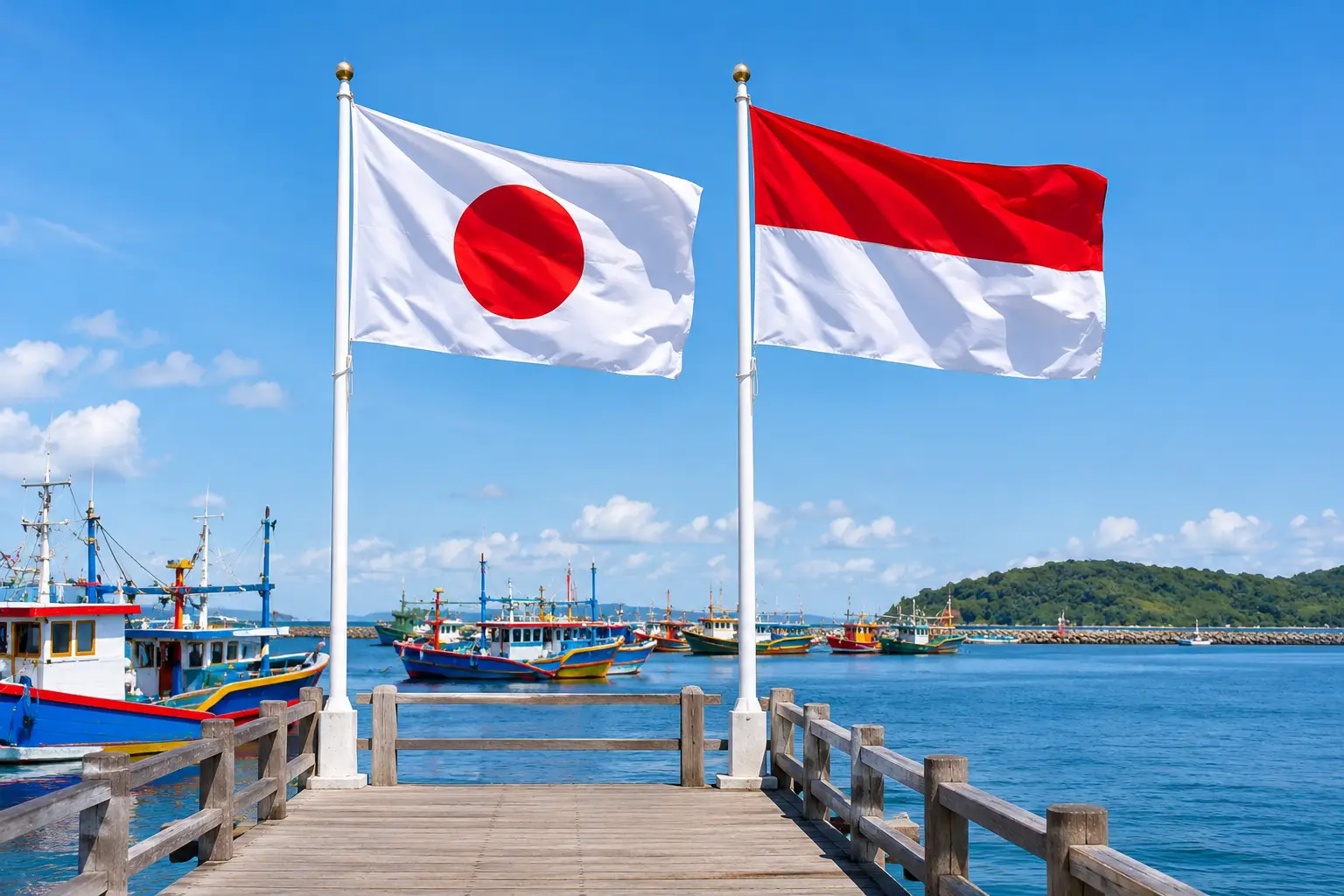
Japan's flag, the Hinomaru, is a red disc on white, and became the official national flag by law in 1999. Bangladesh's flag is a red disc on green, set slightly towards the hoist so that it looks centred when the flag flies.
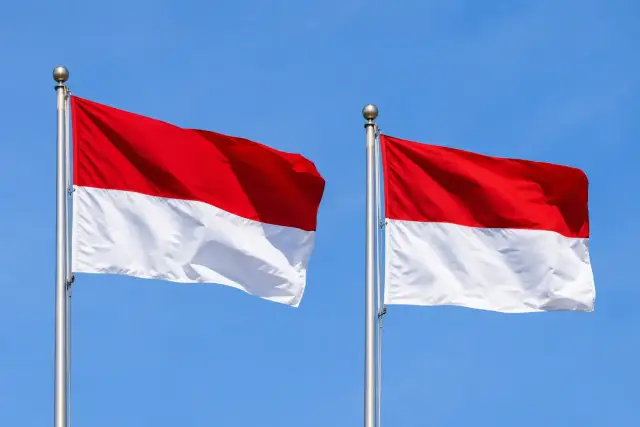
Indonesia's red over white is almost identical to Monaco's; the two differ in proportions. Thailand's flag has red, white and blue stripes, with the central blue band twice as tall as the others.
Stars, crescents and wheels
China's red flag has one large yellow star and four smaller ones, and was adopted in 1949. Vietnam's is red with a single yellow star. Pakistan's dark green flag has a white crescent and star, with a white band at the hoist, and Singapore's shows a white crescent and five stars on red over white.
India's saffron, white and green flag, adopted in 1947, has the navy blue Ashoka Chakra in the centre. The Philippines flag has a sun with eight rays and three stars; it is flown with the red band on top in time of war.
Dragons, temples and old symbols
Bhutan's flag is divided diagonally into yellow and orange, with a white thunder dragon, the Druk, across the middle. Sri Lanka's shows a gold lion holding a sword. Cambodia's flag has Angkor Wat at its centre, making it one of very few national flags to show a building.
Mongolia's red and blue flag carries the Soyombo, a traditional symbol, at the hoist. Kazakhstan's sky blue flag shows a golden sun above a steppe eagle.
| Country | Main symbol | Note |
|---|---|---|
| Japan | Red disc | The sun |
| Bangladesh | Red disc on green | Set towards the hoist |
| India | Ashoka Chakra | 24 spokes |
| South Korea | Red and blue taegeuk | With four black trigrams |
| Bhutan | White dragon | The Druk, or thunder dragon |
| Cambodia | Angkor Wat | A temple complex |
| Mongolia | Soyombo | Traditional national symbol |
| Nepal | Moon and sun | Two stacked pennants |
Asian flag check
0 / 4 answered
1Which country's flag is flown with its red band on top in time of war?
Answer: The Philippines. In peacetime the blue band is on top.2Which building appears on the flag of Cambodia?
Answer: Angkor Wat. Angkor Wat is shown in white at the centre.3What animal is on the flag of Bhutan?
Answer: A dragon. The white thunder dragon is called the Druk.4Why is the red disc on Bangladesh's flag set towards the hoist?
Answer: So it looks centred when the flag flies. The offset balances the flag in the wind.
Frequently asked questions
Which Asian flags are easiest to confuse?
Indonesia's red over white is often mixed up with Monaco's and with Poland's white over red. Japan and Bangladesh both use a red disc, but Bangladesh's background is green.
One symbol per flag
Asia's flags are easiest to learn by their central symbol, such as a sun, star, wheel, dragon or temple, then by the colours around it.
Check the evidence behind the guide
Use these references to check terminology and pursue a topic in more depth. Photo quizzes help you practise observation; a single picture rarely proves a difficult identification.
When a source describes a broad group, compare its details with the exact species, model or specimen you are studying. Record the feature that supports your answer rather than relying on a name alone.