The Bible is full of real places. Abraham set out from Ur in Mesopotamia, Moses led Israel through the Sinai, Jesus grew up in Nazareth and taught around the Sea of Galilee, and Paul sailed across the Mediterranean. Knowing where these places are makes the stories much easier to follow.
This quiz has four rounds: rivers and seas, mountains, cities and towns, and journeys. Start with the quick guide to seven key places, then pick an answer for each question to see if you're right and the passage it comes from.
Quick takeaways
- Seven places come up again and again: Jerusalem, Bethlehem, Nazareth, Capernaum, Jericho, Babylon and Damascus.
- Many questions are about water and mountains, where big moments in the story happen.
- The last round follows famous journeys, from Abraham to Paul.
Quick guide
Seven places every Bible reader should know
If you can place these seven on a map, most Bible stories will make sense geographically.
| Place | Region | Why it matters |
|---|---|---|
| Jerusalem | Judean hills | David's capital, Solomon's temple, and the death and resurrection of Jesus |
| Bethlehem | About 9 km south of Jerusalem | Hometown of David and birthplace of Jesus |
| Nazareth | Lower Galilee | The town where Jesus grew up |
| Capernaum | North shore of the Sea of Galilee | Jesus' base during his ministry in Galilee |
| Jericho | Jordan Valley | Walls that fell for Joshua; Zacchaeus and Bartimaeus |
| Babylon | Mesopotamia, in today's Iraq | Where the people of Judah were taken into exile |
| Damascus | Syria | Where Saul (Paul) was heading when he met the risen Jesus |
Round 1
Rivers and seas
Floods, crossings, baptisms and storms: a lot of the Bible happens near water.
1In which river was Jesus baptised?
Answer: The Jordan. Jesus was baptised in the Jordan, which flows from the Sea of Galilee down to the Dead Sea (Matthew 3:13).2Which sea is so salty that almost nothing lives in it?
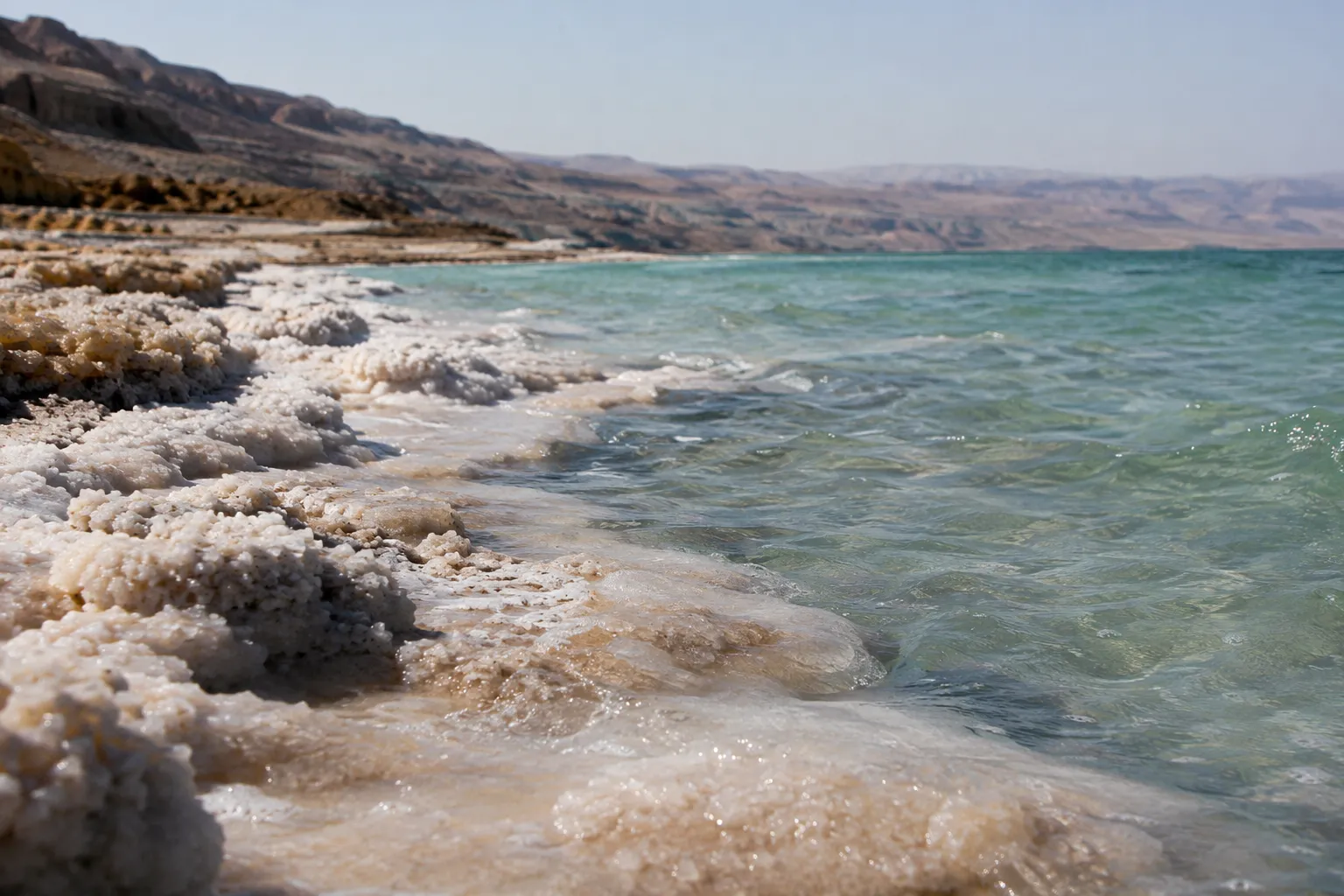
Answer: The Dead Sea. The Dead Sea is called the Salt Sea in the Old Testament (Genesis 14:3). Its shore is the lowest land on Earth, about 430 m below sea level.3What other names does the Bible use for the Sea of Galilee?
Answer: Gennesaret and Tiberias. The Bible also calls it the Lake of Gennesaret (Luke 5:1) and the Sea of Tiberias (John 21:1). It is a freshwater lake about 21 km long.4Which two famous rivers are named as flowing out of Eden?
Answer: Tigris and Euphrates. Genesis names the Tigris and the Euphrates, along with the Pishon and the Gihon (Genesis 2:10-14).5In which river was baby Moses hidden in a basket?
Answer: The Nile. Moses' basket was placed in the Nile, in Egypt (Exodus 2:3).6From which port did Jonah sail when he ran away from God?
Answer: Joppa. Jonah sailed from Joppa, on the Mediterranean coast, on a ship bound for Tarshish (Jonah 1:3).
Round 2
Mountains of the Bible
God meets people on mountains again and again in the Bible. How many can you place?
7Where did Noah's ark come to rest after the flood?
Answer: The mountains of Ararat. The ark came to rest on the mountains of Ararat (Genesis 8:4), in the region of today's eastern Turkey.8On which mountain did Moses receive the Ten Commandments?
Answer: Mount Sinai. Moses received them on Mount Sinai, also called Horeb (Exodus 19 and 20).9On which mountain did Elijah face the prophets of Baal?
Answer: Mount Carmel. Elijah faced them on Mount Carmel, near the Mediterranean coast (1 Kings 18).10From which mountain did Moses see the Promised Land before he died?
Answer: Mount Nebo. Moses climbed Mount Nebo, in Moab, east of the Jordan (Deuteronomy 34:1).11From which hill outside Jerusalem did Jesus ascend to heaven?
Answer: The Mount of Olives. Jesus ascended from the Mount of Olives (Acts 1:9-12).
Round 3
Cities and towns
Capitals, villages and a city that repented. Name the place from the clue.
12In which town did Jesus grow up?
Answer: Nazareth. Jesus grew up in Nazareth in Galilee, which is why he was called Jesus of Nazareth (Luke 2:39-40).13Which lakeside town became Jesus' home base in Galilee?
Answer: Capernaum. Jesus went to live in Capernaum (Matthew 4:13).14Which city was Abraham's family from?
Answer: Ur of the Chaldeans. Abraham's family came from Ur of the Chaldeans, in southern Mesopotamia (Genesis 11:31).15Which great Assyrian city was Jonah sent to warn?
Answer: Nineveh. Jonah was sent to Nineveh, on the Tigris, near today's Mosul in Iraq. Its people repented and the city was spared (Jonah 3).16Where were the followers of Jesus first called Christians?
Answer: Antioch. The disciples were first called Christians in Antioch, in Syria (Acts 11:26).17In which village did Mary, Martha and Lazarus live?
Answer: Bethany. They lived in Bethany, about 3 km from Jerusalem (John 11:1, 11:18).18Which city was destroyed along with Gomorrah?
Answer: Sodom. Sodom was destroyed alongside it. Lot and his daughters escaped (Genesis 19).
Round 4
Famous journeys
The Bible is a book of travellers. Follow them across deserts and seas.
19Through which city did Abraham travel on his way from Ur to Canaan?
Answer: Haran. Abraham's family stopped in Haran, where his father Terah died (Genesis 11:31-12:5).20On which road did Saul have his vision of Jesus?
Answer: The road to Damascus. Saul was on the road to Damascus (Acts 9:3).21On which island was Paul shipwrecked on his way to Rome?
Answer: Malta. Paul was shipwrecked on Malta. Everyone on board, 276 people, reached the shore safely (Acts 27:37-44, 28:1).22On which road did Philip meet an official from Ethiopia?
Answer: Jerusalem to Gaza. Philip met him on the desert road that goes down from Jerusalem to Gaza (Acts 8:26).23On which island was John when he received the visions in Revelation?
Answer: Patmos. John was on Patmos, in the Aegean Sea (Revelation 1:9).

Quick quiz: where in the Bible?
Tap an answer. Each question locks after your first pick.
0 / 5 answered
1Where did Noah's ark come to rest?
Answer: The mountains of Ararat. Genesis 8:4 says the ark came to rest on the mountains of Ararat.2Which town was Jesus' base during his ministry in Galilee?
Answer: Capernaum. Jesus left Nazareth and lived in Capernaum by the lake (Matthew 4:13). Many of his miracles happened nearby.3Which city did Jonah try to avoid?
Answer: Nineveh. God sent Jonah to Nineveh, but he boarded a ship at Joppa heading the other way, to Tarshish.4On which island was Paul shipwrecked?
Answer: Malta. Paul's ship ran aground on Malta, where he survived a viper bite and healed the chief official's father (Acts 28).5Where were Jesus' followers first called Christians?
Answer: Antioch. Acts 11:26 says the disciples were first called Christians in Antioch.
Frequently asked questions
Where is the Holy Land?
The term usually means the land along the eastern Mediterranean between the Jordan River and the sea, where most Bible events took place. Today it spans Israel, the Palestinian territories and parts of Jordan.
What are the most important places in the Bible?
Jerusalem is mentioned more than any other place. Bethlehem, Nazareth, the Sea of Galilee, the Jordan River, Egypt and Babylon are also central to the story.
Is the Garden of Eden a real place?
Genesis places Eden near the source of four rivers, including the Tigris and Euphrates, which points to Mesopotamia. Its exact location has never been identified, and readers differ on how literally to read the account.
How can I learn Bible geography?
Keep a map open as you read and find each place when it comes up. Then test yourself: Bible Quiz Trivia has a Bible geography topic with an explanation for every answer.
Put the stories on the map
Bible geography turns names into places you can picture: a lake where fishermen worked, a road down to Gaza, a mountain where fire fell. Once you know where things happened, the journeys and distances in the stories make much more sense.
- Learn the seven key places in the guide first.
- Trace Paul's journey to Rome on a map of the Mediterranean.
- Practise with a Bible geography quiz a few minutes a day.
Build a map from Bible places and journeys
Sort the places you missed into rivers, mountains, cities and regions. For each place, write the event connected to it and the book where it appears. Linking a location to an event makes it easier to remember than a map label alone.
Some ancient locations are uncertain or have changed names. Read the passage first, then use a map as an aid; avoid treating a modern boundary as if it appeared in the biblical text.